- Category
- Dairy and eggs
- State
- Preserved
- Usual unit
- g
What it is
Parmigiano Reggiano is a firm, aged cow’s-milk cheese with a dense, grainy texture that can crumble into shards or irregular pieces. Its name is linked to a defined production area in Italy and a protected designation; not every cheese sold as Parmesan is necessarily Parmigiano Reggiano. The evidence describes a minimum maturation of 12 months. Age affects both texture and flavor: younger cheeses may taste more delicate, while more mature examples can be more intense and crumbly. It is sold in forms such as wedges, pieces, grated cheese and shavings.
When to use it
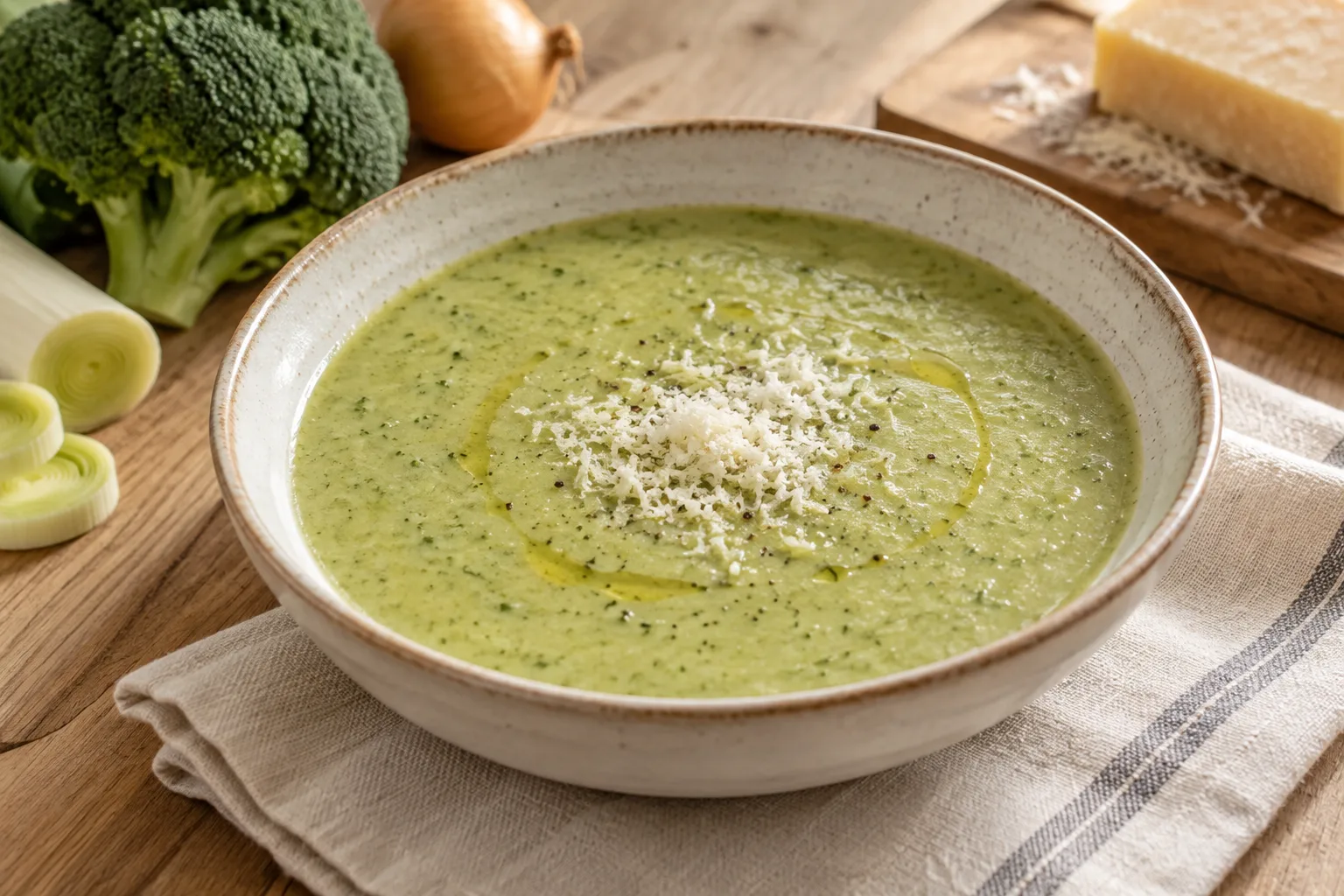
Use it when you want to add a pronounced savory flavor and grainy texture to a dish, or serve a firm cheese as an appetizer. Grate it over pasta, risotto or soup; use shavings in salads and on vegetables or carpaccio. It can also be served in pieces with fruit, nuts or honey. Longer maturation is not automatically the best choice: consider whether you want a more delicate cheese to eat on its own or a more intense one that stands out in a dish.
How to use it
Grate the cheese shortly before serving to finish pasta, risotto and soups, or stir it in near the end of cooking to add flavor. For salads, vegetables or carpaccio, shave it thinly with a peeler or suitable knife. To serve it as an appetizer, break it into irregular pieces and pair it with pears, grapes, figs, walnuts or a little honey. The rind can also be added to soups or purées for flavor; remove it before serving if you do not want it left in the dish. Taste before adding the recipe’s full amount of salt, since the cheese has a concentrated savory flavor.
Flavour and texture
This is a pronounced-flavored cheese whose character varies with maturation. The sources describe milky and fruity notes in younger cheeses, and more intense, nutty or spicy notes in some older ones. Its paste is firm and grainy, and can be crumbled into pieces or shaved. Mature pieces may contain small crystals that can be felt while chewing. Texture and intensity naturally vary with age, so a difference in these qualities does not by itself mean the cheese has spoiled.
How to choose it
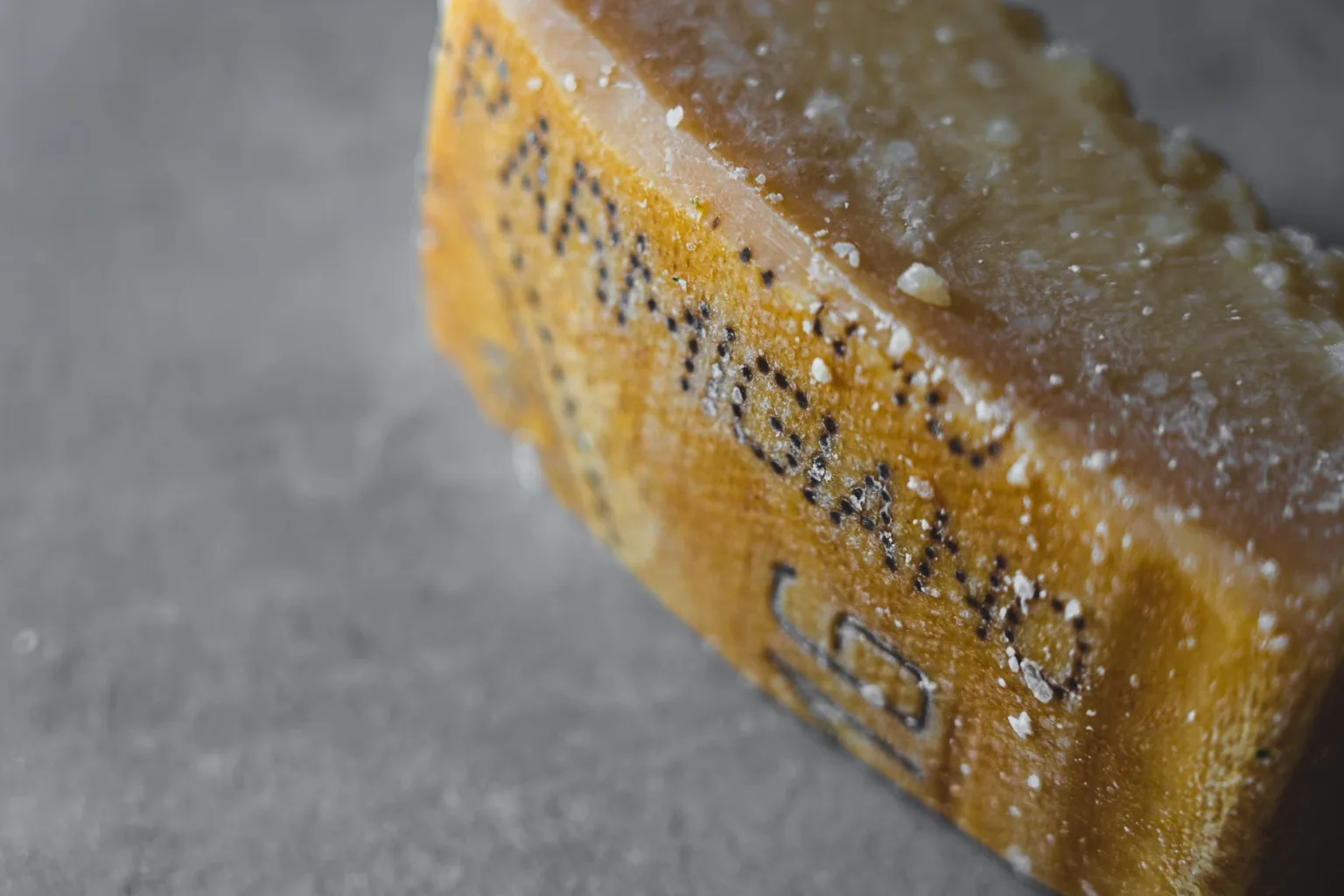
If you want the protected product, check that the name and labeling say Parmigiano Reggiano rather than assuming that every cheese called Parmesan is the same. For a wheel section or wedge, look for the product identification and rind markings described for this cheese; for packaged cheese, read the product name, allergen information and producer’s directions. Choose a maturation level to suit the dish and your preference: the sources describe different profiles at different ages, but do not establish that older is always better. It is available as a wedge, piece, grated cheese or shavings.
Storage
Follow the storage directions on the package or provided by the seller, especially for cut, grated or packaged cheese. For an opened piece, culinary sources recommend refrigeration and wrapping it well; avoid leaving it exposed to air, where it may dry out. Packaging and format can change the applicable instructions, so there is no single direction that fits every product. Check the package for its date and any guidance on use after opening.
Substitutions
Grana Padano has a similarly grainy texture and can serve in comparable ways, but its flavor is not identical. Pecorino Romano offers a different, saltier profile and is made from sheep’s milk, so adjust the salt in the recipe. Reggianito and other hard grating cheeses can also replace it in many dishes, although aroma, intensity and texture will differ. Taste and adjust the amount to suit the dish.
Common mistakes
Do not assume that every cheese labeled Parmesan is Parmigiano Reggiano: check the product name if you want the protected cheese. Also avoid assuming that longer maturation is best for every use; flavor and texture change with age, and preference matters. Finally, do not automatically add the recipe’s full amount of salt before tasting the cheese.
Safety and allergens
This cheese contains milk, an allergen that must be identified in food information. If you have an allergy or intolerance, check the label or ask the seller, especially when it is sold unpackaged or handled alongside other foods. Follow the storage and use directions on the package or provided by the establishment.
Culinary uses
- Queso para rallar y terminar platos
- Queso de mesa y aperitivo
Recommended techniques
- Rallar fino o grueso sobre platos calientes
- Cortar en lascas o desmenuzar en trozos irregulares
- Incorporar a sopas y salsas al final de la cocción
Pairs well with
- Pasta, risotto y sopas
- Rúcula, peras, uvas e higos
- Nueces, miel y vinagre balsámico
Frequently asked questions
How can I use Parmigiano Reggiano?
Grate it over pasta, risotto or soup, or serve it in shavings with salads and carpaccio. It can also be enjoyed in pieces as an appetizer.
Is a longer-matured cheese always better?
Not necessarily. The sources describe changes in flavor and texture with maturation; choose according to the dish and whether you prefer a milder or more intense cheese.
What can I use instead of Parmigiano Reggiano?
Grana Padano is a close option for similar uses; Pecorino Romano and Reggianito can also work, but taste different. Adjust the salt and amount after tasting.
Estimated nutrition
- Fat
- 28.6 g
- Saturates
- 21.4 g
- Carbohydrate
- 3.57 g
- Sugars
- 0 g
- Fibre
- 0 g
- Protein
- 32.1 g
- Salt
- 1.61 g
Sources and review
Automatically researched, cross-checked and validated content. Sources consulted:
- En el etiquetado alimentario hay algunas menciones que son obligatorias eletiquetadocuentamucho.aesan.gob.es
- Client Challenge doi.org
- Queso Parmesano Reggiano: historia, usos, maridaje y recetas elpaladar.es
- Parmigiano Reggiano: qué lo hace único y cómo usarlo totale.es
- Maridajes perfectos con el Parmigiano Reggiano: guía completa - Traversetolese Shop Parma caseificiotraversetolese.it
- Sustitutos de Queso Duro para Queso Parmesano es.hiloved.com
- 153 revista del comité científico nº 37 aesan.gob.es
- Todo sobre el Parmigiano Reggiano. Origen, elaboración y recetas de cocina con él recetasdecocina.elmundo.es
- Queso parmesano - Wikipedia, la enciclopedia libre es.wikipedia.org
- Parmigiano Reggiano: queso italiano - Italia.it italia.it
- Todo lo que necesitas saber sobre el Parmigiano Reggiano para que no te la den con queso eldiario.es
- Parmigiano Reggiano: historia, origen y dónde comprarlo. spaghettiemandolino.it
- El queso parmigiano reggiano. Nota de cata y usos en la cocina directoalpaladar.com
- Parmigiano Reggiano: los maridajes perfectos | Hostelería Salamanca hosteleriasalamanca.es
- Parmigiano Reggiano: Un Análisis Exhaustivo de Este Queso Italiano y Su Comparativa con Otros Quesos Gourmet donquesotori.es
- "No podrás resistirte a estos maridajes de ensueño con el delicioso queso parmesano" eltomatebistro.es
- Diferencia entre queso parmesano y reggianito: sabor, precio y uso | QueVia quevia.es