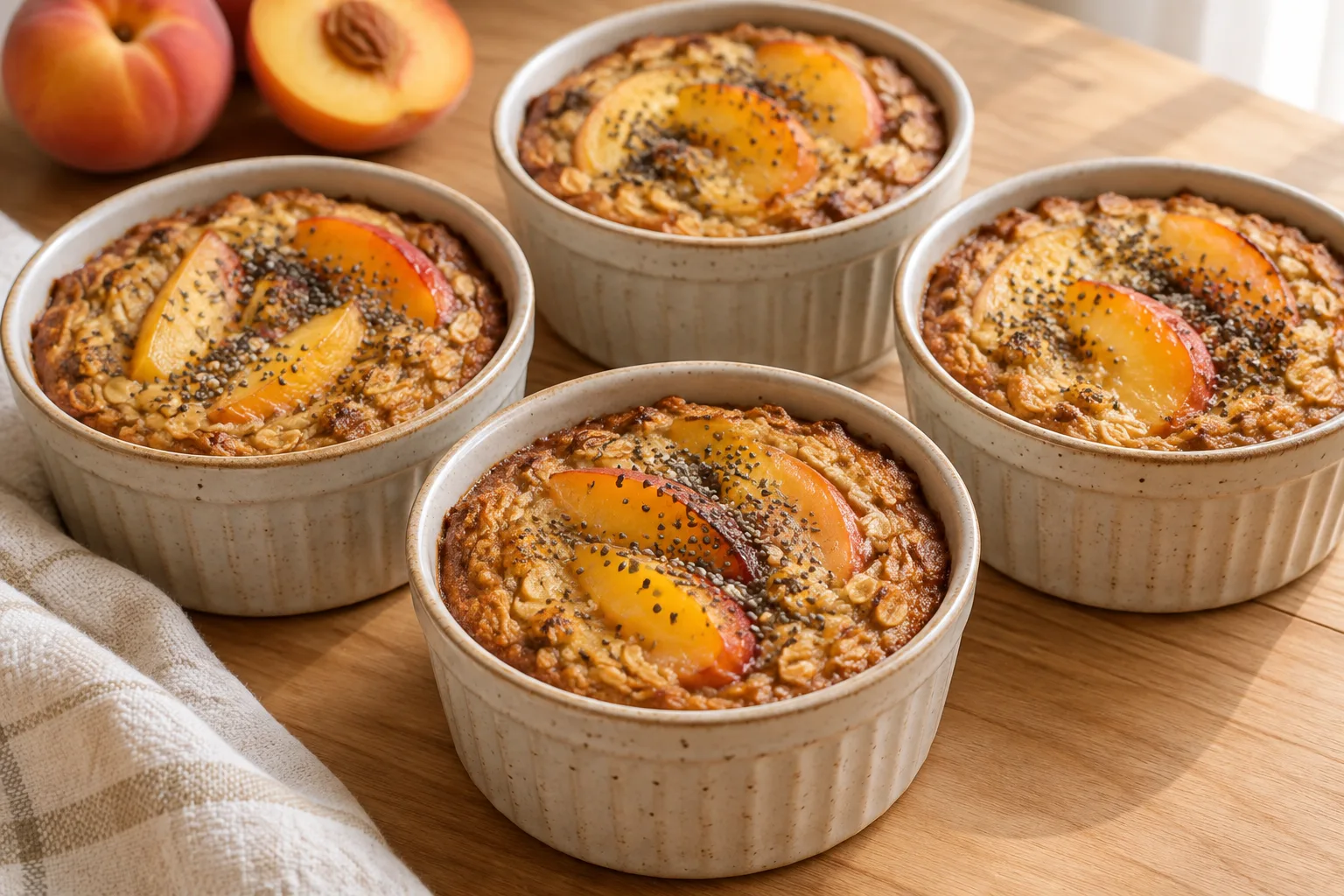
- Category
- Fruit
- State
- Fresh
- Usual unit
- unit
What it is
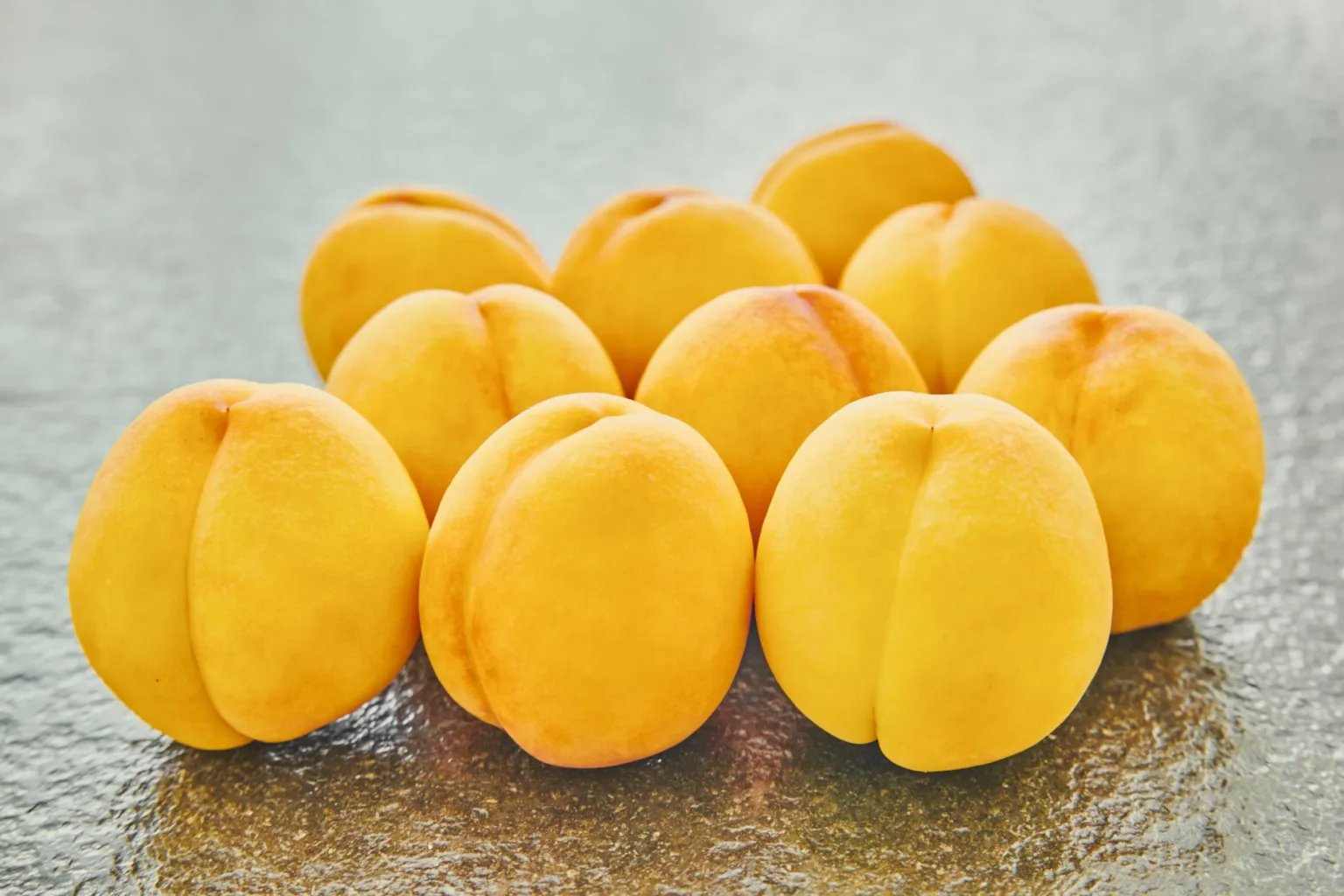
A peach is the fruit of the peach tree and a stone fruit: its fleshy part surrounds a central pit. Peaches are sold with white or yellow flesh, different degrees of firmness, and pits that may cling to the flesh or come away more readily. The skin is usually fuzzy; a nectarine is a related smooth-skinned fruit, not simply the usual fuzzy-skinned form of a peach. Color, juiciness, and sweetness depend on variety and ripeness, so no single texture or flavor describes every peach.
When to use it
Use ripe, juicy peaches for fresh eating, fruit salads, or salads. Firmer fruit is easier to handle when you plan to cut it for grilling, baking, or a tart. Since firmness, sweetness, and pit adherence vary, choose peaches for the result you want rather than assuming every variety will behave alike. A peach with mealy flesh or little juice may disappoint in a dish where fresh fruit is meant to stand out. Peaches also work in crumbles, purées, and some cooked preparations.
How to use it
Wash the fruit before cutting, then remove the pit and serve the flesh in wedges or dice. Eat peaches on their own, add them to fruit salad, or pair them in a salad with chicken, greens, feta, and walnuts. For a warm dish, halve and grill them; they can also be used in tarts and crumbles. Blending the flesh makes a purée for drinks or desserts. In a recipe, allow for differences in firmness, juiciness, and how easily the pit comes away. If using canned peaches instead of fresh, adjust the recipe for their added liquid and sweetness.
Flavour and texture
Depending on variety and ripeness, peaches can taste sweet and aromatic or more tart. Their flesh may be white or yellow and range from firm to very juicy and soft. The characteristic skin is fuzzy, and the pit may separate readily or cling to the flesh.
How to choose it
Choose fruit for its intended use: ripe, juicy peaches suit fresh eating, while firmer ones are easier to handle for cooking. Check firmness and general condition, keeping in mind that color and texture vary among varieties. Do not assume that white or yellow flesh, or an easily removed pit, guarantees a particular flavor.
Storage
Peaches are delicate and highly perishable. Available evidence warns that cold storage over time can lead to flavor loss, mealy flesh, or browning, and some damage may only become apparent as the fruit ripens. Handle peaches gently and avoid unnecessarily prolonged cold storage. The evidence does not establish a universal storage time or temperature; follow any storage instructions supplied with packaged fruit.
Substitutions
A nectarine can replace a peach when similar flesh is wanted and smooth skin is acceptable. Canned peaches may work in some cooked preparations, but they bring their own liquid and sweetness, so adjust the recipe. Neither substitute is guaranteed to match the exact firmness, juiciness, or cooking behavior of fresh peaches.
Common mistakes
Do not choose every peach by the same standard: very ripe, soft fruit can be difficult to handle, while firm fruit may be less juicy for fresh eating. Do not judge quality by appearance alone either; cold damage can affect flavor and texture without being obvious on the outside.
Safety and allergens
The supplied evidence gives no peach-specific safety warning. Handle the fruit carefully and follow any storage and use directions on its packaging; no universal time or temperature is established here.
Culinary uses
- Fruta fresca para comer sola o añadir a ensaladas
- Ingrediente para postres, tartas, compotas y mermeladas
Recommended techniques
- Asar a la parrilla o a la plancha, partido y sin hueso
- Hornear en tartas o cubrir con una mezcla para crumble
- Triturar para obtener un puré o una bebida
Pairs well with
- Pollo, hojas de ensalada, queso feta y nueces
- Helado o yogur en preparaciones dulces
- Tomate y otros ingredientes de ensalada
Frequently asked questions
What is the difference between a peach and a nectarine?
The clearest visible difference is the skin: peaches are usually fuzzy, while nectarines are smooth-skinned. Varieties can also differ in flesh, flavor, and firmness.
Can peaches be used in savory dishes?
Yes. Add peach slices to a salad with chicken, greens, feta, and walnuts, or combine them with other salad ingredients.
Why might a peach be mealy or lack flavor?
Cold storage can cause flavor loss and changes in juiciness and texture. Some symptoms emerge as the fruit ripens and may not be visible from the outside.
Estimated nutrition
- Fat
- 0.34 g
- Saturates
- 0 g
- Carbohydrate
- 10.2 g
- Sugars
- 8.84 g
- Fibre
- 1.4 g
- Protein
- 0.68 g
- Salt
- 0 g
Sources and review
Automatically researched, cross-checked and validated content. Sources consulted:
- En el etiquetado alimentario hay algunas menciones que son obligatorias eletiquetadocuentamucho.aesan.gob.es
- Cooking Food Storage | USU extension.usu.edu
- Aesan - Agencia Española de Seguridad Alimentaria y Nutrición aesan.gob.es
- Currants | Cooperative Extension Service uaf.edu
- PLIEGO DE CONDICIONES INDICACIÓN GEOGRÁFICA PROTEGIDA “MELOCOTÓN DE CIEZA mapa.gob.es
- ¡Qué melocotones y qué penumbras! | Debate Feminista doi.org
- Salsa de Manzana y Durazno (Melocotón) (Spanish) - National Center for Home Food Preservation nchfp.uga.edu
- El daño por frío en melocotones/duraznos. Qué lo causa y cómo podemos disminuir su incidencia. – Extensión en Español extensionesp.umd.edu
- Carrots 101: Selection, Storage, and Cooking Tips for Maximum Flavor - Cooperative Extension: Food & Health - University of Maine Cooperative Extension extension.umaine.edu
- Molecular Gastronomy | Columbia University Press cup.columbia.edu
- Melocotón en España: origen, variedades, temporada y beneficios frutamerca.com
- El melocotón: origen, propiedades y secretos catalunyagastronomica.com
- Melocotón: propiedades y beneficios ✔ | Blog Druni druni.es
- Tipos de melocotones - I Love Fruit And Veg From Europe ilovefruitandvegfromeurope.com
- El melocotón: origen, propiedades y secretos indisa.es
- Melocotón: Propiedades, Variedades y Recetas Dulces y Saladas lasrecetascocina.com