- Category
- Pulses
- State
- Dry
- Usual unit
- g
What it is
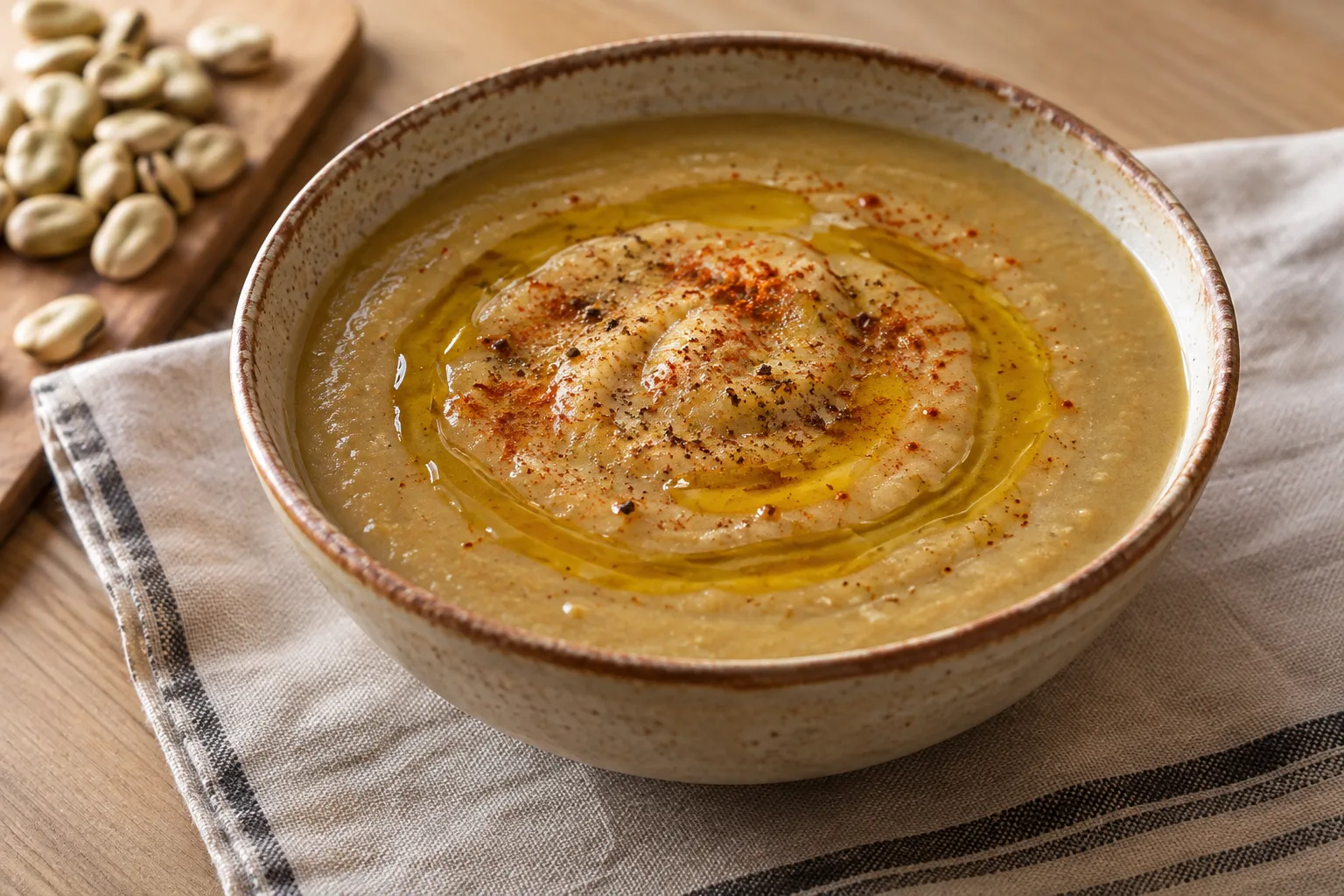
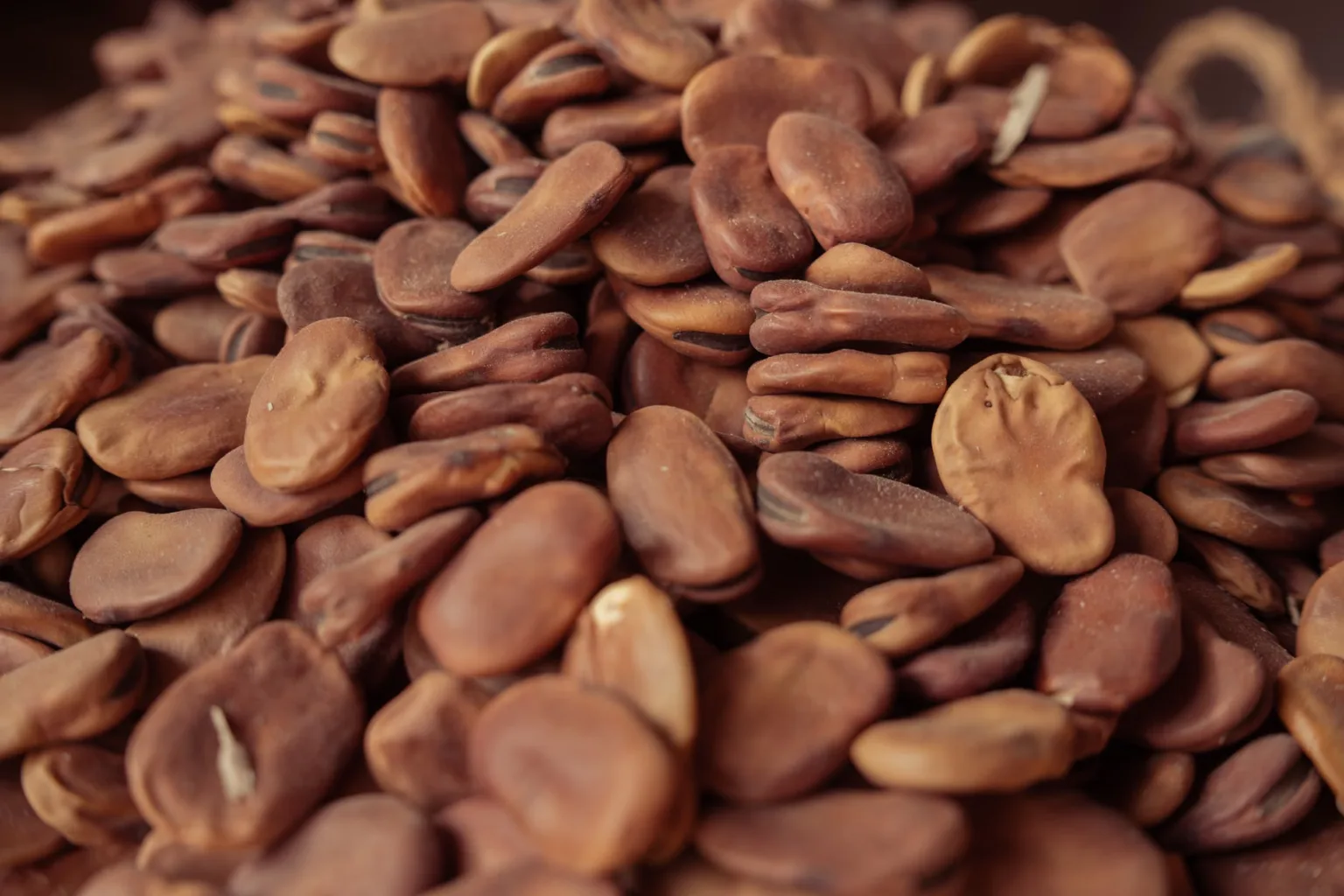
Peeled dried fava beans are mature fava seeds that have been dried and sold without their outer seed coat. They are a dried legume, distinct from fresh, tender fava beans in both form and preparation. “Peeled” indicates that the outer covering has been removed; it does not, by itself, establish a particular variety, origin, or fixed soaking or cooking time. The beans can be used in hearty dishes, soups, purées and salads, in preparations similar to those made with other legumes. Size and age can vary, so check the package instructions and assess their texture as they cook rather than relying on a universal time.
When to use it
Choose these beans when you want a dried legume to add body to a stew, soup or purée, or to add to a salad after cooking and cooling. They can also be the base of a dish with rice or potatoes, or be served with pork, sausage and cabbage. They are convenient pantry ingredients, but require planning: whether soaking is recommended and how long cooking takes depend on the product. Do not replace fresh fava beans directly in a recipe without adapting the method, since dried beans need hydration and cooking.
How to use it
Check the package, and remove any damaged beans or foreign material. If the manufacturer recommends soaking, cover the beans with water and follow its directions; then drain and cook them in fresh water or in the recipe liquid until tender. Do not assume all peeled beans need the same soaking or cooking time: size and storage can make a difference. Add cooked beans to soups or stews, or drain and blend them into a purée. For a salad, let them cool after cooking before mixing with the other ingredients. Adjust salt, liquid and seasonings near the end, when you can judge the dish’s texture and flavor.
Flavour and texture
Cooked dried fava beans are described as delicate and buttery, with a flavor that may recall other dried legumes. Their centers become tender when cooked, making them suitable for stews and purées; the result depends on the variety and cooking. Because they are peeled, they lack the outer covering found on unpeeled dried fava beans. Do not expect them to have the same texture as fresh fava beans: these are different products and are prepared differently.
How to choose it
Check that the package clearly identifies the product as peeled dried fava beans and is intact, clean and free from visible moisture. Look for reasonably uniform beans without obvious signs of insects, mold or damage. When buying in bulk, choose a shop where the product is protected and the containers are clean. Do not infer cooking time from size or appearance alone: check the label, and bear in mind that older dried legumes may take longer to soften.
Storage
Keep dried fava beans in a closed container in a cool, dry place, protected from light and heat. Avoid moisture, which can harm the product, and check occasionally for signs of insects or deterioration. An airtight, opaque container can help protect beans bought in bulk. Keep the package date or note the purchase date, and follow the manufacturer’s storage advice; do not assume every brand has the same shelf life.
Substitutions
In stews, soups or purées, dried chickpeas or dried beans can work as culinary alternatives, but they are not identical in flavor or texture. Each legume has its own soaking and cooking requirements, so follow its package directions rather than copying those for fava beans. If substituting fresh fava beans, adapt the preparation too: they are not the same product as dried beans.
Common mistakes
Do not start cooking without checking whether the package recommends soaking, or assume one generic cooking time works for every batch. Do not swap in fresh fava beans as though their state and preparation were identical. Avoid adding the beans to a dish without checking that they are tender; beans that are still firm can change the texture of a stew or purée. “Peeled” does not mean “already cooked.”
Safety and allergens
The readable official evidence supplied does not provide a product-specific safety instruction. Follow the package directions and cook the beans before serving; do not interpret “peeled” as “ready to eat.”
Culinary uses
- Base for stews and soups
- Ingredient for purées and creamy preparations
- Legume for salads and substantial side dishes
Recommended techniques
- Soak before cooking, using the product label as a guide
- Simmer in liquid until tender
- Mash or purée after cooking
Pairs well with
- Rice or potatoes
- Pork, sausage and cabbage
- Tomato, pepper and aromatic herbs
Frequently asked questions
Do peeled dried fava beans need soaking?
It depends on the product. Check the label and follow its directions; the available evidence does not support one soaking time for every variety and brand.
What dishes can I make with them?
Once cooked, they can go into stews, soups, purées and salads. They can also be served with rice or potatoes, or with pork and cabbage.
Can I substitute chickpeas or beans?
They can be alternatives in some soups, stews and purées, but the flavor and texture will differ. Prepare them according to the directions for that legume.
Estimated nutrition
- Fat
- 1.35 g
- Saturates
- 0 g
- Carbohydrate
- 56.8 g
- Sugars
- 8.11 g
- Fibre
- 5.4 g
- Protein
- 27 g
- Salt
- 0 g
Sources and review
Automatically researched, cross-checked and validated content. Sources consulted:
- Client Challenge doi.org
- Mexican Immigrants´ Foodways In El Paso, Texas, 1880- ... scholarworks.utep.edu
- Comité Científico aesan.gob.es
- Tortillas (“Wraps”) con Harinas Compuestas de Trigo y Yuca scholar.uprm.edu
- Project MUSE -- Verification required! muse.jhu.edu
- Vamos a Conservar Alimentos: Sopas extension.psu.edu
- THE BEAUTIFUL WOMAN IN MEDIEVAL IBERIA mospace.umsystem.edu
- Habas, origen, historia y creencias sobre esta hortaliza. blog.plantamus.com
- Grow crisp, flavorful beans in your home garden | Servicio de Extensión de OSU extension.oregonstate.edu
- Qué son las habas secas y cómo aprovechar al máximo esta legumbre típica de Murcia, de sabor delicado y mantecoso directoalpaladar.com
- Diferencias entre las habas secas y las habas tiernas – Botanical-online botanical-online.com
- Habas de Aragón - La Salmantina lasalmantina.com
- - YouTube youtube.com
- Febrero: las habas secas | Consumer consumer.es
- Habas – PULEVA lechepuleva.es