- Category
- Fish and seafood
- State
- Fresh
- Usual unit
- g
What it is
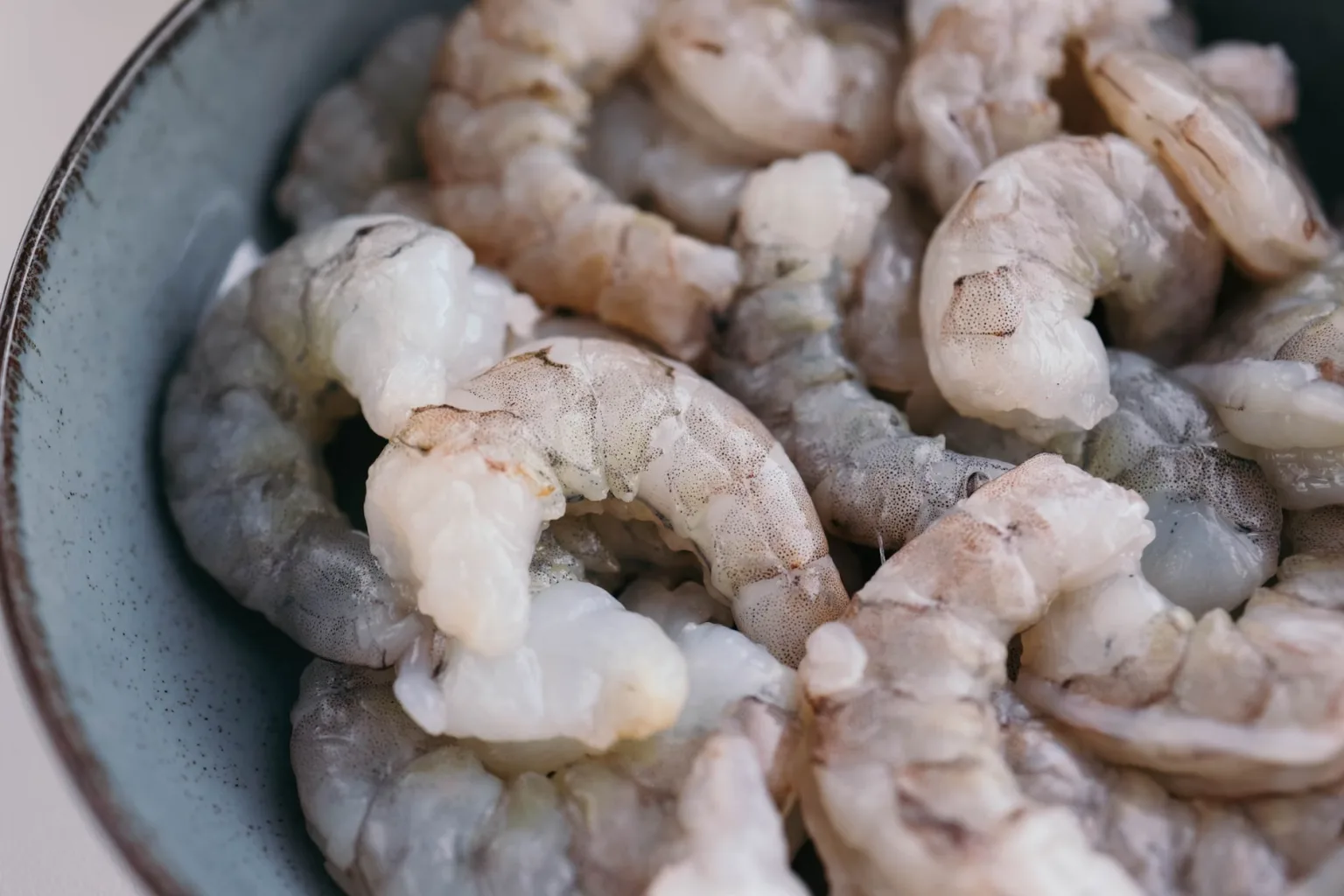
Peeled prawns are the edible portion of prawns with the shell removed. Sold as seafood, they can differ in size, colour and variety; the common product name alone does not identify the precise species in every pack. Their flesh is commonly described as tender and mild, with a light seafood character. Buying them peeled saves the work of removing shells during preparation or at the table, and makes it straightforward to portion them into a dish. Check the product name and label, since sale format and presentation can vary. Prawns are crustaceans and should be treated as an allergen.
When to use it
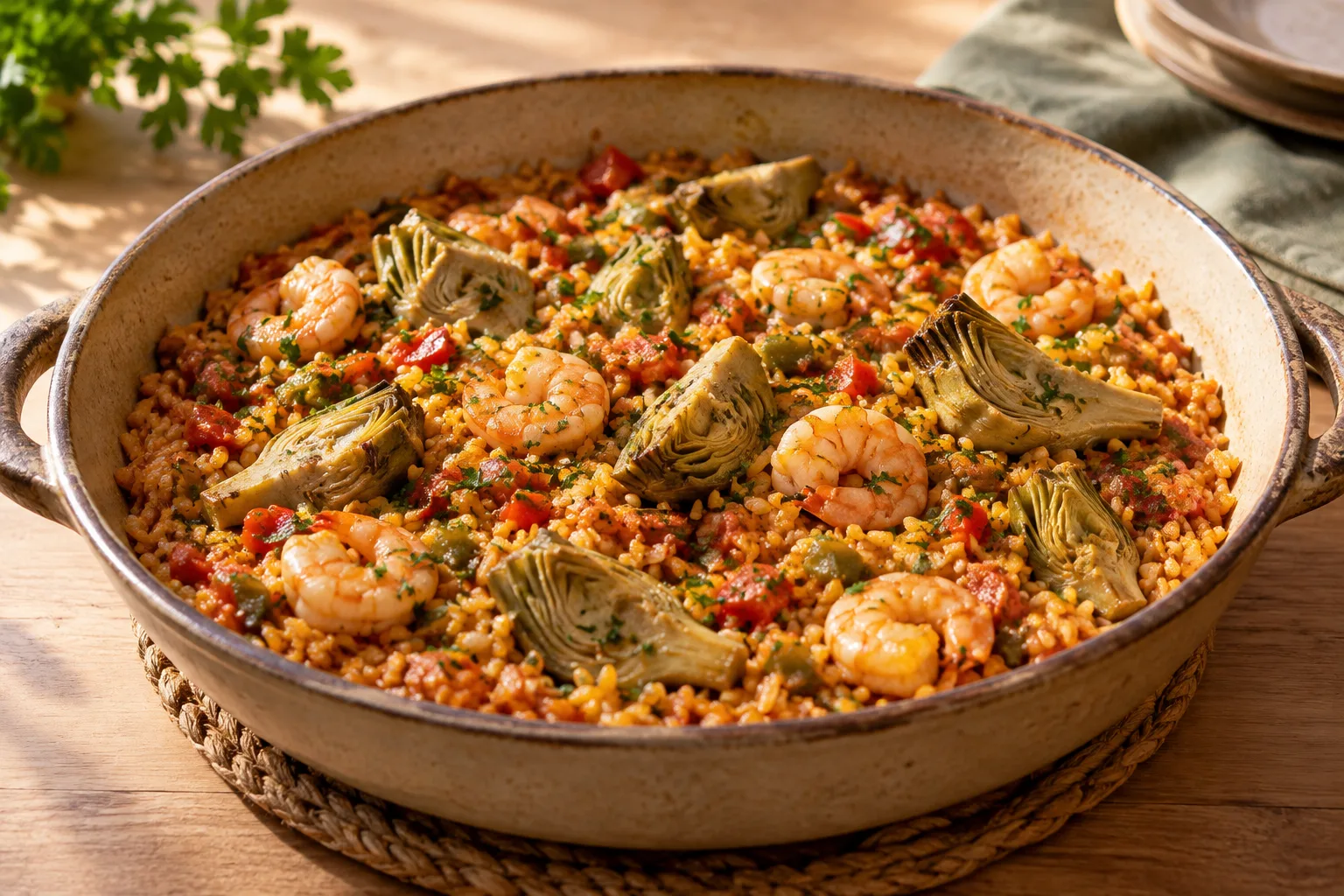
Use peeled prawns when you want to add a seafood ingredient without having to shell each piece during preparation or at the table. They suit rice dishes, pasta, soups, stir-fries, and some chilled or warm preparations, following the recipe and product directions. Their delicate flavour works with moderate seasoning and sauces, while also fitting into spiced dishes. Since prawns vary in size and product format, choose pieces that suit the dish and check whether the pack says they are raw or cooked.
How to use it
Before cooking, check the pack to see whether the prawns are raw or cooked and follow the directions for that product. You can sauté them with garlic and oil for a simple dish, or add them to pasta with tomato. They can also go into rice dishes, soup or stock; some recipes recommend adding prawns near the end to help keep the flesh tender, but follow the method for the specific recipe. For a griddle-style preparation, arrange them in a single layer and watch them as they cook. Do not assume every peeled prawn requires the same treatment: product state, size and label directions can differ.
Flavour and texture
Prawn flesh is commonly described as mild, tender and juicy, with a delicate seafood flavour. Size, variety and product format can affect the eating experience, so the common name does not guarantee identical pieces. A tender texture is generally desirable, while a rubbery texture may be less pleasant. Garlic, oil, tomato, rice and pasta are familiar accompaniments that can complement the flavour without masking it. Season to suit the recipe and the product.
How to choose it
Read the product description and check whether the prawns are sold raw or cooked; do not infer this from appearance alone. Review the allergen information, ingredients, and any storage or use instructions on the label. For fresh product, choose pieces with an even appearance and without strong or unpleasant odours. A culinary source also recommends firmness and even colour for fresh prawns in their shells, although that criterion does not apply literally to peeled pieces. Size and variety may differ between products.
Storage
Follow the storage directions and dates on the pack, since there is no single storage rule established here for every form of peeled prawn. Keep the product under the conditions specified by the producer or retailer and follow any instructions for use after opening. Do not assume fresh, frozen, raw and cooked products are stored in the same way. If the label gives specific directions, use those rather than a general recommendation.
Substitutions
Another variety of peeled prawn can work as a substitute when its size and format suit the recipe, but flavour and texture may differ. Peeled shrimp may also be a culinary alternative in some dishes, although commercial names and species are not necessarily equivalent. Adjust the cut, quantity and point of addition to the size of the pieces and the directions for the chosen product.
Common mistakes
Do not assume all peeled prawns are raw, cooked or ready to eat: check the product description and label. Another common mistake is using one universal cooking time without considering size, product state and recipe method. Avoid overwhelming their delicate flavour with dominant seasoning, and do not overlook allergen information: prawns are crustaceans.
Safety and allergens
Prawns are crustaceans and can trigger a reaction in people with a crustacean allergy; check allergen information and avoid the product if you have such an allergy. Check the label for other ingredients or warnings and follow its storage, preparation and date instructions. Allergen information should be communicated to consumers, and official alerts have documented crustaceans missing from food labels.
Culinary uses
- Ingrediente principal en platos de marisco
- Aporte de sabor y textura a arroces, pastas y sopas
Recommended techniques
- Saltear
- Cocinar a la plancha
- Freír
- Cocer en sopas o caldos
Pairs well with
- Ajo y aceite
- Pasta y tomate
- Arroz
- Limón y hierbas frescas
Frequently asked questions
Are peeled prawns always cooked?
Not necessarily. Check the pack to see whether they are raw or cooked, and follow the product-specific directions.
What dishes work well with peeled prawns?
They are used in rice dishes, pasta, soups and stir-fries. Garlic, oil and tomato are familiar pairings.
Are peeled prawns an allergen?
Prawns are crustaceans. Check the allergen information and avoid them if you have a crustacean allergy.
Estimated nutrition
- Fat
- 1 g
- Saturates
- 0.3 g
- Carbohydrate
- 0.9 g
- Sugars
- 0 g
- Protein
- 16 g
- Salt
- 1.38 g
Sources and review
Automatically researched, cross-checked and validated content. Sources consulted:
- En el etiquetado alimentario hay algunas menciones que son obligatorias eletiquetadocuentamucho.aesan.gob.es
- Client Challenge doi.org
- The Essential Glossary of Cooking Terms for the Culinary Arts - Escoffier escoffier.edu
- Culinary Arts Course Descriptions | Wake Tech waketech.edu
- Aesan - Agencia Española de Seguridad Alimentaria y Nutrición aesan.gob.es
- Comercialización de crustáceos. Características básicas Q DENOMINACIONES mapa.gob.es
- Using and Preserving Cranberries - National Center for Home Food Preservation nchfp.uga.edu
- Crabapples | Cooperative Extension Service uaf.edu
- Untitled recreational.ice.edu
- Food Storage for Safety and Quality fcs.uga.edu
- WebSites - Culinary Arts - LibGuides at Kauai Community College libguides.kauai.hawaii.edu
- Gastronomy and Geography of Southern Spain aquila.usm.edu
- Gambas: origen, variedades, propiedades y cómo usarlas en la cocina abc.es
- Gambas peladas – Hacendado es.openfoodfacts.org
- Gambas, del océano a un platillo delicioso | Recetas Nestlé recetasnestle.com.co
- Propiedades y beneficios de las gambas - Compesca compesca.com
- 30 recetas con gambas ricas, originales y fáciles de hacer elle.com