- Category
- Vegetables
- State
- Fresh
- Usual unit
- g
What it is
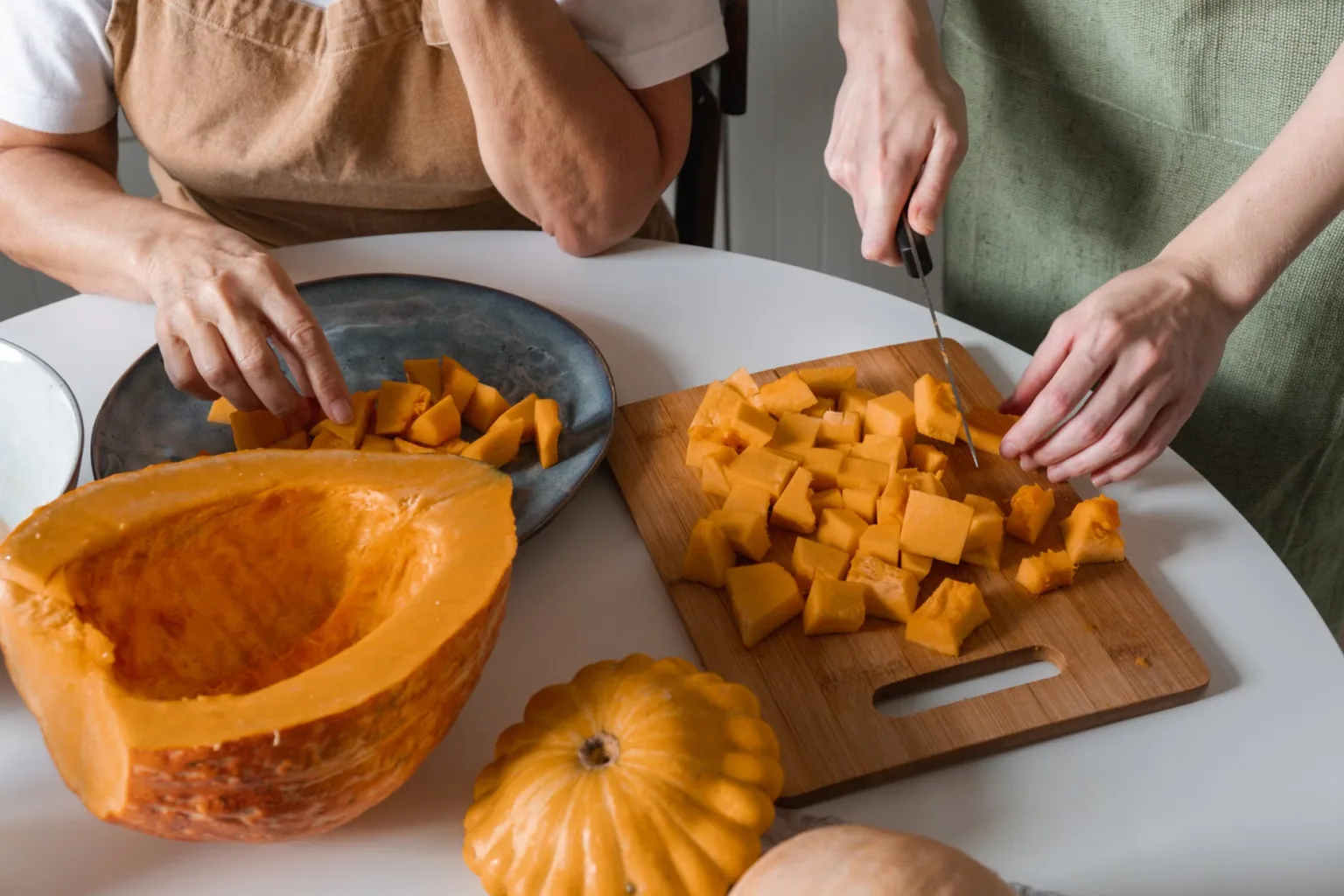
Peeled pumpkin is the edible flesh of a pumpkin after its outer skin has been removed. It is sold fresh, either as a whole peeled piece or cut up, so its size and shape can differ. The name covers many varieties: flesh can vary in color, sweetness and texture, from smooth to somewhat fibrous. In cooking, pumpkin is generally treated as a vegetable, although botanically it is the fruit of a plant in the cucurbit family. With the skin already removed, it is ready to cut or cook, but check for any remaining seeds or fibrous material and remove them if needed.
When to use it
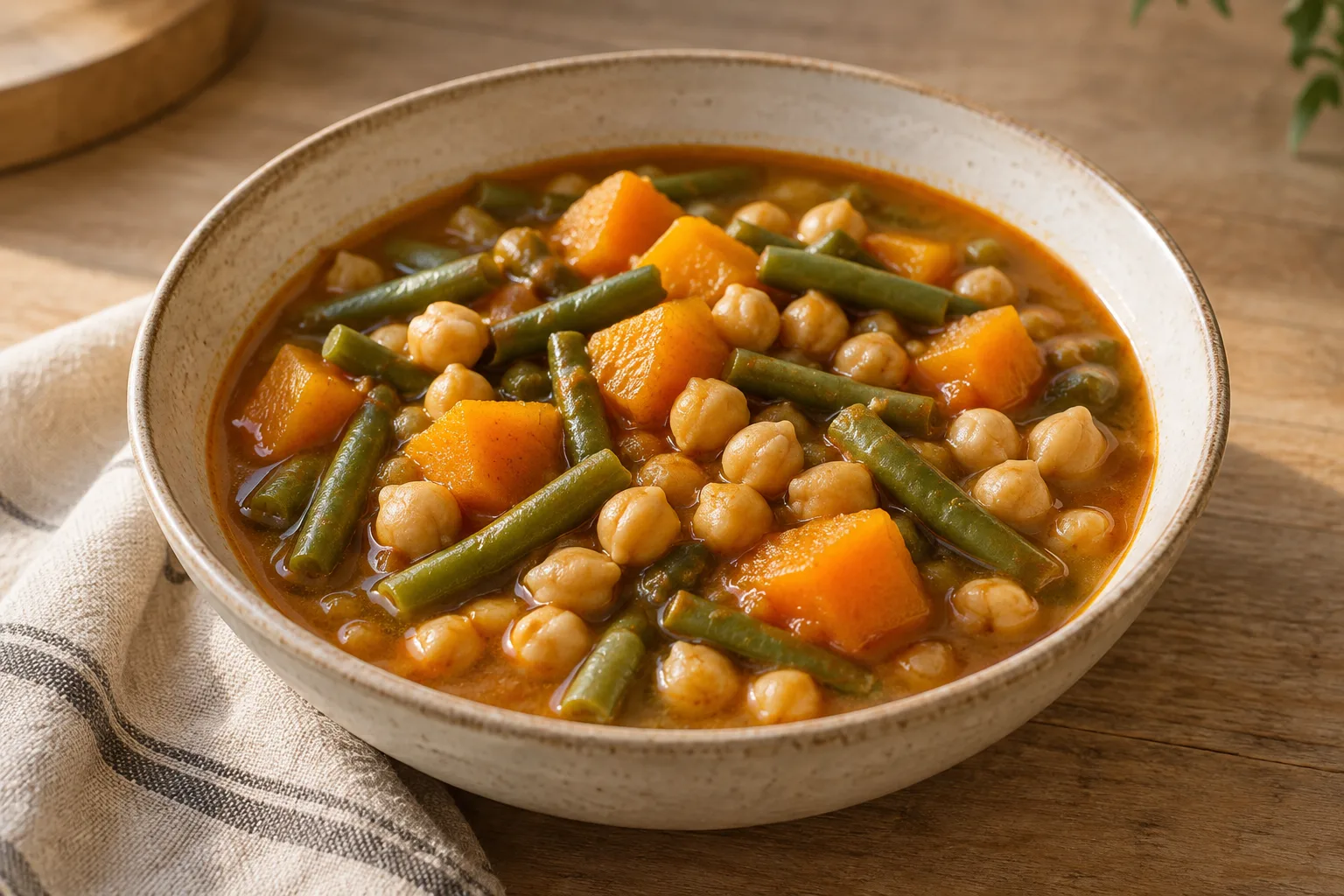
Use it when you want to skip peeling a whole pumpkin and need flesh for a savoury or sweet recipe. Cubes work in stews, sautés and dishes with legumes; roasted pieces can be served as a side or added to salads and tarts. Cooked and puréed pumpkin gives soups and purées a creamy texture. Varieties differ in flavor and texture, so the result will not be identical every time; choose according to whether you want flesh that is sweeter, firmer or more fibrous.
How to use it
First check the appearance and any package or seller information, then remove seeds or fibres that may remain. Cut the flesh into similarly sized pieces for more even cooking. Roast it to bring out sweet notes and develop a browned surface, sauté or stew it in pieces to help it hold its shape, or simmer and purée it for soup or mash. It can also be used in sweet preparations such as tarts, cakes or other baked goods. Ginger, curry and soy sauce suit savoury dishes; cinnamon, cardamom and nutmeg work in sweet or spiced recipes. Adapt the preparation to the variety and cut rather than assuming one cooking time fits all.
Flavour and texture
Pumpkin usually has a mild, distinctive and somewhat sweet flavor, but the profile varies among varieties. Its flesh can be firm enough to hold its shape when sautéed or stewed; when cooked and puréed, it can become smooth and creamy. Some varieties are more fibrous or sweeter than others, so color alone cannot fully predict the result. Roasting can bring forward sweet, toasted notes.
How to choose it
Choose peeled pumpkin with flesh that looks fresh and clear information about the product. If it is packaged, check the date and storage and use instructions; if it is sold unpackaged, ask the seller which variety it is and what guidance they provide. Variety matters because sweetness, color and texture can differ. Consider whether a whole peeled piece or pre-cut pieces suit your recipe, and check whether seeds or fibres remain and need removing.
Storage
The available evidence does not establish a universal storage duration or set of conditions for peeled pumpkin. Follow the date and storage and use instructions on the package or provided by the seller, and do not apply guidance for a whole, unpeeled pumpkin automatically to peeled flesh. If clear instructions are not provided, ask before storing or using it; this guide does not set a use-by period or temperature.
Substitutions
You can replace it with another edible pumpkin or peeled winter squash, bearing in mind that sweetness and texture may differ. In a roasted or puréed preparation, sweet potato can play a similar culinary role, but its flavor is distinct. Adjust the cut and method to the substitute’s texture rather than assuming the quantities or result will be exactly the same.
Common mistakes
Do not assume every peeled pumpkin has the same flavor, color or cooking behavior: variety matters. Avoid cutting pieces of very different sizes if you want them to cook evenly, and do not purée the flesh if you want to keep distinct pieces. A single cooking time will not suit every variety and cut. Finally, do not assume storage advice for a whole pumpkin applies to peeled flesh; follow the seller’s or package instructions.
Safety and allergens
Check and follow the date and storage and use instructions supplied with the product. Required information can differ according to whether it is sold packaged or unpackaged; if you need guidance that is missing, ask the seller. This guide does not provide a storage duration or an additional product-specific warning.
Culinary uses
- Base for soups, purées and creamy preparations
- Vegetable component in savoury dishes and desserts
- Roasted or cooked side dish
Recommended techniques
- Roasting
- Simmering or stewing
- Sautéing
- Mashing or puréeing
Pairs well with
- Ginger and curry spices
- Soy sauce
- Legumes such as chickpeas
- Cinnamon, cardamom or nutmeg
Frequently asked questions
Is peeled pumpkin a fruit or a vegetable?
Botanically, it is the fruit of a cucurbit plant; in cooking, it is commonly treated as a vegetable.
What can I cook with peeled pumpkin?
Roast, sauté or stew it in pieces, or cook and purée it for soups and smooth dishes. It is also used in sweet recipes.
Do all pumpkin varieties have the same texture?
No. The flesh may be smoother or more fibrous, and sweetness and firmness also vary. Keep those differences in mind when choosing it for a recipe.
Sources and review
Automatically researched, cross-checked and validated content. Sources consulted:
- En el etiquetado alimentario hay algunas menciones que son obligatorias eletiquetadocuentamucho.aesan.gob.es
- Calabaza: cocina fácil, casera, tradicional y barata con recetas de la abuela directoalpaladar.com
- Client Challenge doi.org
- Calabaza - Wikipedia, la enciclopedia libre es.wikipedia.org
- Calabaza: Propiedades, beneficios y usos en la cocina mercadosantamariadelacabeza.es
- ¿Qué es la Calabaza? Origen, beneficios y posología | Dieti Natura dieti-natura.es
- ¡Es tiempo de calabazas! - Concha y Toro conchaytoro.com
- Cómo cocinar calabaza: lo que debes saber para preparar la hortaliza más otoñal | El Comidista | Gastronomía | EL PAÍS elpais.com
- 13 recetas de calabaza para disfrutar del sabor dulce de este alimento en todas tus comidas trendencias.com
- Pepitas de calabaza: qué son, propiedades | Recetas Mexas recetasmexas.com
- Guía de tipos de calabaza: descubre sus variedades y usos | Recetas Nestlé recetasnestlecam.com
- Calabaza Entera Pelada | Chef Fruit chef-fruit.com
- Semillas de calabaza peladas crudas - Slow Shop granel slowshopgranel.es
- 70 recetas con calabaza muy saludables y fáciles de hacer nuevoestilo.es