- Category
- Dairy and eggs
- State
- Fresh
- Usual unit
- tablespoon
What it is
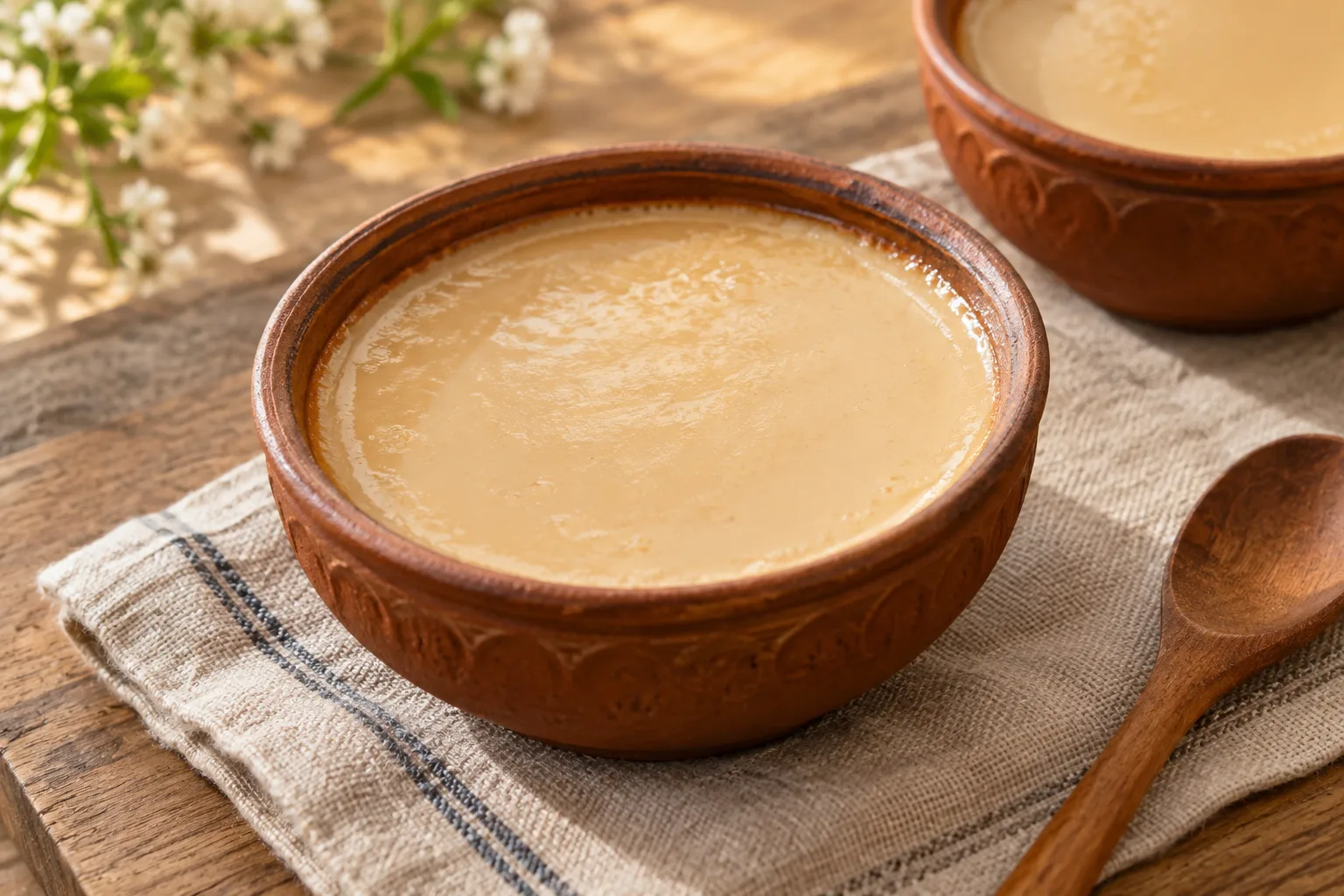
Yogurt is a dairy product made by fermenting milk with specific cultures. During fermentation, some of the milk’s lactose is converted to lactic acid; the resulting acidity helps coagulate milk proteins and create yogurt’s characteristic texture. Plain yogurt typically tastes tangy and does not necessarily contain added fruit or sugar. Its exact composition and consistency vary with factors such as the milk used and the production process. Some products receive heat treatment after fermentation, so check the label if retaining live cultures in the finished product matters to you.
When to use it
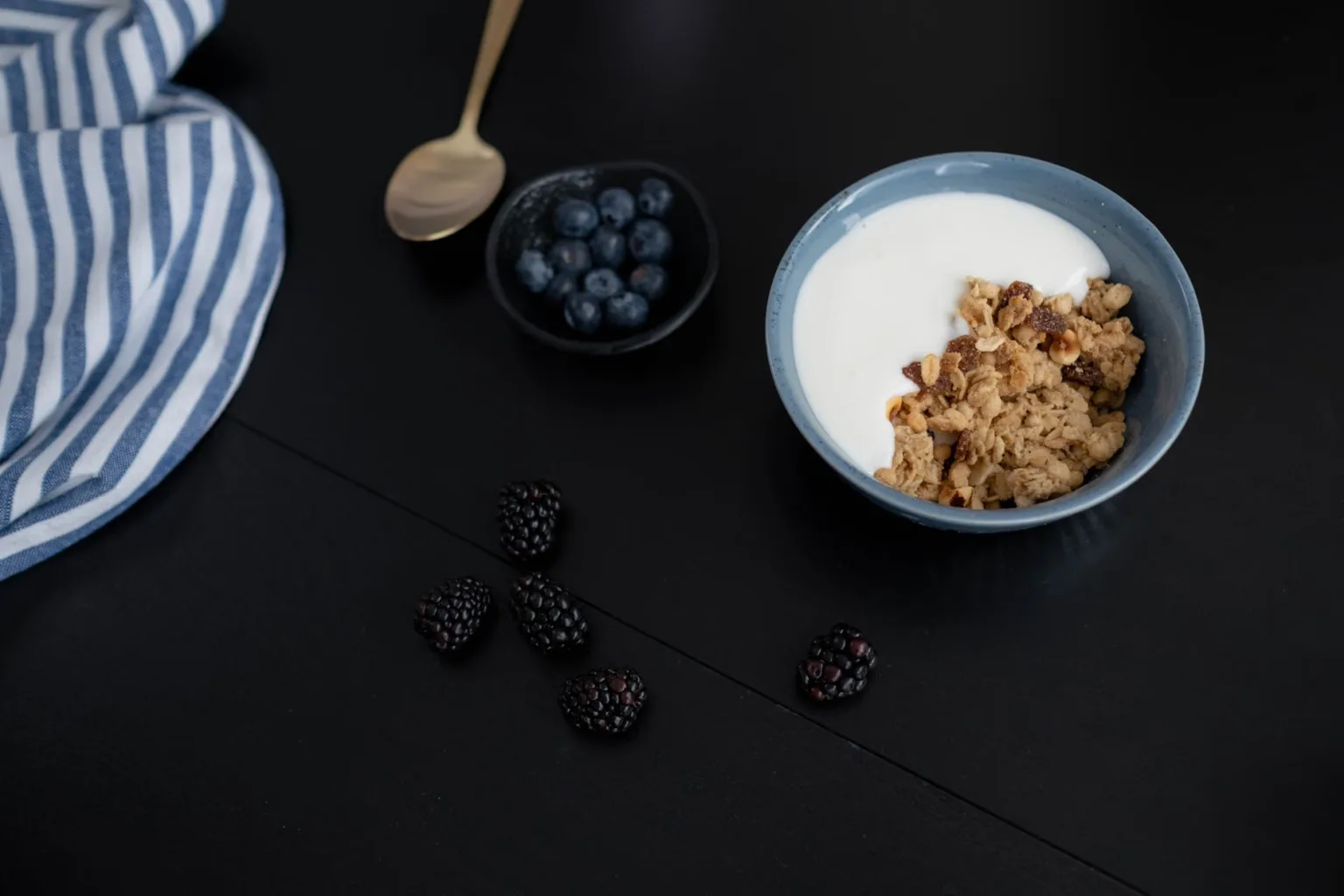
Use plain yogurt when you want a creamy base with a gently tangy flavor, or serve it simply with other ingredients. It pairs readily with fruit, cinnamon, or dark chocolate, and can be mixed with other components for a more uniform preparation. If a recipe calls for a thicker consistency, strained or Greek-style yogurt may be a better fit; for a more fluid mixture, plain drinkable yogurt may work well. Check the package if it matters that live cultures remain in the finished product.
How to use it
Stir the yogurt before serving if whey has separated on the surface; separation can occur and does not by itself mean the yogurt should be discarded. For a smooth mixture, whisk it or gradually blend it with the other ingredients. Serve it with fruit, cinnamon, or dark chocolate, or use it as a creamy base for a sauce or mixture. To make it thicker, strain it or choose plain Greek-style yogurt; for a thinner preparation, choose plain drinkable yogurt. Read the ingredients and package information: “plain” does not guarantee that every brand has the same composition.
Flavour and texture
Its flavor is generally milky, fresh, and tangy, with acidity that varies from product to product. The texture can range from smooth and creamy to thick or fluid. The type of milk and the production process affect consistency, and some yogurts may have whey separated on top. Plain products without added ingredients differ from versions containing fruit, sugar, or flavorings.
How to choose it
Read the product name and ingredient list to confirm that you are buying plain yogurt rather than a version with fruit, sugar, or other added ingredients. If you want live cultures in the finished product, check whether the package or label says so; not all yogurt retains them after processing. Yogurt can be made with milk of different compositions, so creaminess is not identical across varieties. Also check the allergen information provided on the package.
Storage
Follow the storage directions on the package and observe the date shown for the product. Keep the package closed and in the conditions specified by the manufacturer, and use a clean spoon when serving. Exact guidance can vary by product and packaging, so do not assume a universal storage period. If the package is damaged or the yogurt shows unusual signs, do not eat it; check the manufacturer’s information.
Substitutions
For more body, replace regular plain yogurt with strained or Greek-style plain yogurt; strained yogurt is generally thicker. For a more fluid mixture, plain drinkable yogurt may work better. These choices change texture and may change flavor, too. Check the label, since Greek-style and drinkable products may differ in ingredients and production.
Common mistakes
Do not assume that all plain yogurts have the same texture, composition, or live cultures in the finished product. Whey separation is not automatically a sign of spoilage: stir the yogurt if its appearance and package are otherwise normal. Do not overlook the ingredient list, allergen information, or the manufacturer’s storage and date instructions.
Safety and allergens
This product contains milk; people with a milk allergy or intolerance should check the package’s allergen information. Follow the product’s storage, use, and date instructions. If the package is open or damaged, or the yogurt looks unusual, do not consume it without first checking the manufacturer’s guidance.
Culinary uses
- Base cremosa para preparaciones dulces o saladas
- Ingrediente lácteo para salsas, mezclas y marinados
Recommended techniques
- Remover o batir para integrar una mezcla
- Añadir fruta u otros ingredientes y mezclar
- Escurrir para obtener una consistencia más espesa
Pairs well with
- Fruta fresca
- Canela
- Chocolate negro
Frequently asked questions
What does it mean for yogurt to have live cultures?
It means the finished product retains live cultures. Some yogurts receive heat treatment after fermentation, so check the label if this feature matters to you.
Why is there liquid on top of my yogurt?
Whey can separate on the surface. If the package and yogurt otherwise look normal, stir it to bring the mixture back together.
How can I make yogurt thicker?
Choose strained or Greek-style plain yogurt. Straining removes some whey and produces a thicker consistency.
Sources and review
Automatically researched, cross-checked and validated content. Sources consulted:
- En el etiquetado alimentario hay algunas menciones que son obligatorias eletiquetadocuentamucho.aesan.gob.es
- El yogur: Origen de sus ingredientes - Alimentando el cambio alimentandoelcambio.es
- ¿Qué es el yogur? Preguntas frecuentes - Yogurt in Nutrition yogurtinnutrition.com
- Agencia Española de Seguridad Alimentaria y Nutrición aesan.gob.es
- Preguntas y respuestas sobre el yogur - FOM ortegaygasset.edu
- Client Challenge doi.org
- FSHN12-01s/FS198: De compras para la salud: Yogur ask.ifas.ufl.edu
- The Microbiome • The Nutrition Source nutritionsource.hsph.harvard.edu
- A comprehensive review on bioactive peptides derived from ... digitalcommons.unl.edu
- Treball Final de Grau diposit.ub.edu
- K-State Graduate Research, Arts, and Discovery (GRAD) ... k-state.edu
- Productos cárnicos fermentado-curados funcionales y ... dugi-doc.udg.edu
- UTILIZACIÓN DE SUERO ÁCIDO LÁCTEO EN LA ... scholar.uprm.edu
- Evaluación de la viabilidad de Lactobacillus casei libre y ... bdigital.zamorano.edu