- Category
- Drinks
- State
- Liquid
- Usual unit
- ml
What it is
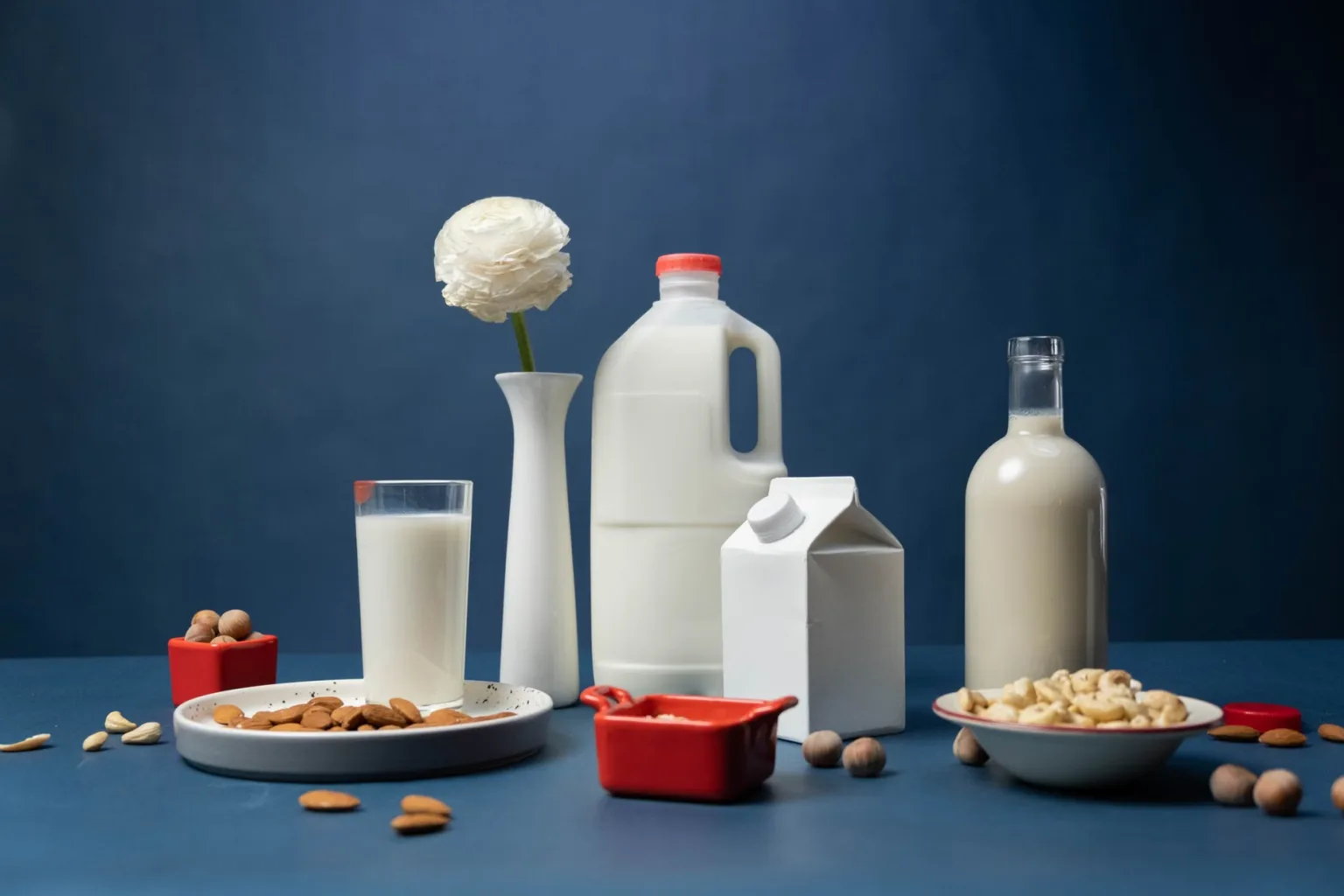
Plant-based milk is a liquid product made from one or more plant sources, such as grains, legumes, nuts or seeds, usually processed or blended with water. Common varieties include soy, oat, rice and almond drinks, as well as drinks made from other seeds and combinations. It is not one uniform product: the plant base, the amount of that ingredient and any added ingredients can all affect the result. Some versions are unflavored; others contain sugar, flavorings or additional ingredients, and some are fortified with vitamins or minerals. It is often used instead of dairy milk in drinks and recipes, but varieties should not be assumed to behave identically or to have equivalent compositions. (4185, 4186, 4189, 4190, 4191, 4194)
When to use it
Use it with coffee, tea, cocoa or cereal, or as a liquid in smoothies, batters, desserts, soups, purées and sauces. Choose an unflavored, unsweetened variety when you want to avoid added sweetness or are making a savory dish. For coffee or recipes where foam and body matter, look for a texture suited to the result; barista versions are formulated to foam. In sweet recipes, a flavored or sweetened variety may work when its flavor fits the dish. Always check the plant base and the ingredients in the specific product. (4185, 4187, 4195, 4200)
How to use it
Shake the package before serving if the label or the appearance of the product suggests that its components may have separated; formulations differ. Serve it on its own or add it to coffee, tea, cocoa and cereal. In cooking, use it as a liquid in batter, smoothies, soups, purées or sauces, choosing the variety for the flavor, sweetness and texture you want. For savory dishes, an unsweetened drink without mismatched flavorings is usually easier to work with. In baking, the sweetness and aroma of the base may complement a recipe or change its flavor, so check them before replacing another liquid. If you need more body, choose a creamier variety or a plant-based cream, which is more concentrated than a drink. (4189, 4195, 4200)
Flavour and texture
Flavor and texture vary considerably with the base and formulation. Oat drinks can be creamy and mildly sweet; rice drinks are often mild and sweet; soy is described as fairly neutral, while nut-based drinks reflect the flavor of their base. Some products are light, while others are more substantial. Flavored or sweetened versions have a different profile from unflavored ones. (4185, 4187, 4195, 4200)
How to choose it
Start with the intended use. For savory dishes, coffee or a subtle flavor, look for an unsweetened variety without flavorings that would not suit the recipe. For foam or extra body, compare textures and consider a barista version. Read the product name, ingredient list and allergen information: the base may be soy, a grain, a nut or a seed, and formulations vary. Check for sugar, flavorings or fortification rather than assuming all plant-based drinks are alike. (119, 4195)
Storage
Follow the storage and use instructions on the package; requirements can depend on the product and how it is presented. Check the directions for after opening as well, since not all drinks necessarily have the same instructions. Keep the use-by or best-before information available and do not use the product if you cannot verify that it has been stored as directed by the manufacturer. (119)
Substitutions
Plant-based drinks can replace dairy milk in many drinks and recipes, but the flavor and texture may differ. Soy, oat and almond drinks are used in sweet and savory cooking; rice drinks can add more sweetness, and flavored or sweetened versions may be out of place in a savory sauce. Choose according to the recipe and check whether you need a more neutral or creamier product. (4195, 4200)
Common mistakes
Treating all plant-based drinks as interchangeable can change a recipe’s sweetness, flavor and consistency. Another common mistake is using a sweetened or flavored variety in a savory dish without considering the effect, or assuming the base named on the front describes every ingredient. Read the label and choose for the intended use. (119, 4195, 4200)
Safety and allergens
Check the package ingredient list and allergen information: plant-based drinks can have different bases and ingredients. Follow the manufacturer’s specific instructions for storage and use after opening. (119)
Culinary uses
- Bebida para tomar sola o acompañar café y otras bebidas calientes
- Líquido para recetas dulces y saladas
Recommended techniques
- Añadir a bebidas calientes o frías
- Incorporar en masas, cremas, purés y salsas
Pairs well with
- Café, cacao y té
- Avena, cereales, fruta y preparaciones de repostería
- Verduras, purés y salsas saladas con una bebida sin endulzar
Frequently asked questions
Do all plant-based drinks taste the same?
No. Flavor and texture depend on the base, the proportion of plant ingredient and any added ingredients. Rice, soy and oat drinks need not give the same result. (4185, 4195)
Can I use a plant-based drink in a savory sauce?
Yes. Choose an unsweetened variety without flavorings that would not suit the dish; the flavor and body vary with the base. (4195, 4200)
What should I check before buying one?
Check the plant base, ingredient list, allergen information, sweetness and storage instructions. The label helps distinguish products that may otherwise seem similar. (119)
Estimated nutrition
- Fat
- 2.25 g
- Saturates
- 0.28 g
- Carbohydrate
- 7.32 g
- Sugars
- 7.32 g
- Fibre
- 0 g
- Protein
- 3.38 g
- Salt
- 0.1 g
Sources and review
Automatically researched, cross-checked and validated content. Sources consulted:
- En el etiquetado alimentario hay algunas menciones que son obligatorias eletiquetadocuentamucho.aesan.gob.es
- Tipos de bebidas vegetales: ¿Cuál elegir y qué beneficios tienen? herbolarionavarro.es
- ¿Qué Son Las Bebidas Vegetales? | Gullón gullon.es
- Tipos de bebida vegetal: cómo elegir la mejor para ti academianutricionydietetica.org
- Bebidas o leches vegetales | CreatiVegan.net creativegan.net
- Las bebidas vegetales | Consumer consumer.es
- Bebidas vegetales: qué son, cuántos tipos hay y cuál es su consumo en España huleymantel.com
- Tipos de bebidas vegetales y sus propiedades naturitas.es
- Leche vegetal - Wikipedia, la enciclopedia libre es.wikipedia.org
- 9 Bebidas Vegetales: Análisis, Beneficios y Cómo Usarlas okeymas.es
- Todo lo que debes saber sobre las bebidas vegetales - Ametller Origen ametllerorigen.com
- Cómo cocinar con bebidas vegetales | Te lo llevas fresco | El Comidista | EL PAÍS elpais.com
- Maridaje restaurante: Cómo potenciar tu experiencia gastronómica - BlogQPack puntoqpack.com
- Maridajes saludables: qué beber con tapas ecológicas - Astrid Tapería Orgánica taperiaorganica.com
- ¿Cómo hacer bebidas vegetales? Descubre todos los métodos - Blog Conasi conasi.eu
- Tipos de Maridaje: de afinidad o contraste | Bartalent Lab bartalentlab.com
- Cómo sustituir los lácteos | Gastronomía Vegana gastronomiavegana.org