- Category
- Vegetables
- State
- Fresh
- Usual unit
- g
What it is
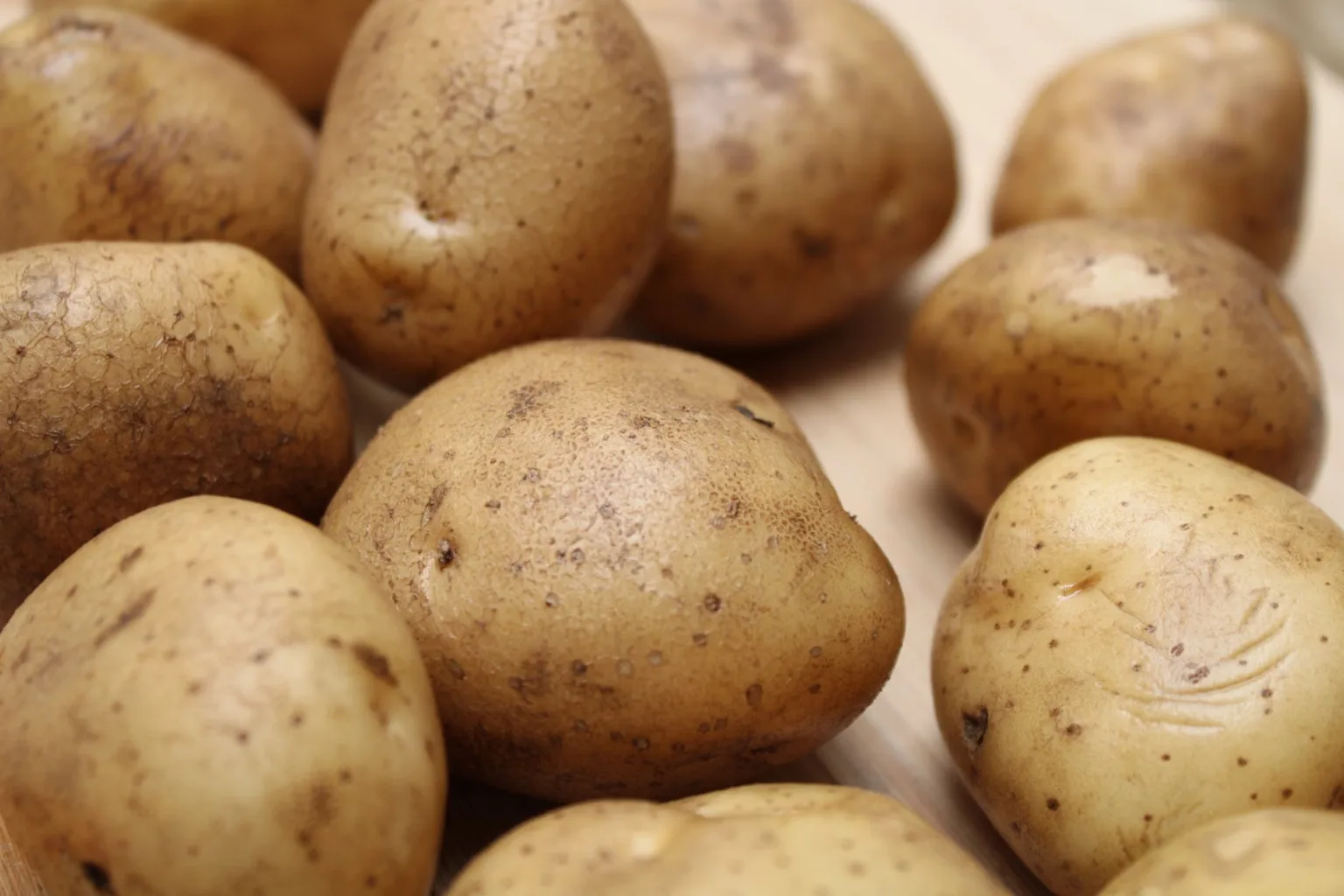
A potato is an edible tuber that grows underground. There is no single shape or texture: varieties differ in size, shape, colour and cooking characteristics. It helps to consider the dish before choosing one: some varieties are described as firm and suited to holding their shape, while others are recommended for mash or stews. In the kitchen, a potato can be the main ingredient, accompany other foods or add body to soups and sauces. This profile covers fresh potatoes, not potato starch, flour, frozen products or preserved products, which behave differently and need their own guidance.
When to use it
Use potatoes when you want a straightforward base for a meal, a side dish, or an ingredient that can add texture to soups and stews. Boiled potatoes can be used in salads or mashed; roasted or baked potatoes work as a side and can also be stuffed; fried potatoes can be served as a snack or accompaniment. Variety matters: a potato that holds its shape may suit salads and intact pieces, while a creamier texture is useful for mash. No seasonal months are listed because the supplied sources do not document a calendar of availability.
How to use it
Wash potatoes before preparing them. Choose a method based on the texture you want and the role the potato will play: boil it whole or cut into pieces for a side, a salad or mash; roast or bake it whole, sliced or cubed; or cut and fry it for a crisp preparation. Potatoes can add body to soups and stews and can also be the main ingredient in a dish. Match the cut and cooking method to the variety and desired result rather than assuming all potatoes behave alike. Add milk, butter, cheese, oil or seasonings only when they suit the recipe and the needs of the people eating.
Flavour and texture
Potatoes are often described as mild, though flavour can vary between varieties. Their texture and cooking behaviour also differ: some hold their shape better, while others become creamier or break down more readily. Cooking changes the experience: boiled potatoes can become tender, while roasting or frying can create a browned or crisp surface, depending on the preparation. Appearance or colour alone does not determine the result, so choose a variety to suit the dish.
How to choose it
Choose a variety that suits the dish: firm potatoes are described as useful for salads and preparations where the pieces should hold their shape, while creamier varieties are recommended for mash or stews. Potatoes come in different sizes, shapes and colours, so there is no single appearance that defines them all. Check the product and its label if it is packaged; if texture matters to the recipe, ask which variety is being sold. The available sources do not provide specific freshness criteria or a detailed list of defects to guide selection more precisely.
Storage
The supplied evidence does not set a specific shelf life or storage conditions for fresh potatoes, so it would not be sound to promise a time period or temperature. For a packaged product, follow the storage directions on its label. For loose fresh potatoes, ask the retailer or a local authority for guidance, and do not assume that directions for frozen, dried or processed products also apply to fresh potatoes.
Substitutions
The sources do not establish a universal substitute for fresh potatoes. Potato starch can replace wheat starch in certain preparations, but that is not the same as replacing a whole tuber in a recipe. Potatoes are also described as being mixed with cereal flour to make bread; this is a combination of ingredients, not a direct equivalent. If changing the potato in a particular recipe, choose according to the function you need and check the result.
Common mistakes
A common mistake is treating all varieties as though they have the same texture and can be used interchangeably in every recipe. A potato that holds its shape will not necessarily make the same mash as a creamier one. Avoid automatically applying directions for a processed potato product to fresh potatoes: the sources do not set universal cooking times, temperatures or storage instructions for every form. Choose the preparation first and then the variety, and do not assume an exact substitute when texture matters.
Safety and allergens
The available sources provide no official warning specific to fresh potatoes. For packaged potatoes, follow the storage and use directions on the label; guidance can differ by product presentation. If you are unsure about a product, ask the retailer or a food-safety authority.
Culinary uses
- guarnición
- ingrediente principal
- espesante
Recommended techniques
- hervir
- asar u hornear
- freír
- hacer puré
Pairs well with
- carne
- pescado
- queso
- ajo y hierbas aromáticas
Frequently asked questions
Is a potato a root?
It is described as an edible tuber that grows underground. This profile classifies it as a vegetable and distinguishes fresh potatoes from derived starch or flour.
Which kind of potato is suitable for mash?
The sources describe creamier or flourier varieties as suitable for mash. Since varieties differ by location, ask which available potato has that characteristic.
How can I cook potatoes?
Documented methods include boiling, roasting, baking, frying and mashing. Choose according to the texture and use you want.
Estimated nutrition
- Fat
- 0.34 g
- Saturates
- 0.09 g
- Carbohydrate
- 83.1 g
- Sugars
- 3.52 g
- Fibre
- 5.9 g
- Protein
- 6.9 g
- Salt
- 0.14 g
Sources and review
Automatically researched, cross-checked and validated content. Sources consulted:
- En el etiquetado alimentario hay algunas menciones que son obligatorias eletiquetadocuentamucho.aesan.gob.es
- ¿Por qué la muerte es origen de miedos y tabúes? doi.org
- Client Challenge doi.org
- Gastronomía del Perú - Wikipedia, la enciclopedia libre es.wikipedia.org
- Cocina de la papa - Wikipedia, la enciclopedia libre es.wikipedia.org
- VARIEDADES DE PATATA DE SIEMBRA CERTIFICADA mapa.gob.es
- Agencia Española de Seguridad Alimentaria y Nutrición aesan.gob.es
- La Papa en la Cocina: Historia y Mil Usos del Tesoro Andino | Club Susazón clubsusazon.com
- Papa peruana: variedades, historia y platos típicos del Perú lamurallarestaurante.pe
- Datos interesantes sobre la papa - Gustolatino Gastronomia gustolatinogastronomia.com
- Tipos de papa: celebrá su Día Internacional | Recetas Nestlé recetasnestle.com.ar
- Papas Nativas ~ "Entre Sabores y Recuerdos: Un Viaje por la Gastronomía del Mundo" borekdys.com
- métodos de cocción en seco de la papa como alternativa ... repositorio.utn.edu.ec
- Horticultura Revista de Industria Distribución y ... mapa.gob.es
- Conocé los tipos de papas y su preparación | Recetas Nestlé recetasnestle.com.ar