- Category
- Sauces and condiments
- State
- Liquid
- Usual unit
- ml
What it is
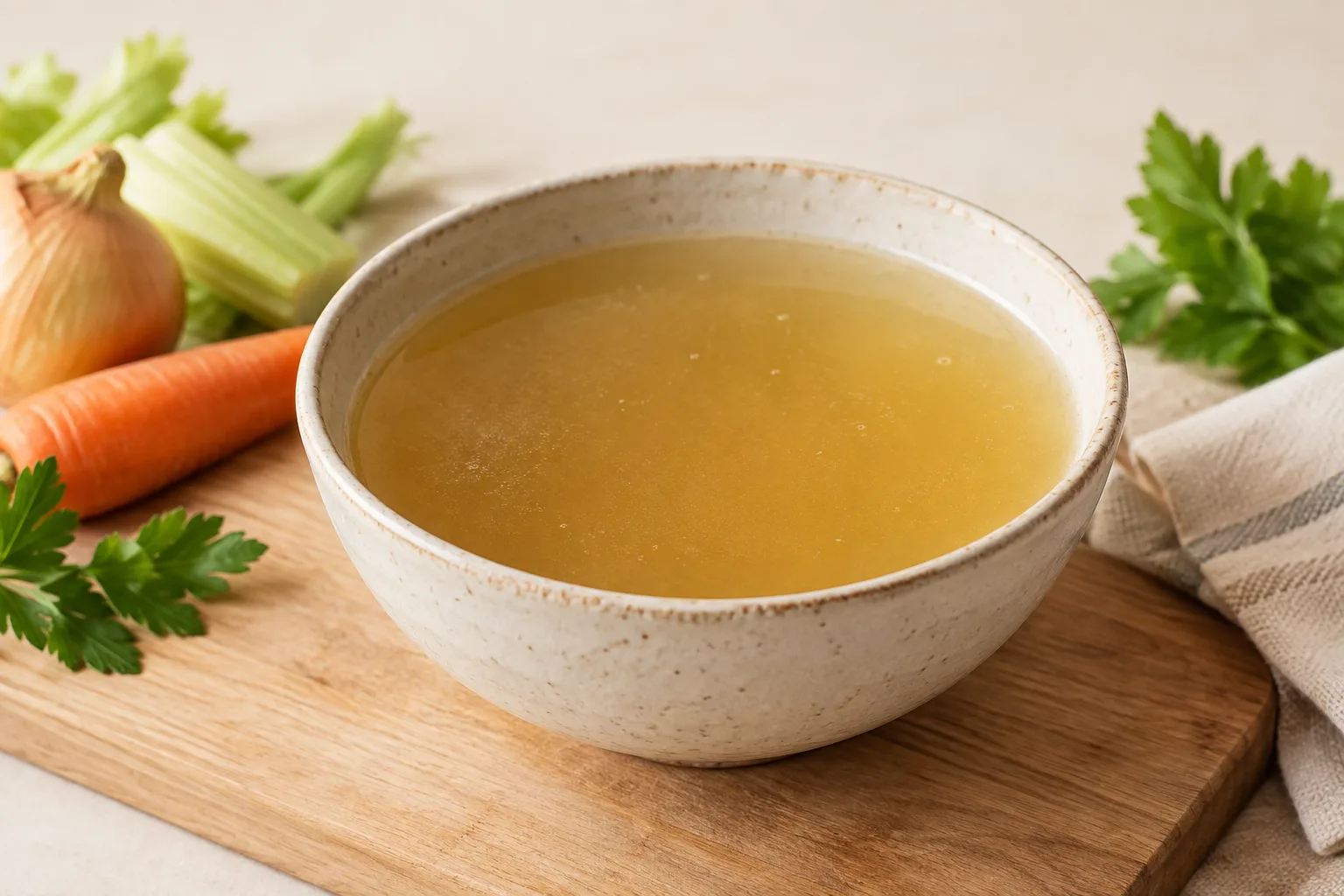
Poultry stock is the liquid produced by simmering poultry meat or parts, often with vegetables and seasonings, in water. In everyday use, the name can cover homemade preparations and commercial products, which do not necessarily share the same ingredients or concentration. You can find ready-to-use liquid stock as well as concentrated formats, such as cubes, that are dissolved in water. Do not assume that every product has the same flavor, saltiness or ingredient list: check the package and follow its directions. Poultry stock is used as an ingredient and can also be served as soup or consommé.
When to use it
Use poultry stock to add flavor to soup, consommé, cream soup, sauces or stews, or whenever a recipe allows stock in place of water. It can also provide the cooking liquid for dishes made with rice or pasta. Choose ready-to-use liquid stock for convenience; a concentrated format can be handy when you want to prepare a smaller amount. Commercial products vary in composition, so check the label before adding salt or other seasonings, especially if the stock will reduce as it cooks.
How to use it
Measure the amount required and add the stock wherever a recipe calls for liquid, or heat it if serving it as consommé. In soups and stews, use it as part of the liquid base and adjust any additional water to achieve the consistency you want. For rice, pasta or other dishes cooked in liquid, stock can be used when the recipe allows. If using a cube or another concentrate, dissolve it according to the package directions; the required ratio depends on the product. Taste before adding salt, since some prepared stocks are salty. If your recipe includes raw poultry, handle it hygienically and cook it safely; ready-to-use stock does not replace proper cooking of those ingredients.
Flavour and texture
Flavor depends on the poultry, vegetables, seasonings and salt used, as well as the product's concentration. It may be mild or more robust and savory. Liquid stocks are generally ready to pour; concentrated products must be dissolved and can taste especially strong if too much is used. The liquid may be clear or cloudy, and its fat content can vary. Poultry stock does not have one universal flavor or texture.
How to choose it
Compare the product name, ingredient list and preparation directions. Check whether the product is ready-to-use liquid stock or a concentrate that must be diluted; they are not interchangeable in equal volumes without following the maker's directions. Check the package for allergen information and storage instructions. If you want to control saltiness, compare labels and taste the stock before seasoning your recipe.
Storage
Always follow the package's storage instructions, which can differ by format and presentation. After opening, check the label for how to store the product and how long to use it; do not assume that commercial and homemade stock share the same storage conditions. For homemade stock, a university extension guide recommends keeping it refrigerated for up to four days or frozen for up to four months in covered containers. Do not store an opened product in a way that conflicts with the manufacturer's directions.
Substitutions
Homemade poultry stock can replace canned chicken stock in a recipe. Ready-to-use commercial stock or stock reconstituted from cubes can also be used, but follow the product's dilution directions and taste before adding salt. Since concentration and ingredients vary across brands and formats, adjust the amount of liquid and seasoning to suit the recipe and the result you want.
Common mistakes
Do not mistake ready-to-use stock for a concentrate: follow the stated dilution and do not substitute volumes blindly. Another common mistake is adding salt before tasting, since some commercial stocks are already salty. Do not assume all brands have the same ingredients or allergens; check the label and follow its storage directions.
Safety and allergens
Check the label for ingredients and allergen information, and follow the manufacturer's storage and safe-use directions. If making stock with raw poultry, use hygienic handling and cook the meat safely; stock does not make undercooked poultry safe.
Culinary uses
- Base líquida para sopas y consomés
- Líquido de cocción y aporte de sabor para platos salados
- Base para salsas y cremas
Recommended techniques
- Usar directamente o calentar antes de servir
- Añadir durante la cocción para sustituir parte o toda el agua indicada en una preparación
- Ajustar el sazonado después de incorporar el caldo
Pairs well with
- Pollo y otras carnes de ave
- Cebolla, zanahoria y apio
- Hierbas como perejil, tomillo, romero o laurel
- Arroz, pasta y verduras
Frequently asked questions
Is poultry stock the same as chicken stock?
Poultry stock can be made with chicken or other poultry. The recipe or product label tells you which ingredients are used.
Can homemade stock replace canned stock?
Yes. A university cooking guide says homemade chicken stock can replace canned chicken stock in recipes. Adjust the seasoning to taste.
Should I add salt when using prepared stock?
Taste it first and check the label. Some commercial stocks are already quite salty, so extra salt may not be needed.
How should I store homemade stock?
A university extension guide recommends refrigerating it for up to four days or freezing it for up to four months in covered containers. Follow the label for commercial products.
Sources and review
Automatically researched, cross-checked and validated content. Sources consulted:
- En el etiquetado alimentario hay algunas menciones que son obligatorias eletiquetadocuentamucho.aesan.gob.es
- Caldo de pollo y pollo cocido - Spend Smart Eat Smart spendsmart.extension.iastate.edu
- aprovechamiento COOKING BATCH cocina de y Silvia antón | maite lópez unav.edu
- Vamos a Conservar Alimentos: Carnes extension.psu.edu
- 209 revista del comité científico nº aesan.gob.es
- ¿Por qué la muerte es origen de miedos y tabúes? doi.org
- Cooking Food Storage | USU extension.usu.edu
- The Essential Glossary of Cooking Terms for the Culinary Arts - Escoffier escoffier.edu
- Fichas de Difusión de la Condicionalidad Conservación de las aves silvestres mapa.gob.es
- Safe Handling of Veal | Home & Garden Information Center hgic.clemson.edu
- Temperatures - Ratio Guide - LibGuides at Conrad N. Hilton Library library.culinary.edu
- Caldo avá - Wikipedia, la enciclopedia libre es.wikipedia.org
- 🥇Orígenes del Caldo de Pollo: Un Viaje a través de la Historia y Tradiciones Culinarias reyvinoblanco.com
- Receta de Caldo de ave recetascomidas.com
- Caldo de ave beneficios | OCU ocu.org
- Caldo de ave casero: receta tradicional y sabrosa solorecetas.com
- ACEITE Y SAL: CALDO DE AVE O POLLO aceiteysalrosa.blogspot.com