- Category
- Vegetables
- State
- Paste
- Usual unit
- cup
What it is
Pumpkin purée is cooked pumpkin flesh blended or mashed into a smooth or slightly textured mixture. To make it, remove the seeds, cook the flesh until tender, drain excess liquid if needed, and purée it. It can be homemade or sold in a package, so check whether the product is plain purée or a preparation with added ingredients. Pumpkin variety and cooking method affect flavour, colour and moisture, meaning batches do not all have exactly the same consistency. It is a prepared vegetable ingredient, not a spice blend and not necessarily a seasoned, ready-to-eat dish.
When to use it
Use pumpkin purée when a recipe calls for cooked, mashed pumpkin: it can add body to soups and creamy dishes or bring pumpkin into pancake batter and pudding-style desserts. In a recipe calling for solid-pack canned pumpkin, purée can be used in the same amount. Since moisture varies, check the recipe’s consistency rather than adding extra liquid automatically. Plain purée is also convenient when you want cooked pumpkin ready to mix in, instead of preparing and mashing a whole pumpkin as part of the dish.
How to use it
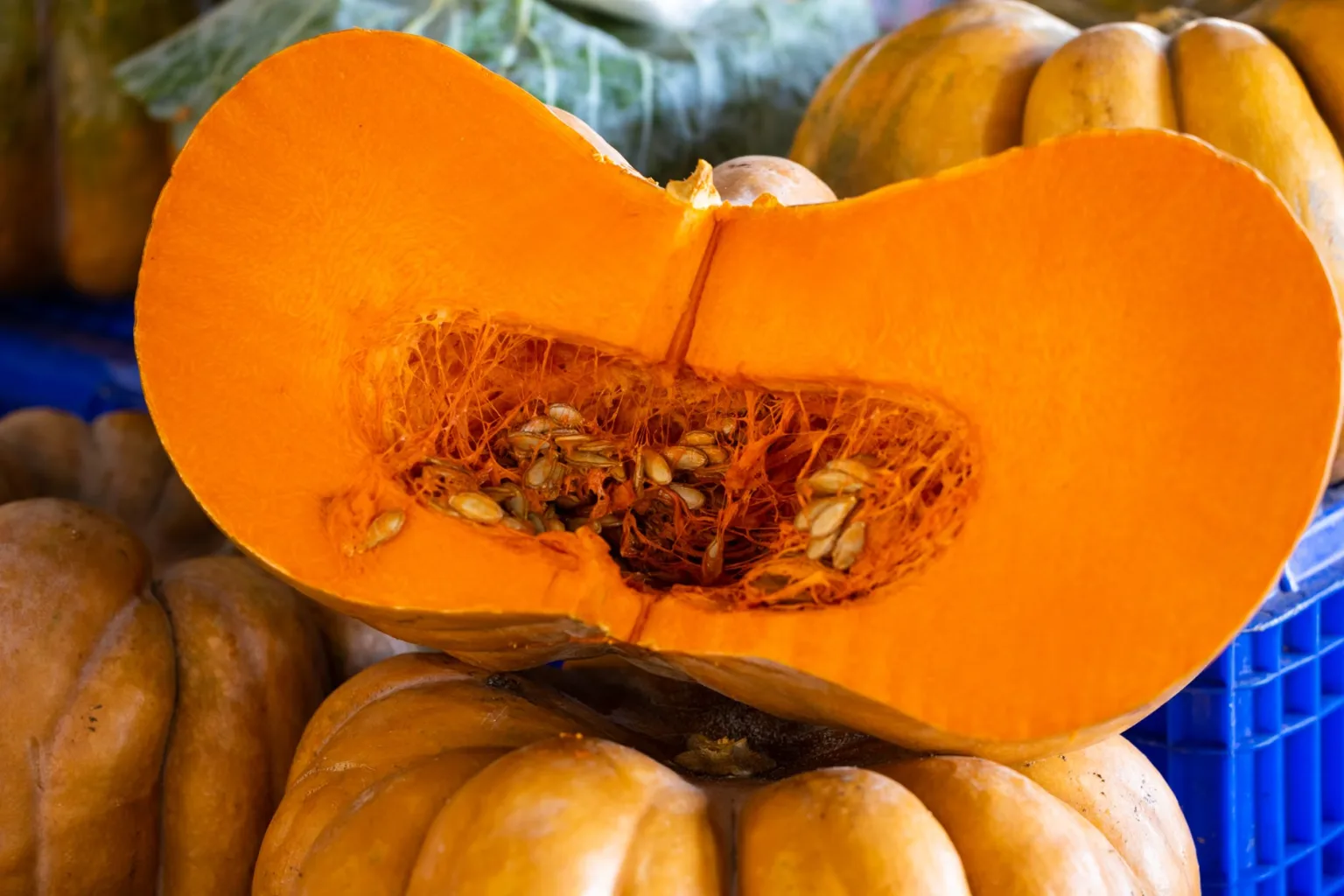
To make purée at home, wash the pumpkin, cut it open, and remove the seeds and fibrous strands. Cook it—by baking, steaming or boiling, for example—until the flesh is tender. Let it cool enough to handle, separate the flesh from the skin where needed, and mash or blend to the texture you want. Drain excess liquid if the purée is too wet for your recipe. Stir it into soups, pancake batter or pudding-style preparations, checking the consistency before adding more liquid. To freeze it, use rigid freezer-safe containers and leave headspace, or use freezer bags and press out excess air; seal and freeze.
Flavour and texture
Flavour and texture depend on the pumpkin variety and its balance of water and solids. Purée is generally soft and thick, but it can be wetter or slightly fibrous. Cooked pumpkin may have a noticeable sweetness, though its intensity is not identical in every batch. Blend thoroughly for a smoother mixture; if a recipe needs more body, check the consistency before adding liquid.
How to choose it
When buying packaged purée, check the product name to confirm it is pumpkin purée and read the ingredient list, allergen information, and storage and use instructions. Labels may describe different products, so do not assume plain purée and a seasoned preparation are interchangeable. If making your own, choose a firm, mature pumpkin; winter squash should have hardened skin and mature flesh.
Storage
For longer storage, freeze the purée in rigid freezer-safe containers, leaving about 1.25 cm (½ inch) of headspace. Alternatively, portion it into freezer bags, press out excess air, and lay the bags on a tray while they freeze. Once fully frozen, the bags can be stacked. The available guidance supports these freezing steps; it does not give a refrigerated storage duration here, so follow the label instructions for a purchased product.
Substitutions
The available guidance allows pumpkin purée to replace solid-pack canned pumpkin in the same amount, and vice versa. This equivalence refers to the stated quantity; it does not guarantee that every product has identical moisture or texture. If homemade purée is particularly watery, drain off excess liquid before adding it so the dish can keep its intended consistency.
Common mistakes
Do not confuse plain purée with pie filling or another mixture that already contains sugar or spices: check the product name and ingredients. Another common mistake is adding liquid without considering the purée’s moisture, which varies between batches. When freezing, do not fill rigid containers to the rim, and remember to press excess air out of freezer bags.
Safety and allergens
When making purée at home, use clean hands, surfaces and utensils, and wash fresh pumpkin before cutting or cooking it. For purchased purée, follow the storage and use directions on its label.
Culinary uses
- Base para sopas, cremas y purés
- Ingrediente húmedo para masas, tortitas y postres
Recommended techniques
- Cocer la calabaza hasta que esté tierna y triturarla
- Hornear, cocer al vapor o hervir la calabaza antes de hacer puré
- Congelar el puré en recipientes aptos para congelador
Pairs well with
- Masas para tortitas
- Preparaciones tipo pudín
Frequently asked questions
Can homemade purée replace canned pumpkin?
Yes. For a recipe calling for solid-pack canned pumpkin, homemade purée can be used in the same amount. Check its moisture and drain excess liquid if needed.
How do I make pumpkin purée from scratch?
Remove the seeds, cook the pumpkin until tender, then mash or blend the flesh. If it is too wet for your recipe, drain off excess liquid before using it.
Can pumpkin purée be frozen?
Yes. Penn State’s guidance describes freezing it in rigid freezer-safe containers with headspace, or in freezer bags with excess air pressed out.
Sources and review
Automatically researched, cross-checked and validated content. Sources consulted:
- En el etiquetado alimentario hay algunas menciones que son obligatorias eletiquetadocuentamucho.aesan.gob.es
- Vamos a Conservar Alimentos: Calabazas y Calabacines extension.psu.edu
- ¿Por qué la muerte es origen de miedos y tabúes? doi.org
- Calabaza: Propiedades, beneficios y usos en la cocina mercadosantamariadelacabeza.es
- HS1495/HS1495: Harvest and Handling of Calabaza (Tropical Pumpkin) ask.ifas.ufl.edu
- Calabazas y Calabacines (Spanish) - National Center for Home Food Preservation nchfp.uga.edu
- Puré de calabaza de invierno healthyliving.extension.wisc.edu
- Calabaza - Spend Smart Eat Smart spendsmart.extension.iastate.edu
- Pumpkins | Illinois Extension | Illinois web.extension.illinois.edu
- Beneficios de la calabaza- Puré de calabaza y calabacín. boticonsejos.es
- Descubra usos creativos del puré de calabaza en sus recetas | Ferwer ferwer.es
- Receta de puré de calabaza para hacer en casa hosteleriasantander.com
- Puré de calabaza cremoso casero - Recetas Fáciles ✔️ recetasfaciles.com.es
- Puré de calabaza, la receta del otoño - Corazón de Caramelo corazondecaramelo.es