- Category
- Nuts and seeds
- State
- Dry
- Usual unit
- g
What it is
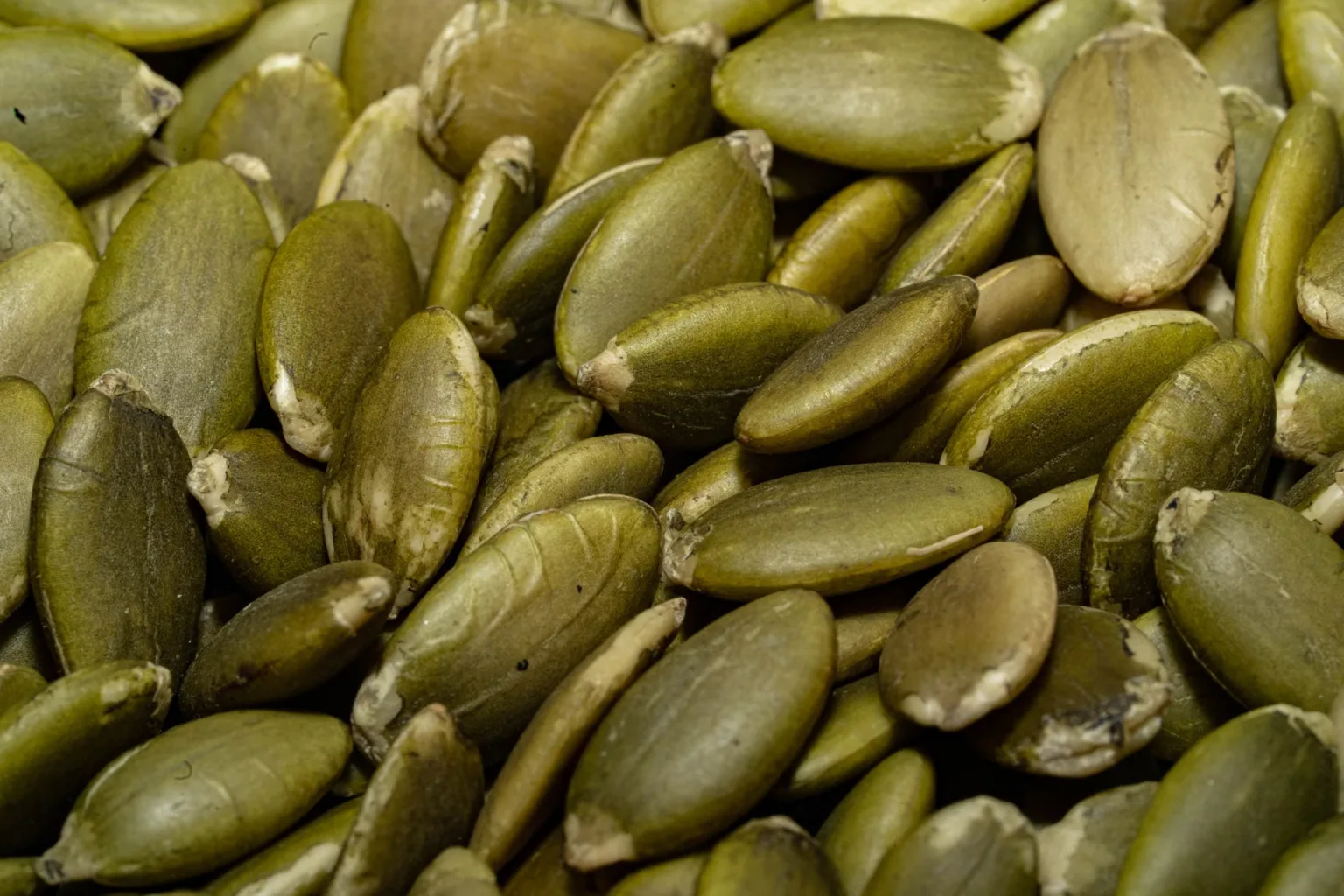
Pumpkin seeds, also called pepitas, are the edible seeds found inside pumpkins and other squashes. Depending on the variety and product format, they may be sold with a pale outer shell or peeled, with the green inner seed exposed. They are available whole, raw or toasted, and are also sold in seed mixes. Differences in size, shape and color are normal and do not by themselves require a different culinary use. Pumpkin seeds can be eaten as a snack or added to recipes for crunch. When ground or blended, they can form a paste, contribute to a sauce, or help thicken certain preparations. Check the packaging to see whether the seeds are shelled, seasoned or ready to use as sold.
When to use it
Use pumpkin seeds when a dish would benefit from a crisp contrast: sprinkle them over salads, soups, vegetable purées, grain bowls or yogurt. Toasted seeds also work as a snack or as a finishing touch; raw seeds are convenient for adding to mixtures and doughs that will be cooked with other ingredients. If you want a thicker sauce or a more cohesive paste, grind the seeds and blend them with the other components. They can also be incorporated into bread, crackers and other baked goods. Choose the format to suit the recipe: use shelled seeds when you want to add them directly, and check whether seeds with their outer shells are intended to be eaten as supplied.
How to use it
Add whole or chopped seeds to salads, soups, vegetable purées, yogurt, porridge, granola and grain dishes for a crisp finish. They can be mixed into bread and cracker dough or sprinkled over baked goods. For a more toasted character, toast them lightly in a pan or oven, watching carefully to prevent scorching, and let them cool before using. If using seeds removed from a squash, rinse away large pieces of pulp and dry the seeds before toasting. Grind or blend them to make a paste or to incorporate them into sauces; in pipián-style preparations, ground seeds help thicken the sauce. A seed-based sauce can accompany fish, while a mixture of ground seeds and herbs can be used as a dressing. Adjust the amount to the texture you want.
Flavour and texture
Pumpkin seeds have a mild flavor that can become more distinctly toasted when browned. Whole seeds add crunch, while grinding turns them into a thicker, paste-like ingredient. Flavor and crispness depend on the product format and whether the seeds are raw or toasted. Shelled and unshelled seeds also feel different to eat, so choose the form that suits the recipe and the way you plan to serve them.
How to choose it
Check whether the seeds are shelled or unshelled and whether they are raw, toasted, salted or seasoned. Shelled seeds are usually green, while seeds with their outer shell are generally pale. Plain seeds are a useful choice when you want to control seasoning or use them in both sweet and savory recipes. Read the package and ingredient list, especially for seasoned products and seed mixes. Differences in size and color are common, so focus on the format and intended use rather than expecting every seed to look identical.
Storage
Follow the storage directions on the package, since processing and product formats can differ. After opening, keep the seeds tightly closed to limit exposure to air and moisture. One culinary source recommends refrigeration to extend their usable life; if you refrigerate them, keep them in a sealed container. Check their smell and appearance before using them, and discard seeds that show clear signs of spoilage. A single storage duration cannot be applied to every variety and product format.
Substitutions
Ground walnuts can replace pumpkin seeds in some sweet, paste-like preparations, but they bring a different flavor and may change the result. Sunflower seeds can play a similar role in seed mixes or pesto, but they are not an exact substitute either. If the recipe relies on seeds to thicken a sauce, add the alternative gradually and check the consistency, since different ingredients behave differently.
Common mistakes
Do not assume all pumpkin seeds are sold in the same form: some are shelled, others retain their outer shell, and products may be raw, toasted or seasoned. Choosing the wrong format can change the texture and the amount of preparation needed. Watch seeds closely while toasting so they do not scorch. When grinding seeds into a sauce, add them gradually and check the consistency. Replacing them with walnuts or sunflower seeds will not necessarily preserve the original flavor or texture.
Safety and allergens
Read the label, especially for seasoned products and mixes, and check the allergen information and the manufacturer's storage directions. The available sources do not identify a specific safety warning for plain pumpkin seeds.
Culinary uses
- Aportan textura crujiente como guarnición o ingrediente
- Espesan salsas y preparaciones cuando se muelen
- Funcionan como aperitivo o como ingrediente de panadería y repostería
Recommended techniques
- Tostar ligeramente en sartén u horno
- Moler o triturar para obtener una pasta o espesar salsas
- Añadir enteras o picadas a masas y platos
Pairs well with
- Ensaladas, sopas y cremas de verduras
- Panes, galletas, granola y yogur
- Perejil, albahaca y queso curado en salsas de hierbas
- Pescado, en preparaciones con salsa de semillas
Frequently asked questions
Are pumpkin seeds and pepitas the same?
Pepitas often refers to shelled, green pumpkin seeds, although names can vary by market. Check whether the product still has its outer shell.
How can I add pumpkin seeds to a meal?
Add them whole or chopped to salads, soups, yogurt, granola or dough. Ground seeds can be used in pastes and sauces or to help thicken them.
Can I use seeds straight from a squash?
Yes. Remove large pieces of pulp, rinse the seeds and dry them before toasting or adding them to a preparation.
Estimated nutrition
- Fat
- 25 g
- Saturates
- 12.5 g
- Carbohydrate
- 39.3 g
- Sugars
- 0 g
- Fibre
- 39.3 g
- Protein
- 21.4 g
- Salt
- 10,475 g
Sources and review
Automatically researched, cross-checked and validated content. Sources consulted:
- En el etiquetado alimentario hay algunas menciones que son obligatorias eletiquetadocuentamucho.aesan.gob.es
- ¿Por qué la muerte es origen de miedos y tabúes? doi.org
- ¿Qué es la Calabaza? Origen, beneficios y posología | Dieti Natura dieti-natura.es
- ¡Es tiempo de calabazas! - Concha y Toro conchaytoro.com
- Graines de courge : bienfaits, propriétés et conseils d'utilisation nutrimea.com
- Las semillas de calabaza joseanalija.com
- Semillas de calabaza, las pipas de moda: características, propiedades, usos en la cocina y cinco recetas para disfrutarlas directoalpaladar.com
- Pepitas o semillas de calabaza – Botanical-online botanical-online.com
- Pepitas de calabaza: qué son, propiedades | Recetas Mexas recetasmexas.com
- Como espesante y sustituto de harina: usos de las semillas de calabaza cocinadelirante.com
- Propiedades y beneficios de las semillas de calabaza - Marketing4Food marketing4food.com
- Dieta prehispánica de Mesoamérica - Wikipedia, la enciclopedia libre es.wikipedia.org
- Cómo hacer Semillas de Calabaza Saborizadas - Paulina Cocina paulinacocina.net
- Cocinar con semillas de calabaza: consejos y beneficios | Vitamix vitamix.com
- 10 Platos con semillas de calabaza, saludables, ricas y fáciles nuevoestilo.es
- Cómo puedes preparar las semillas de calabaza para sacarles todo el partido (y 11 recetas para incluirlas en tu dieta) vitonica.com