- Category
- Meat
- State
- Fresh
- Usual unit
- kg
What it is
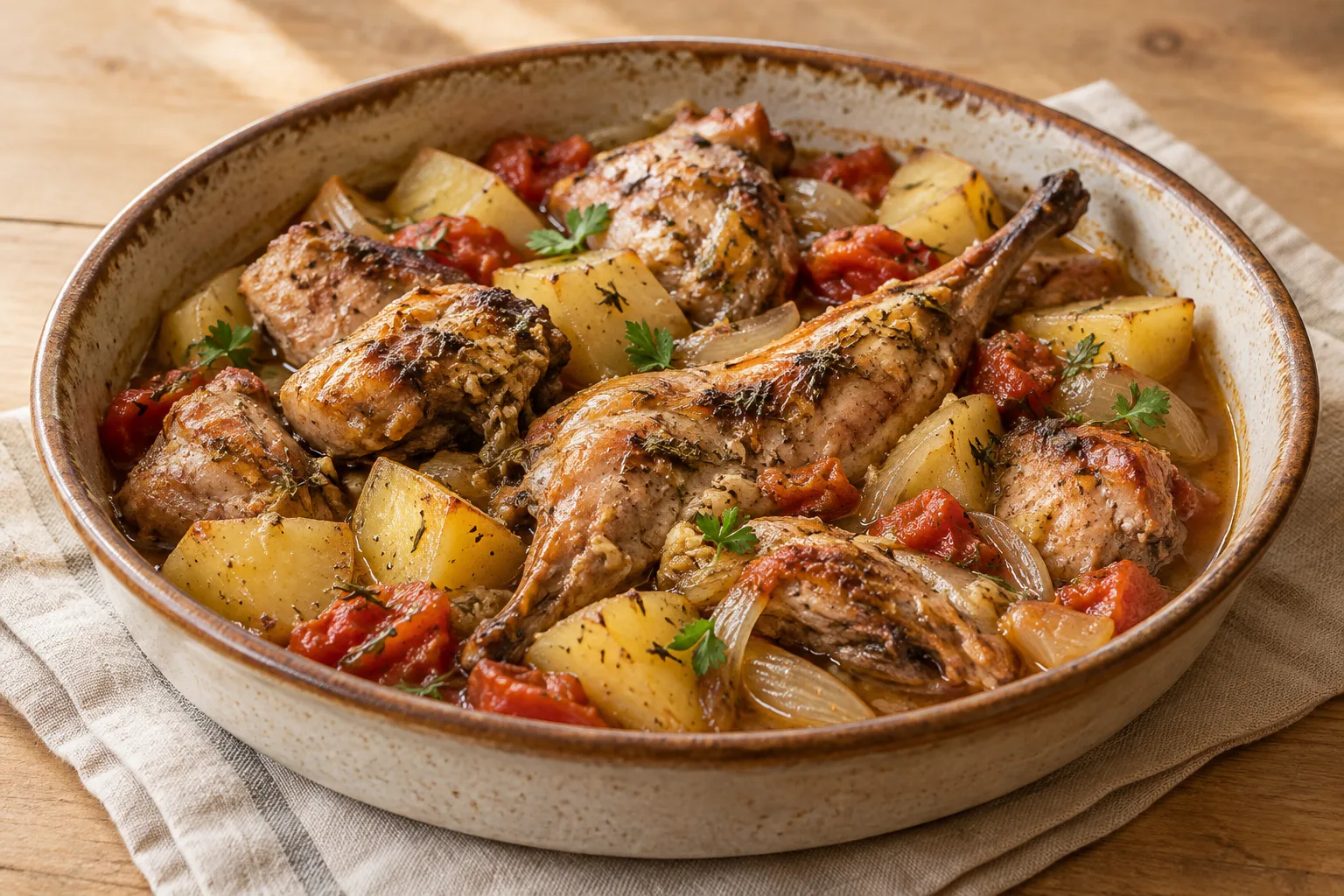
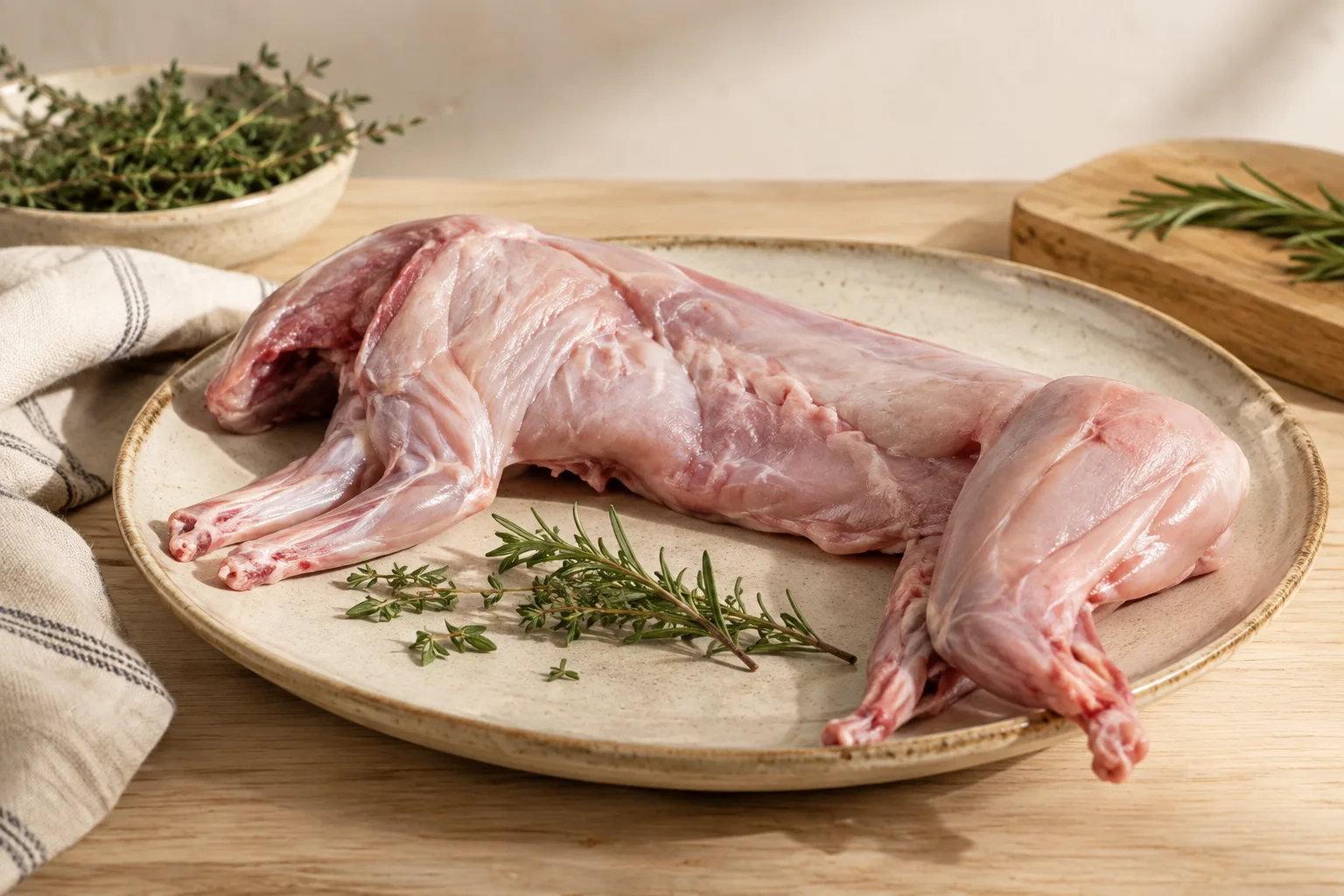
Rabbit is meat from a lagomorph and is sold fresh in forms such as whole or cut-up portions. It helps to distinguish farm-raised rabbit from wild rabbit: the sources describe farm-raised meat as milder and lighter in color, while wild rabbit may be redder, firmer and more strongly flavored. These differences can affect the result, alongside the chosen preparation. Rabbit can be the main ingredient in stews and rice dishes, and it is also used roasted or fried. This profile concerns fresh meat; check the specific product label and seller’s instructions when buying it.
When to use it
Choose rabbit when you want a meat that can take the lead in a dish or be incorporated into rice, vegetable or pasta preparations. Pieces are used in stews and rice dishes; sources also describe roasted and fried rabbit. The milder flavor associated with farm-raised rabbit may suit a dish where a less pronounced taste is wanted. Wild rabbit is described as more strongly flavored and firmer, making it an option for game-style preparations. There is no single season that applies to all rabbit: one regional source reports farm-raised rabbit available throughout the year and wild rabbit in autumn and winter.
How to use it
Before cooking, decide whether to use a whole rabbit or cut pieces, and follow the product instructions. Rabbit can be added to a stew or rice dish, roasted or fried. Garlic and white wine are documented companions; sources also describe marinades with wine and herbs such as thyme, parsley and garlic. Rabbit is also served with rice, snails or vegetables in regional dishes. Choose seasonings with the meat’s intensity in mind: wild rabbit is described as stronger in flavor than farm-raised rabbit. Do not assume a universal cooking time; the cut and recipe determine the preparation.
Flavour and texture
Farm-raised rabbit is generally described as mild, pale pink and tender. Wild rabbit may be redder, firmer and more strongly flavored. The result is therefore not identical for every rabbit, and whether it is farm-raised or wild, as well as the preparation, matters. Garlic, wine and herbs appear in documented preparations, while rice dishes and stews combine the meat with other ingredients.
How to choose it
Buy from a reputable retailer or supplier and check the label, date and storage instructions. If the product is sold chilled, make sure it feels cold and its packaging is intact; frozen product should be solidly frozen. Keep the meat cold on the way home and prevent its juices from contacting food that will be eaten without cooking. If the information is available, check whether it is farm-raised or wild rabbit, since flavor and texture may differ.
Storage
Fresh rabbit is perishable: take it home promptly and follow the package or seller’s storage instructions and date. Keep it separate from foods that will be eaten without cooking, in a container or bag that prevents juices from dripping onto them. For freezer storage, use suitable freezer wrapping and follow the product instructions. Smell and appearance alone cannot establish that meat is safe; correct handling and storage still matter.
Substitutions
Farm-raised and wild rabbit can replace one another in a recipe, but the result may change: sources describe differences in flavor, color and firmness. In a game stew such as gazpacho jumillano, one regional source mentions both rabbit and partridge; this alternative applies to compatible preparations and does not mean the meats behave identically in every recipe. Adapt the recipe to the ingredient available and its texture.
Common mistakes
Do not assume all rabbit has the same flavor or texture: farm-raised and wild meat can differ. Do not rely on a supposed universal cooking time; the sources describe several uses but do not provide timings. When shopping, check the date and package instructions, and during handling keep raw-meat juices from contaminating other foods.
Safety and allergens
Keep the meat cold, follow the date and package instructions, and prevent its juices from contacting ready-to-eat foods. Do not rely on smell or appearance alone to judge safety. Check the label for product-specific storage and use directions.
Culinary uses
- Protagonista de guisos y arroces
- Carne para asar o freír
Recommended techniques
- Guisar
- Asar
- Freír
- Marinar
Pairs well with
- Arroz
- Ajo y vino blanco
- Tomillo y otras hierbas
- Caracoles y verduras
Frequently asked questions
How does farm-raised rabbit differ from wild rabbit?
Sources describe farm-raised rabbit as milder and lighter, and wild rabbit as redder, firmer and more strongly flavored. Individual products may vary.
How can I cook rabbit?
It is used in stews and rice dishes and can also be roasted or fried. Garlic, wine and herbs are documented pairings.
Is rabbit available year-round?
A regional source reports farm-raised rabbit available throughout the year and wild rabbit in autumn and winter.
Estimated nutrition
- Fat
- 8.34 g
- Saturates
- 2.49 g
- Carbohydrate
- 0 g
- Sugars
- 0 g
- Fibre
- 0 g
- Protein
- 30.14 g
- Salt
- 0.86 g
Sources and review
Automatically researched, cross-checked and validated content. Sources consulted:
- En el etiquetado alimentario hay algunas menciones que son obligatorias eletiquetadocuentamucho.aesan.gob.es
- Client Challenge doi.org
- Cooking Food Storage | USU extension.usu.edu
- The Essential Glossary of Cooking Terms for the Culinary Arts - Escoffier escoffier.edu
- El conejo – Blog foodVAC foodvac.es
- Artes culinarias/Ingredientes/Conejo - Wikilibros es.wikibooks.org
- Ingredientes para la receta: El conejo — Cuaderno de Cultura Científica culturacientifica.com
- Culinary MakerSpace | Auxiliary Services | Binghamton University binghamton.edu
- The Mango - A Tropical Treat - National Center for Home Food Preservation nchfp.uga.edu
- abril 2026 ANÁLISIS SOCIOECONÓMICO DEL SECTOR CINEGÉTICO mapa.gob.es
- Food Storage for Safety and Quality | CSU Extension extension.colostate.edu
- Conejo- Gastronomía - Región de Murcia Digital regmurcia.com
- La carne de conejo en la gastronomía valenciana | INTERCUN intercun.org
- Conejo, tradición prehispánica de la gastronomía mexicana codigosanluis.com
- Conejo - Guía de los alimentos | Nestlé Family Club nestlefamilyclub.es