- Category
- Fish and seafood
- State
- Fresh
- Usual unit
- g
What it is
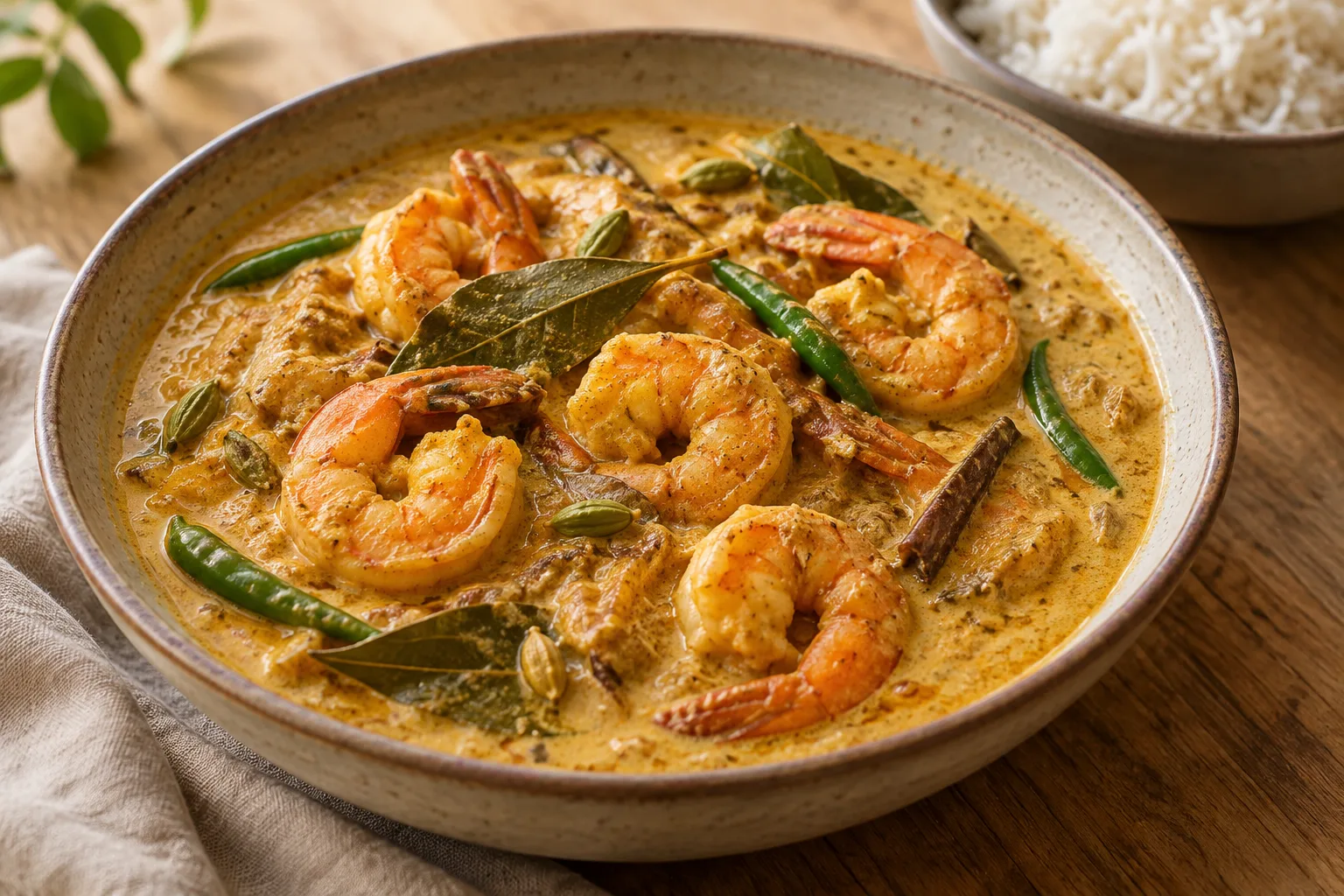
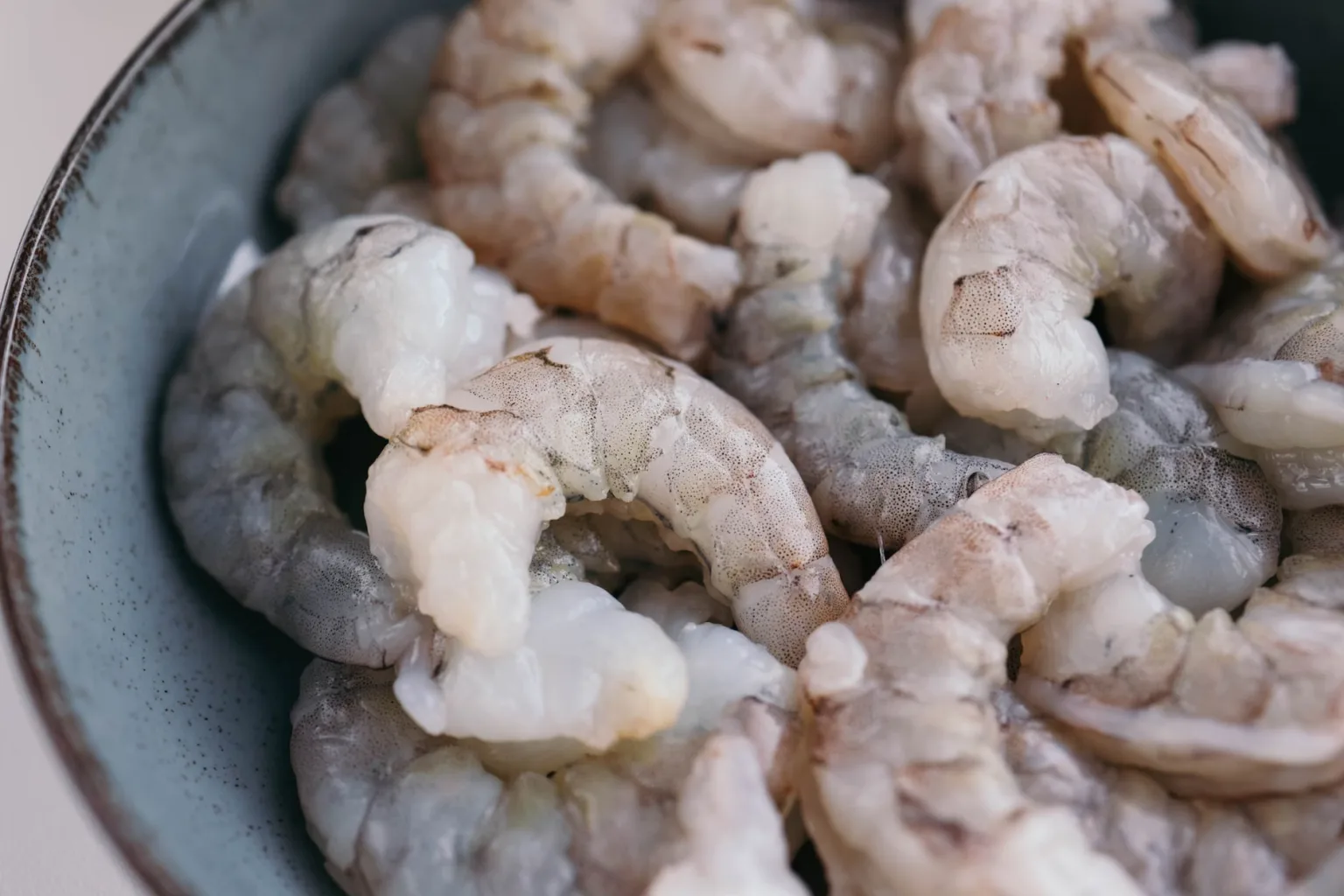
A raw prawn is a marine crustacean with ten legs and a semi-hard shell. Raw prawns may be dark grey; cooking turns them pink. The name covers different varieties, so size, shell markings and flavor can differ by type. Prawns are sold fresh as well as frozen, but this profile focuses on fresh raw product. Their flesh is used in simple preparations such as cooking on a hot plate, and as an ingredient in salads, rice dishes, pasta, soups and appetizers. Check the product label and adapt the preparation to the variety and storage state of the prawns.
When to use it
Choose raw prawns when you want the seafood to cook with the other ingredients or to feature its flavor in a short preparation, such as a sauté or hot-plate cooking. They also work in rice dishes, pasta, seafood soups, omelets, skewers and fillings. If adding them to a salad or cold appetizer, cook them first and allow them to cool before mixing. The choice between small and large pieces depends on the dish: smaller prawns can be distributed through salads and cocktails, while larger ones can take a more prominent role on the plate.
How to use it
Before cooking, peel the prawns if the recipe calls for it. When using the flesh without the shell, you can remove the dark line running along the back; one culinary source identifies it as the digestive tract and notes that it can taste bitter. Grill, boil, sauté or fry the prawns with garlic according to the dish. They can also be added to rice dishes, pasta, legumes, omelets, soups and fish sauces. For a salad, seafood salad or cold appetizer, use prawns that have already been cooked and cooled. If the product is frozen, thaw it slowly in the refrigerator and do not refreeze it after thawing; always follow the package directions.
Flavour and texture
Prawns are described as seafood with a pronounced flavor, although intensity can vary by variety and source. Cooked flesh is valued for its firmness; one culinary source recommends rapid cooling after cooking as a way to help retain that texture. Their color also changes with heat: raw prawns may be dark grey and become pink when cooked. The precise appearance and flavor depend on variety and on whether the product is fresh or frozen.
How to choose it
For fresh prawns, look for shiny, firm shells and avoid pieces that feel soft. Buying guidance also advises rejecting prawns with an ammonia smell and describes fresh ones as having a mild, sea-like aroma. Markings and size vary among varieties, so do not rely on a single color as a universal quality test. For frozen product, check that the packaging is intact and that there are no visible signs of freezer burn, and read the label.
Storage
Store the product according to its package directions and avoid extending storage without reliable guidance. The available culinary source recommends thawing frozen prawns slowly in the refrigerator and not refreezing them once thawed. This advice concerns frozen product after thawing; it does not establish a specific storage period for fresh raw prawns. Keep raw product separate from ready-to-eat foods and consult local official food-safety guidance for handling and storage.
Substitutions
Raw shrimp or a different variety of prawn can be considered as culinary alternatives when the recipe can accommodate differences in size and texture. The sources describe prawn varieties with differing sizes, flavors and characteristics, so a substitution is not necessarily exact. Adjust the cut and presentation to the size of the pieces, and make sure the alternative is also raw if it is meant to cook in the dish.
Common mistakes
When looking for fresh prawns, do not choose pieces that are soft or smell of ammonia. Avoid treating every variety as identical: size, appearance and flavor can differ. Another mistake is refreezing frozen prawns after thawing, which the consulted source advises against. Do not add raw prawns to a salad or appetizer as though they were already cooked.
Safety and allergens
Follow the package directions and your local official food-safety guidance. The available evidence does not provide specific official instructions for cooking raw prawns, so this profile does not give cooking times or temperatures.
Culinary uses
- Main ingredient in seafood dishes
- Ingredient for salads, rice dishes, pasta, soups and appetizers
Recommended techniques
- Grilling or cooking on a hot plate
- Boiling
- Sautéing
- Frying with garlic
Pairs well with
- Garlic and lemon
- Rice and pasta
- Salad vegetables and fruit
- Fish and seafood sauces
Frequently asked questions
What color are raw prawns?
One source describes raw prawns as dark grey and says they turn pink when cooked. Appearance can vary by variety.
How can I identify fresh prawns?
Look for shiny, firm shells. Avoid soft pieces or prawns with an ammonia smell, and check the seller's guidance and product label.
Can thawed prawns be frozen again?
The consulted source advises against refreezing prawns once thawed. Thaw frozen product slowly in the refrigerator and follow the package directions.
Sources and review
Automatically researched, cross-checked and validated content. Sources consulted:
- Client Challenge doi.org
- The Essential Glossary of Cooking Terms for the Culinary Arts - Escoffier escoffier.edu
- Dictionary of Health Related Terms: English – Spanish hia.berkeley.edu
- Aplicaciones de la Biotecnología en Seguridad Alimentaria aesan.gob.es
- quantitative-assessment-of-relative-risk-to-public-health- ... seafood.oregonstate.edu
- Mayo: los langostinos | Consumer consumer.es
- ¿Cómo elegir los mejores langostinos? - Compesca compesca.com
- Quédate en casa y cocina: Propuestas de nuestros alumni (Tacos de langostinos "mexicasiáticos") cordonbleu.edu
- CAMBIO CLIMATICO ResumenB research.fit.edu
- - YouTube youtube.com
- Langostinos de autor | Noray norayseafood.es
- Langostinos -Gastronomía - Región de Murcia Digital prm.pruebas.f-integra.org