- Category
- Grains, flour and pasta
- State
- Dry
- Usual unit
- g
What it is
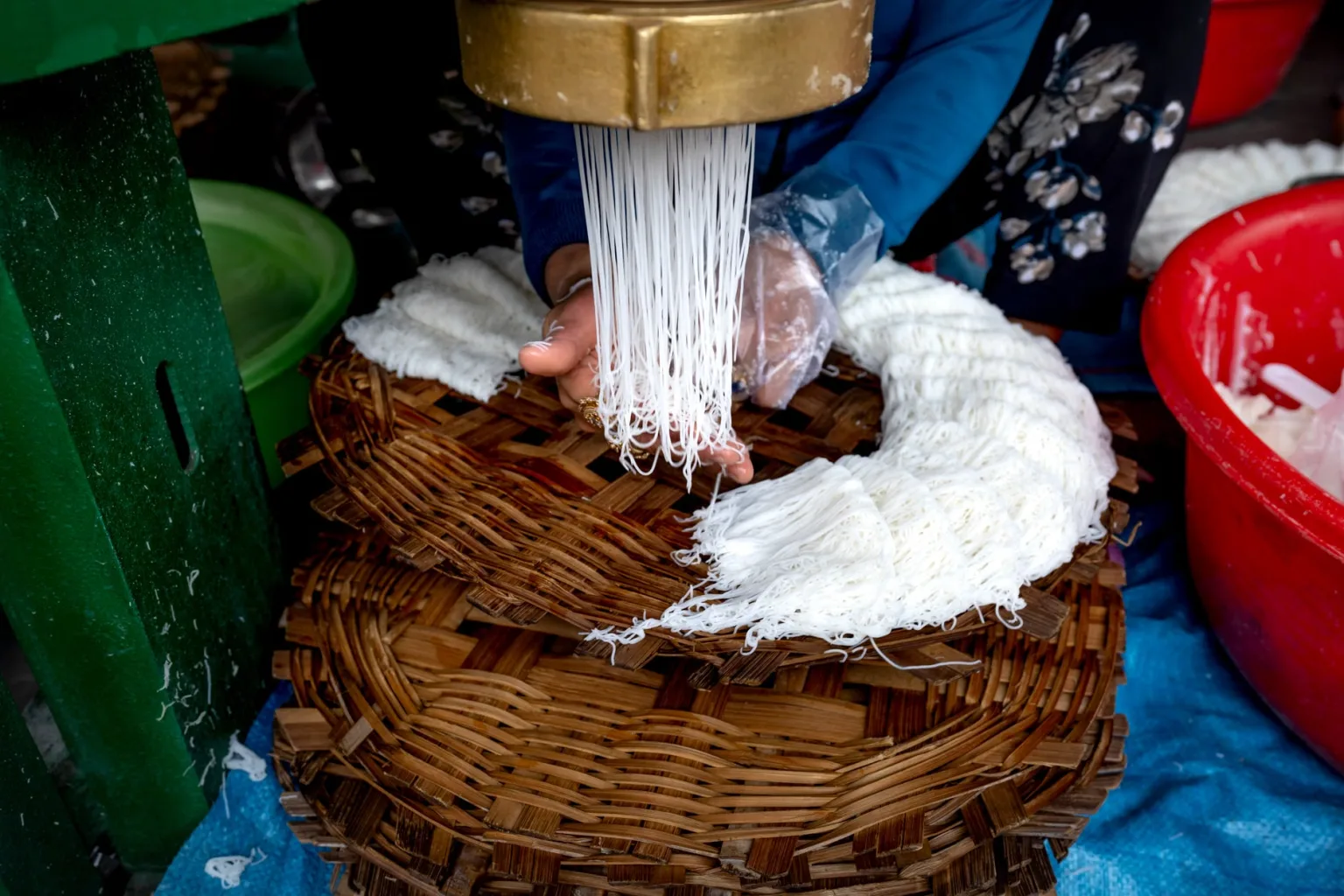
Rice noodles are noodles made mainly from rice flour and water. Some products may also contain tapioca or cornstarch to adjust their transparency or texture, so check the ingredient list. They come in different shapes and widths, from fine strands to broad, flat strips. Their product form also varies: rice noodles may be sold dry, fresh or frozen. They are not all prepared in the same way; the noodle’s shape, thickness and the maker’s directions are more useful guides than one method for the whole category.
When to use it
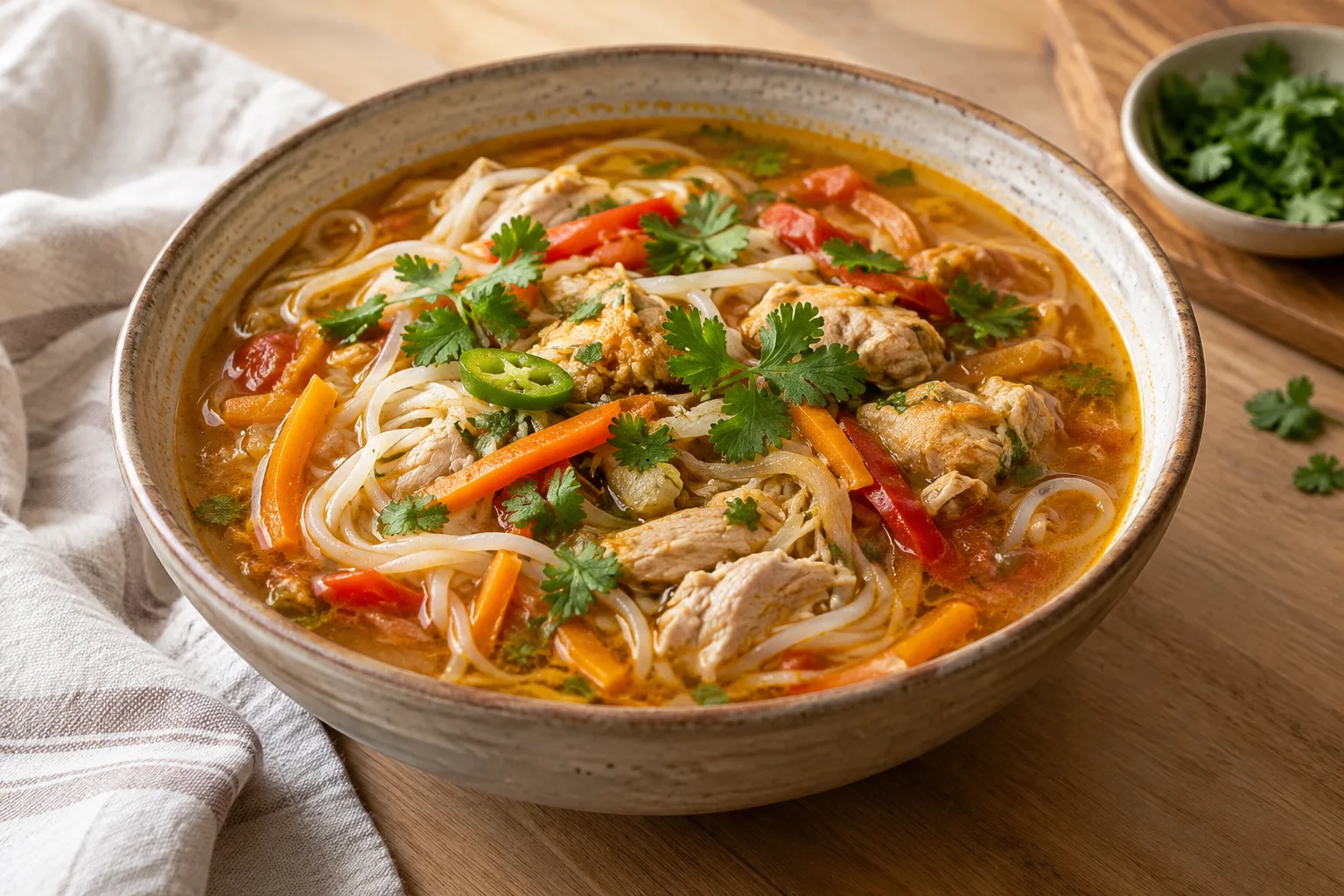
Choose rice noodles when you want a noodle base for soup or broth, or a substantial component in a salad or stir-fry. Thin varieties are often used in soups and salads, while broad, flat noodles are commonly used in stir-fries such as pad thai. These are general patterns, not strict rules: the texture you want and the product directions matter too. If the dish finishes cooking in a pan or broth, remember that the noodles may continue to soften there.
How to use it
Before preparing rice noodles, check whether they are dry, fresh or frozen and read the package directions: method and timing can vary with shape and thickness. Some dry varieties are meant to be soaked until pliable; other directions may call for adding them to hot water after it has been taken off the heat. Do not automatically use the method for wheat pasta. Drain the noodles when they are flexible, then finish heating them in soup, broth or a stir-fry if the recipe or package calls for it. Handle them gently: fine dry strands can break, and noodles can become sticky if they soften too much.
Flavour and texture
Rice is the main ingredient, but the finished texture is not identical across all products. Thickness, shape and composition—which can sometimes include tapioca or cornstarch—may affect transparency and a gel-like quality. Depending on the variety and preparation, the noodles can be more flexible or more tender. Choose them for the result you want in the dish and follow the directions for that specific product.
How to choose it
Check the package for the noodle shape, thickness and product form: rice noodles may be sold dry, fresh or frozen. Review the ingredients too, since some varieties contain tapioca or cornstarch to adjust texture or transparency. If a recipe calls for a particular form, such as fine strands or broad, flat strips, choose a similar product and use its preparation directions.
Storage
Product form matters: rice noodles are sold dry, fresh and frozen, and one storage rule cannot be assumed to fit them all. Store the product according to its package directions and check for any instructions after opening. The available evidence does not establish a specific storage duration or temperature for every type of rice noodle; do not assume a fresh variety keeps like a dry one.
Substitutions
Other noodles, such as wheat noodles or mung bean noodles, may work as substitutes if their shape and flavor suit the recipe. The result will change: alternatives do not necessarily have the same texture or preparation method. Check the substitute’s ingredients and follow its own package directions.
Common mistakes
Do not assume every rice noodle should be boiled like wheat pasta or needs the same cooking time. Shape, thickness and product form affect preparation. Soaking or cooking longer than needed can make noodles overly soft and sticky; rough handling can also break fine dry strands. Use the directions on the specific package.
Safety and allergens
The available evidence does not provide a specific official warning for rice noodles. Read the label for ingredients and storage and preparation directions; if you have an allergy or intolerance, check the specific product rather than relying on the ingredient name alone.
Culinary uses
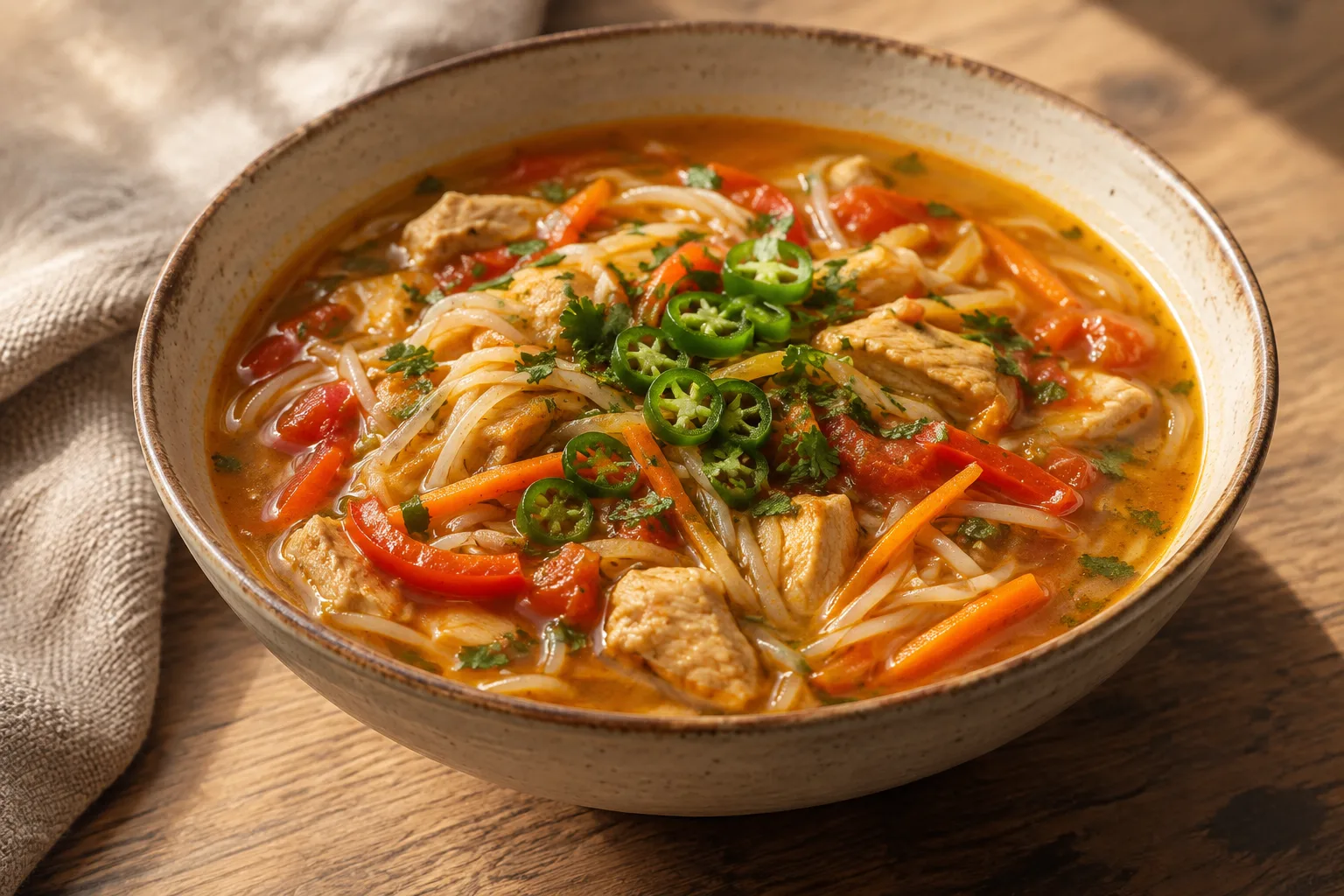
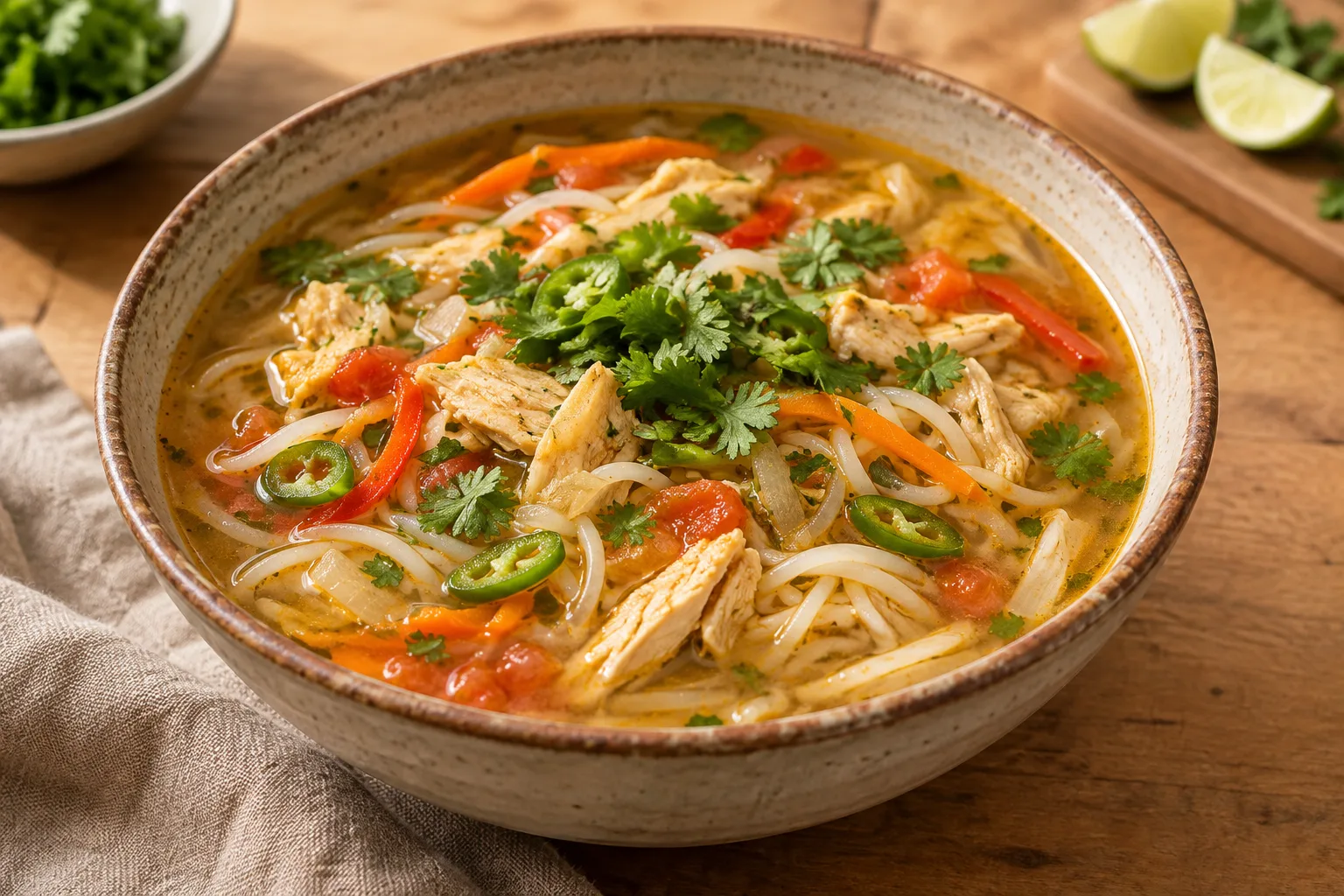
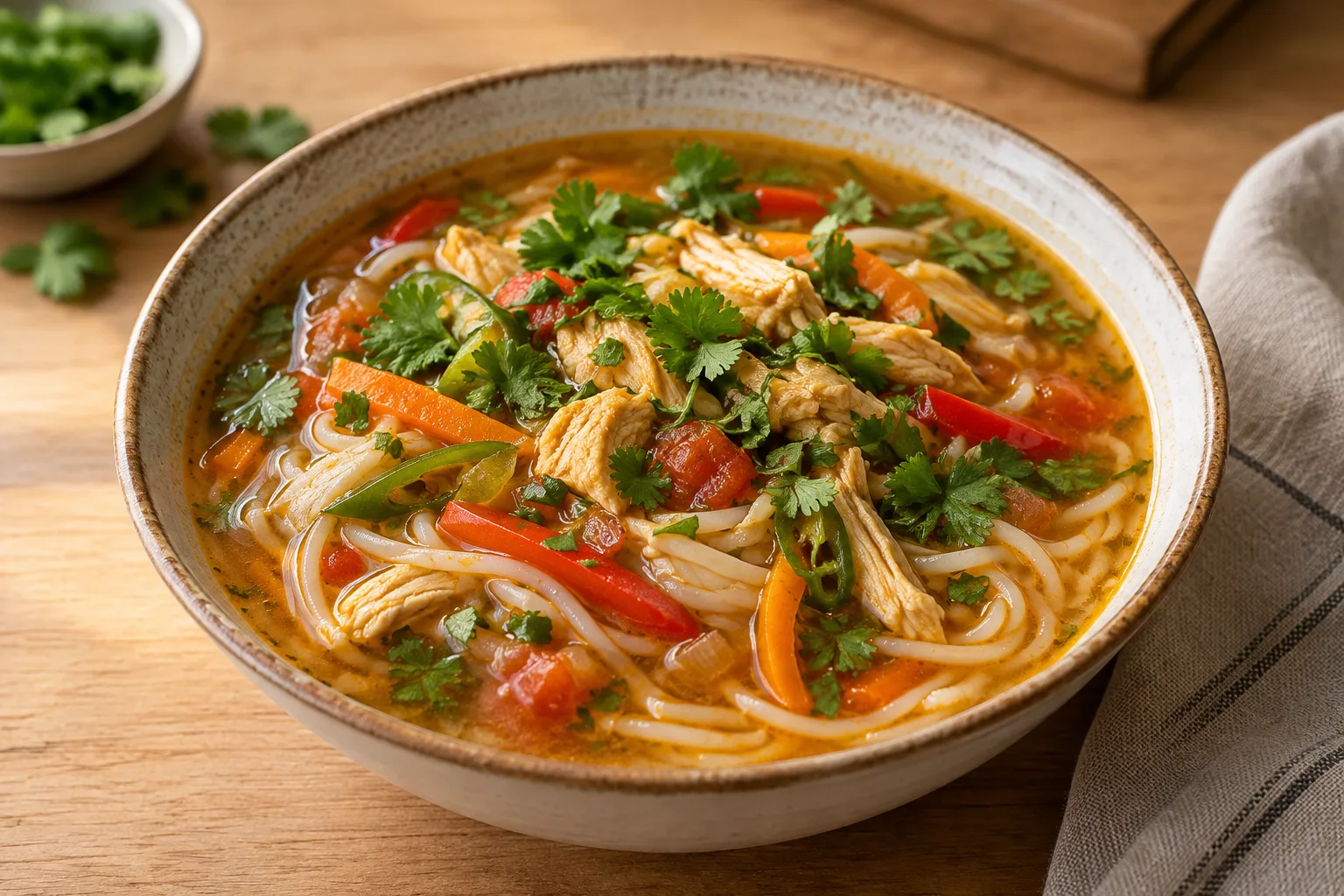
- Base for soups and broths
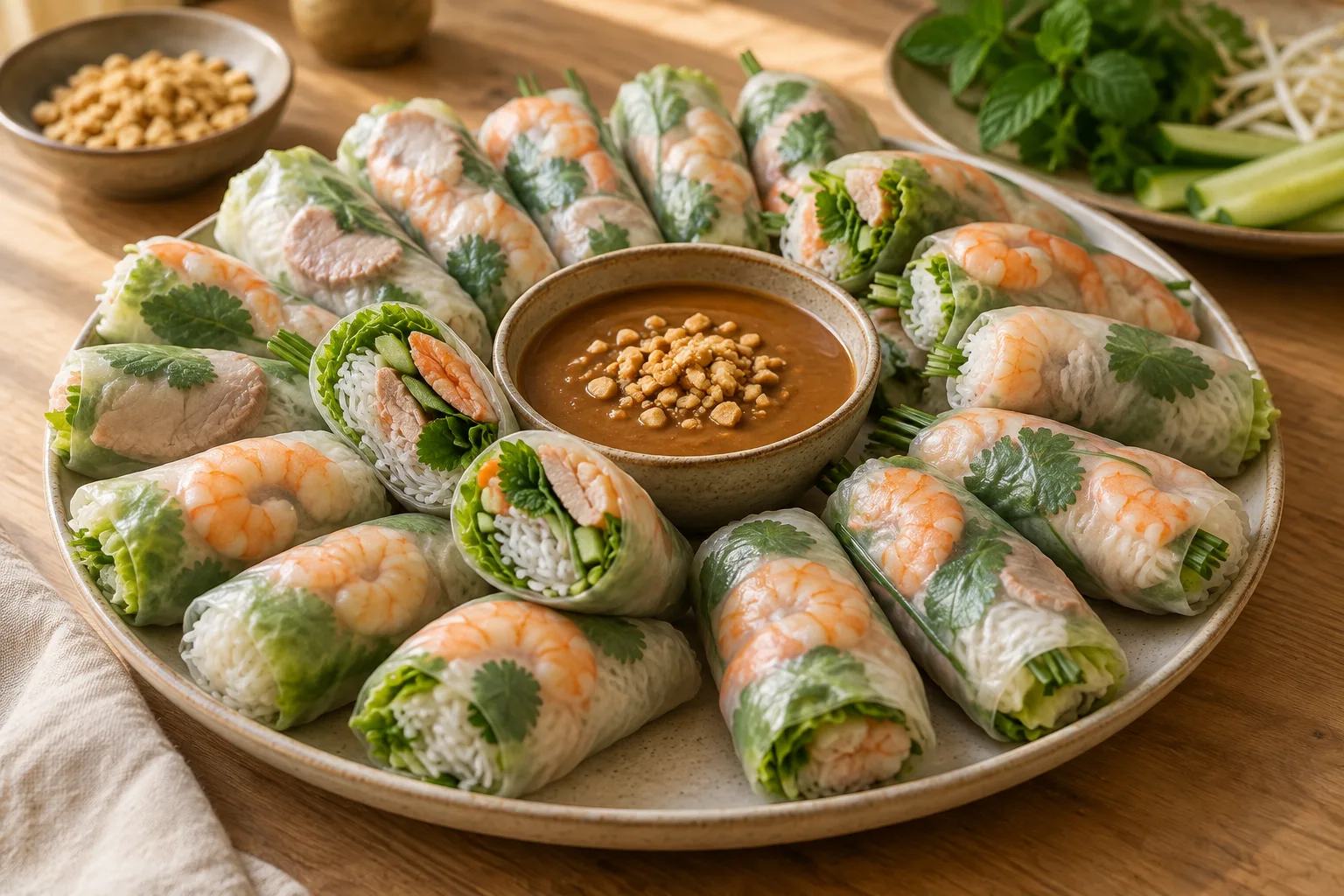
- Noodle component in salads and stir-fries
Recommended techniques
- Soaking or rehydrating according to the package directions
- Briefly heating in a soup, broth or stir-fry
Pairs well with
- Vegetables
- Meat, fish or seafood
Frequently asked questions
Are all rice noodles dry?
No. They may be sold dry, fresh or frozen. Check the package form, since it affects preparation and storage.
Should I boil rice noodles like wheat pasta?
Not necessarily. Methods vary by product: some are soaked, while others have different directions. Follow the package instructions.
Which shape works well in a stir-fry?
Broad, flat noodles are often used in stir-fries such as pad thai, while fine varieties are commonly used in soups and salads. Choose based on the recipe and the texture you want.
Estimated nutrition
- Fat
- 1.75 g
- Saturates
- 0 g
- Carbohydrate
- 100 g
- Sugars
- 0 g
- Fibre
- 0 g
- Protein
- 0 g
- Salt
- 0.52 g
Sources and review
Automatically researched, cross-checked and validated content. Sources consulted:
- ¿Por qué la muerte es origen de miedos y tabúes? doi.org
- The Essential Glossary of Cooking Terms for the Culinary Arts - Escoffier escoffier.edu
- Storing White Rice | USU extension.usu.edu
- Agencia Española de Seguridad Alimentaria y Nutrición aesan.gob.es
- Home Cooking Peers | Health & Wellness wellness.ucsb.edu
- Culinary Alchemy - Open PRAIRIE openprairie.sdstate.edu
- Food - Thematic Lists - Research Guides at University of Nebraska Kearney (UNK) guides.library.unk.edu
- Freezing Rice and Pasta | UNL Food | Nebraska food.unl.edu
- How to Make Fluffy Rice | Institute of Culinary Education ice.edu
- Menus | Ohio University ohio.edu
- Future Chefs Camps | Brightwater: A Center for the Study of Food brightwater.nwacc.edu
- Fideo de arroz - Wikipedia, la enciclopedia libre es.wikipedia.org
- ¿Cómo cocinar fideos de arroz? | JUST SPICES ® justspices.es
- Los fideos de arroz, ¿por qué triunfa esta pasta típica asiática? | El Diario Vasco diariovasco.com
- Tips para cocinar y usar fideos de arroz | Recetas Nestlé recetasnestle.com.ar
- Diferencia entre tallarines y noodles bonviveur.com