- Category
- Sauces and condiments
- State
- Liquid
- Usual unit
- tablespoon
What it is
Rice vinegar is a vinegar made through fermentation from a rice-related base. Like other vinegars, it tastes acidic, but culinary descriptions often characterize it as milder and slightly sweeter than sharper styles. Color and flavor vary among products: clear, brown, black, red, whole-grain and seasoned versions exist, and they do not all have the same composition. Seasoned rice vinegar may contain added ingredients such as salt or sugar, so distinguish it from plain rice vinegar before cooking. It is usually sold as a liquid and used as a seasoning; it is not automatically interchangeable in equal amounts with every other vinegar.
When to use it
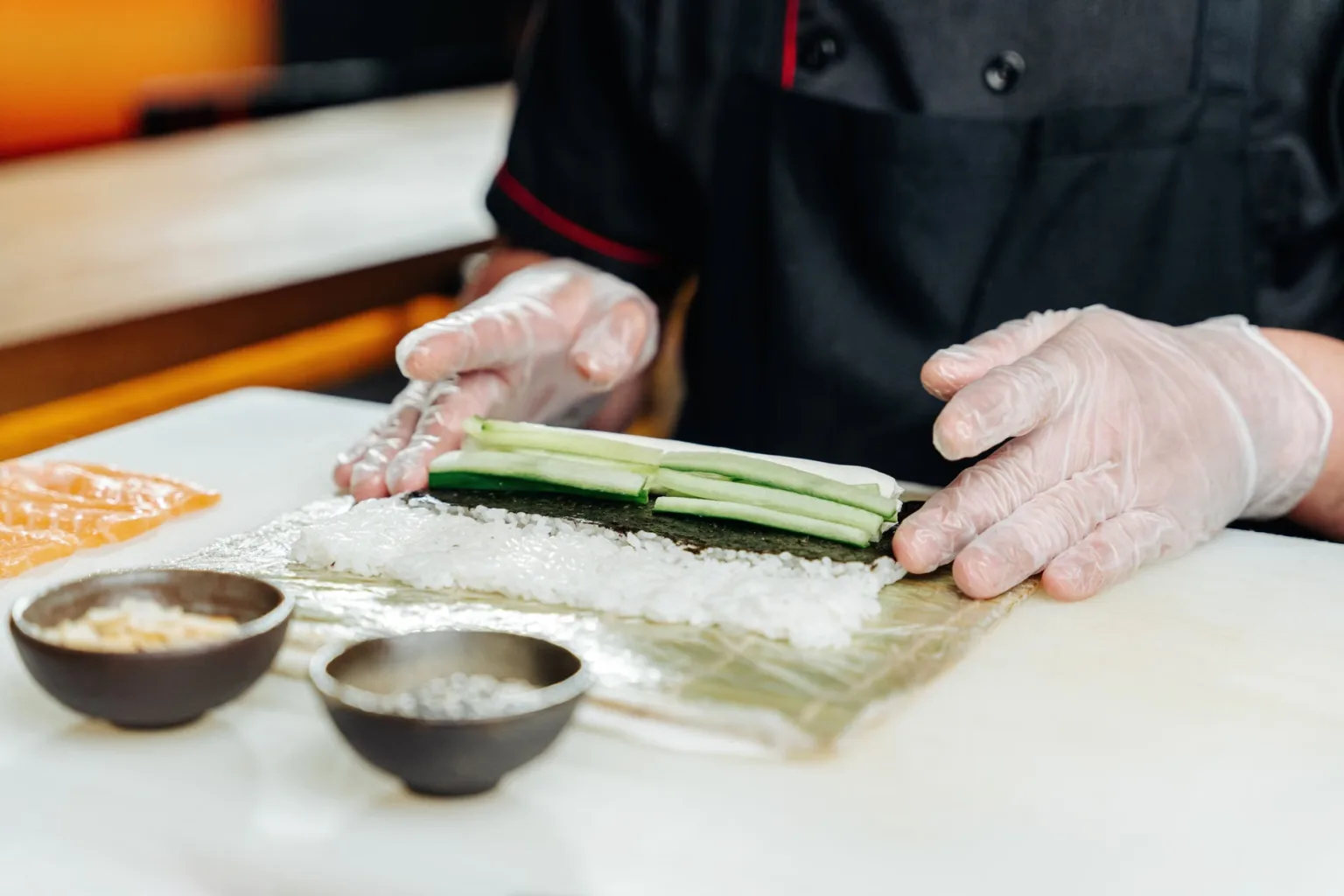
Choose rice vinegar when you want acidity without letting the vinegar overwhelm a delicate-tasting dish. It is especially useful for seasoning sushi rice and making dressings, dipping sauces or vegetable pickles. It can also bring contrast to stir-fries, soups and stews: start with a little at the end and adjust to taste. Do not assume this style has the same sharpness as another vinegar when a recipe depends on pronounced acidity; products and varieties differ. Check whether the recipe calls for plain or seasoned rice vinegar, since the latter may already contribute salt or sugar.
How to use it
Start with a small amount of rice vinegar and add more gradually until the flavor is balanced. For a dressing, mix it with oil and other seasonings; it also works with ingredients such as soy sauce or sesame oil. For sushi rice, use it as part of the seasoning and follow a reliable recipe, accounting for whether the vinegar already contains salt or sugar. In sauces and pickles, combine it with the other ingredients and taste before adding more. In hot dishes, a little added near the end can provide an acidic contrast. Vinegar adds flavor, but do not turn an improvised recipe into a preservation method: use tested instructions for pickles intended for storage.
Flavour and texture
Its flavor is acidic and, in many versions, milder and somewhat sweeter than that of sharper vinegars. It is a liquid; color can range from clear to golden or dark depending on the style. Black, red, whole-grain and seasoned versions may taste different, so the name alone does not guarantee an identical flavor.
How to choose it
Read the full product name and ingredient list before buying. Distinguish plain rice vinegar from seasoned rice vinegar, which may contain salt, sugar or other ingredients and can change a recipe's result. Styles vary in color and flavor, so choose according to the intended use and the recipe instructions. If a recipe specifies a particular style, check that the bottle matches it.
Storage
The available evidence does not establish one universal storage rule for every brand and style of rice vinegar. Follow the instructions on the bottle, especially if it gives specific directions after opening. Keep the label readable so you can check ingredients and the manufacturer's advice. Do not replace those directions with a general rule based only on the fact that the product is vinegar.
Substitutions
Apple cider vinegar can be an alternative when rice vinegar is unavailable, but its flavor will differ; add it gradually and taste. Seasoned rice vinegar may replace plain rice vinegar in some preparations, but check for salt or sugar and adjust the other seasonings. A substitution can change the recipe's final balance.
Common mistakes
Do not confuse plain rice vinegar with seasoned rice vinegar: the seasoned version may add salt or sugar and alter a recipe's balance. Another common mistake is using a fixed amount without tasting, since styles and products can vary in acidity and flavor. Add it gradually and taste again before serving.
Safety and allergens
Read the label for ingredients and any allergen declaration, and follow the manufacturer's storage and use instructions. Product composition can vary; do not assume every bottle has the same ingredients or directions.
Culinary uses
- condimento ácido suave
- ingrediente para aliños, salsas y encurtidos
Recommended techniques
- mezclar en vinagretas y salsas
- incorporar al arroz para sushi
- añadir al final de la cocción para ajustar la acidez
Pairs well with
- arroz para sushi
- pepino y otras verduras
- salsa de soja y aceite de sésamo
- platos salteados y salsas agridulces
Frequently asked questions
Is rice vinegar always sweet?
Not necessarily. It may have a slightly sweet note, but flavor depends on the style and whether the product is seasoned.
Can I use it to season sushi rice?
Yes. It is used to season the rice; check whether your bottle is plain or seasoned before adjusting other ingredients.
Can I substitute apple cider vinegar?
It can be an alternative, although the flavor will change. Add it gradually and adjust after tasting.
Estimated nutrition
- Fat
- 0 g
- Saturates
- 0 g
- Carbohydrate
- 53.3 g
- Sugars
- 53.3 g
- Fibre
- 0 g
- Protein
- 0 g
- Salt
- 11.82 g
Sources and review
Automatically researched, cross-checked and validated content. Sources consulted:
- En el etiquetado alimentario hay algunas menciones que son obligatorias eletiquetadocuentamucho.aesan.gob.es
- ¿Por qué la muerte es origen de miedos y tabúes? doi.org
- Cooking Food Storage | USU extension.usu.edu
- Aesan - Agencia Española de Seguridad Alimentaria y Nutrición aesan.gob.es
- Arroz integral - Spend Smart Eat Smart spendsmart.extension.iastate.edu
- Arroz Español | Extension extension.unh.edu
- Vinegar • The Nutrition Source nutritionsource.hsph.harvard.edu
- A Guide to Cooking with Vinegar: Types, Uses & Flavor Profiles - Escoffier escoffier.edu
- Conservación de productos vegetales no mapa.gob.es
- Komezu, the Vinegar of Japanese Cooking cordonbleu.edu
- (PDF) Tema 19 Produccion de vinagre academia.edu
- Vinagre de arroz y sus usos en cocina | Arroz Brazal arrozbrazal.es
- Vinagre de arroz | www.cocinista.es cocinista.es
- Vinagre de arroz. ¿Qué es? ¿Cómo hacerlo? Usos y beneficios en la cocina abc.es
- ¿Qué es el vinagre de arroz? - Restaurante Chino Gran Muralla - Albacete restaurante-chino-granmuralla.com
- Vinagre de arroz - Wikipedia, la enciclopedia libre es.wikipedia.org
- Vinagre de arroz: propiedades y beneficios nutricionales | ECOagricultor ecoagricultor.com