- Category
- Fruit
- State
- Fresh
- Usual unit
- unit
What it is
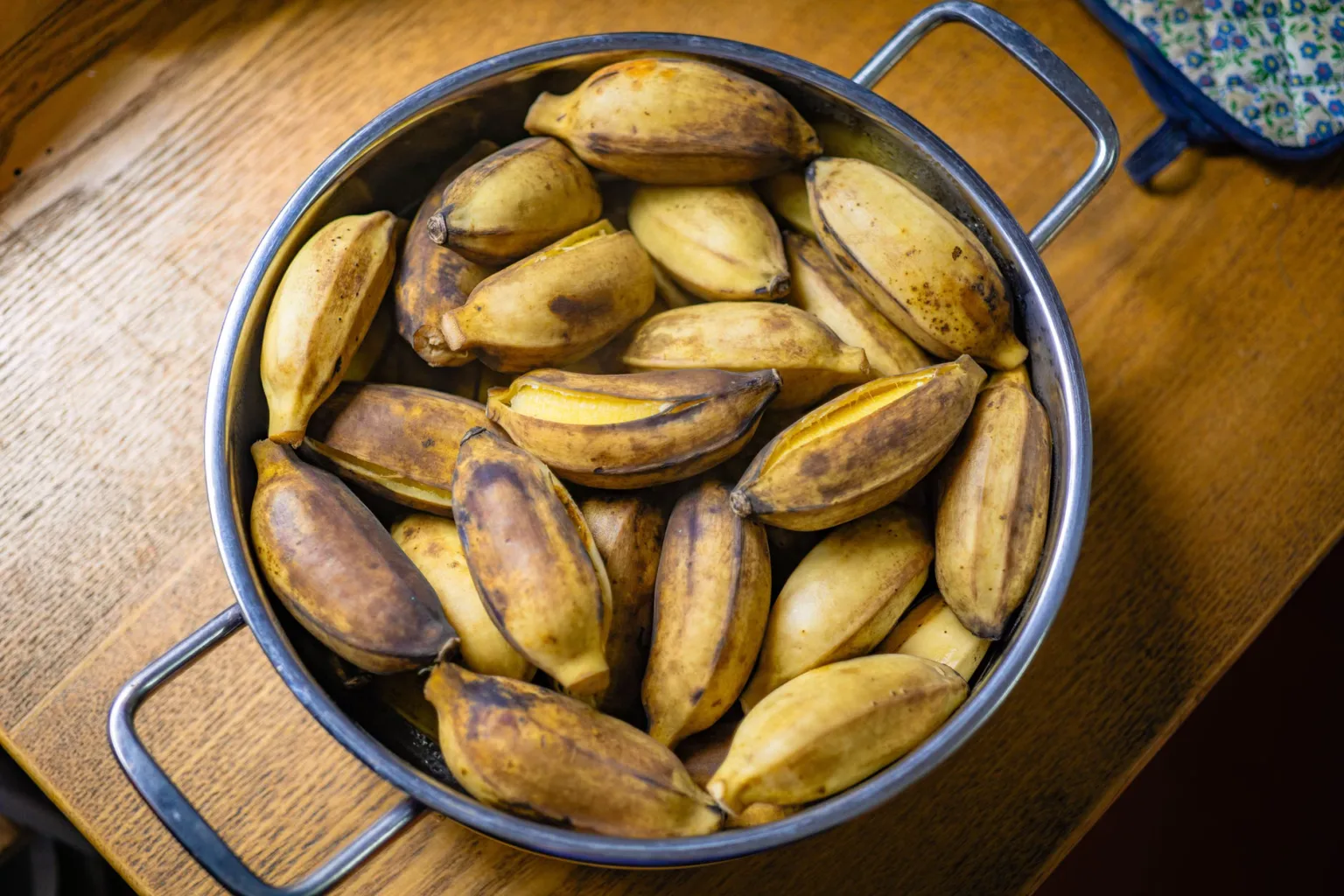
A ripe plantain is a cooking banana further along in the ripening process. At this stage, its flesh becomes softer and sweeter, and some of its starch has changed into sugars. The peel may be yellow, marked with dark spots, or become very dark; peel color alone does not tell the whole story about texture, so consider how firm the fruit feels as well. Unlike a dessert banana, a plantain usually has more floury flesh and is commonly cooked. A yellow, ripe plantain can be eaten raw, although cooking it is a familiar way to use it. Do not confuse it with a green plantain: the green fruit is firmer and starchier and is used for different preparations.
When to use it
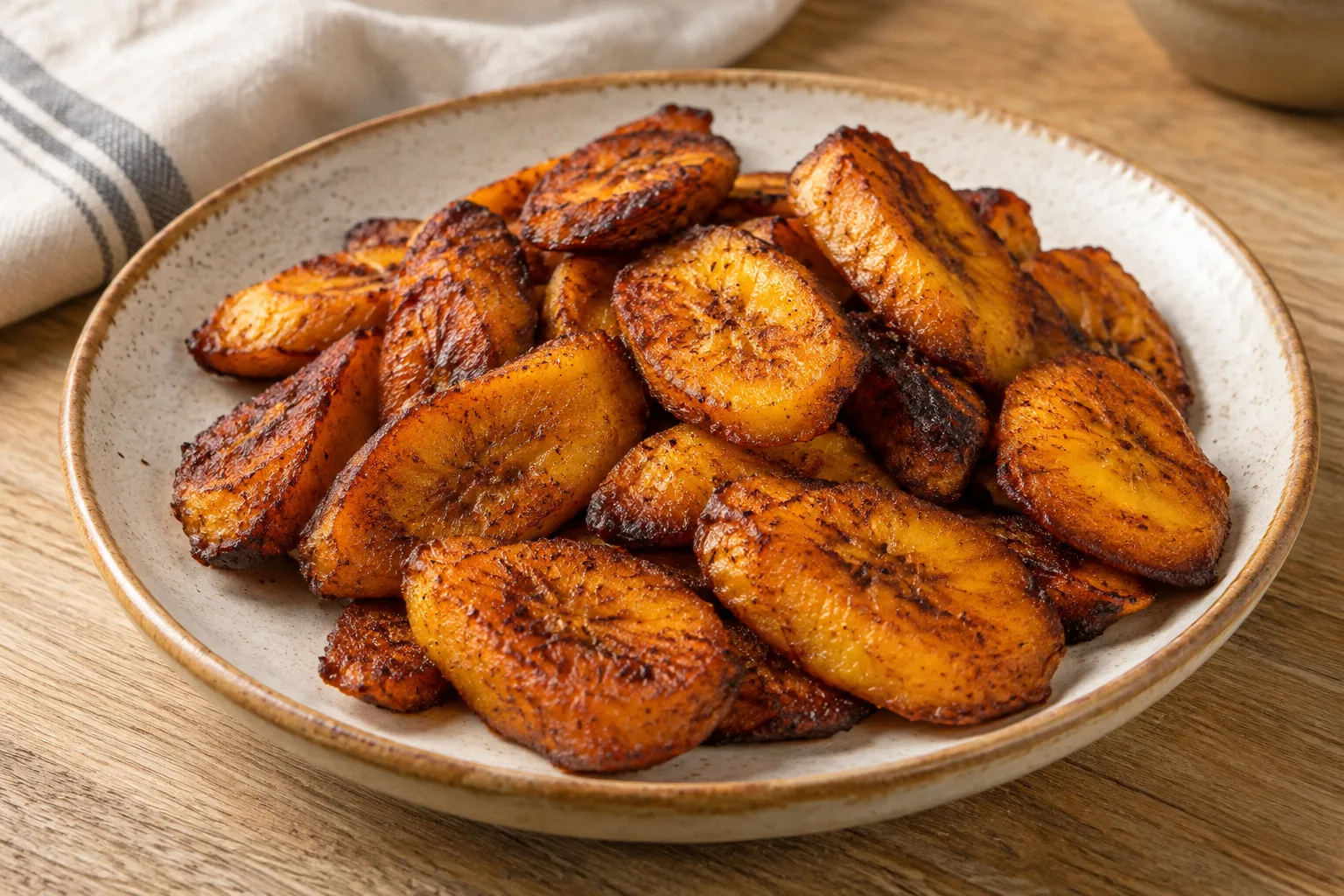
Choose ripe plantains when you want a sweeter, softer result than green plantains provide. Yellow fruit with dark patches works well for slices that are fried, baked, or roasted and served as a side, breakfast, or snack. If the flesh is very soft and sweet, it can also be mashed for purées and some baked preparations. For dishes that need firm slices or the crisp texture associated with green plantains, choose unripe fruit instead. Ripeness changes both sweetness and consistency, so match the method to the condition of each plantain.
How to use it
Peel the ripe plantain and cut it into diagonal slices or pieces, depending on how you plan to serve it. For a simple side, fry the slices in a pan until browned on both sides; watch them and turn them so they do not burn. You can also boil the fruit until tender and mash it into a purée, or bake or roast it. Serve it plain or with fresh cheese; it also pairs with eggs and savory dishes. Double-frying and flattening are associated with tostones made from green plantains, not the method described here for ripe slices. Adjust the cut and technique to the fruit’s softness: the riper it is, the more gently it needs to be handled.
Flavour and texture
As it ripens, the flesh softens and becomes sweeter than the flesh of a green plantain. Once cooked, it can be tender and creamy; frying or roasting browns the surface and makes the sweetness more noticeable. The interior may remain somewhat floury, unlike the juicier flesh of a dessert banana. Flavor intensity and consistency vary with ripeness: a firm yellow plantain behaves differently from one that is very soft with a darkened peel.
How to choose it
Look for fruit labeled plantain or cooking banana, rather than a dessert banana if your recipe depends on plantain’s more floury flesh. For tender, sweet preparations, choose ripe fruit whose peel is mostly yellow and may have dark spots. Check firmness too: very soft plantains need gentler handling and may break down more easily. The peel can become very dark when the fruit is very ripe, so consider its firmness and intended use rather than judging by outside color alone.
Storage
The available evidence describes fresh ripe plantains but does not establish an exact storage life or specific storage conditions. Handle the fruit gently, since its flesh softens as it ripens. If you plan to cook it, choose the stage of ripeness that suits the recipe, and do not rely only on peel color to judge the flesh. Do not assign a precise storage period without a reliable fresh-produce guide; discard fruit that shows obvious spoilage.
Substitutions
A ripe dessert banana can work in some sweet preparations, but it will not exactly reproduce a plantain’s more floury texture. Sweet potato or cassava can be used in certain sweet dough preparations as recipe alternatives, though they bring different flavors and consistency. None of these is a direct substitute for every dish: choose according to the ingredient’s role and adjust the recipe if needed.
Common mistakes
Do not confuse ripe plantains with green ones: green plantains are firmer and starchier, while ripe plantains are softer and sweeter. A dessert banana will not have exactly the same texture either. For ripe slices, do not automatically use the tostone method, which uses green plantains that are fried, flattened, and fried again. Finally, keep an eye on the pan: ripe slices can brown quickly.
Safety and allergens
Handle fresh fruit with clean hands and utensils. Do not use fruit with obvious spoilage; the available information identifies no ingredient-specific safety warning.
Culinary uses
- Acompañamiento dulce o salado
- Ingrediente para aperitivos y desayunos
- Base para purés y preparaciones horneadas
Recommended techniques
- Freír en rodajas
- Hervir y hacer puré
- Hornear o asar
Pairs well with
- Queso fresco o queso salado
- Huevo
- Arroz y platos salados
Frequently asked questions
How can I tell when a plantain is ripe?
The peel is usually yellow and may have dark spots; the flesh becomes softer and sweeter as it ripens. Firmness also helps you decide whether it suits your recipe.
Can ripe plantains be eaten raw?
The available information says a yellow ripe plantain can be eaten raw, although cooking is common. Its flesh may be more floury than that of a dessert banana.
Do ripe plantains need to be fried twice?
Not for the ripe slices described here; they are generally fried once. Frying, flattening, and frying again is the method used for tostones made from green plantains.
Estimated nutrition
- Fat
- 3.26 g
- Saturates
- 0.54 g
- Carbohydrate
- 33.7 g
- Sugars
- 28.3 g
- Fibre
- 1.1 g
- Protein
- 1.09 g
- Salt
- 0 g
Sources and review
Automatically researched, cross-checked and validated content. Sources consulted:
- Client Challenge doi.org
- Gastronomía de México - Wikipedia, la enciclopedia libre es.wikipedia.org
- Plátano maduro - Wikipedia, la enciclopedia libre es.wikipedia.org
- Curiosidades sobre el plátano macho - Formacion en Gastronomia formacionengastronomia.com
- Plátano macho: qué es, propiedades y cómo utilizarlo en la cocina directoalpaladar.com
- Plátano Macho: Historia y Preparación en Cocina Cubana | Receta Cubana recetacubana.app
- Plátano macho: 8 beneficios y cómo consumirlo - Tua Saúde tuasaude.com
- Tipos de plátanos ¿Los conocías todos? | El arte de comer bien | mentta mentta.com
- Lexicon, Gastronomy and Culture: Loja (Ecuador) and Cerro Azul, Veracruz (Mexico) | OpenAlex openalex.org
- Plátanos maduros fritos - Comida Latina - Recetas de Laylita laylita.com
- - YouTube youtube.com
- Guía de tipos de plátano y sus aplicaciones | Recetas Nestlé recetasnestle.com.ec
- Chips de Plátano Macho - Danza de Fogones danzadefogones.com
- DIVERSITY OF QUELITES IN THE MUNICIPAL MARKETS OF TABASCO, MEXICO | OpenAlex openalex.org