- Category
- Vegetables
- State
- Fresh
- Usual unit
- g
What it is
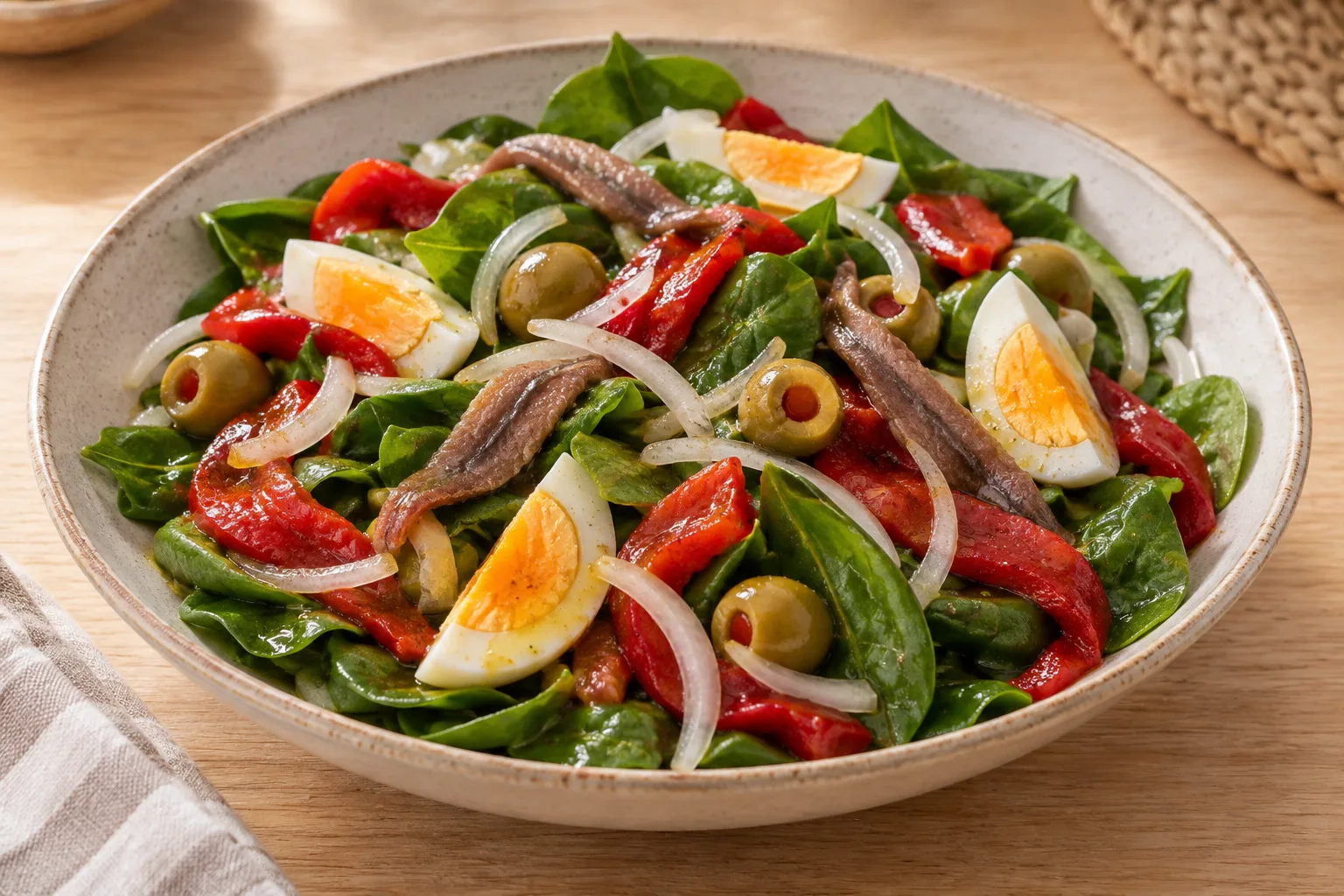
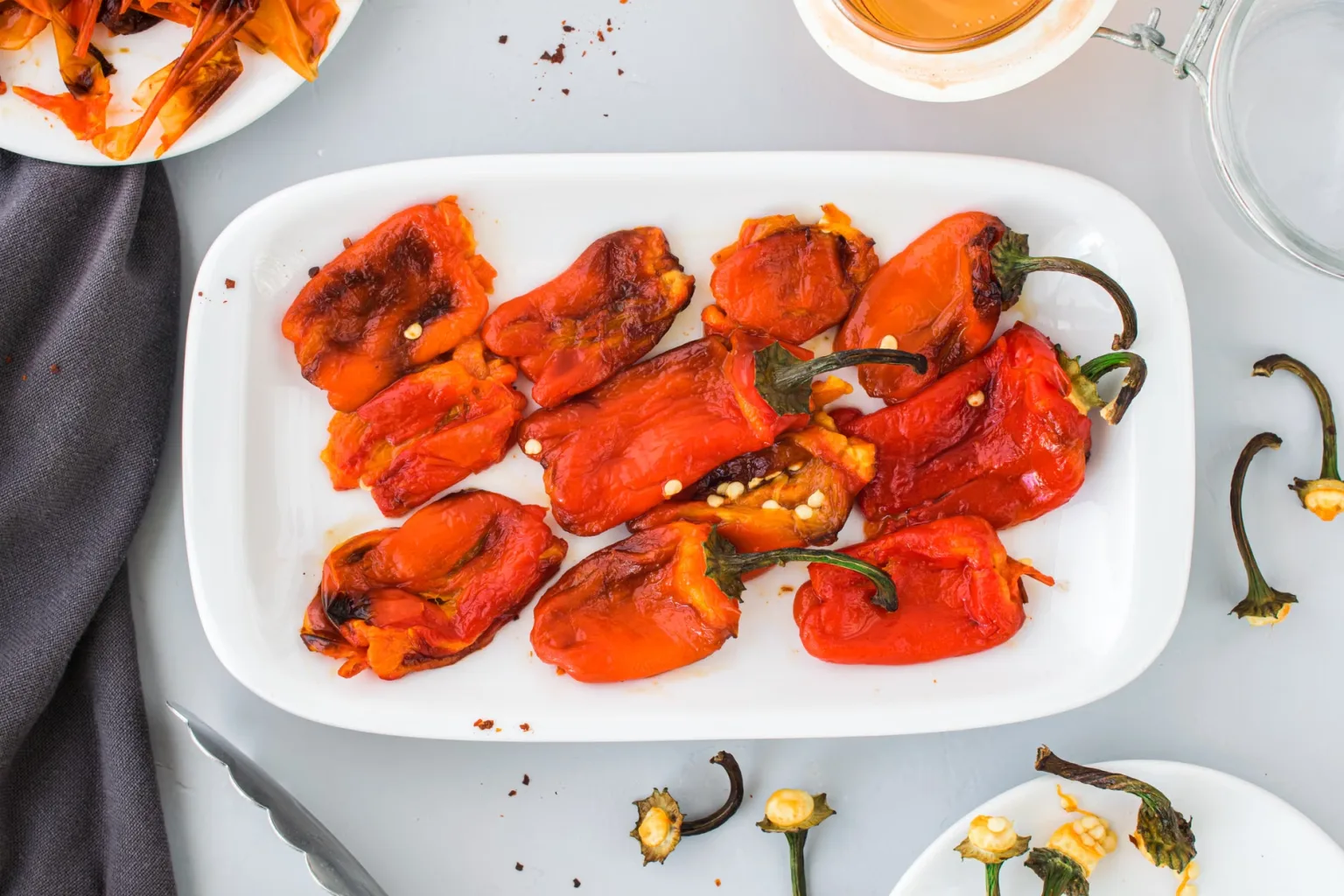
Roasted peppers are a preparation made from peppers in the Capsicum genus and cooked over an intense heat source. Roasting cooks the vegetable in its own juices and often leaves the skin toasted or blackened. Depending on the recipe, the skin can then be removed, along with the stem and seeds. Roasted peppers may be made at home or bought packaged, so the name alone does not specify the variety or form in which they are sold. Red peppers are often sweeter and fleshier than green ones, although the type of pepper also affects the flavor. They can be served on their own or dressed, used as a side, or added to salads, sauces and other dishes.
When to use it
Use roasted peppers when you want to add tender, juicy texture and the concentrated flavor that comes from roasting. They work in salads and starters, as a side for meat or fish, on bread, or as part of sauces and purées. They can be used in both cold and hot dishes. Choose the color and variety for the result you want: red peppers tend to be sweeter and fleshier, while green ones may be less sweet. Keep in mind that a piquillo or another variety will not give exactly the same result as a large roasted pepper.
How to use it
To make roasted peppers at home, cook them whole or opened, using an oven, grill or direct flame depending on the equipment available. Once roasted, remove the skin if the recipe calls for it; remove the stem and seeds as well, then cut the flesh into strips or pieces. Serve them as they are or dress them with oil and vinegar, mix them into a salad, put them on bread, or blend them into a sauce or purée. They can also accompany meat or fish. If using packaged peppers, check the label for ingredients and the appropriate use and storage directions for that product, since the presentation and composition can vary.
Flavour and texture
Roasting softens the flesh and concentrates its juices. Red peppers are often sweeter and fleshier than green ones, although the variety also affects the result. Intense heat can add toasted or smoky notes, especially when the skin is marked by cooking. Flavor and texture therefore vary among roasted peppers according to the type of pepper and how it is prepared.
How to choose it
For home roasting, choose firm peppers without damaged areas; large, fleshy red peppers are a common choice for this preparation. Peppers of similar size help them cook more evenly. If buying ready-roasted peppers, check the product name, ingredients and storage directions on the label. Recipes and packaging can differ, so do not assume that every product has the same composition.
Storage
Storage depends on whether the peppers are homemade or packaged and on the directions supplied for the product. For packaged peppers, follow the label for storage and use after opening; do not infer a shelf life from appearance. The available evidence does not establish a general safe storage period for homemade preparations, so this guide does not assign one. Consult official recommendations appropriate to your situation.
Substitutions
You can replace red roasted peppers with yellow or green ones if a change in color and flavor suits the dish. A roasted or preserved piquillo pepper may work in some recipes, but its variety, size and presentation differ from those of a large roasted pepper. Adjust the cut and amount to the preparation. For packaged products, check the ingredients on the label rather than assuming all options have the same composition.
Common mistakes
A common mistake is treating all colors and varieties as if they had the same flavor and texture: the result depends on the type of pepper. Roasted peppers as a preparation should also not be confused with a particular preserved product, whose composition can vary. For packaged peppers, do not ignore the label or assume they store in the same way as a homemade preparation.
Safety and allergens
For packaged roasted peppers, check the label for ingredients and product-specific storage and use directions. Applicable information can vary with the product and its presentation. If you have an allergy or intolerance, check the information for the specific product before eating it.
Culinary uses
- acompañamiento
- ingrediente para ensaladas y entrantes
- base para salsas y cremas
Recommended techniques
- asar
- retirar la piel y las semillas
- cortar en tiras o triturar
Pairs well with
- aceite y vinagre
- ajo y hierbas aromáticas
- carne o pescado
- pan
Frequently asked questions
What are roasted peppers?
They are peppers cooked over intense heat until the flesh is tender. The skin may be toasted and removed before serving.
Are roasted peppers always red?
No. Peppers of different colors and varieties can be roasted, and their flavor and texture can vary.
How can I serve them?
Serve them in strips in a salad or as a side, put them on bread, or add them to sauces and purées.
How should I store packaged roasted peppers?
Follow the directions on the specific product’s label, including storage and use instructions after opening.
Estimated nutrition
- Fat
- 28.6 g
- Saturates
- 3.57 g
- Carbohydrate
- 3.57 g
- Sugars
- 3.57 g
- Fibre
- 0 g
- Protein
- 0 g
- Salt
- 0.98 g
Sources and review
Automatically researched, cross-checked and validated content. Sources consulted:
- En el etiquetado alimentario hay algunas menciones que son obligatorias eletiquetadocuentamucho.aesan.gob.es
- Client Challenge doi.org
- Variedades de pimientos más populares y algunas recetas con ellos hola.com
- Artes culinarias/Ingredientes/Pimiento - Wikilibros es.wikibooks.org
- Pimiento: Variedades (Rojo, Verde, Padrón), Propiedades y Cultivo frutamerca.com
- Pimientos: variedades y usos en cocina - CocinoPedia.com cocinopedia.com
- La guía definitiva para hacer pimientos asados directoalpaladar.com
- Aesan - Agencia Española de Seguridad Alimentaria y Nutrición aesan.gob.es
- PIMIENTO ROJO ASADO , tu Huerta de proximidad | deHigosaPeras dehigosaperas.com
- Pimientos asados - Wikipedia, la enciclopedia libre es.wikipedia.org
- Avanis | Plataforma no disponible avanis.es
- Pimientos Asados Deliciosos y Fáciles - Paulina Cocina paulinacocina.net
- El verano huele a pimientos asados - IBSA ibsabierzo.com
- Recetas con pimientos asados: recetas mediterráneas irresistibles okdiario.com
- Guía para asar y pelar pimientos: técnicas y consejos casayverde.blog
- ¿Has probado los pimientos asados? - La Española Aceites laespanolaaceites.com
- Pimientos asados caseros: la receta fácil para horno o freidora de aire | El Comidista | Gastronomía | EL PAÍS elpais.com
- Pimientos asados: Guía completa, trucos de preparación y recetas creativas lasrecetascocina.com