- Category
- Herbs and spices
- State
- Dry
- Usual unit
- g
What it is
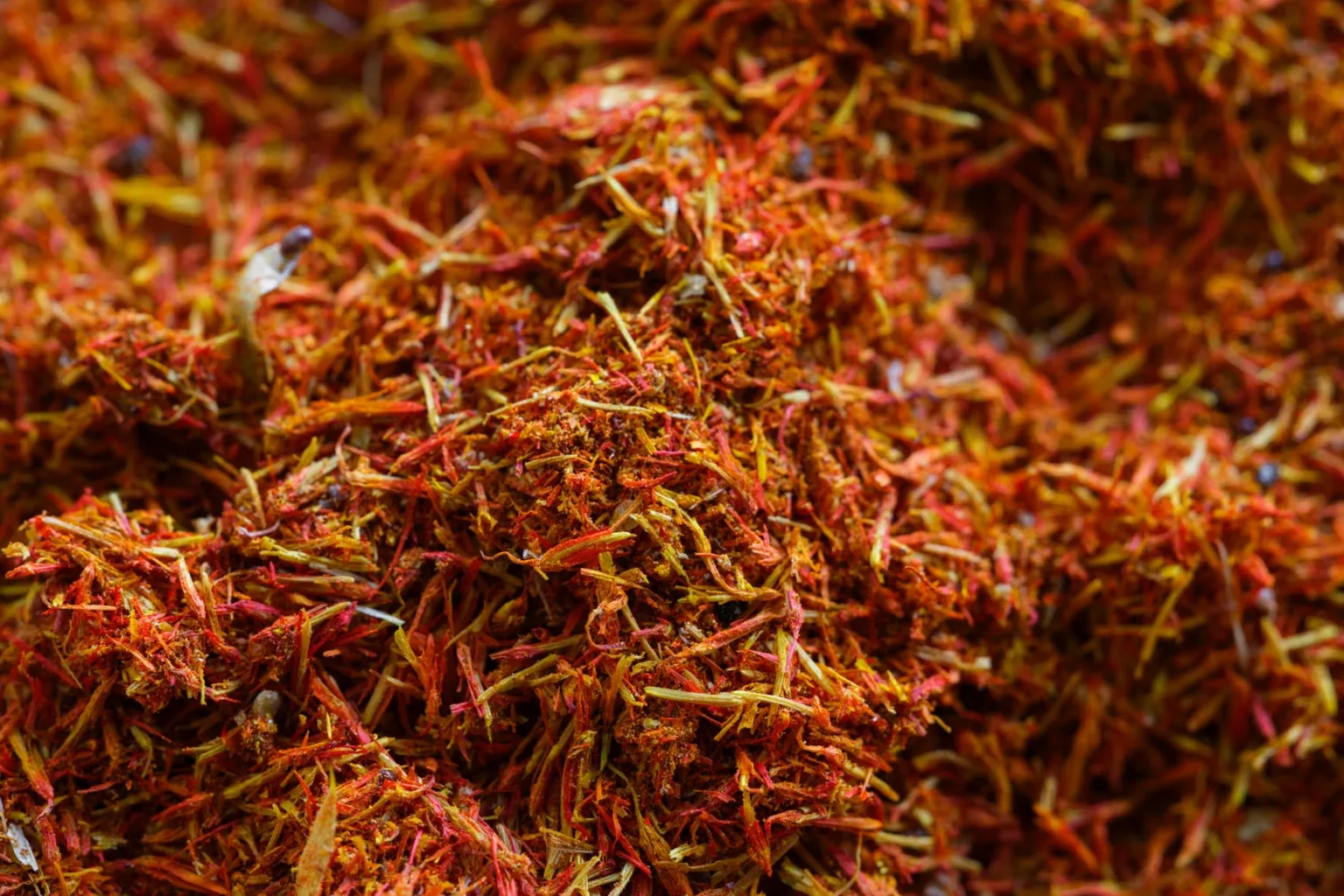
Saffron threads are the dried stigmas of the Crocus sativus flower. Sold as reddish filaments, saffron belongs to the Iridaceae family. In cooking it contributes aroma, flavor, and a yellow-golden color. It is more than a coloring agent: saffron has its own aromatic character as well as the ability to tint food. Threads are a different presentation from ground saffron and let you see the ingredient before adding it to a recipe.
When to use it
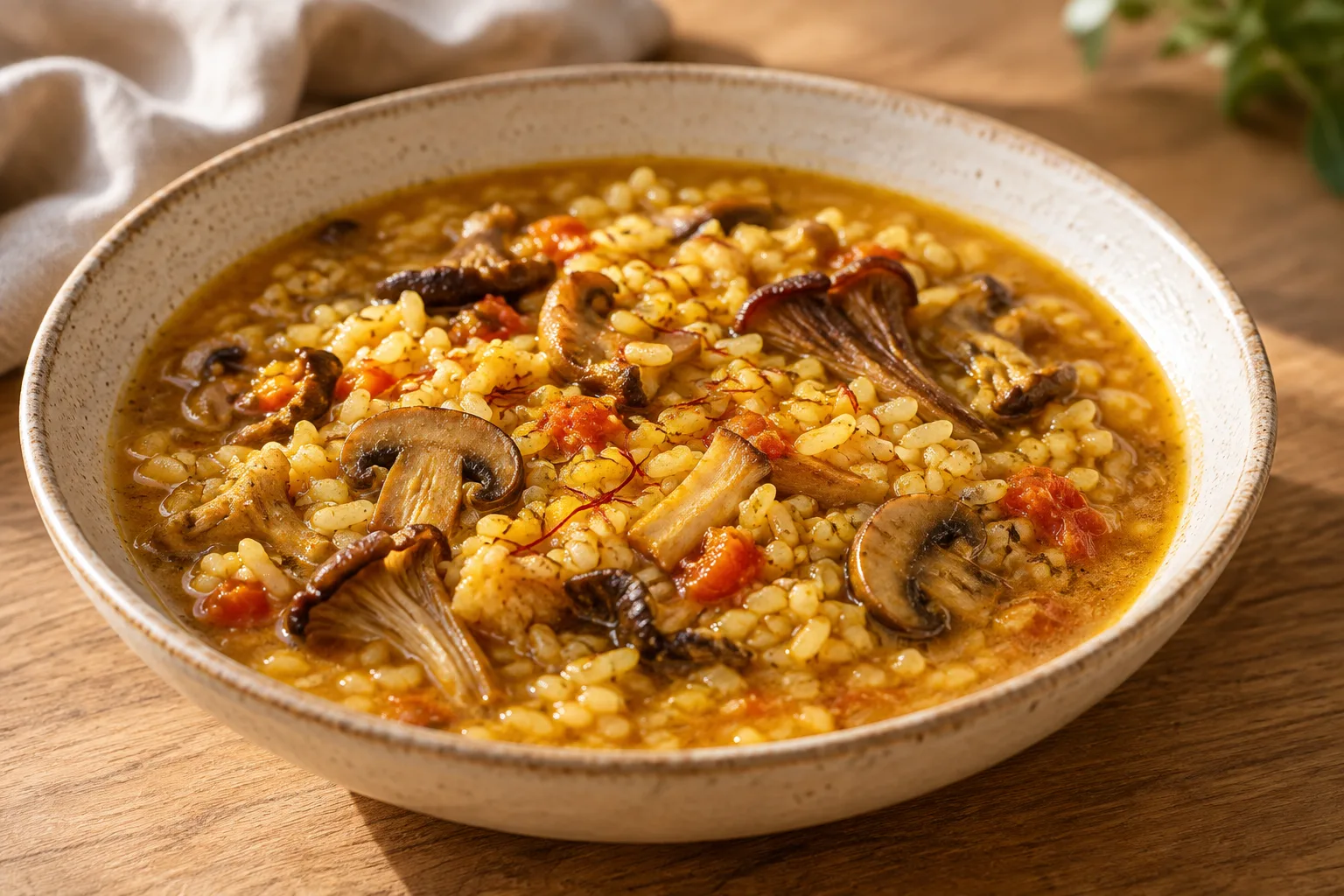
Use saffron when you want to give a dish a distinctive aroma and flavor as well as color. It is commonly used in rice dishes and risotto, and can also perfume fish broths, soups, stews, mild sauces, and sweet dishes. Its character can stand out readily, so start with a small amount and adjust to the recipe. If your only aim is yellow color, another option may be more practical, though it will not provide saffron’s aroma.
How to use it
To help distribute its flavor, aroma, and color, gently crush the threads in a mortar and infuse them in a little water, broth, or milk before adding them to the dish. Add the infusion liquid too, so its released color is not left behind. Alternatively, add the threads directly to a liquid in the recipe and allow them to infuse as the dish cooks. Toasting is not essential: product guidance differs, and some products say it is unnecessary. Use sparingly, since saffron’s flavor can dominate the other ingredients.
Flavour and texture
Saffron has an intense, penetrating, floral aroma with earthy notes. Its distinctive flavor is often described as slightly bitter, although products can vary. The dried threads are delicate, fragile filaments; when infused, they release yellow, orange, or golden color into the liquid. Unlike a coloring agent without aroma, saffron changes both the fragrance and flavor of a dish.
How to choose it
Choose a package clearly identified as saffron threads and check its labeling, including stated origin where provided. Thread appearance and aromatic intensity can differ from one product to another, so do not treat a single feature as a guarantee of quality. Buy a package size suited to your expected use and check that it is intact, properly closed, and clearly labeled.
Storage
Keep the threads in a well-closed package to limit exposure to air and light, which can alter their qualities. Follow the storage instructions on the product label, since they can differ by presentation and packaging. Avoid leaving the container open while cooking, and close it again after each use. Any specific storage directions on the label take priority.
Substitutions
Turmeric can provide a yellow tint when color is the main goal, but it does not reproduce saffron’s aroma or flavor. Food-grade coloring may work when only color is needed; it also does not replace the aromatic character of the threads. These alternatives change the result, so choose according to whether color, flavor, or both matter most.
Common mistakes
A common mistake is adding too much saffron in the hope that more will improve a dish; its flavor can overwhelm the other ingredients. The threads can also be unevenly distributed if you do not consider how they will disperse; infusing them in liquid makes them easier to incorporate evenly. Do not assume that toasting is required, or mistake a color substitute for an equivalent flavor substitute.
Safety and allergens
No specific official warning for saffron is available in the supplied evidence. Read and follow the package directions for storage and use, and check the product label if you need to verify ingredients or allergen information.
Culinary uses
- Condimento aromático para aportar sabor y aroma
- Colorante natural para caldos, arroces y otras preparaciones
Recommended techniques
- Infusionar las hebras en agua, caldo o leche antes de incorporarlas
- Machacar suavemente en un mortero y añadir a la preparación
Pairs well with
- Arroz y risotto
- Caldo de pescado y marisco
- Guisos y sopas
- Postres y preparaciones dulces
Frequently asked questions
Should I grind or infuse saffron threads?
Neither is essential, but gently crushing and infusing the threads in water, broth, or milk can help distribute their color, aroma, and flavor. Add the infusion liquid to the dish as well.
Can turmeric replace saffron threads?
Turmeric can provide yellow color, but its flavor and aroma are not those of saffron. It is an alternative only when color is the main priority.
How should I store saffron threads?
Keep the package closed and protected from light, and follow the storage directions printed on the product label.
Estimated nutrition
- Fat
- 0 g
- Saturates
- 0 g
- Carbohydrate
- 0 g
- Sugars
- 0 g
- Protein
- 0 g
- Salt
- 0 g
Sources and review
Automatically researched, cross-checked and validated content. Sources consulted:
- En el etiquetado alimentario hay algunas menciones que son obligatorias eletiquetadocuentamucho.aesan.gob.es
- Romanica Olomucensia : «¿Qué pinga es esto?». Usos disfemísticos en el español de Cuba doi.org
- Todo sobre el azafrán, la fragante especia más cara del mundo: propiedades y usos en la cocina más allá de la paella directoalpaladar.com
- ¿Qué es el azafrán y para qué sirve? | JUST SPICES ® justspices.es
- Azafrán: La 1ª guía definitiva - Espècies Teixidor teixidor.com
- Azafrán en hebras - Dehesa de la Albufera dehesadelaalbufera.com
- Usos culinarios del azafrán en la cocina | Cocinar con Crocus Sativus – Sativus.com sativus.com
- A Freír Espárragos afreiresparragos.com
- Paella de Marisco Valenciana: Receta Auténtica y Fácil es.kitchen20.com
- Azafrán: todo sobre la especia, beneficios y usos culinarios finedininglovers.es
- Aesan - Agencia Española de Seguridad Alimentaria y Nutrición aesan.gob.es
- ¿Qué es y para qué sirve el azafrán? 3 recetas para aprovechar al máximo todas sus propiedades 20minutos.es
- Azafrán molido y Azafrán en hebra | POTE azafranpote.com
- Azafrán en Hebras | Ruta de las Especias rutadelasespecias.es
- Azafrán. ¿Qué es y cómo cocinar con él?¿Tostar o infusionar? abc.es
- Azafrán hebra carmencita.com
- Azafrán: 10 trucos para su correcto uso - Scoolinary blog.scoolinary.com