- Category
- Fish and seafood
- State
- Fresh
- Usual unit
- lomos
What it is
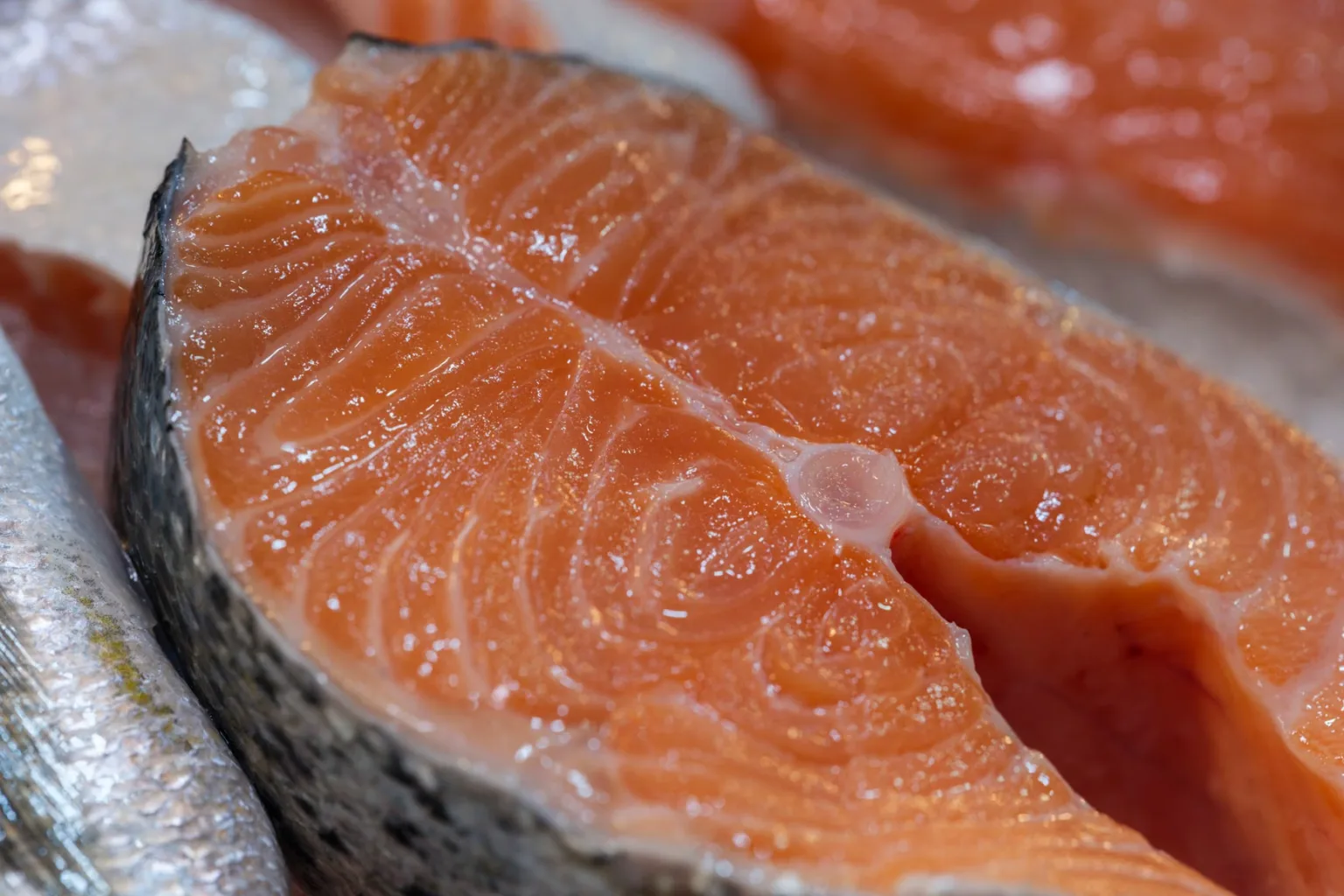
A salmon portion is a cut piece taken from the fish; the name describes the cut, not a particular species or cooking method. Portions are often thicker than thin fillets and may be sold with or without skin, and with or without bones, depending on the product. Salmon is a fish in the salmonid group, but the cut alone does not tell you whether it is wild or farmed, or where it comes from. This profile is for fresh portions. Check the product description and its use and storage instructions on the package or with the seller.
When to use it
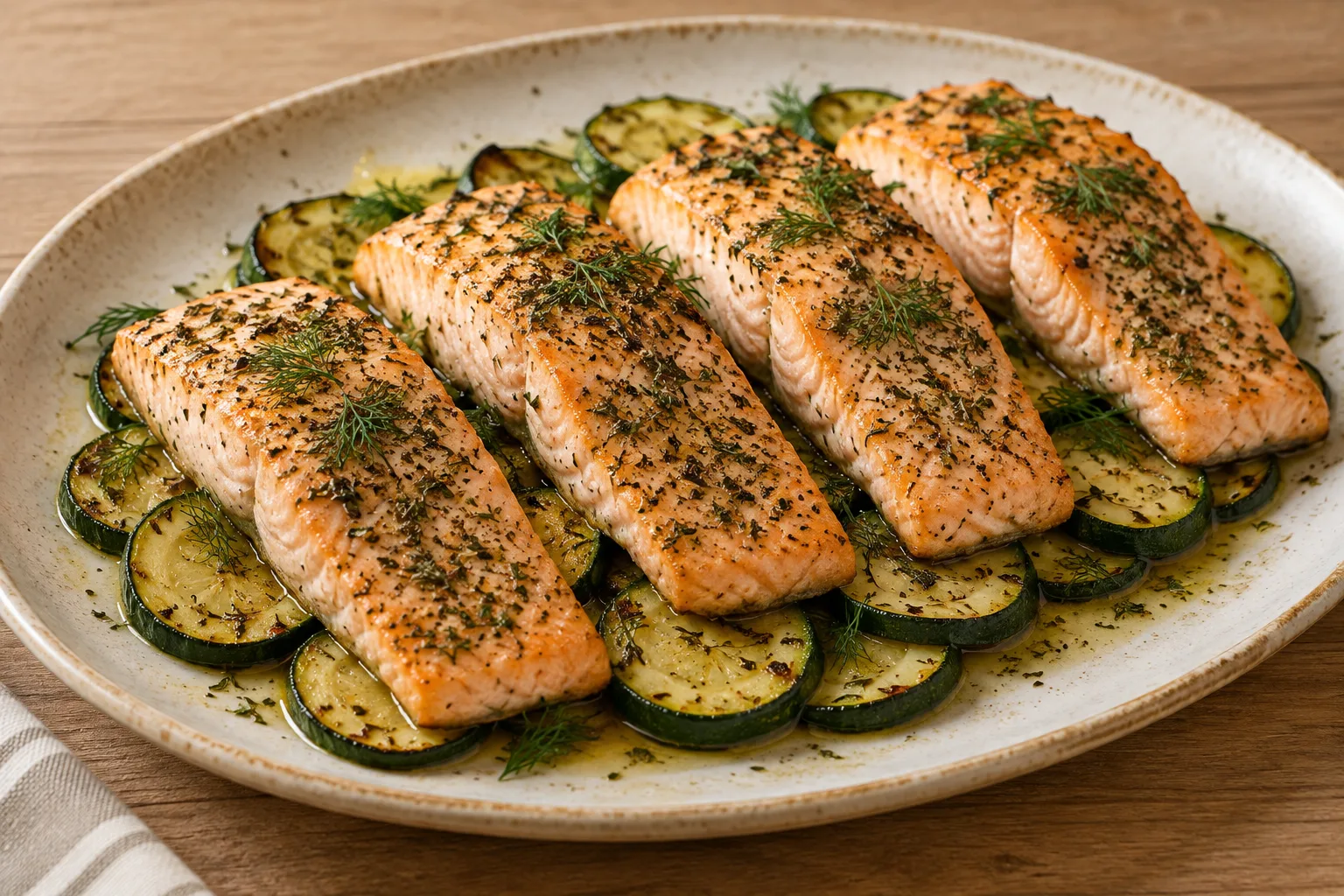
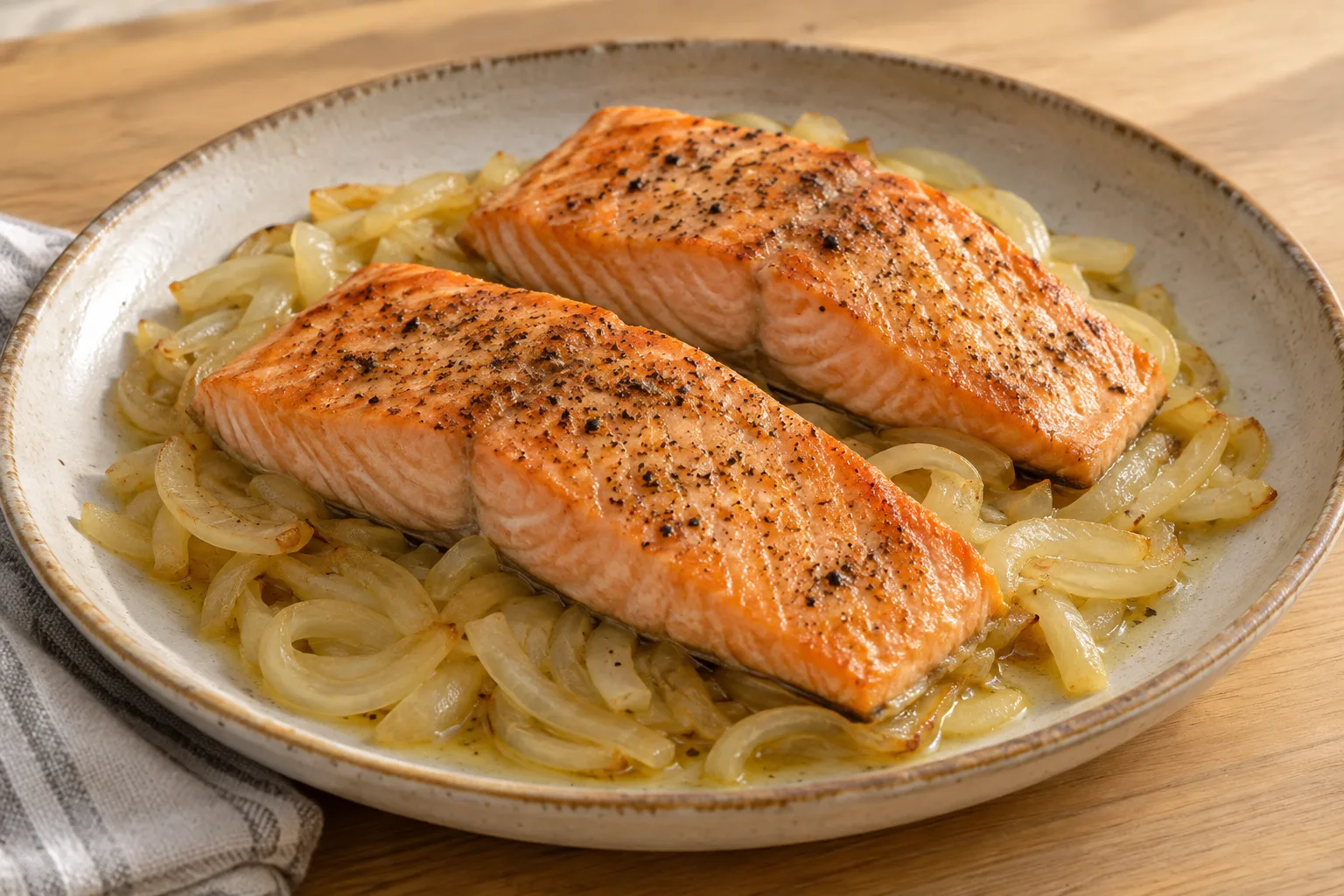
Choose portions when you want defined servings for a main course or separate pieces to cook on a pan, grill, in the oven, by steaming or in papillote. They can also be flaked or cut up for rice dishes, pasta, salads, stews, fillings and savoury bakes. Results depend on the size and thickness of each piece and on the method, so check how it is cooking rather than automatically using timings intended for a different cut.
How to use it
Check whether the portions have skin or bones and prepare them to suit the dish; products may be presented in different ways. For a simple preparation, season and cook them on a pan or grill, bake them, steam them or wrap them in papillote. Check the fish as it cooks and avoid extending the cooking unnecessarily, since salmon can dry out. Serve with potatoes, vegetables or rice, or add lemon, orange or herbs such as dill. Portions can also be used in stews, pasta, salads and fillings. Always follow the product's own use and date information.
Flavour and texture
Salmon is described as a fish with a pronounced flavour and firm, juicy, delicate flesh. Its texture can be tender when cooked with care, but it may become dry if cooking is prolonged. The pink or reddish colour of the flesh can become more pronounced during cooking. The thickness of the portions and the chosen method affect the final texture.
How to choose it
Check that the product name clearly identifies the fish and cut, and ask if you are unsure about its presentation. For packaged portions, check the date, storage conditions and directions for use; for unpackaged fish, ask the seller for relevant information. Do not infer origin, farming method, skin or bone status from the word “portion” alone.
Storage
Keep the product according to the storage conditions stated on the package or provided by the retailer. Check the use-by or durability date and follow the directions for use; fresh fish may carry a use-by date. If clear instructions are not available, ask the seller instead of guessing a time or temperature. Keep the label information available, especially if the product has been packaged or prepared.
Substitutions
Trout or hake can replace salmon in dishes that allow for portions of fish, such as pan-cooking, baking or some stews. They are not identical: flavour, texture and thickness may differ, so check the cooking as appropriate for the cut you use. Trout is the closer alternative among these suggestions, while hake has a different profile.
Common mistakes
Do not cook every cut for the same length of time regardless of thickness: salmon can dry out when overcooked. Do not assume every portion has skin, is boneless or comes from the same place; check the specific product. Do not replace the label's storage directions with a generic rule.
Safety and allergens
Salmon is fish, so this allergen matters to anyone who needs to avoid fish. Read the allergen information and follow the date and storage and use instructions for the specific product. Labelling and presentation can vary according to how it is sold.
Culinary uses
- Plato principal
- Ingrediente para guisos, arroces, pastas, ensaladas y rellenos
Recommended techniques
- Plancha o parrilla
- Horno
- Vapor
- Papillote
Pairs well with
- Patatas y otras verduras
- Arroz
- Limón y naranja
- Eneldo y otras hierbas aromáticas
Frequently asked questions
Does “salmon portion” mean the fish is boneless?
Not necessarily. The name describes a cut and does not guarantee that it is boneless. Check the product or ask the seller.
How can I cook salmon portions?
They can be pan-fried or grilled, baked, steamed or cooked in papillote. Keep an eye on the cooking so the fish does not dry out.
What goes well with salmon portions?
Potatoes, vegetables and rice are suitable options. Lemon, orange and aromatic herbs are also used alongside salmon preparations.
Estimated nutrition
- Fat
- 15.9 g
- Saturates
- 3.1 g
- Carbohydrate
- 0 g
- Sugars
- 0 g
- Fibre
- 0 g
- Protein
- 20.4 g
- Salt
- 0.1 g
Sources and review
Automatically researched, cross-checked and validated content. Sources consulted:
- En el etiquetado alimentario hay algunas menciones que son obligatorias eletiquetadocuentamucho.aesan.gob.es
- Receta de Salmón al Horno +3 Guarniciones - Paulina Cocina paulinacocina.net
- ¿Por qué la muerte es origen de miedos y tabúes? doi.org
- Aceite de oliva - Wikipedia, la enciclopedia libre es.wikipedia.org
- Aesan - Agencia Española de Seguridad Alimentaria y Nutrición aesan.gob.es
- Recetas con lomo de salmón: irresistibles y variadas cookpad.com
- Cómo se prepara el salmón, increíble receta | Recetas Nestlé recetasnestlecam.com
- Salmón, todo lo que necesitas saber sobre este excepcional pescado - MOWI Salmon España mowi-salmon.es
- El salmón, un pescado noruego excelente - El Blog de Mariskito mariskito.com
- Lomos de salmón de Noruega – Leroy – 250g es.openfoodfacts.org
- Lomo de salmón con ajo y perejil - Gallina Blanca gallinablanca.es
- Salmón | Curiosidades y cómo prepararlo | Pescados y mariscos | EROSKI CONSUMER pescadosymariscos.consumer.es
- Lomos de salmón: 10 recetas ‘supremas’ que son un triunfo seguro hola.com
- 17 recetas de salmón fresco deliciosas, rápidas y fáciles directoalpaladar.com
- El Maridaje Perfecto de Salmón y Vino - Recetas con Salmón recetasconsalmon.com
- 5 técnicas que necesitas saber ya para cocinar el salmón más jugoso que hayas probado nunca elespanol.com
- Cómo cocinar el salmón para que conserve la textura y tres recetas fáciles, rápidas y saludables eldiario.es