- Category
- Fish and seafood
- State
- Fresh
- Usual unit
- piece
What it is
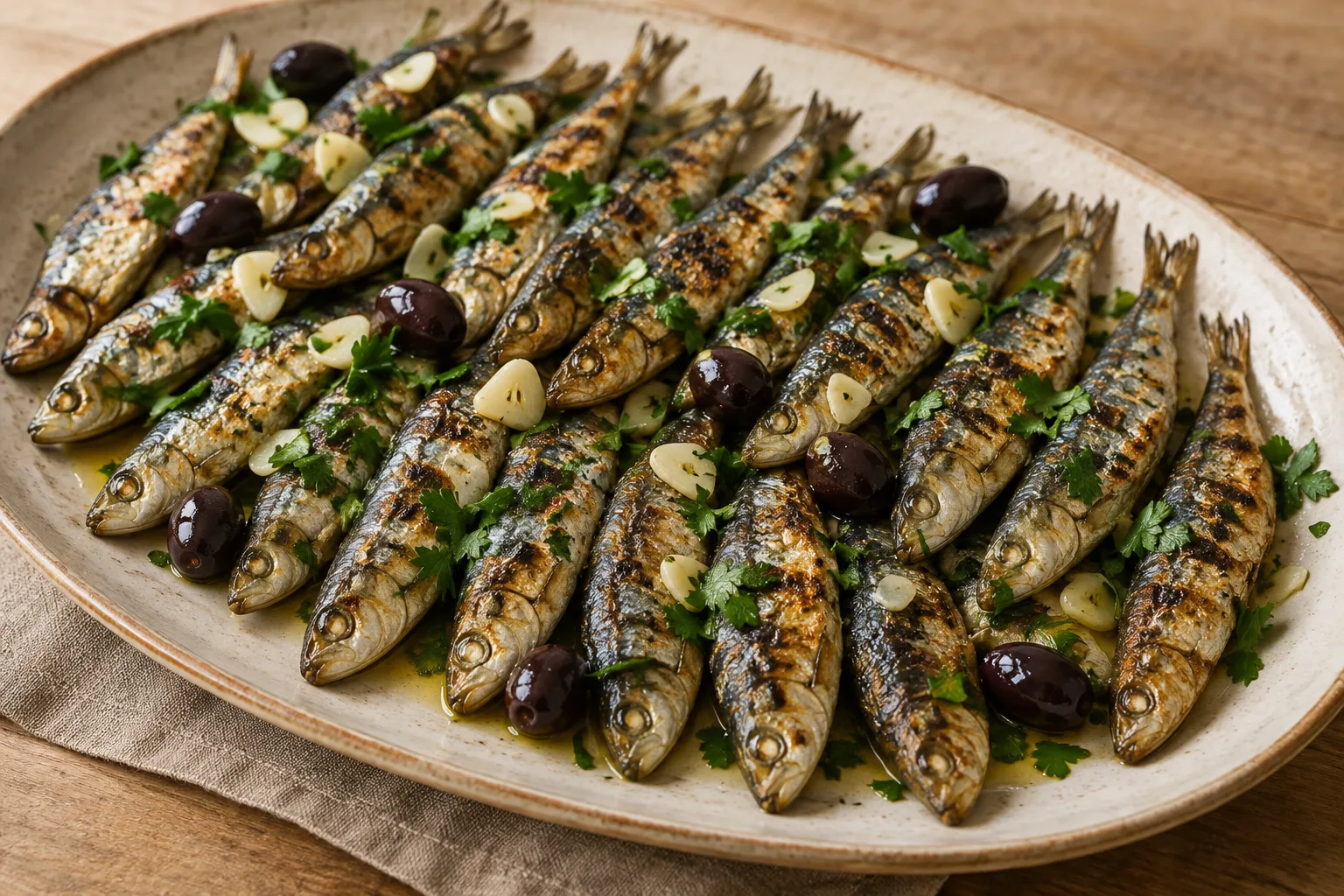
Sardines are oily fish sold fresh and also in forms such as canned and salted products. The common name can refer to more than one species, so not every sardine on sale should be assumed to be identical. In cooking, sardines may be eaten whole or, when larger, as fillets; small and large fish can suit different preparations. Their flesh is flavorful and works with simple methods such as grilling, pan-cooking and frying, as well as preparations such as escabeche. This profile focuses mainly on fresh sardines: guidance for canned and salted sardines refers to alternative forms, not exact equivalents in texture or flavor.
When to use it
Choose sardines when you want a full-flavored fish to serve as a main dish or add to a straightforward meal. Small sardines can be cleaned and added to omelets or scrambled dishes; larger ones suit the grill, pan, oven or coating and frying. Cleaned fresh sardines can also go into escabeche or a seafood stew. For salads, sandwiches and omelets, canned sardines are a convenient option, although their texture and flavor differ. Availability and season depend on location and product; the evidence here does not establish a universal calendar for all sardines.
How to use it
Let size guide the preparation: small sardines work well in omelets or scrambled dishes once cleaned; larger ones can be grilled, pan-cooked or baked, and can also be coated and fried. For a seafood stew or escabeche, use cleaned fish and follow a recipe suited to the product you have. Fresh sardines may also be grilled whole; some traditional preparations cook them with the head and, sometimes, the innards. Fillets are another option for larger fish. Canned sardines can be added to salads, omelets and sandwiches. Match the seasoning to their pronounced flavor, and remember that salted sardines taste strong and are often served with olive oil. Do not automatically transfer instructions for one form of sardines to another.
Flavour and texture
Sardines have flavorful flesh, a somewhat dark tone and the characteristic richness of oily fish. Size matters in the kitchen: smaller fish are described as more delicate, while larger ones lend themselves to different preparations. Grilling, pan-cooking, frying and escabeche produce different results; canning and salting also change the flavor and texture. Salted sardines can taste intense and are commonly served with olive oil.
How to choose it
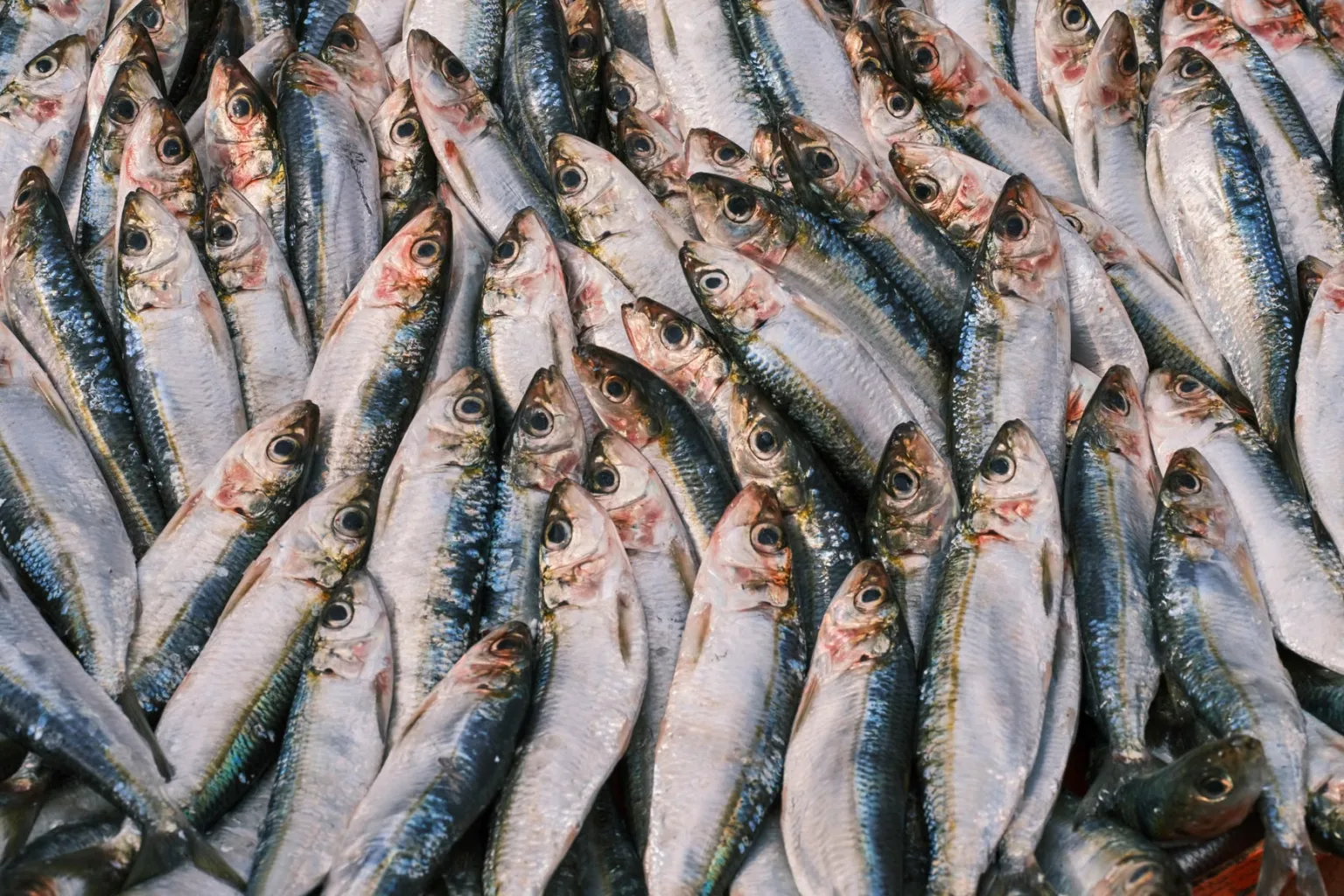
When buying fresh sardines, check that the fish has been properly kept at the place of sale. One available quality cue is a bright color and mild smell; if you are unsure, ask the fishmonger before buying. Sardines are also sold canned and salted, which are distinct products from fresh fish. For a packaged product, check its name and the instructions relevant to that form. Availability can vary by region and time of year, so do not treat a local calendar as a universal rule.
Storage
Follow the storage and use instructions on the label or those provided by the seller for fresh sardines. If a packaged product gives a use-by date or special storage conditions, follow them and check the information before use. Do not apply storage guidance for canned or salted sardines to fresh fish: these are different forms. Keep track of which form you have, and ask the seller if the storage instructions are unclear.
Substitutions
For salads, sandwiches or omelets, canned sardines can replace fresh ones, but the texture and flavor will differ and the recipe should be adapted to the product. In dishes that accommodate other oily fish, herring, anchovy or mackerel may be possible alternatives, but they are not exact substitutes: size, flavor and handling differ. Check whether a recipe calls for fresh, salted or canned fish before making a swap.
Common mistakes
Treating fresh, canned and salted sardines as interchangeable without adapting the recipe. Ignoring size when choosing a preparation, even though small and large sardines suit different uses. Assuming that one season applies everywhere or that instructions for one product form automatically apply to another. For a moist result, avoid cooking the fish until it has lost all its juiciness; one culinary source recommends retaining some of its fat and juiciness.
Safety and allergens
Follow the storage and use instructions on the package or from the seller, and observe a use-by date when one is given for fresh fish. If the instructions are unclear, ask the seller; do not judge safety by appearance or smell alone. Sardines are fish and should be identified as such when communicating allergens; for prepared products, also check the label for other declared ingredients or allergens.
Culinary uses
- Plato principal
- Ingrediente para ensaladas, tortillas y bocadillos
- Aporte sabroso a guisos marineros
Recommended techniques
- A la plancha o a la brasa
- Fritura o rebozado
- Asado y escabeche
- En conserva o salazón
Pairs well with
- Limón y hierbas frescas
- Aceite de oliva y ajo
- Ensaladas y hojas verdes
- Pan tostado o de corteza crujiente
Frequently asked questions
How can I cook fresh sardines?
Depending on their size, grill, pan-cook, bake, fry or coat and fry them. Small sardines can also be cleaned and added to omelets or scrambled dishes.
Can I use canned sardines instead of fresh ones?
Yes, in dishes such as salads, sandwiches and omelets. The texture and flavor will differ, so adapt the recipe to the canned form.
Which storage instructions should I follow?
Follow the seller’s or label’s instructions and observe a use-by date if provided. Ask the seller if you are unsure how to store the product.
Estimated nutrition
- Fat
- 8.24 g
- Saturates
- 1.76 g
- Carbohydrate
- 0 g
- Sugars
- 0 g
- Fibre
- 0 g
- Protein
- 18.8 g
- Salt
- 0.88 g
Sources and review
Automatically researched, cross-checked and validated content. Sources consulted:
- En el etiquetado alimentario hay algunas menciones que son obligatorias eletiquetadocuentamucho.aesan.gob.es
- Client Challenge doi.org
- Food Selection & Storage | Home & Garden Information Center hgic.clemson.edu
- Storing White Rice | USU extension.usu.edu
- Aecosan - Agencia Española de Consumo, Seguridad Alimentaria y Nutrición aesan.gob.es
- Eat Sardines! - Tufts Health & Nutrition Letter nutritionletter.tufts.edu
- Pacific Sardine | California Sea Grant caseagrant.ucsd.edu
- 4 Reasons Sardines are Great | Bastyr University bastyr.edu
- Sardines wrapped in a sustainable (and baby-friendly) package - Pickles and Tea apa.si.edu
- Características de los alimentos: sardinas nestlefamilyclub.es
- EL MERCADO DE LA SARDINA EN ESPAÑA Elaboración 2017 mapa.gob.es
- (PDF) Fatty Acid Profiles and Lipid Oxidation Status of Sun Dried, Deep Fried, and Smoked Sardine (Rastrineobola argentea) from Lake Victoria, Tanzania academia.edu
- Sardina | Curiosidades y cómo prepararlo | Pescados y mariscos | EROSKI CONSUMER pescadosymariscos.consumer.es
- Sardina - Wikipedia, la enciclopedia libre es.wikipedia.org
- Sardinas en conserva y otros pescados: un breve recorrido jamonarium.com
- Sardina- Gastronomía - Región de Murcia Digital regmurcia.com