- Category
- Vegetables
- State
- Fresh
- Usual unit
- g
What it is
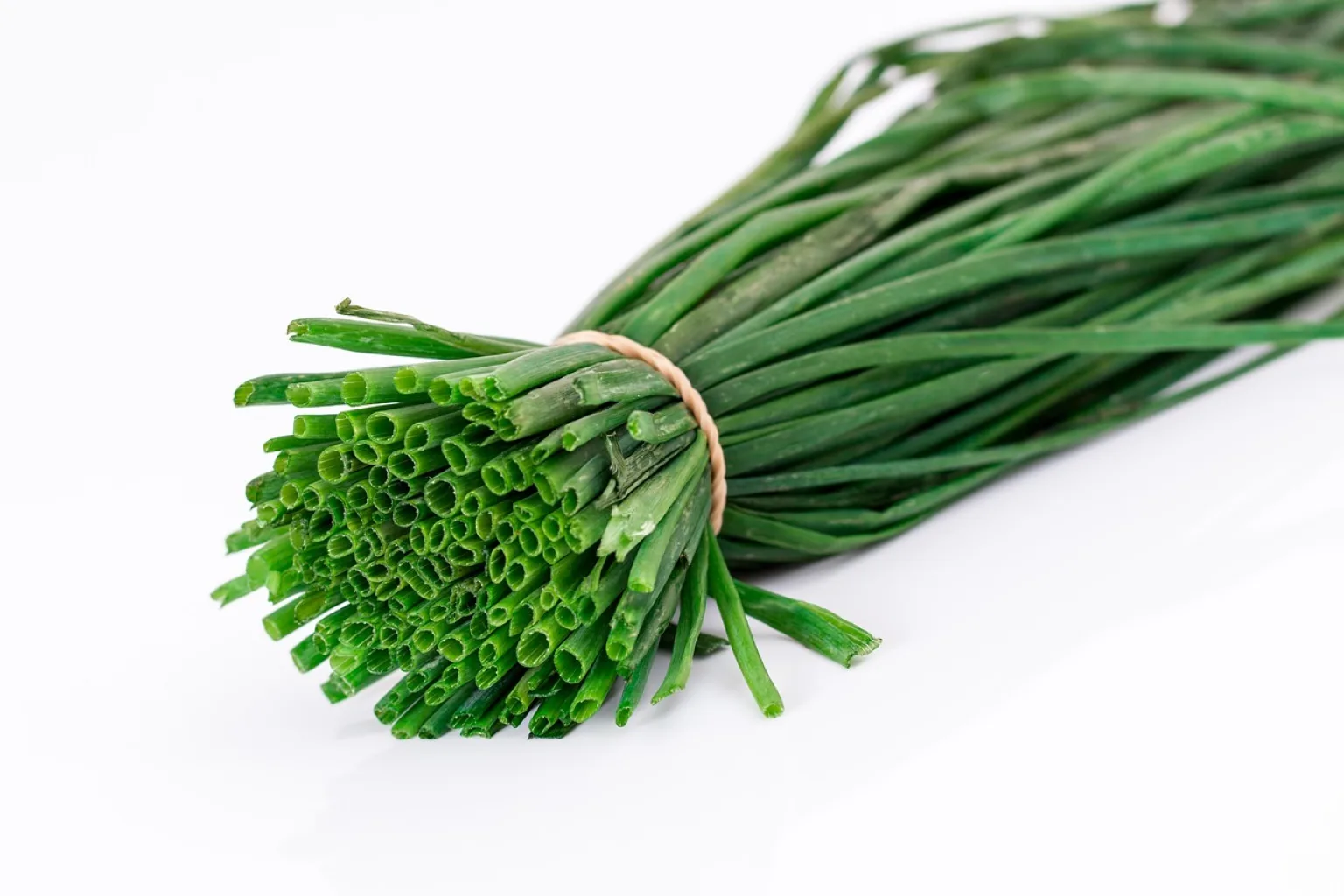
Scallions are fresh alliums related to onions, leeks, and chives. The name does not identify exactly the same plant everywhere: it can mean an allium that does not form a large bulb, while green or spring onion can refer to a common onion harvested while young. Both may have edible green leaves, but they are not necessarily botanically identical. In the kitchen, scallions with a small base and long green leaves are generally used whole, from the pale portion to the greens, and have a milder character than mature dry onions. This profile uses “scallions” in that practical, broad culinary sense rather than assuming that every product sold under a similar name is the same variety.
When to use it
Choose scallions when you want a gentler onion flavor or a fresh green accent. Use them raw in salads or finely sliced as a finishing garnish. Cooked, they can contribute aroma to soups, broths, sauces, and sautéed bases. They can also season meat and fish dishes. Since regional names differ, check the actual shape of the ingredient: a small base and long leaves are not the same as a more developed bulb. That difference affects how much white and green you have available and how closely the ingredient will match the scallions described in a recipe.
How to use it
Remove any damaged parts and rinse the scallions before cutting. Separate the pale base from the green leaves if you want to control their texture or add them at different points. Slice them thinly for salads or scatter them over a finished dish. For soups and broths, chop the white and green portions and add them to the preparation; the leaves can also be used in soups. For a sauce or sautéed base, chop the scallions and cook them as an aromatic ingredient. They can also add aroma to meat and fish. Because products vary in size, the balance of white and green, and intensity, taste as you go rather than assuming they measure exactly like mature dry onion.
Flavour and texture
Scallions have an onion-like aroma and flavor, but young fresh products are generally milder and less pungent than dry onions. The pale base is more substantial, while the green leaves are lighter and make a fresh-looking garnish when finely sliced. The flavor is not identical in every product sold under similar names: a young common onion may differ from an allium that does not form a large bulb.
How to choose it
Choose scallions with firm bases and green leaves that look fresh, without obvious damaged or wilted areas. Check the size of the base and the balance of pale and green portions: scallion and green-onion names can refer to different plants, and some young onions have a more developed bulb. If you want a particularly mild flavor, select a tender-looking product and taste a small amount before adding more. A shared name does not guarantee identical appearance or intensity.
Storage
Keep fresh scallions refrigerated. Remove damaged parts, and wait to wash them until you are ready to prepare them so you do not store them wet. Keep unwashed produce apart from ready-to-eat foods and use pieces that show deterioration first. The available evidence does not establish an exact storage duration, so inspect the scallions and discard any that are clearly spoiled.
Substitutions
Green or spring onions can often stand in for scallions, but their bases may be more bulbous and the proportion of leaves may differ. Chopped dry onion also supplies onion flavor, though it is often stronger and does not provide the same fresh green finish. Chives can work as an aromatic garnish, but they do not replace the body or texture of the pale base. Adjust the amount to suit the ingredient you have.
Common mistakes
Do not assume that scallion and green onion always name the same plant: one may not form a large bulb, while the other may be a young common onion. Do not automatically discard the green leaves; they can be used in soups or as a garnish. Avoid replacing scallions one-for-one with dry onion without tasting, since the flavor and texture may be stronger and different.
Safety and allergens
Rinse scallions under clean running water before cutting, and use clean utensils and work surfaces. Refrigerate the fresh produce and discard pieces that are clearly spoiled. The available sources do not identify a scallion-specific safety warning.
Culinary uses
- Aromático para sopas, caldos y salsas
- Guarnición fresca para ensaladas y platos terminados
Recommended techniques
- Cortar en rodajas finas para usar en crudo
- Picar y rehogar como base aromática
- Añadir a sopas y caldos
- Usar las hojas verdes troceadas como acabado
Pairs well with
- Sopas, incluidos platos de estilo asiático
- Ensaladas y preparaciones crudas
- Carnes y pescados como ingrediente aromático
- Salsas y sofritos
Frequently asked questions
Are scallions and green onions the same?
Not always. Scallion may refer to an allium that does not form a large bulb, while green or spring onion may mean a common onion harvested young. Usage varies by region.
Can I eat the green leaves?
Yes. Chop the leaves into soups and broths, or use them as a fresh garnish.
How should I store scallions?
Keep them refrigerated and remove deteriorated parts. The available sources do not specify an exact storage life.
Estimated nutrition
- Fat
- 28.6 g
- Saturates
- 17.9 g
- Carbohydrate
- 7.14 g
- Sugars
- 3.57 g
- Fibre
- 0 g
- Protein
- 7.14 g
- Salt
- 1.07 g
Sources and review
Automatically researched, cross-checked and validated content. Sources consulted:
- Client Challenge doi.org
- The Essential Glossary of Cooking Terms for the Culinary Arts - Escoffier escoffier.edu
- Para qué sirve cada tipo de cebolla (y un truco para no llorar al picarla) | El Comidista | Gastronomía | EL PAÍS elpais.com
- Qué es la cebolleta en España: La joya verde de nuestra gastronomía - Agrícola Campolor agricolacampolor.com
- Sabores de nuestras tierras/recetas - 2024 | Agricultura y Recursos Naturales ucanr.edu
- Vamos a Conservar Alimentos: Raíces comestibles: remolachas, zanahorias, nabos y colinabos extension.psu.edu
- Recetas y redes sociales: posts culinarios y la alimentación familiar como parte de la maternidad española / Recipes and Social Media: Culinary Posts and Family Food as Part of Spanish Motherhood | Published in Hispanic Studies Review hispanicstudiesreview.cofc.edu
- Appendix B: Recipes for Disease Prevention – Culinary Medicine opentextbooks.library.arizona.edu
- Transnational identity, food and community dr.lib.iastate.edu
- POTATOES stcroix.extension.wisc.edu
- Cebolleta o cebolla tierna | Gastronomía & Cía gastronomiaycia.com
- Cebolla tierna, cebolla de temporada - La Garbancita Ecológica lagarbancitaecologica.org
- Tipo de Cebollas: usos y propiedades | Fruta y verdura Cal Fruitós calfruitos.com