- Category
- Herbs and spices
- State
- Dry
- Usual unit
- teaspoon
What it is
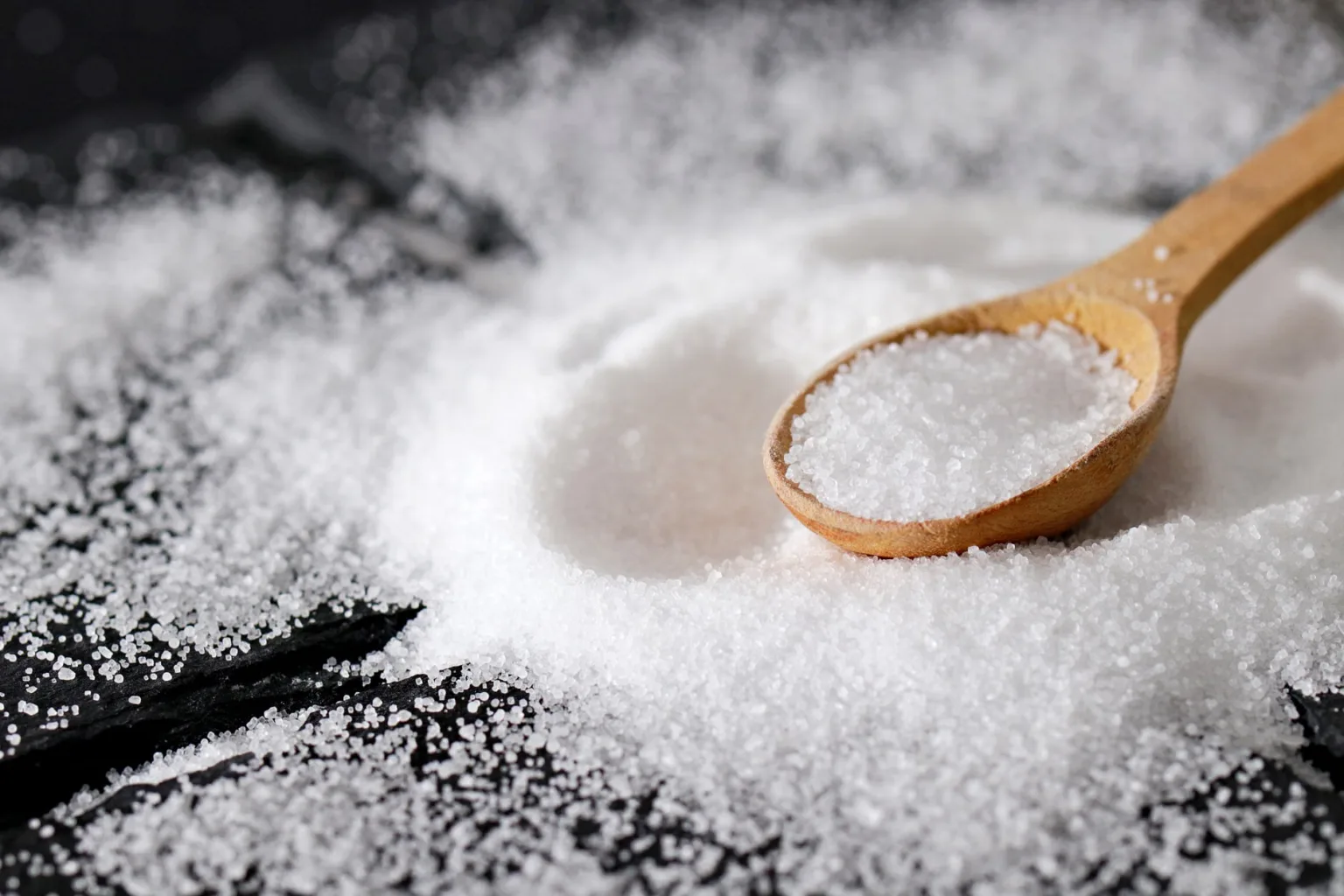
Sea salt is salt produced by evaporating seawater. In saltworks, the water becomes concentrated until salt crystallizes; the crystals are then collected and dried. Commercial sea salt comes in different grain sizes and forms, including fine grains, coarse crystals and flakes. The term “sea salt” therefore does not mean that every product has the same texture or works in exactly the same way. Some sea salts are sold without intensive refining, but the processing depends on the particular product. It is used as a seasoning, and the best way to add it depends on crystal size and the result you want in the dish.
When to use it
Use sea salt to season food during cooking or when you want the salt to be noticeable as part of the finished dish. Fine grains are convenient for spreading through ingredients and mixtures; larger crystals or flakes can add a crunchy sensation when sprinkled on at the end. It can accompany grilled or griddled meat and fish, vegetables, salads and other cooked dishes. Choose the form for the texture you want, rather than relying on the name alone: crystal size and shape affect how salt dissolves and how it is perceived.
How to use it
First decide whether you want the salt to blend into the food during cooking or to stand out on the finished dish. For seasoning as you cook, add it in a way that lets the crystals spread among the ingredients and dissolve; fine-grained salt is often convenient for this. For a visible or crunchy finish, keep coarse crystals or flakes aside and add them at the end. Try it with grilled or griddled meat and fish, vegetables and salads. Since salt products and grain sizes vary, add it gradually and adjust to the specific product and recipe. Do not assume that a spoonful of one texture will always replace the same measure of another in every use.
Flavour and texture
Its main culinary role is to provide a salty taste and bring out the overall flavor of a dish. The experience changes with crystal size and shape: fine grains spread readily, while coarse crystals or flakes can be more noticeable when bitten and provide a crunchy finish. Appearance and texture depend on the product sold; “sea salt” does not always mean large crystals or an identical flavor profile.
How to choose it
Check the package to confirm that the product is sea salt, and look at the grain size and shape before choosing it. Fine and coarse forms do not behave alike in cooking, while flakes are often chosen for finishing. Sea salt can differ in texture and processing from one product to another, so do not assume every pack is interchangeable in a recipe. If you need particular characteristics, check the product name and label information.
Storage
Check and follow the storage directions on the package, since conditions may depend on the product and its form. Keep the package identified so you can distinguish fine, coarse or flaked salt and select the right one when cooking. If you buy it in bulk or transfer it to another container, keep its label information available when possible; do not assume that every sea salt has the same specific storage requirements.
Substitutions
You can substitute table salt or another fine- or coarse-grained sea salt. Keep in mind that crystal size and shape affect distribution, dissolving and the texture of the finish. If switching from fine grains to coarse crystals or flakes, adjust how you add it and season gradually rather than assuming the same measure will give exactly the same result.
Common mistakes
A common mistake is treating all sea salts as if they had the same grain size and dissolved in the same way. Coarse crystals may disappoint when used like fine salt for an even distribution, while flakes added during cooking may lose the finishing texture you wanted. Choose the form for its role and adjust the amount gradually.
Safety and allergens
Use the product as a seasoning and check its label for the product name and any applicable directions. Sea salt can vary by form and processing, so avoid assuming that every variety has identical characteristics.
Culinary uses
- Condimento para sazonar y realzar el sabor
- Ingrediente para aportar textura y un acabado salino
Recommended techniques
- Sazonar durante la cocción, ajustando la cantidad al tamaño del grano
- Añadir al final como toque de acabado, especialmente si los cristales son grandes o en escamas
Pairs well with
- Carnes y pescados a la parrilla o a la plancha
- Ensaladas, verduras y platos ya cocinados
Frequently asked questions
How is sea salt produced?
It is produced by evaporating seawater until salt crystallizes; the crystals are then collected and dried.
Can I use sea salt to finish a dish?
Yes. Larger crystals or flakes can be added at the end when you want their texture to be noticeable in the finished dish.
Does sea salt always have coarse grains?
No. It is sold in different sizes and forms, including fine grains, coarse crystals and flakes.
Estimated nutrition
- Fat
- 0 g
- Saturates
- 0 g
- Carbohydrate
- 0 g
- Sugars
- 0 g
- Protein
- 0 g
- Salt
- 80 g
Sources and review
Automatically researched, cross-checked and validated content. Sources consulted:
- En el etiquetado alimentario hay algunas menciones que son obligatorias eletiquetadocuentamucho.aesan.gob.es
- Client Challenge doi.org
- 15 tipos de sal para dar variedad a nuestros platos: cómo elegirlas y usarlas en la cocina directoalpaladar.com
- Tipos de sal para cocinar: descubre cómo usarlas en tu cocina laespanolaaceites.com
- Tipos de sal, ¿conocías todos estos? | Excelencias Gourmet excelenciasgourmet.com
- Tipos de sal para transformar tus platos chovi.com
- Tipos de sal y sus usos en la cocina divinacocina.es
- Sabor a sal: 10 variedades que debes conocer y usar cooking.elmundo.es
- Diferencias y tipos de sal: marina, del Himalaya y refinada - Club Delicatessen clubdelicatessen.com
- revista del Comité Científico de la aesan Nº 18 aesan.gob.es
- Sal marina - Wikipedia, la enciclopedia libre es.wikipedia.org
- Sal Marina: usos, propiedades, cómo identificarla y dónde comprarla salroche.com
- Sal Marina: Qué es, cuál es su historia y cuáles son sus beneficios - Monti pmonti.com
- ¿Cómo se hace la sal marina y de dónde proviene? - Ittefaq Salt ittefaqsalt.com
- Tipos de sal y cuál elegir - Unión Vegetariana Española (UVE) unionvegetariana.org
- Sal marina yodada natural | Con el yodo del Atlántico, no artificial salinasdecadiz.es
- Qué sal elegir al cocinar: marina, refinada o parrillera para platos más sabrosos y saludables | técnicas de cocina con sal refinada | consejos para cocinar con sal | cómo salar platos correctamente | Curiosidades | La República larepublica.pe