- Category
- Vegetables
- State
- Fresh
- Usual unit
- unit
What it is
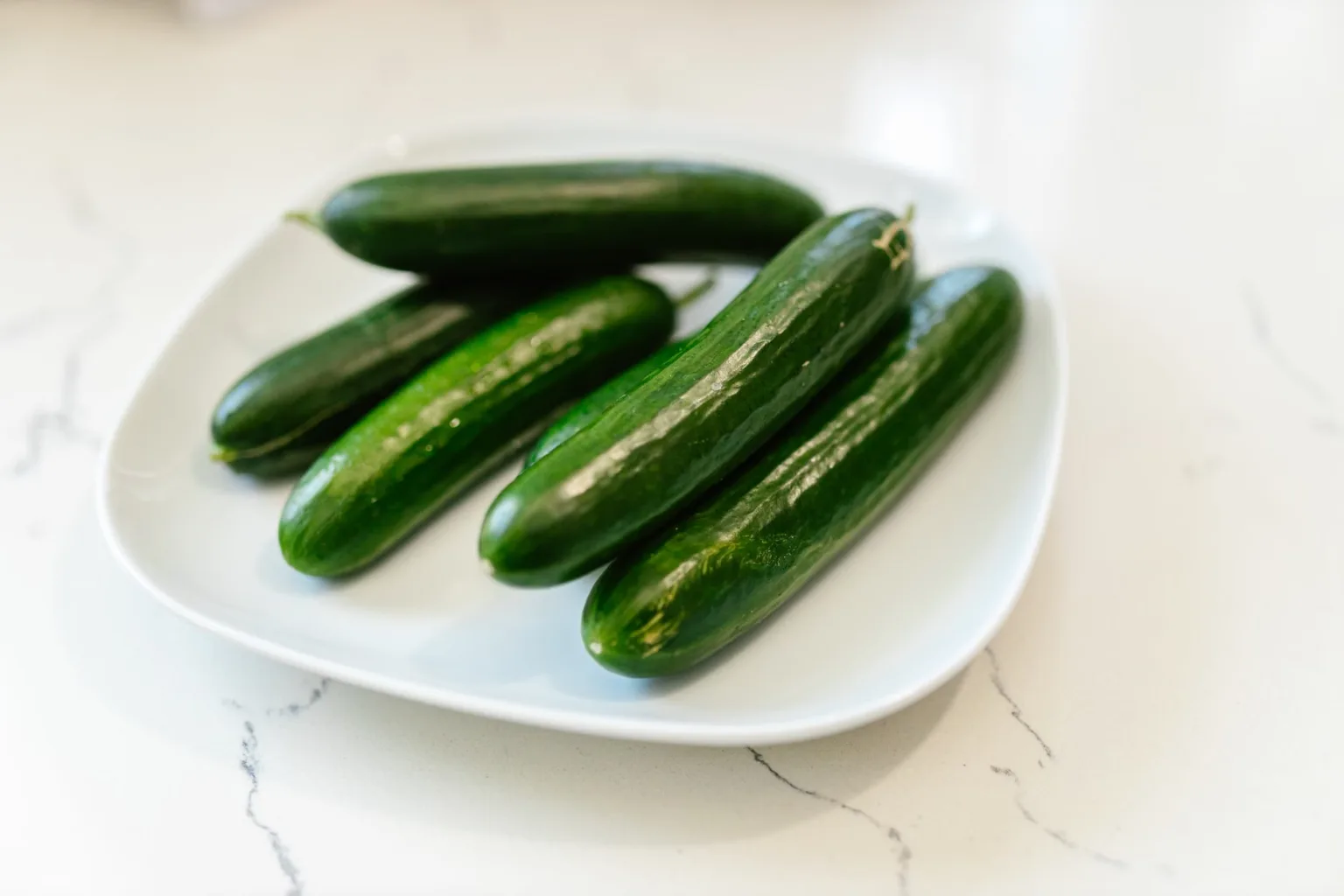
Seedless cucumber is a type of cucumber grown to produce fruit with few seeds or no seeds. The name does not guarantee that every cucumber is completely seed-free: some varieties produce fruit without seeds, while others have almost none. Like other cucumbers, it belongs to the cucurbit family and is used as a vegetable in cooking. Long slicing cucumbers are often described as mild and generally seedless. The label may refer to different varieties in different markets, so shape, skin thickness, and any remaining seeds can vary from one cucumber to another.
When to use it
Use it when you want fresh cucumber pieces in a salad, salsa, or side dish without many seeds. Its mild profile works well in raw dishes and with tomato, onion, pepper, garlic, herbs, and citrus. If a recipe calls for cucumber to be sliced, diced, or chopped, this type can fill that role. Since seed size and skin vary across varieties, check the cucumber as you cut it and adjust the preparation to suit the recipe.
How to use it
Slice the cucumber for salads or sides, or chop it finely for fresh salsa. It pairs well with tomato, onion, pepper, garlic, cilantro, and lemon or lime juice; it also appears in preparations with sour cream and cumin. Leave the skin on or peel it depending on its texture and your preference. Despite the seedless label, check the inside as you cut: a cucumber may contain a few seeds or almost none. For salsa, chop the ingredients to a similar size and mix them with the dressing shortly before serving if you want a distinct texture.
Flavour and texture
Long slicing cucumbers are described as mild in flavor. Cucumber is commonly eaten raw in salads, while skin, firmness, and seed quantity can differ among types. A seedless cucumber may have a few seeds or almost none; do not assume every specimen has exactly the same texture.
How to choose it
Choose cucumbers that feel firm and look well developed, with fresh-looking skin and no obvious defects. For cucumbers generally, dark green skin without yellow patches is a recommended selection cue; avoid specimens with dried ends or a soft feel. Appearance and size depend on variety, so treat “seedless” as an indication of few seeds, not an absolute promise that there will be none.
Storage
Store fresh cucumber according to directions on the label or from the seller, when provided. General cucumber guidance says they can be kept in a refrigerator for several days, but the available evidence does not establish one specific period for every variety or storage condition. If packaged, follow the storage and use directions on the package; do not assume a cut cucumber keeps in the same way as a whole one.
Substitutions
For a recipe calling for seedless cucumber, another fresh cucumber can be used, such as a long slicing type with few seeds. Seed quantity, skin thickness, and texture may differ, so check the center and adjust the cut. The evidence does not establish an exact flavor or yield equivalence between varieties, making this substitution most straightforward in raw salads and salsas.
Common mistakes
Do not treat “seedless” as a guarantee that every fruit is completely free of seeds: some varieties may produce fruit with few seeds or almost none. Also, do not choose by size alone; large cucumbers in general may be more bitter and softer. Check firmness and skin condition, and cut the cucumber to inspect its center before making a recipe where texture matters.
Safety and allergens
Treat it as fresh produce and follow any storage and use directions on the package or provided by the seller. The available evidence identifies no specific safety warning for seedless cucumber and does not support claiming that it is free of allergens; check product labeling where relevant.
Culinary uses
- Fresh salad ingredient
- Salsa and fresh condiment ingredient
- Raw snack or side dish
Recommended techniques
- Slice
- Dice or finely chop
- Peel when preferred or when the skin is tough
Pairs well with
- Tomato, onion, and pepper
- Garlic, lemon or lime, and cilantro
- Sour cream and cumin
Frequently asked questions
Is seedless cucumber always completely free of seeds?
Not necessarily. Some varieties produce fruit without seeds, while others have almost none, so a few seeds may still be present.
How can I use it in cooking?
Slice it for salads or sides, or chop it for fresh salsa. It also pairs with tomato, onion, pepper, and citrus.
Does it need to be peeled?
There is no single rule for this type. Leave the skin on or remove it according to its texture and personal preference.
Sources and review
Automatically researched, cross-checked and validated content. Sources consulted:
- En el etiquetado alimentario hay algunas menciones que son obligatorias eletiquetadocuentamucho.aesan.gob.es
- Pepinos | Center for Community Health communityhealth.ucsd.edu
- Pepino: origen, variedades, cultivo, propiedades y beneficios. frutamerca.com
- Cucumis sativus - Wikipedia, la enciclopedia libre es.wikipedia.org
- Client Challenge doi.org
- · 61 · USOS PRINCIPALES José Fajardo pepino, cogombre, luzoker, cogombro mapa.gob.es
- Pepino aihd.ku.edu
- Producción de Pepino extension.psu.edu
- Direcciones Mezcle el pepino, los tomates, las cebollas, el cuscús communitynutrition.cahnr.uconn.edu
- Cultivo de pepinos en huertos familiares | Extensión de la UMN es.extension.umn.edu
- Salsa de pepino - Spend Smart Eat Smart spendsmart.extension.iastate.edu
- PEPINO FRUIT pvamu.edu
- Salsa De Pepino - Expanded Food and Nutrition Education Program efnep.tamu.edu
- Pepino | Introducción | Verduras y hortalizas | EROSKI CONSUMER verduras.consumer.es
- Pepino: ¿qué es y para qué sirve? 7 beneficios y propiedades - Viviendo La Salud viviendolasalud.net