- Category
- Bread and dough
- State
- Fresh
- Usual unit
- unit
What it is
Shortcrust pastry is a pastry dough that, once baked, is valued for a tender, crumbly texture rather than an elastic one. It is used as a shell or base for tarts, tartlets, quiches, and some savory pies. Many versions are made mainly from flour and butter, but there is no single fixed formula: recipes may also include egg, water, or milk, while sweet versions can contain sugar. Ingredient proportions and mixing methods vary too. It is therefore useful to think of shortcrust as a family of related pastry doughs, not as one standard recipe. Pâte brisée is commonly associated with this style; pâte sablée and pâte sucrée are related alternatives with differences in ingredients and results.
When to use it
Choose shortcrust pastry when you want a firm, crumbly shell to hold a filling, whether the dish is sweet or savory. It is suitable for fruit tarts, tartlets, quiches, and pies, and can also be used for some biscuits or small savory bites. Blind-baking may help prepare the shell before adding a liquid filling or one that will not be baked with the pastry. If you want a sweeter or otherwise different result, consider a related style such as pâte sucrée or pâte sablée rather than assuming every pastry in this family can be exchanged without a change in texture or flavor.
How to use it
Check the recipe or package because shortcrust formulas are not all identical. In a common method, fat is combined with flour until the mixture looks sandy, then the recipe’s remaining ingredients are added to bring it together. Work the dough only enough to make it hold together; do not keep kneading until it becomes elastic. Roll it out to line the chosen tin, then follow the recipe for baking in light of the filling. If the filling is liquid or will not cook with the shell, you can blind-bake the pastry before filling it. If the filling also needs baking, remember that the pastry may return to the oven with it.
Flavour and texture
The baked result is usually a firm, crumbly crust that breaks easily when cut or eaten. Butter, common in many recipes, contributes flavor, but some formulas use other combinations or include egg, milk, salt, or sugar. The flavor can therefore be neutral, savory, or sweet, while color and consistency depend on the recipe and baking. The intended crumbly quality should not be confused with an elastic dough. Related styles such as sablée or sucrée can have a different sweetness and texture.
How to choose it
Ready-made shortcrust pastry may be sold in rolls in the refrigerated section of some supermarkets. Check the product name, ingredient list, and package directions: recipes vary and may include egg, sugar, or other ingredients as well as flour and fat. If you need a sweet or savory base, confirm that the product suits that use rather than relying on the name alone. Also check whether the package says to keep it refrigerated and follow its instructions.
Storage
Some ready-made pastry is sold refrigerated, so follow the storage directions on its package. For homemade dough, one described method recommends wrapping and refrigerating it while it rests before rolling; this does not establish a general storage life. If the product has been opened or its label gives specific directions, follow those directions. Do not assume a storage period or that the pastry is suitable for freezing unless the recipe or manufacturer says so.
Substitutions
Pâte sablée and pâte sucrée are related doughs, but they are not identical replacements: they can change the sweetness and texture of the crust. Pâte à foncer is also related and is described primarily for lining tart tins. Before swapping one for another, consider the filling and the result you want; culinary names can overlap in use, but the recipes are not necessarily the same.
Common mistakes
Do not assume that every shortcrust pastry has the same ingredients or proportions: some versions contain egg, others do not, and recipes may be sweet or savory. Another mistake is working the dough until it turns elastic when a crumbly texture is wanted. Nor should you assume that every shell must be blind-baked; that choice depends on the filling and how the dish will be baked.
Safety and allergens
Check the recipe or package ingredients if you need to avoid wheat or gluten, milk, or egg, as formulations vary. Keep the product refrigerated when its label directs you to do so, and follow the recipe’s handling and baking instructions.
Culinary uses
- Base for sweet or savory tarts and tartlets
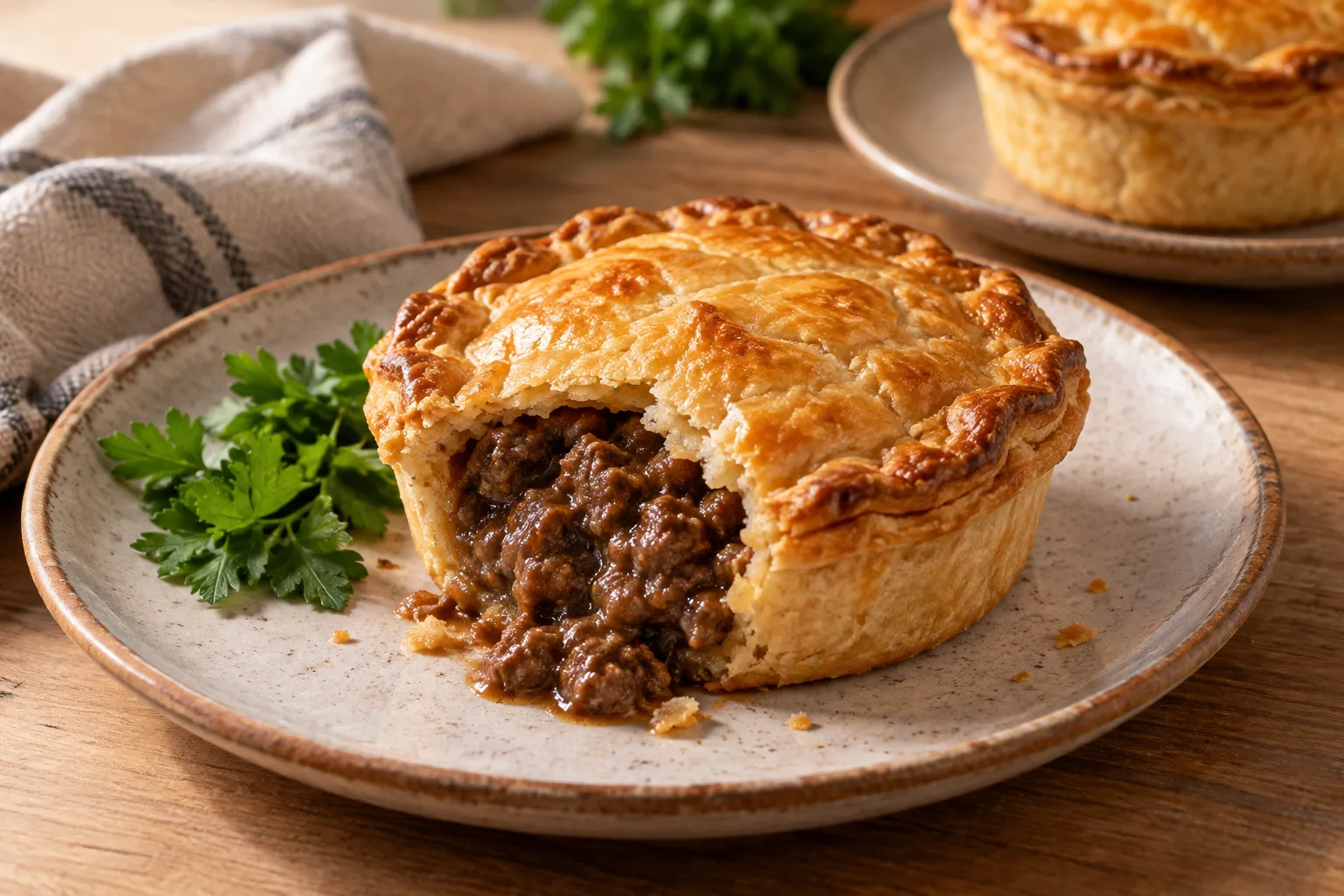
- Crust for quiches and filled pies
Recommended techniques
- Rub or cut fat into flour until the mixture looks sandy, then bring it together with minimal mixing
- Blind-bake the crust when the filling is liquid or will not be baked with the crust
Pairs well with
- Fruit, pastry cream, or other sweet tart fillings
- Egg, cream, and cheese fillings for quiche
- Savory fillings for pies and small appetizers
Frequently asked questions
Is shortcrust pastry always savory?
No. It is made in both sweet and savory versions; some recipes include sugar and others do not.
When should I blind-bake the pastry?
It can be useful for a liquid filling or one that will not be baked with the crust. Use the recipe to decide.
Is pâte sablée exactly the same as shortcrust pastry?
It is related, but it can differ in ingredients, sweetness, and texture, so it is not always an identical substitute.
Estimated nutrition
- Fat
- 13.2 g
- Saturates
- 4.72 g
- Carbohydrate
- 52.8 g
- Sugars
- 28.3 g
- Fibre
- 1.9 g
- Protein
- 3.77 g
- Salt
- 0.33 g
Sources and review
Automatically researched, cross-checked and validated content. Sources consulted:
- Client Challenge doi.org
- Comparative Perspectives on the Archaeology of Coastal ... sites.pitt.edu
- Margarita María Palma Vallejo repository.uniminuto.edu
- ON 993.fm mwfb.ucdavis.edu
- Culture and landslide risk in the Central Andes of Bolivia ... digitalcommons.usf.edu
- coastal subsistence and settlement systems on the northern gulf openscholar.uga.edu
- Seri dictionary: Plants - UND Scholarly Commons commons.und.edu
- Vaca Muerta mesosiderite strewnfield adsabs.harvard.edu
- Masa quebrada - Wikipedia, la enciclopedia libre es.wikipedia.org
- Masa quebrada: Concepto y Definición — ChefBusiness chefbusiness.co
- Que es la masa quebrada: guía completa para entender, preparar y dominar este clásico de la repostería – Reposteriaypasteleria.com.es reposteriaypasteleria.com.es
- Qué es la masa quebrada (brisa): ingredientes y usos glosariococina.com
- Masa quebrada | Gastronomía & Cía gastronomiaycia.com
- ¿Qué es la Masa Quebrada? Análisis y Comparativa de los Mejores Ingredientes y Herramientas para Su Elaboración pasteleriamarianohernandez.es