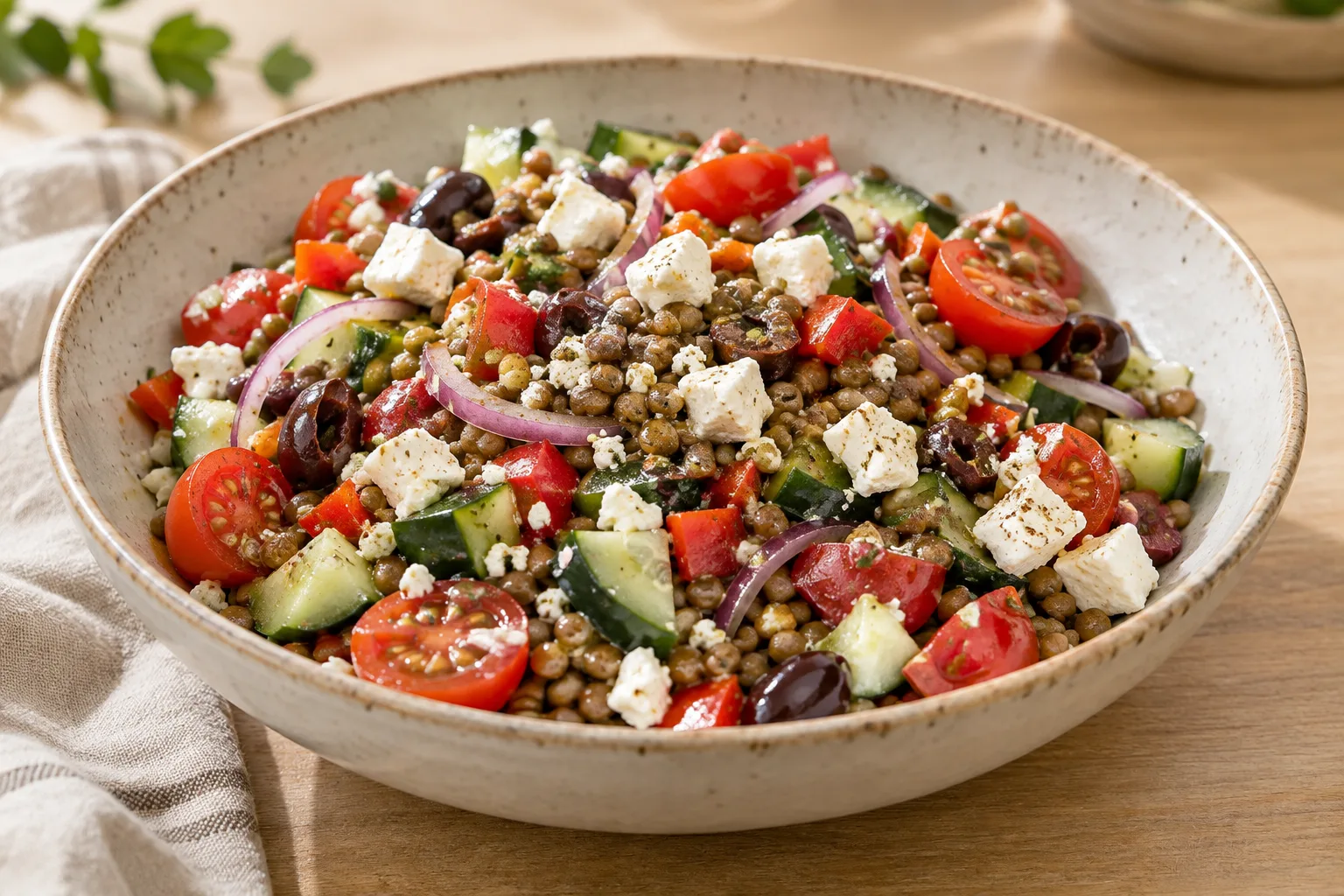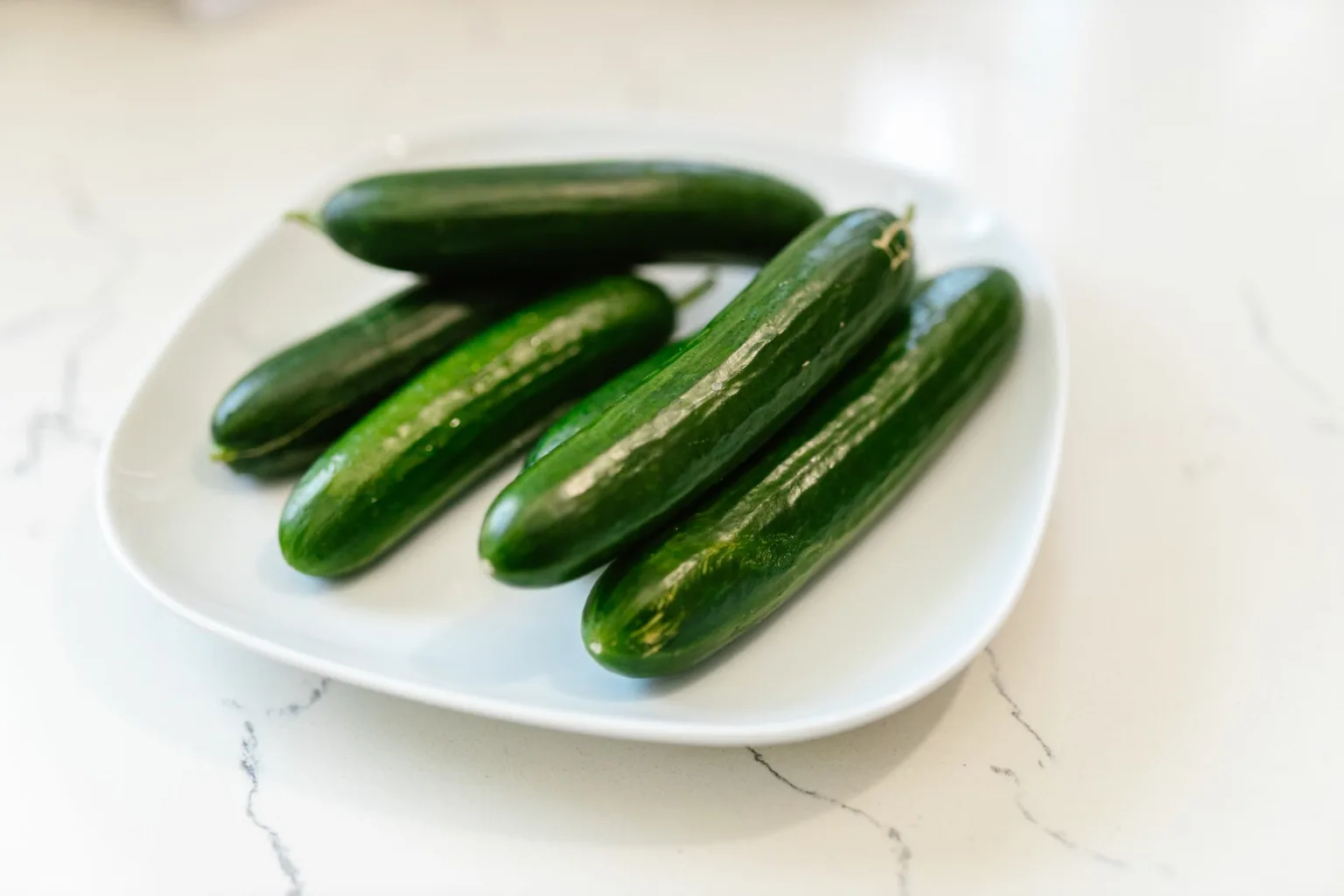
- Category
- Vegetables
- State
- Fresh
- Usual unit
- g
What it is
A small cucumber is the fruit of the cucumber plant, a vegetable in the Cucurbitaceae family. The name describes size, but does not establish the variety, skin thickness, seed content, or whether the cucumber was grown specifically for pickling. Cucumbers are eaten fresh and can also be made into pickles. Depending on type, the skin may be smooth or rough and the size can vary, so judge an individual cucumber by its appearance and firmness rather than by its selling name alone.
When to use it
Use it when you want a fresh, crisp element in a salad, side dish, or other cold preparation. Its reduced size makes it convenient to slice or dice for individual portions, although the best use depends on the cucumber's texture and condition. It can also be added to cold soups such as gazpacho. If you intend to pickle it whole, choose cucumbers suited to that purpose and follow an established recipe; small size by itself does not confirm that it is a pickling variety.
How to use it
Slice the cucumber thinly for salads or dice it for fresh mixtures with legumes and other ingredients. It can be served with tomato and lettuce, or paired with yogurt and dill in a dressed salad. Chop it into cold soups such as gazpacho as well. The skin can be left on or removed depending on the cucumber and the texture you prefer. For pickles, use suitable cucumbers and a tested recipe. Do not change the proportions of vinegar, water, and produce on your own, because acidity is part of the safety of the process.
Flavour and texture
Cucumber is generally mild in flavor and fresh and crisp in texture when firm. The precise qualities depend on its type and condition; some cucumbers may taste more bitter or feel softer. Small size does not guarantee a particular flavor or fewer seeds. In salads it adds a crisp contrast, while chopped cucumber can blend into the other ingredients in a cold soup.
How to choose it
Choose cucumbers that feel firm, look green, and appear fresh. Avoid examples with shriveled or wilted ends, damaged areas, or a soft feel. The right size depends on the cucumber type and intended use. For pickling, university extension guidance recommends choosing fresh, firm cucumbers suited to the recipe. Do not assume that every small cucumber is a pickling variety.
Storage
Cucumber quality and keeping life can vary with type and storage conditions, so there is no single supported time limit for every cucumber. Follow package storage directions when provided, and ask the seller about a particular product if needed. Once cut, treat it as a fresh food and follow relevant directions for its form. Storage recommendations may differ for whole, cut, and packaged cucumbers.
Substitutions
In a salad or cold dish, you can replace a small cucumber with another fresh cucumber cut into similar-sized pieces. If you want another crisp vegetable, raw zucchini may work in some mixtures, though its flavor and texture are not identical. Match the cut to the dish and check that the alternative suits the dressing. These substitutions do not make an ordinary cucumber suitable for preserving.
Common mistakes
Do not treat small size as proof of a particular pickling variety; the name alone does not establish that. Avoid soft cucumbers or ones with wilted ends when crisp texture matters. For home preserving, do not improvise the proportions of vinegar, water, and produce or use vinegar of unknown acidity; use an established recipe.
Safety and allergens
For preserved pickles, use a tested recipe and do not change its proportions of vinegar, water, and cucumber. If the product is packaged, follow the storage and use directions on its label.
Culinary uses
- Aporte crujiente y fresco para platos sin cocción
- Ingrediente para sopas frías y ensaladas
- Base para encurtidos
Recommended techniques
- Cortar en rodajas, dados o trozos para servir crudo
- Añadir a sopas frías, incluido el gazpacho
- Preparar encurtidos con una receta probada
Pairs well with
- Tomate, lechuga y aceitunas
- Yogur y eneldo
- Garbanzos, cilantro y limón
Frequently asked questions
Does small cucumber mean it is a pickling cucumber?
Not necessarily. Small describes size, not a confirmed variety or intended use. For preserving, choose suitable cucumbers and follow a tested recipe.
Do I need to peel a small cucumber?
Not always. Leave the skin on or remove it depending on the cucumber, its condition, and the texture you prefer. It can be eaten with or without the skin.
How can I serve it?
Slice or dice it for salads and cold dishes, pair it with yogurt and dill, or add it to a cold soup such as gazpacho.
Estimated nutrition
- Fat
- 0 g
- Saturates
- 0 g
- Carbohydrate
- 0 g
- Sugars
- 0 g
- Fibre
- 0 g
- Protein
- 0 g
- Salt
- 2.7 g
Sources and review
Automatically researched, cross-checked and validated content. Sources consulted:
- En el etiquetado alimentario hay algunas menciones que son obligatorias eletiquetadocuentamucho.aesan.gob.es
- Todo lo que debes saber sobre el pepino hogarmania.com
- Pepinos | Center for Community Health communityhealth.ucsd.edu
- Vamos a Conservar Alimentos: Proceso Rápido para preparar Pepinillos en Vinagre extension.psu.edu
- Pepino | Postharvest Research and Extension Center postharvest.ucdavis.edu
- Pepino: origen, variedades, cultivo, propiedades y beneficios. frutamerca.com
- Cucumis sativus - Wikipedia, la enciclopedia libre es.wikipedia.org
- Client Challenge doi.org
- Pepino aihd.ku.edu
- Pepino | Introducción | Verduras y hortalizas | EROSKI CONSUMER verduras.consumer.es
- CUCUMBERS NUTRITION • Vitamin C: helps heal cuts and helps the immune system stcroix.extension.wisc.edu
- Recetas para comer fuera de casa: Ensalada de tomate asado, pasta y pepino cordonbleu.edu
- Ensalada de pepino | University of Maryland Extension extension.umd.edu
- Pepino, la hortaliza más refrescante del verano: propiedades, beneficios y cómo usarlo en la cocina directoalpaladar.com
- Palabras ⋆ El pequeño Larousse Gastronomique en español ⋆ Pepino ⋆ Larousse Cocina laroussecocina.mx