- Category
- Meat
- State
- Preserved
- Usual unit
- g
What it is
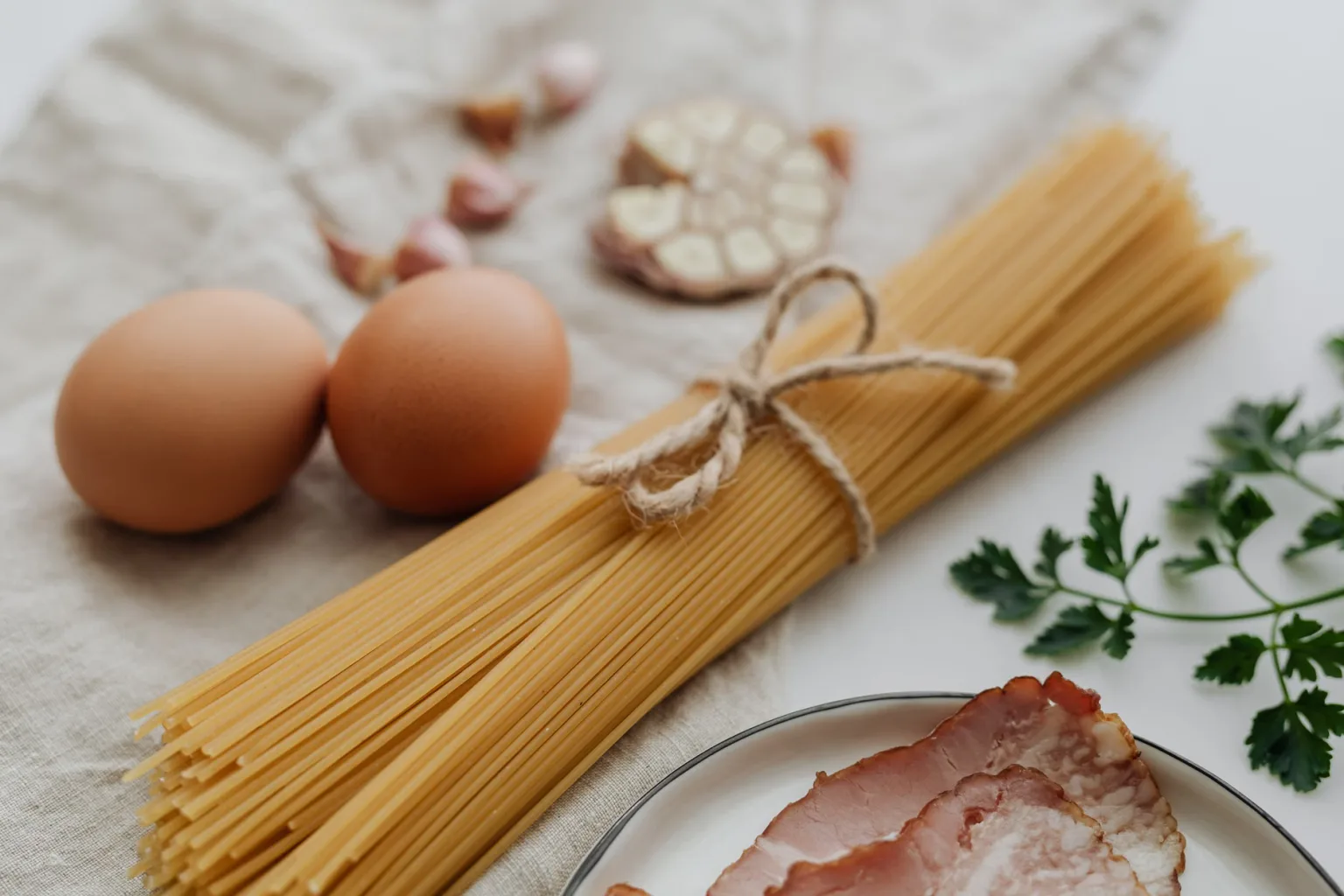
Smoked bacon is a pork product that has been cured and then smoked. It may come from the belly or other cuts, including the back, so its amount of meat and fat, texture and intensity can differ from one product to another. It is not the same as fresh bacon, which has not been cured or smoked, and products sold as pancetta are not all made in the same way. Check the product name and package directions before preparing or serving it.
When to use it
Use smoked bacon when you want a savory, smoky accent rather than necessarily making it the main ingredient. It can accompany eggs, add character to a sandwich or salad, or be folded into pasta, quiche and risotto. Because products vary in fat, salt, cut and smoke intensity, start with a modest amount and taste before adding more salt. The result also depends on whether you slice it thinly or cut it into pieces.
How to use it
Start by following the package directions, since products and preparation requirements can differ. If the label says to cook it, do not serve it uncooked: cut it into strips or pieces and brown it in a pan, aiming for even cooking. Add it to eggs, pasta, quiche or salads, or use it in a sandwich. If fat renders out during cooking, you can use some to flavor other ingredients, while controlling the amount so the dish does not become too greasy or salty. Taste before seasoning.
Flavour and texture
Its profile commonly combines savory, smoky notes with the flavor of pork. Texture and fat content depend on the cut and product: after cooking, it may become crisp or remain more tender. Smoke intensity also varies, so do not assume every product will taste equally smoky.
How to choose it
Read the product name and package directions to distinguish smoked bacon from other cured or fresh pork products. Belly and other cuts can produce bacon with different amounts of meat and fat. Choose a format, such as slices or a piece, that suits the recipe, and check the maker's storage and preparation information.
Storage
Store the product according to its package directions; do not assume every smoked bacon product needs identical handling, since processing and format can differ. After opening, follow the product's instructions and do not eat it if the package or product seems abnormal. If directions are unclear, ask the maker or retailer.
Substitutions
Cured, unsmoked pancetta can replace smoked bacon in many dishes, but the result will have less smoke flavor. Another kind of smoked bacon or pancetta may also work; account for differences in cut, fat and flavor intensity. Adjust the amount and taste before adding salt.
Common mistakes
Do not confuse smoked bacon with fresh bacon or assume every product is ready to eat: check the label. Another common mistake is adding the usual amount of salt without tasting first. Cuts and fat levels vary, so browning and the finished texture can vary too.
Safety and allergens
Products and directions can differ. Read and follow the label, especially its storage and cooking instructions; do not assume that smoking alone means the product is ready to eat.
Culinary uses
- Aportar sabor ahumado y salado
- Añadir grasa y textura crujiente como guarnición
Recommended techniques
- Freír o dorar en sartén
- Cocinar en trozos para incorporarlo a un plato
Pairs well with
- Huevos
- Ensaladas y sándwiches
- Pasta y quiches
Frequently asked questions
Is smoked bacon the same as fresh bacon?
No. Fresh bacon has not been cured or smoked; smoked bacon has undergone curing and smoking.
Can pancetta replace smoked bacon?
Cured, unsmoked pancetta can work, but it will contribute less smoky flavor. Check how the specific product was made.
Does smoked bacon always need to be cooked?
Directions can differ by product. Follow the package and cook it if instructed; do not infer that it is ready to eat simply because it is smoked.
Estimated nutrition
- Fat
- 50 g
- Saturates
- 17.9 g
- Carbohydrate
- 0 g
- Sugars
- 0 g
- Fibre
- 0 g
- Protein
- 28.6 g
- Salt
- 4.65 g
Sources and review
Automatically researched, cross-checked and validated content. Sources consulted:
- Client Challenge doi.org
- The Essential Glossary of Cooking Terms for the Culinary Arts - Escoffier escoffier.edu
- Agencia Española de Seguridad Alimentaria y Nutrición aesan.gob.es
- elBulli: un nuevo lenguaje en la gastronomía repositorio.ucjc.edu
- El bacon en la cocina friolisa.es
- Prevención del Cáncer Limitar las Carnes Rojas y Procesadas en la Dieta extension.psu.edu
- the new christian desengaño and etd.ohiolink.edu
- "The Adventures of Sherlock Homes -- Las aventuras de Sherlock Homes" people.duke.edu
- El tocino, ¿Qué es y cómo consumirlo? - Atilano Anllo atilanoanllo.com
- Tipos de tocino: Diferencias, usos y guía de compra – DSPC distribuidoracholula.com
- Tocino fresco y sus usos culinarios - Carnicerías Juan Ortíz - Carnicería en Móstoles - Online carniceriasjuanortiz.com
