- Category
- Fish and seafood
- State
- Fresh
- Usual unit
- g
What it is
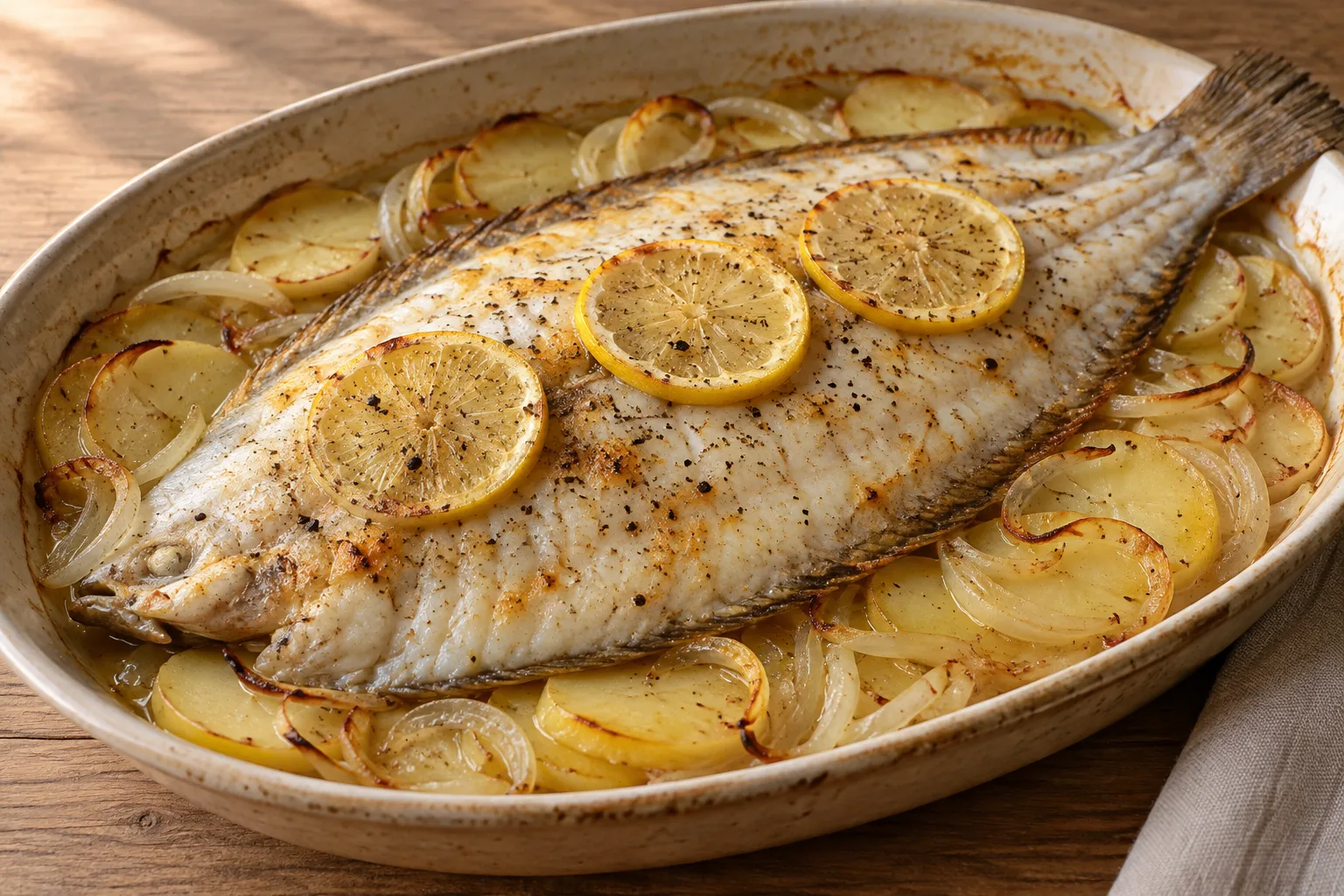
Sole is a common name used for several flatfish sold as food; the common sole is identified as Solea solea and belongs to the Soleidae family. Its white flesh is described as firm, tender and delicate, with a mild taste that works well with simple accompaniments. It may be sold whole or as fillets. Not every product called sole necessarily comes from the same species: different kinds of sole can appear in the market. If a particular species matters to your recipe or purchase, check the product name and ask the seller rather than relying on the general market name alone.
When to use it
Choose sole when you want a mild-tasting fish that can take centre stage without strong seasoning. It works in simple preparations such as grilling or pan-frying, and can also be baked, cooked in a parcel or fried. Fillets are convenient for individual portions or rolls, while a whole fish can be prepared and served as the main item. For a classic pairing, use butter, lemon and parsley. Gallo or turbot can be considered as alternative flatfish if sole is unavailable, but they are different fish, not identical replacements.
How to use it
Check the product description, then decide whether to cook the fish whole or as fillets. Handle the delicate flesh gently to help it keep its shape and choose a method that lets its mild flavour come through: grill, pan-fry, bake, cook in a parcel or fry it. A classic serving uses butter, lemon and parsley; capers, leek, almonds, courgette or a citrus-led sauce are other possible accompaniments. Match the sauce to the cooking method and avoid overpowering the fish. For safe use, follow the storage and use-by instructions on the package or those provided by the seller.
Flavour and texture
Sole is described as mild and delicate, with white flesh that is firm yet tender. This balance suits simple accompaniments as well as butter-and-lemon sauces. Grilling, pan-frying or baking can showcase the fish without letting the seasoning overwhelm it.
How to choose it
Check the product name and ask which species is being sold if you specifically want common sole: the market name may cover more than one kind. Review the identity information provided at the point of sale and, for a packaged product, check the date and any storage or use instructions. Appearance alone is not a substitute for the product’s identification information.
Storage
Fresh sole is perishable. Follow the storage and use instructions on the package or provided by the seller, and pay attention to any stated use-by date. If you are unsure about the date or how to store the fish, ask the retailer before storing or eating it; do not infer a safe storage period from appearance alone.
Substitutions
Gallo and turbot can be considered as flatfish alternatives in some similar preparations, but neither is sole, and their flavour and texture need not be identical. When substituting in a recipe, keep the accompaniments restrained and adapt the cooking to the fish you choose. If the recipe depends on a specific species, confirm the product name before buying.
Common mistakes
Assuming that every fish sold as sole is the same species can lead to buying something other than intended. Its delicate flavour can also be obscured by an overpowering sauce, and rough handling may damage the shape of fillets. Check the product description, choose balanced accompaniments and follow the supplied storage and use-by information.
Safety and allergens
Fish can cause an allergic reaction; if you have a fish allergy, avoid sole and check the product information. For safe use of fresh fish, follow the use-by date and storage and use instructions on the package or provided by the seller. Mandatory food information can vary with the product’s presentation and how it is sold.
Culinary uses
- Pescado principal para servir entero o en filetes
- Ingrediente delicado para platos sencillos y salsas ligeras
Recommended techniques
- A la plancha o a la parrilla
- Al horno o en papillote
- Frito o dorado en sartén
Pairs well with
- Limón, mantequilla y perejil
- Alcaparras y puerro
- Almendra, calabacín o salsas cítricas
Frequently asked questions
Is sole always one species?
Not necessarily. The market name may include different kinds of sole. If you want common sole or another particular species, check the product description or ask the seller.
How can I cook sole?
It can be grilled, pan-fried, baked, cooked in a parcel or fried. Butter, lemon and parsley are classic accompaniments that suit its mild flavour.
What fish can I use instead of sole?
Gallo or turbot may work as flatfish alternatives in some preparations, but neither is an exact equivalent. The flavour and texture may differ.
What should I check when storing it?
Follow the storage instructions and use-by date on the package or provided by the seller. Ask the retailer if you are unsure.
Estimated nutrition
- Fat
- 1.93 g
- Saturates
- 0.44 g
- Carbohydrate
- 0 g
- Sugars
- 0 g
- Fibre
- 0 g
- Protein
- 12.41 g
- Salt
- 0.74 g
Sources and review
Automatically researched, cross-checked and validated content. Sources consulted:
- En el etiquetado alimentario hay algunas menciones que son obligatorias eletiquetadocuentamucho.aesan.gob.es
- Client Challenge doi.org
- The Essential Glossary of Cooking Terms for the Culinary Arts - Escoffier escoffier.edu
- Culinary MakerSpace | Auxiliary Services | Binghamton University binghamton.edu
- Home - Culinary Arts / Restaurant Management - LibGuides at Bob Jones University libguides.bju.edu
- Culinary (CUL) | Central Piedmont Community College Catalog catalog.cpcc.edu
- Culinary Arts Course Descriptions | Wake Tech waketech.edu
- 2024 – 2025 1 Florida Department of Education Curriculum Framework fctc.edu
- Evolución y tendencias en los mercados de pescados (I) mapa.gob.es
- Culinary Arts (CUL) 1 CULINARY ARTS (CUL) CUL 100 (2 credit hours) catalog.kctcs.edu
- (PDF) LanguaL Food Description: a Learning Process academia.edu
- Drying Meat | USU extension.usu.edu
- Sacando todo el partido al lenguado en temporada, un versátil pescado plano: cómo usarlo, en qué recetas y qué propiedades tiene directoalpaladar.com
- Lenguado, cómo disfrutarlo en la cocina - Mercado de Chamartín mercadodechamartin.es
- Descubre los secretos de la lenguadina: el pez que debes sumar a tu alimentación diaria. - Deporte y nutricion deporte-nutricion.net
- Lenguado - Guía de los alimentos | Nestlé Family Club nestlefamilyclub.es
- PESCADO parecido al LENGUADO - Características y USOS clave jornadasdepesca.com