- Category
- Fish and seafood
- State
- Fresh
- Usual unit
- g
What it is
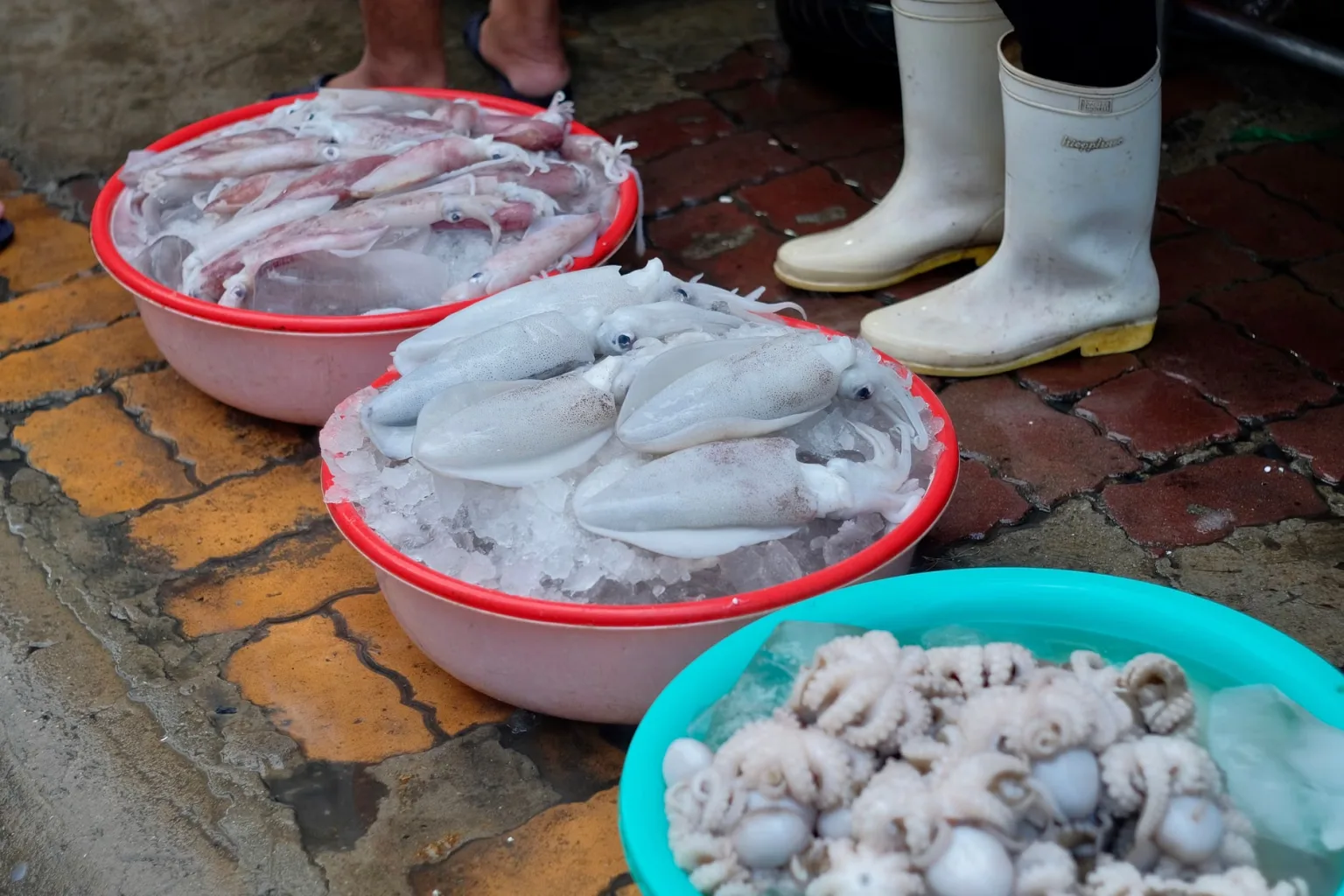
Squid is a marine mollusc in the cephalopod group, sold and cooked in several forms. In the kitchen, the mantle and tentacles are commonly used, and the ink is included in some suitable recipes. The mantle can be cut into rings or strips, or kept whole for stuffing; tentacles can be served whole or chopped. Squid has a mild flavour and a springy bite, while size and product type affect how it suits a dish. It is available fresh, frozen and preserved, but this profile focuses on fresh squid.
When to use it
Choose squid when you want a seafood ingredient that can stand on its own or fit into a larger dish. Cut pieces work in fried dishes, stir-fries and rice preparations; a whole mantle can be stuffed, and squid can also be simmered in a sauce. Its understated flavour works well with aromatic ingredients and sauces without overwhelming a dish. If the shape or size matters to your recipe, choose pieces suited to the cut or filling you plan to use.
How to use it
Before cooking, decide whether to use the mantle in rings or strips, keep it whole for stuffing, or include the tentacles. Remove parts you do not plan to use and clean the squid using a reliable culinary guide or the seller’s instructions. Grill it, fry it coated or uncoated, stuff it and finish it in a sauce, or add it to a stew, soup or rice dish. Ink can also be used in recipes that call for it. Do not assume every piece, species or product form needs the same treatment; use a recipe suited to your product and follow current food-safety guidance.
Flavour and texture
Squid is generally described as mild and delicate, with pale flesh and a springy, juicy texture. Its restrained flavour takes well to a range of seasonings and sauces. The result varies with size, cut and cooking method: a coated fried preparation has a crisp exterior, while grilled or stewed squid has a different texture. Some species or products can be firmer, so do not assume all squid will cook or eat exactly alike.
How to choose it
Look for a clear description of the food and check whether it is sold fresh, frozen or prepared; these forms are not interchangeable. When buying fresh squid, ask the seller if you need clarification about the species, condition or recommended use. For packaged products, check the product name, date, storage conditions and use instructions on the label. For unpackaged food, ask for the allergen and handling information that applies to its form of sale.
Storage
Follow the date and storage and use instructions on the package or provided by the seller; requirements can depend on the product form and how it is sold. Do not infer a storage period or temperature simply from the fact that squid looks fresh. If a use-by date or special storage conditions are stated, follow them. If essential information is missing, ask the seller before storing or preparing it.
Substitutions
Cuttlefish can be a seafood alternative, but its flavour may be more pronounced than squid’s. Octopus can also fill a similar role in a seafood dish, though its texture is not the same. Neither is an exact substitute: adjust the cut and method to the species and use a suitable recipe. If the recipe relies on the mantle’s tubular shape for stuffing, choose an alternative that can accommodate that preparation.
Common mistakes
Do not treat every piece or product form as identical: size, cut and product type affect the result. Another common oversight is failing to check the label, use instructions or allergen information, especially for packaged or prepared products. Do not assume ink, mantle and tentacles are used in the same way in every recipe, or swap in another cephalopod without considering differences in flavour and texture.
Safety and allergens
Cephalopods, including squid, can contain Anisakis, which may cause anisakiasis and allergic reactions, sometimes severe. Follow current official seafood safety advice and the product instructions; do not assume every preparation is safe. Squid is a mollusc: check allergen information and do not serve it to anyone with a mollusc allergy.
Culinary uses
- Main ingredient
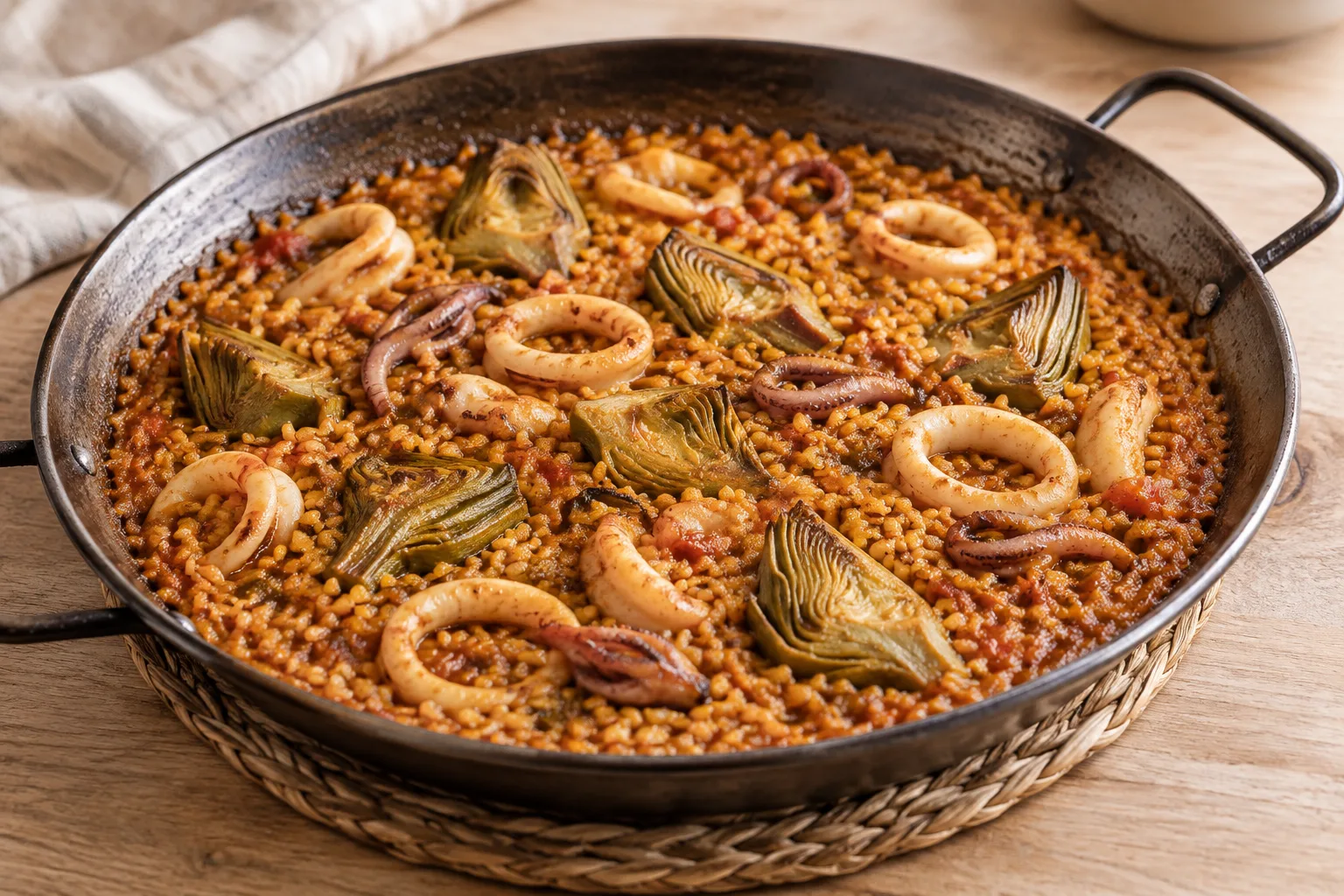
- Ingredient in rice dishes, soups and stews
Recommended techniques
- Grilling or griddling
- Frying with or without a coating
- Stuffing
- Slow simmering in a sauce
Pairs well with
- Lemon, garlic and parsley
- Rice, onion and tomato
- Vegetables and seafood sauces
Frequently asked questions
Which parts of squid are used in cooking?
The mantle and tentacles are used in many preparations, and some recipes also use the ink. Choose a recipe that explains how to handle each part.
How is squid commonly cooked?
It can be grilled, fried, stuffed or stewed, and added to rice dishes, soups and salads. Choose a method suited to the cut and recipe.
Can squid cause an allergic reaction?
Yes. Squid is a mollusc; check the product’s allergen information and avoid it if you have a mollusc allergy.
Estimated nutrition
- Fat
- 1.77 g
- Saturates
- 0 g
- Carbohydrate
- 2.65 g
- Sugars
- 0 g
- Fibre
- 0 g
- Protein
- 15.9 g
- Salt
- 0.11 g
Sources and review
Automatically researched, cross-checked and validated content. Sources consulted:
- Aesan - Agencia Española de Seguridad Alimentaria y Nutrición aesan.gob.es
- En el etiquetado alimentario hay algunas menciones que son obligatorias eletiquetadocuentamucho.aesan.gob.es
- Client Challenge doi.org
- Calamar (gastronomía) - Wikipedia, la enciclopedia libre es.wikipedia.org
- Calamares, características y diferencias | blog de eggify eggify.net
- Conocé todos los tipos de calamar que hay | Recetas Nestlé recetasnestle.com.ar
- Descubre los tipos de conservas de calamares disponibles en el mercado - Cateto elcatetochiringuito.es
- Conoce todos los tipos de calamar que hay | Recetas Nestlé recetasnestle.com.mx
- Calamares: ¿Cuáles son sus tipos? | Recetas Nestlé recetasnestlecam.com
- Un calamar para dar sabor de mar afuegolento.com
- Calamar - Guía de los alimentos | Nestlé Family Club nestlefamilyclub.es
- Recetas de Calamares: Desde los Clásicos de Siempre hasta Propuestas Originales mycookrecetas.com
- 11 recetas con calamares: descubre cómo cocinar este sabroso producto del mar bonviveur.com
- Recetas deliciosas con sabor a calamar hola.com
- 10 recetas para cocinar con calamares | Gastronosfera gastronosfera.com
- Cómo cocinar calamares: 5 recetas muy diferentes y deliciosas - ElNacional.cat elnacional.cat