- Category
- Vegetables
- State
- Fresh
- Usual unit
- unit
What it is
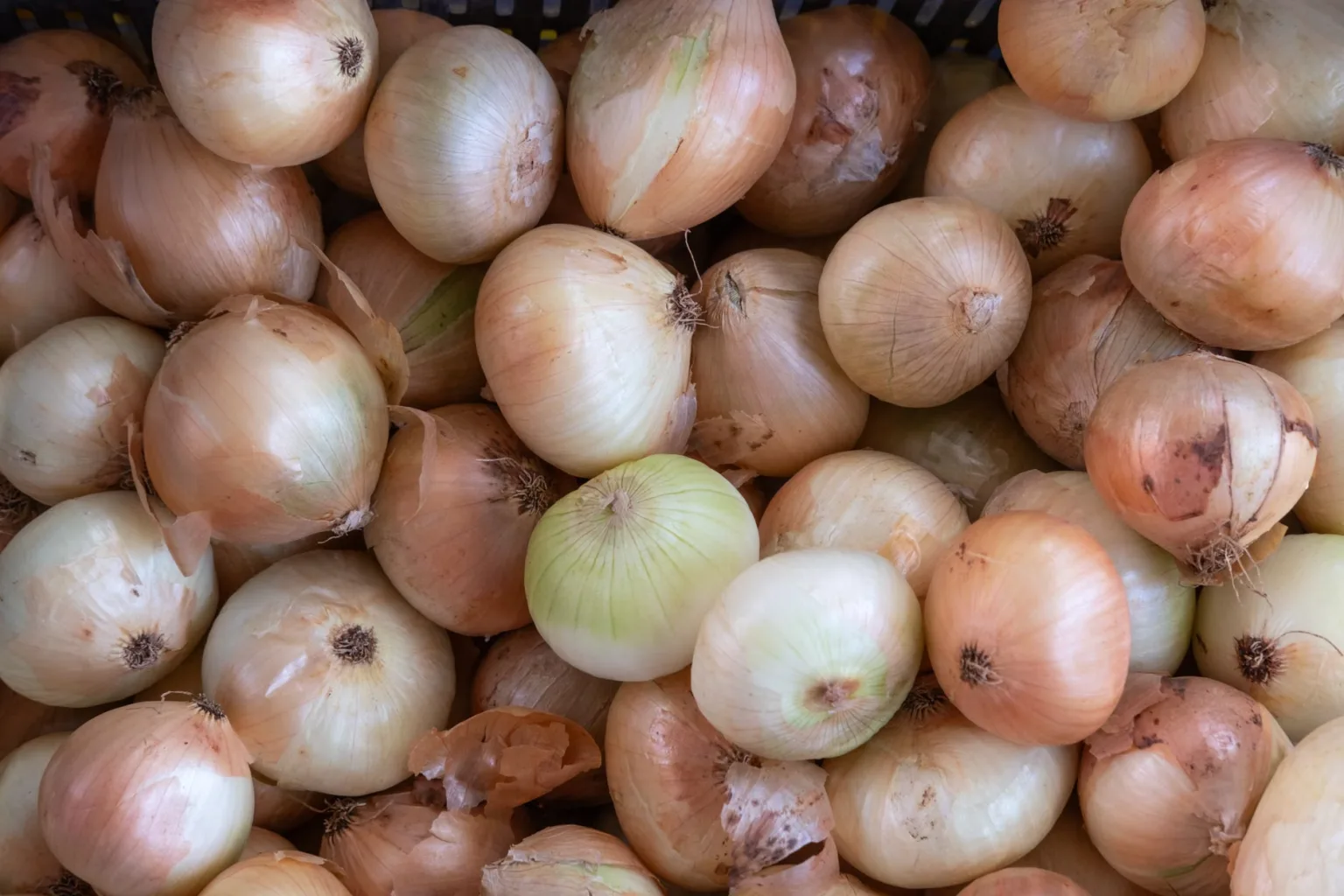
A sweet onion is a fresh onion valued in cooking for a milder, less pungent flavor than stronger-tasting onions. It is often juicy and may have thinner outer skin; its appearance and color vary by variety, so the name does not describe one single shape or shade. Sweet onions can be eaten raw or cooked and are especially useful when you want the onion to be noticeable without overwhelming the rest of a dish. Cooking can bring out their sweetness, making them suitable for preparations such as caramelized onions, battered onion rings, and roasted accompaniments.
When to use it
Choose a sweet onion for salads, sandwiches, and other cold dishes when you want a mild onion flavor and a juicy texture. It is also a good choice when onion takes a starring role, such as in battered rings or as a roasted side. For a stronger base in a stew or sauce, you may prefer a more assertive onion; a sweet onion can still be used, but its gentle flavor contributes less intensity. Sweetness and other characteristics vary among varieties.
How to use it
Remove the outer skin, then slice the onion into thin rounds or cut it into julienne for salads, sandwiches, or rolls. For a hot preparation, cut it into rings and batter it, roast it, or sauté it. You can also cook it slowly to caramelize it and bring out its natural sweetness; adding sugar is not a requirement for choosing a sweet onion for this preparation. Match the cut to the dish: rounds work well as a topping, while julienne pieces fit easily into cold or cooked dishes. If you substitute another onion, expect the flavor and intensity to change.
Flavour and texture
Sweet onions have a mild, slightly sweet flavor and are less pungent than stronger onion varieties. They are often juicy and tender, making them pleasant sliced raw in salads or sandwiches. Sweetness, juiciness, firmness, and appearance can differ between varieties and individual onions, so not every sweet onion is exactly alike.
How to choose it
Choose onions that feel heavy for their size and show no visible bruises or spots. Sweet onions are often juicy and may have thinner skin than other onions, so they may not keep as long; choose a firm, sound onion for the way you plan to use it. Shape and color vary among varieties, so appearance alone is not a reliable way to identify one.
Storage
Keep sweet onions in an open paper bag in a cool, dark place, following the available guidance for this ingredient. Because they are often juicy and may keep for less time than other onions, it is sensible to buy them with relatively near-term use in mind. If the packaging gives storage directions, follow the product label.
Substitutions
Yellow, white, or red onions can stand in for a sweet onion: onion varieties are often interchangeable, but the result will differ. Yellow onions can bring a stronger flavor; white onions can have a more pronounced, crisp presence; red onions add color and character to raw or pickled preparations. Adjust the amount to taste if you do not want the substitute to dominate.
Common mistakes
Do not assume that every sweet onion has the same shape, color, or intensity; these traits vary by variety. Another mistake is choosing an onion with bruises or spots, or storing it as though it necessarily keeps as long as a less juicy onion. Its natural sweetness also does not mean that you must add sugar when caramelizing it.
Safety and allergens
If you buy a packaged onion product, follow the storage and use directions on its label. Instructions can vary with the food's presentation.
Culinary uses
- Aporta frescor suave y textura jugosa cuando se sirve cruda.
- Da dulzor y protagonismo a platos donde la cebolla es un ingrediente principal.
- Sirve como base aromática cocinada para sopas, salsas y rellenos.
Recommended techniques
- Cortar en rodajas o juliana para ensaladas, bocadillos y sándwiches.
- Caramelizar lentamente para desarrollar su dulzor natural.
- Cortar en aros y rebozar para freír.
- Asar o saltear cuando se busca una preparación caliente.
Pairs well with
- Tomate y aguacate en ensaladas o preparaciones frescas.
- Quesos suaves en tostadas, sándwiches y tartas saladas.
- Pescados ahumados en bocadillos o platos fríos.
- Carnes y pescados como acompañamiento cocinado.
Frequently asked questions
Can sweet onions be eaten raw?
Yes. Their mild flavor and juicy texture make them suitable for salads, sandwiches, and rolls.
Do I need to add sugar to caramelize a sweet onion?
No. Added sugar is not necessary when choosing a sweet onion for a caramelized preparation; the onion has natural sweetness.
How do I choose a sweet onion?
Look for onions that feel heavy for their size and have no visible bruises or spots. Shape and color can vary.
Estimated nutrition
- Fat
- 0.9 g
- Saturates
- 0.15 g
- Carbohydrate
- 26.6 g
- Sugars
- 23.9 g
- Fibre
- 1.5 g
- Protein
- 1.5 g
- Salt
- 1.32 g
Sources and review
Automatically researched, cross-checked and validated content. Sources consulted:
- En el etiquetado alimentario hay algunas menciones que son obligatorias eletiquetadocuentamucho.aesan.gob.es
- Client Challenge doi.org
- Conoce 15 tipos de cebolla y sus usos en la cocina - Mejor con Salud mejorconsalud.as.com
- Para qué sirve cada tipo de cebolla (y un truco para no llorar al picarla) | El Comidista | Gastronomía | EL PAÍS elpais.com
- Guía completa de tipos de cebolla: variedades, propiedades y usos culinarios jardineriaon.com
- Cebollas: variedades, usos y diferencias - CocinoPedia.com cocinopedia.com
- Conoce los diferentes tipos de cebolla: nombres, características y usos - Mariettas mariettas.es
- Allium ascalonicum - Wikipedia, la enciclopedia libre es.wikipedia.org
- ¿Cómo elegir la mejor cebolla para cocinar? Guía de sabores patataslazaro.com
- Aecosan - Agencia Española de Consumo, Seguridad Alimentaria y Nutrición aesan.gob.es
- Cebolla dulce: qué es, en qué se diferencia del resto de cebollas y 14 recetas en la que usarla directoalpaladar.com
- Todo sobre la cebolla dulce | LÉKUÉ lekue.com
- Cebolla dulce o normal: cuál elegir y sus diferencias - Gamper Exportaciones gamperexport.com
- Tipos de cebolla y cuál usar según la receta hogarmania.com
- La auténtica receta de cebolla caramelizada sin azúcar es.hellorecipes.net