- Category
- Sauces and condiments
- State
- Liquid
- Usual unit
- tablespoon
What it is
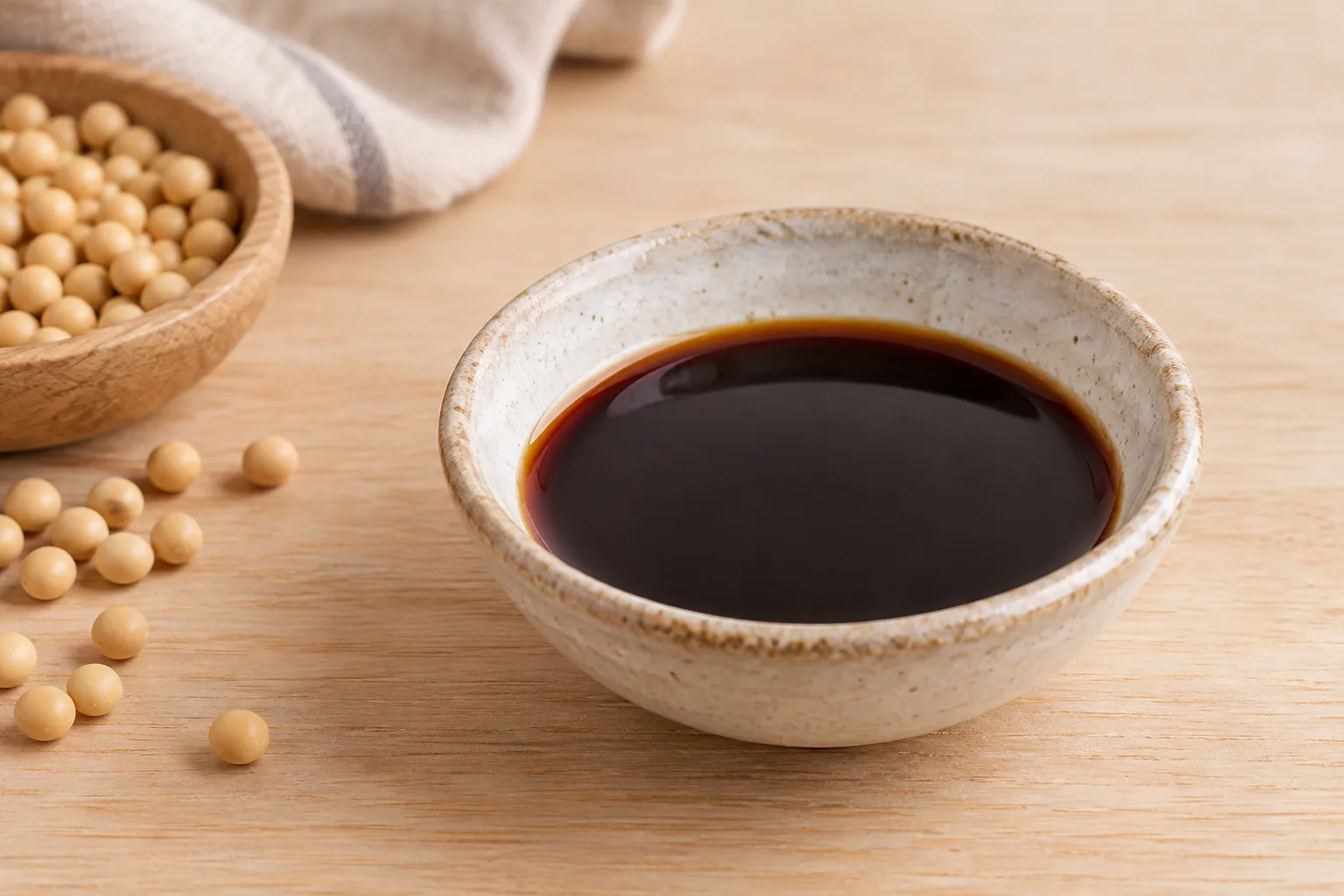
Tamari is a liquid condiment made by fermenting soybeans. It is related to other soy sauces and can be used in many of the same kinds of dishes, though its flavor, color and consistency depend on the product. Some descriptions characterize it as darker, thicker and more complex than certain soy sauces; other accounts note that commercial versions can be quite fluid. It should not be assumed that every tamari is wheat-free: some formulations may contain wheat. The name alone therefore does not establish every ingredient or whether a particular product suits a dietary requirement. Check the package whenever you need to confirm its composition.
When to use it
Use tamari when you want a fermented, savory seasoning for soups, stews, stir-fries, noodles, tofu or rice. It can also be served for dipping sushi or sashimi, or mixed into marinades and other sauces. Since flavor and concentration vary by product, add it gradually and taste before adding more. If you choose it to avoid wheat or gluten, do not assume that every brand meets that need: confirm the ingredients and label information for the specific product.
How to use it
Add tamari to soups, stews or stir-fries as a seasoning, incorporating it gradually and tasting before adjusting the dish. For a simple sauce, combine it with the other ingredients in the preparation and serve it with vegetables, rice, tofu or noodles. It can also be mixed into marinades for fish, meat or other ingredients, or served separately as a dipping sauce for sushi, sashimi and rolls. A stir-fry sauce may combine tamari with rice vinegar or mirin, a sweet ingredient, water and, if desired, chile and a thickener; adapt the mixture to the dish and the product label. Do not treat it as an exact, quantity-for-quantity match for every soy sauce: taste and adjust the seasoning. If cooking for someone avoiding soy, wheat or gluten, check the package rather than assuming the word tamari guarantees a particular ingredient profile.
Flavour and texture
Tamari brings a salty, savory taste often described as rich or deep. Flavor, saltiness, color and thickness can vary across brands and production methods. Some versions are dark and thick, while others are more fluid. Taste the product before deciding how much to add, and remember that differences between bottles can change a recipe's final balance.
How to choose it
Read the ingredient list and allergen information on the package, especially if you need to avoid soy, wheat or gluten. Do not assume all tamari is wheat-free: some formulations may include wheat. Choose a product whose label fits the recipe and the needs of the people eating. If you want a particular texture or flavor, check the product itself rather than relying on the name alone.
Storage
Follow the storage and use directions printed on the package, since recommendations can differ between products. Keep the bottle closed when not in use and check the label for any special conditions, including whether refrigeration is needed after opening. Observe the date and manufacturer instructions; do not apply a storage rule to every brand unless it appears on that product's label.
Substitutions
Shoyu soy sauce can replace tamari in many preparations, but flavor, saltiness and ingredients may differ; start with less and adjust after tasting. Some recipes also use tamari or soy sauce as alternatives in the same sauce. If the substitution must avoid wheat or gluten, check the alternative product's label: culinary interchangeability does not guarantee the same ingredients.
Common mistakes
Do not assume every tamari is identical in thickness, color, intensity or wheat content. Avoid adding a large amount at once without tasting, since the final seasoning depends on the product and the other ingredients. The word tamari alone is not a guarantee that a bottle is suitable for someone with an allergy or intolerance; check the label.
Safety and allergens
Check the package ingredients and allergen information. Follow the manufacturer's storage and use directions, and consult the label if you need to confirm whether the product contains soy, wheat or gluten.
Culinary uses
- Condimento salado y sabroso para sazonar
- Salsa para mojar o servir aparte
- Base para adobos y otras salsas
Recommended techniques
- Añadir a sopas y guisos para sazonar
- Incorporar a salteados, preferiblemente probando y ajustando al gusto
- Mezclar en adobos o salsas
- Servir como salsa para mojar
Pairs well with
- Tofu, fideos y arroz
- Verduras salteadas
- Sushi y sashimi
- Sopas y platos de arroz
Frequently asked questions
Is tamari always wheat-free?
No. Some formulations may contain wheat. Check the ingredient list and allergen information for the specific product.
How can I use tamari in cooking?
Add it gradually to soups, stir-fries, stews, noodles, tofu, marinades and sauces, or serve it as a dip for sushi or sashimi.
Can I substitute tamari for soy sauce?
They often work in similar preparations, but flavor, saltiness and ingredients vary. Adjust by tasting, and check the label if you need to avoid an ingredient.
Estimated nutrition
- Fat
- 0.1 g
- Saturates
- 0.01 g
- Carbohydrate
- 5.57 g
- Sugars
- 1.7 g
- Fibre
- 0.8 g
- Protein
- 10.5 g
- Salt
- 13.98 g
Sources and review
Automatically researched, cross-checked and validated content. Sources consulted:
- Aesan - Agencia Española de Seguridad Alimentaria y Nutrición aesan.gob.es
- En el etiquetado alimentario hay algunas menciones que son obligatorias eletiquetadocuentamucho.aesan.gob.es
- Client Challenge doi.org
- Storing White Rice | USU extension.usu.edu
- I ► I ►II' ►^ Núm. 3182 HD ABONADO DE H O RTA L I ZAS APROVECHADAS mapa.gob.es
- Shiso Plant - Shiso Recipe | Institute of Culinary Education ice.edu
- Vegetable Stir-fry with Teriyaki Sauce | Nutrition med.stanford.edu
- Ingredient Spotlight: Kecap Manis - Pickles and Tea apa.si.edu
- Beginner's Guide to Tamis: Discover the Versatile Kitchen Tool - Salem State Vault www-backup.salemstate.edu
- Pacific Food Guide | Taro manoa.hawaii.edu
- Discovering the Tamarind | CIA Culinary School ciachef.edu
- (PDF) Taro as a food academia.edu
- Qué es la salsa tamari y para qué se utiliza cocinista.es
- ▷ Qué es el tamari y en qué se diferencia de la salsa de soja. ¿Tiene gluten? | Blog de Cocina Internacional mercadoflotante.com
- Qué es la salsa tamari y cómo se utiliza en la cocina uncomo.com
- WIN79 : Link SLOT777 Terbaik Hari Ini Situs Slot Gacor Maxwin Gampang Jackpot Hoki wasabidelnorte.es