- Category
- Sauces and condiments
- State
- Paste
- Usual unit
- tablespoon
What it is
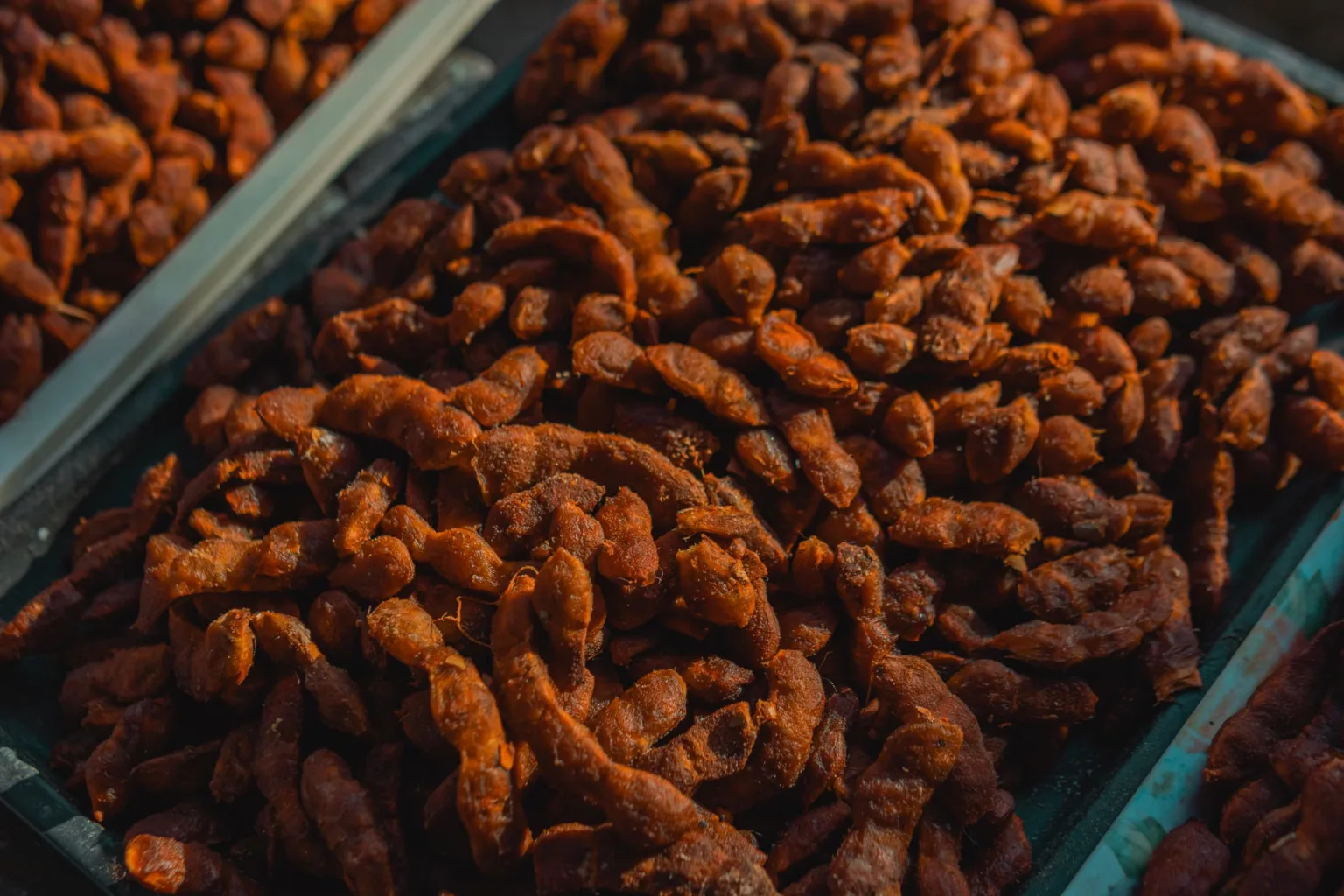
Tamarind paste is a pulpy preparation made from the fruit's edible pulp. Depending on the product, it may be seedless pulp, a mixture containing water, or a product with other ingredients and a different level of concentration. As a result, pastes do not all have the same thickness or strength; check the ingredient list and package directions. Its flavor is commonly tangy and fruity, with both sour and sweet notes, though one may be more noticeable than the other. It is used as a seasoning to bring fruity acidity to savory or sweet dishes.
When to use it
Use it when a recipe needs fruity acidity or a counterpoint to salty, spicy or aromatic flavors. It can season sauces, chutneys, curries, soups, dressings and drinks, and can lend a sweet-and-sour character to fruit-based preparations. Since acidity and concentration depend on the product, begin with a little and taste before adding more. Do not assume it is an exact substitute for lemon juice or vinegar: tamarind has a distinct flavor and may add sweetness as well as acidity.
How to use it
Stir the paste before measuring if the package indicates that it may separate. Add it gradually to a sauce, broth, curry or dressing, tasting before adjusting the balance. If it is too thick to combine evenly, loosen it with a little water or broth, then mix it into the dish. It can also be combined with ginger, garlic or chile, or used in chutneys with mango and other fruit. For drinks, start sparingly and adjust the other ingredients to taste. The right quantity depends on the specific formulation, so follow the recipe and the product label rather than assuming all pastes behave alike.
Flavour and texture
The typical flavor is tangy, fruity and sweet-and-sour, but some products taste more sour or sweeter than others. Texture may be thick and sticky or more fluid, depending on water content and product type. Its acidity may bring lemon or vinegar to mind, but tamarind does not taste identical to either. Taste it before adjusting a recipe, and remember that intensity can differ between brands and formats.
How to choose it
Read the ingredient list and check whether you are buying pulp, ready-to-use paste or a concentrate; these products can differ in composition and strength. Check whether seeds or fibers are present and whether the ingredients include water, acidity regulators or preservatives, since products are not formulated uniformly. Choose an intact package and consult its storage directions. If a recipe calls for a particular kind of paste, look for a product with similar characteristics or adjust the quantity gradually.
Storage
Storage directions depend on the formulation and package: some products say to store unopened paste at room temperature and refrigerate it after opening, while others give different directions. Follow the instructions on your own package and use a clean utensil when serving. Do not apply storage periods for homemade paste to a commercial product, or the reverse. Recommendations for homemade versions also differ in the available evidence, so there is no single time period that applies to every recipe.
Substitutions
Lemon juice or vinegar can provide acidity when tamarind paste is unavailable, but neither reproduces its fruity, sweet-and-sour profile exactly. Add a substitute gradually and taste before adjusting sweetness, salt or chile. The best choice depends on the dish: an alternative may work in a sauce or dressing but will change the finished flavor. There is no fixed, evidence-supported ratio that applies to every product and recipe.
Common mistakes
Adding a large amount at once can make a dish too sour, especially when the product is concentrated. Another common mistake is assuming every brand has the same ingredients, texture or sweetness. Start small, mix thoroughly and taste before adding more. Do not automatically replace tamarind with the same amount of lemon juice or vinegar: their acidity and fruity character are not identical.
Safety and allergens
The available evidence does not identify a specific safety warning for tamarind paste. Follow the product's storage directions and handle it with clean utensils; do not assume every product has the same instructions.
Culinary uses
- Condimento ácido y afrutado
- Ingrediente para equilibrar sabores agridulces
Recommended techniques
- Disolver o diluir en agua o caldo para incorporarla a salsas
- Mezclar en curris, sopas, aderezos o marinados
Pairs well with
- Jengibre, ajo y chile
- Mango y otras frutas en chutneys o salsas
Frequently asked questions
Is tamarind paste always equally sour?
No. Strength and the balance of sour and sweet notes can vary by product and formulation. Taste a small amount and adjust gradually.
Can I replace it with lemon juice or vinegar?
Either can provide acidity, but neither tastes exactly like tamarind. Add it gradually and taste the dish as you go.
How should I store it after opening?
Check the product label. Directions vary between products, so there is no single storage period that applies to every paste.
Estimated nutrition
- Fat
- 0 g
- Saturates
- 0 g
- Carbohydrate
- 68.8 g
- Sugars
- 0 g
- Fibre
- 6.2 g
- Protein
- 3.12 g
- Salt
- 2,500 g
Sources and review
Automatically researched, cross-checked and validated content. Sources consulted:
- ¿Por qué la muerte es origen de miedos y tabúes? doi.org
- Tamarindo: mucho más que chutneys | CocinaSinReceta.com cocinasinreceta.com
- filling gender gaps: determining how traditional knowledge of experts.esf.edu
- Studies on the Preparation and Shelf-Life of Soursop, ... revistas.upr.edu
- Additional file 1: The Antioxidant Food Table. vtechworks.lib.vt.edu
- NUTRITION IN ACTION Beans & Peas • Frijoles & ... stonybrookmedicine.edu
- An Evaluation of the Food FARMacy Pantry Program academiccommons.columbia.edu
- Como preparar pasta de tamarindo casera – Kwan Homsai kwanhomsai.com
- Pasta de tamarindo (¿cruda?, ¿orgánica?) | Fundación G+E diet-health.info
- Pasta de Tamarindo 227g - Comprar Online | Cocinista.es cocinista.es
- Pasta de tamarindo sin semillas Aroy-D, 454GR - ecoasiashop ecoasiashop.com