- Category
- Sauces and condiments
- State
- Liquid
- Usual unit
- tablespoon
What it is
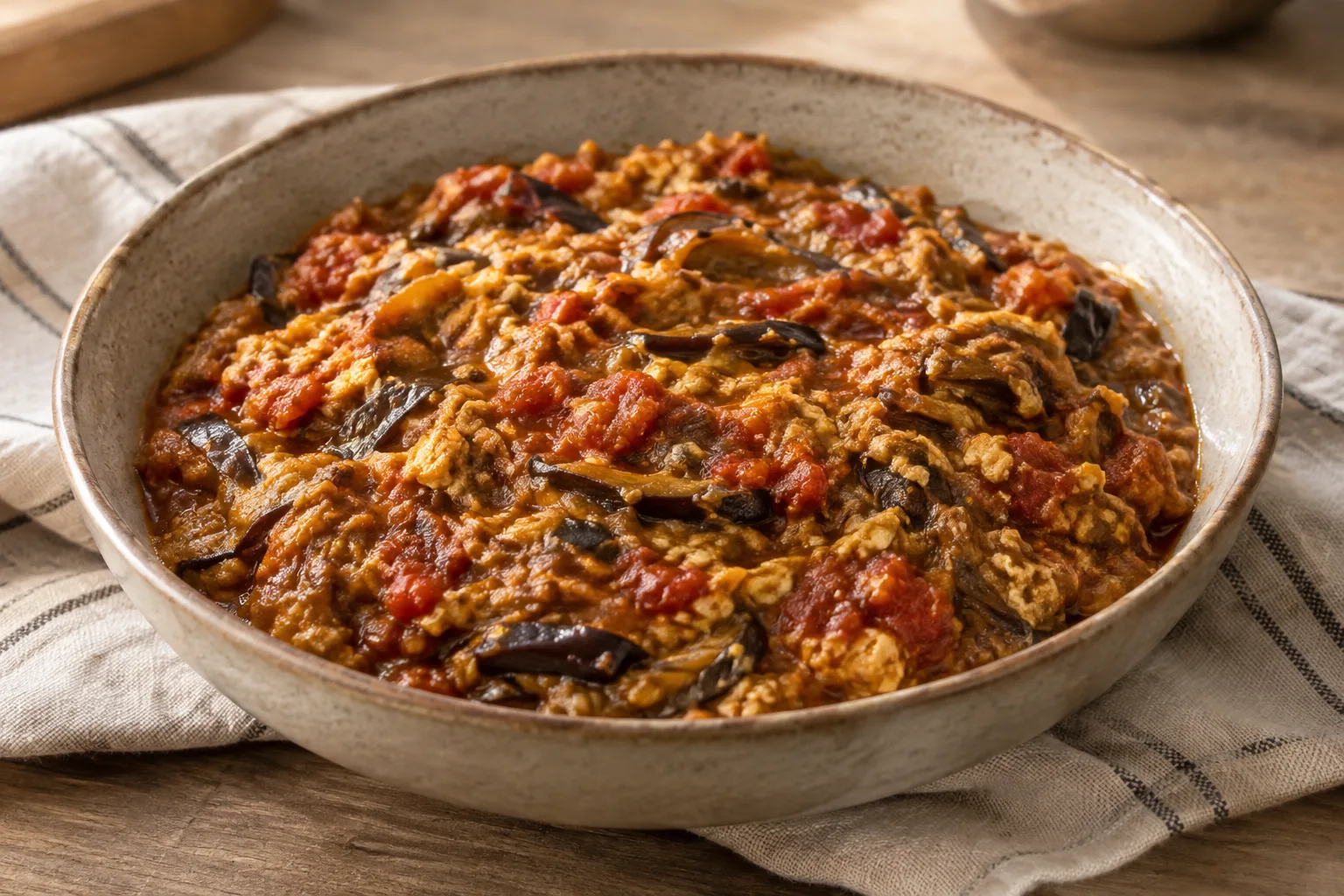
Tomato purée is a tomato product made from crushed or puréed tomatoes, but the name alone does not guarantee the same texture or formulation in every package. It may be relatively fluid or quite thick, and products sold as purée can differ from plain crushed tomatoes or from an already seasoned tomato sauce. Check the product name and ingredient list to see whether it contains only tomato or also salt, herbs or other ingredients. Do not automatically treat it as ketchup or as a fully seasoned pasta sauce; these names can refer to different products. This profile treats it as a liquid tomato ingredient that can be used as a cooking base. Follow the directions on the specific product you buy.
When to use it
Use it when you want tomato to blend evenly into a sauce, stew or pasta preparation without chopping whole tomatoes. It can also be part of a pizza sauce or a cooked tomato mixture with other ingredients. Since products differ in thickness and seasoning, choose one that suits the result you want: a thicker product adds more body, while a thinner one contributes more moisture. If a recipe depends on a precise ingredient ratio or a canning process, do not swap products or change quantities by guesswork.
How to use it
Stir the purée before measuring if it appears separated, then add it as directed by your recipe. For a sauce, cook it with aromatics and other ingredients; adjust added liquid and seasoning to account for what is already in the product. Add it to soups or stews when you want tomato distributed throughout the mixture. In pasta or pizza recipes, use it as a component of a sauce rather than assuming it can replace a thicker tomato concentrate: check the texture the recipe calls for. For home canning, use only a tested recipe that matches the product and process, and do not change ingredients, quantities or preparation instructions.
Flavour and texture
The flavor is recognizably tomato-like and may taste more or less sweet or tart depending on the product. Texture ranges from fluid to thick, so two packages labelled purée may behave differently during cooking. The ingredient list helps distinguish plain tomato from a product containing salt, herbs or other additions. Check the product first, then adjust added liquid and seasoning.
How to choose it
Read the product name, ingredients and package directions: the word purée alone does not tell you whether the contents are fluid, thick or already seasoned. Choose a texture that fits your recipe, and check for added ingredients that may affect the seasoning. For home-canning recipes, choose a product explicitly compatible with a tested recipe; do not assume every purée is suitable for that process.
Storage
Follow the package directions for storage, particularly after opening, and observe the date and usage instructions provided. Storage can depend on the product and its packaging, so do not assume all opened purées should be kept in the same way. If you cannot confirm the instructions for a particular product, ask the manufacturer or do not use it.
Substitutions
In cooked dishes, cooked fresh tomatoes that have been crushed or puréed, or canned crushed tomatoes, may work as alternatives, but they can add a different texture and amount of liquid. Adjust consistency as you cook. Do not substitute products or alter proportions in a home-canning recipe; use a tested recipe that matches the ingredients.
Common mistakes
Do not assume every tomato purée has the same thickness, acidity or seasoning; check the label before adding salt or liquid. Do not confuse it with tomato paste or ketchup, which are not direct replacements in every recipe. The key mistake to avoid in home canning is changing ingredients or quantities in a tested recipe.
Safety and allergens
Follow the manufacturer's storage and use directions. For home-canned tomato products, use a tested recipe and do not change its ingredients, proportions or method; changes can affect product safety.
Culinary uses
- base for sauces
- tomato component in soups and stews
- ingredient in pasta and pizza sauces
Recommended techniques
- stir into a simmering sauce or stew
- cook with aromatics to build a sauce
- blend into a soup or other smooth mixture
Pairs well with
- pasta
- onion and peppers
- garlic and herbs
Frequently asked questions
Is tomato purée the same as tomato paste?
Not necessarily. Purée may be more fluid; check the package texture and product name before replacing it with paste.
Can I replace it with canned crushed tomatoes?
That can work in cooked dishes if you adjust the texture and liquid. Do not make the swap independently in a home-canning recipe.
Can I adapt a canning recipe to use this purée?
Only if a tested recipe specifies that product and process. Follow the recipe's quantities and method without changes.
Sources and review
Automatically researched, cross-checked and validated content. Sources consulted:
- En el etiquetado alimentario hay algunas menciones que son obligatorias eletiquetadocuentamucho.aesan.gob.es
- ¿Por qué la muerte es origen de miedos y tabúes? doi.org
- Los 6 mejores tipos de tomate y cómo usarlos en cocina mercadosantamariadelacabeza.es
- Salsa de tomate - Wikipedia, la enciclopedia libre es.wikipedia.org
- Vamos a Conservar Alimentos: Tomates extension.psu.edu
- Canning Tomatoes and Tomato Products | UNL Food | Nebraska food.unl.edu
- Canning tomatoes and tomato products | OSU Extension Service extension.oregonstate.edu
- Áreas de Seguridad Alimentaria aesan.gob.es
- Tomato & Garbanzo Bean Salsa/Salsa de Tomate y Garbanzo (LCH) | CSU Northridge w2.csun.edu
- Choice Salsa extension.sdstate.edu
- Salsa de Tomate | UC Master Food Preservers of San Joaquin County ucanr.edu
- - YouTube youtube.com
- Cocina rápida y sabrosa: el clásico puré de tomate como nunca antes lo habías usado | Pomi South America pomionline.it