- Category
- Pulses
- State
- Dry
- Usual unit
- g
What it is
Urad dal is the dried seed of Vigna mungo, a pulse in the Vigna genus. It is sometimes sold or translated as “black lentil,” but that name can be misleading: botanically, it is not a lentil. The whole seed has black skin and a pale interior. It is also sold split with the skin on, or split and dehulled, in a white or cream colour. In South Asian cooking, “dal” can refer both to certain dried pulses and to dishes made from them. Check the form stated on the package rather than relying on the word dal alone.
When to use it
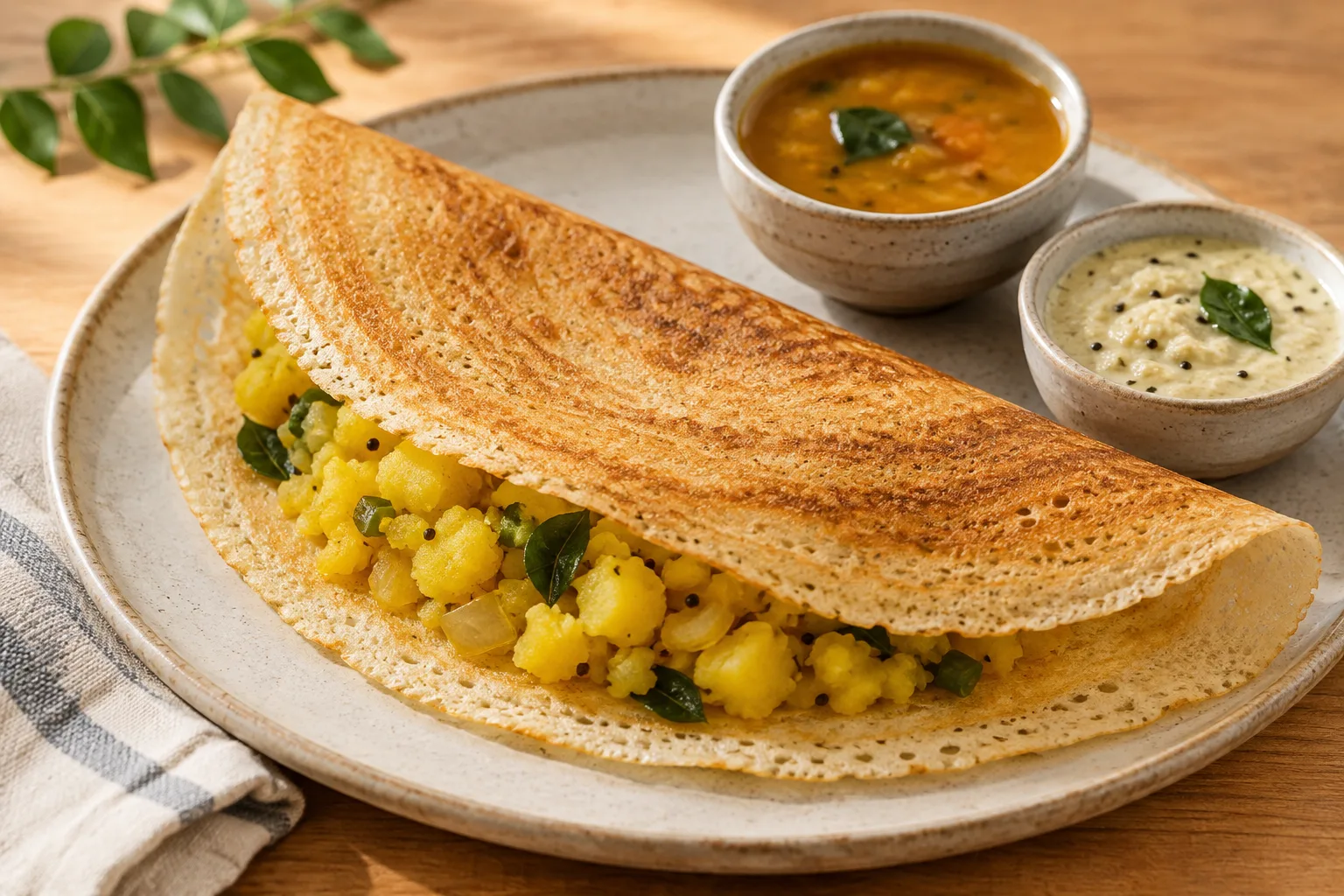
Choose urad dal for a thick dal or pulse stew, paying attention to whether the recipe calls for whole, split skin-on or dehulled grain. Whole skin-on urad is associated with dal makhani; split, dehulled urad is used in fermented idli and dosa batters, medu vada and ground papadum flour. If a particular texture matters, do not treat the forms as interchangeable: processing changes the appearance and cooking behaviour. For a simple dal, it can also be cooked until tender and served with rice or bread.
How to use it
First check whether you have whole skin-on urad, split skin-on urad or split dehulled urad; these are not identical culinary forms. For a stew or dal, cook it until fully tender, then finish it to the texture you want: the dish may retain distinct grains or become thicker and more broken down. White, dehulled urad can be soaked, ground with rice and fermented for idli or dosa batter. It is also soaked and ground for medu vada, and used as flour for papadums. Rice, spices and sautéed aromatics are common flavours or accompaniments for dal preparations; follow the quantities and steps in the recipe you choose.
Flavour and texture
The available sources describe urad as mild in flavour, with a slight nut-like quality. Its texture depends greatly on its form and how it is cooked: whole grain may remain more distinct, while dal dishes can be thick or creamy. Split, dehulled urad is pale and commonly used in ground batters; split skin-on urad is described as giving a more mucilaginous texture.
How to choose it
Read the label to distinguish whole skin-on urad, split skin-on urad and split dehulled urad, which is usually white or cream-coloured. These are different forms and do not always suit the same recipe: idli, dosa and medu vada commonly use white dehulled urad, while dal makhani is associated with whole skin-on grain. Check whether the product is grain or flour and look for any preparation instructions on the package. Do not rely only on names such as “black lentil,” since urad is not a true lentil.
Storage
The available evidence identifies urad dal as a dried pulse but does not provide a verified storage duration or specific storage conditions. Follow the package directions and protect it from moisture and contamination while storing it. If you buy urad flour, check the manufacturer's directions too; do not assume it stores in the same way as whole grain.
Substitutions
Moong dal can be used in a dal-style dish if you are happy to use a different pulse and accept a different result; it is not the same ingredient as urad. Masoor or toor can also be made into dal dishes, but their texture and cooking behaviour will not be identical. For idli, dosa, medu vada or papadums, do not substitute without checking that the recipe supports another pulse or flour.
Common mistakes
A common mistake is treating urad as a true lentil: it is the pulse Vigna mungo. It is also easy to confuse whole urad with split skin-on or white dehulled urad; each has different uses. Do not assume every dal form works equally well for idli, dosa or dal makhani, and do not eat pulses raw or inadequately cooked.
Safety and allergens
The supplied sources contain no specific official warning for urad dal. Follow the package and recipe instructions, and cook the pulse fully before eating.
Culinary uses
- Base for dal and thick legume stews
- Ingredient for fermented batters, fritters and legume flour
Recommended techniques
- Simmer until fully tender; whole and split forms produce different textures
- Soak, grind and ferment for idli or dosa batter
- Grind into flour for papadums, or soak and blend for medu vada
Pairs well with
- Rice
- Indian breads such as roti or naan
- Cumin, mustard, coriander, turmeric, ginger, garlic and chilli
Frequently asked questions
Is urad dal a lentil?
No. It is the pulse Vigna mungo. “Black lentil” is a common name that can be misleading.
What is the difference between whole urad and white urad?
Whole urad keeps its black skin. White urad is usually split and dehulled; a split version with its skin on is also available.
What dishes use urad dal?
Depending on its form, it is used for dal makhani, fermented idli and dosa batters, medu vada and papadum flour.
Sources and review
Automatically researched, cross-checked and validated content. Sources consulted:
- Client Challenge doi.org
- Gastronomía de la India - Wikipedia, la enciclopedia libre es.wikipedia.org
- r^icu^tu^a mapa.gob.es
- Legumes and Pulses • The Nutrition Source nutritionsource.hsph.harvard.edu
- Content - Health Encyclopedia - URochester Medicine urmc.rochester.edu
- Las lentejas Urid o Urad, de la India - Pepekitchen pepekitchen.com
- Urad dal | CreatiVegan.net creativegan.net
- Urad Dal: cultivo, riego y cosecha en 80 días plotmygarden.com
- Comprar Urad Dal (lentejas negras) en línea en España eu.dookan.com
- CUADERNOS DE COCINA ORIENTAL 2.0 : DAL, la comida de los pobres cocinaorientalgurumasala.blogspot.com
- Tipos de lentejas indias explicadas: nombres, familias y procesamiento - Pure Curry purecurry.com
- Dal, daal, dahl o dhal | Gastronomía & Cía gastronomiaycia.com
- - YouTube youtube.com
- Cocción de lentejas: análisis y comparativa de quesos y embutidos para potenciar tu plato laovejaquebala.es
- Lentejas y dal explicados: guía de compra para principiantes – Desi Gourmet desigourmet.es
- Lentejas Guisadas al Estilo Tradicional: La Receta que Rescata el Sabor de Siempre - Conservas Cachopo conservascachopo.com
- Especias para lentejas cuáles usar y cómo darles más sabor | Cocinatis cocinatis.com