- Category
- Drinks
- State
- Liquid
- Usual unit
- ml
What it is
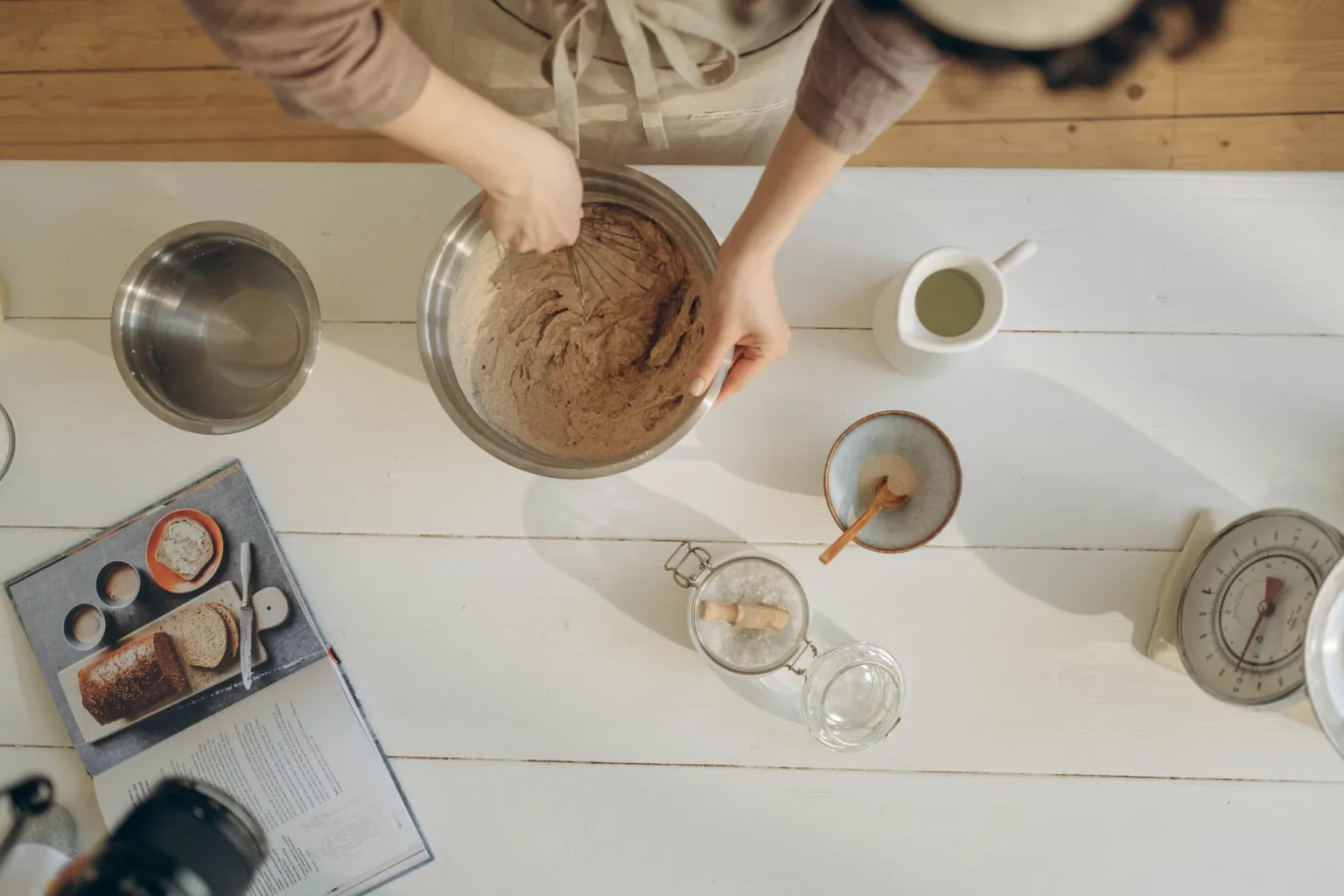
Warm water for a batter or dough is liquid water added to dry ingredients or a mixture to form a workable preparation. “Warm” describes its temperature when added; it is not a separate kind of water. In yeast dough, water temperature can affect the pace of fermentation. In other mixtures, water chiefly hydrates and brings ingredients together. For example, a masa harina recipe combines the flour with water until the mixture no longer cracks. Other dough methods pour flour into boiling water, so it would be inaccurate to assume that every dough needs warm water. Follow the temperature and mixing method specified by the particular recipe.
When to use it
Use warm water when the recipe calls for it, including some yeast doughs where a steady fermentation is wanted. Temperature is a process variable, not a universal rule: a slow-fermented dough may use cold water, while a scalded preparation may require boiling water. Changing the temperature without adapting the method can alter the pace and the result. For doughs without yeast, follow the recipe’s hydration and texture instructions rather than assuming that warm water always improves the mixture.
How to use it
Measure the quantity specified and add the water while mixing the dry ingredients, unless the recipe directs you to pour it in all at once. Check the texture the recipe describes: some doughs should come together, while other batters are looser. For yeast dough, use warm water only when the recipe calls for it; a general temperature suggestion cannot guarantee the same outcome across different flours, room conditions, and mixing methods. For masa harina dough, incorporate the water and work the mixture until it no longer cracks, as the relevant recipe directs. If the method says to scald the flour, use boiling water rather than automatically substituting warm water. Do not add extra water by default; adjust only in line with the recipe and the mixture’s consistency.
Flavour and texture
Water adds moisture, but the available evidence does not describe it as a source of distinctive flavor on its own. The amount used affects how moist and cohesive the dough becomes. In yeast preparations, water temperature can also affect the pace of fermentation; other recipes may require cold or boiling water for their particular method.
How to choose it
Choose water suitable for drinking and measure the quantity the recipe specifies. The available evidence does not establish a particular brand, source, or single purchase temperature for water used in dough. Pay attention to the recipe’s actual instruction: warm, cold, and boiling describe different preparation steps and are not interchangeable in every recipe.
Storage
This profile treats water as a liquid ingredient and does not establish a specific storage duration for measured or heated water. Handle hot water in a suitable container and follow the storage directions for the water and container you use. Once combined with flour or other ingredients, the mixture is no longer simply water; follow the recipe’s directions for the dough.
Substitutions
Do not replace water with another liquid based on this profile: the available evidence does not establish equivalence with milk, broth, or other liquids. If the recipe allows it, cold water can suit a dough whose method permits slower fermentation. Boiling water belongs to methods that scald flour; it is not a general substitute for warm water.
Common mistakes
A common mistake is treating warm water as suitable for every dough. Some recipes use cold water to slow fermentation, while others call for boiling water to scald flour. Another is adding water all at once or in excess without checking the intended consistency. Follow the method and quantity given, and change the water temperature only when the recipe allows it.
Safety and allergens
The supplied evidence identifies no specific safety warning for warm water in dough. Handle boiling water carefully to avoid burns and follow the recipe’s instructions.
Culinary uses
- Hidratar harina y otros ingredientes secos
- Ajustar la consistencia de una masa y, en masas con levadura, contribuir a controlar el ritmo de fermentación
Recommended techniques
- Incorporar gradualmente mientras se mezcla
- Ajustar la temperatura del agua según la receta y el proceso de la masa
Pairs well with
- Harina de trigo
- Masa harina y otras harinas o mezclas secas para masas
Frequently asked questions
Does every dough need warm water?
No. The method determines the temperature: some recipes use cold water, while others call for boiling water to scald flour.
Can I use cold water instead of warm water?
Only if the recipe allows the change. In yeast dough, cold water can slow fermentation, so the pace and result may differ.
When does dough need boiling water?
When the recipe instructs you to scald the flour. Boiling water is not a universal replacement for warm water.
Sources and review
Automatically researched, cross-checked and validated content. Sources consulted:
- Agencia Española de Seguridad Alimentaria y Nutrición aesan.gob.es
- Nutrition After Your Transplant - Health Online healthonline.washington.edu
- Free Standing, Slide In, and Drop In Electric housing.illinoisstate.edu
- UCCE efforts improve quality of and demand for fresh ... ucanr.edu
- Qué es eso llamado epistemología, para qué sirve, por qué es inexcusable para la universidad y para la paz | Reencuentro. Análisis de problemas universitarios doi.org
- Pictorial Recipes - OSU Extension Service extension.oregonstate.edu
- Cocinar y Congelar Artículos de la Despensa de Alimentos extension.psu.edu
- Sopes | Dinner Tonight dinnertonight.tamu.edu
- - YouTube youtube.com
- La temperatura del agua lo cambia todo en el pan. Guía completa para tus leudados de tus masas panarras abc.es
- La cocina en Al-Ándalus dipalme.org
- Churro - Wikipedia, la enciclopedia libre es.wikipedia.org