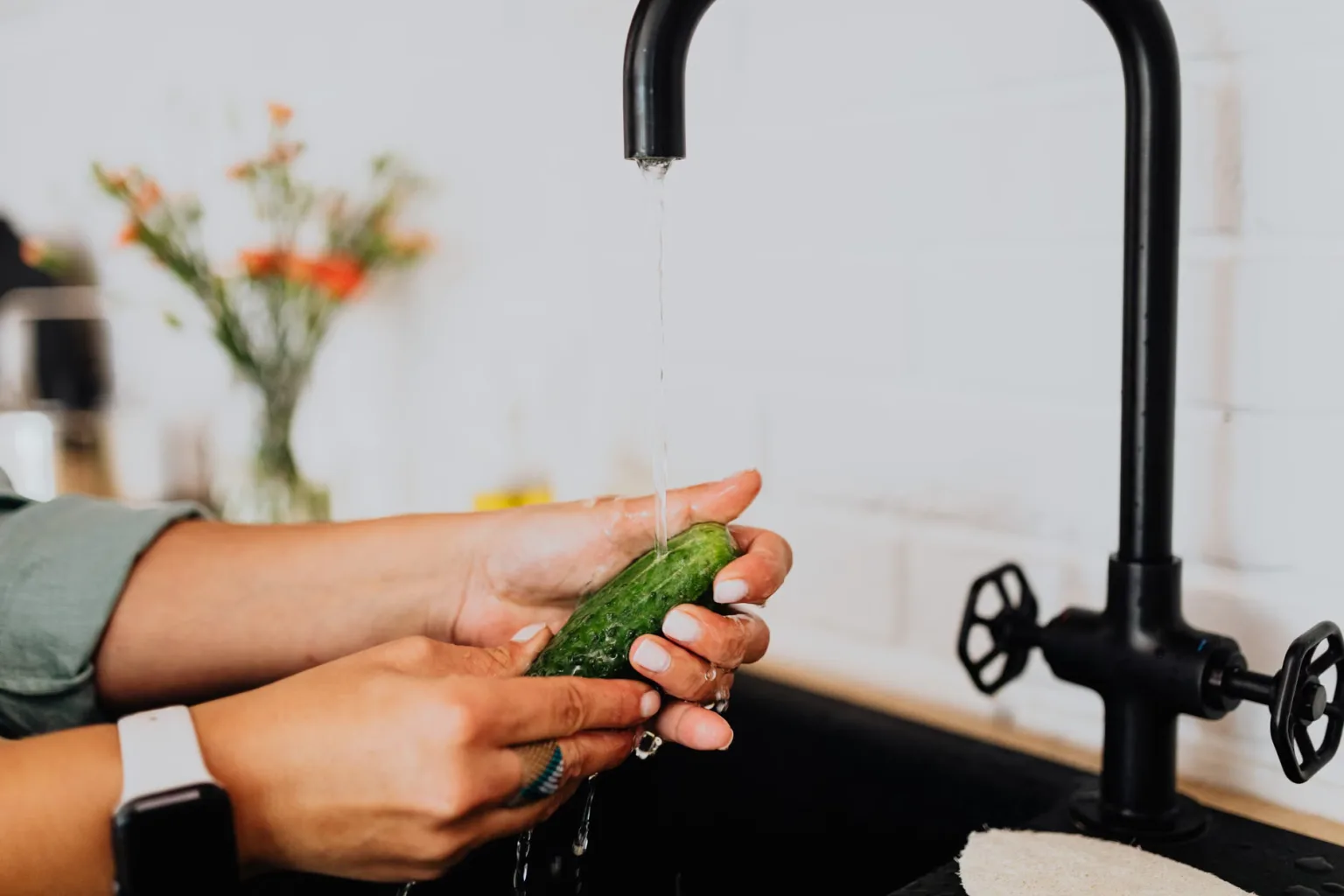
- Category
- Fish and seafood
- State
- Liquid
- Usual unit
- ml
What it is
This name identifies water intended for rinsing seafood, but does not specify whether it is tap water, bottled water, or another kind. The evidence packet does not describe this water’s sensory qualities, composition, source, or culinary results. It also provides no verifiable recommendation to rinse raw seafood and does not say that rinsing removes bacteria or makes food safe. The relevant information concerns hygienic handling: raw seafood and its liquids can contribute to cross-contamination, so they should be kept away from ready-to-eat foods, and hands and utensils should be washed after contact. Treat this item as a kitchen aid, not as a food or seasoning.
When to use it
The available evidence supports using water for hygiene after handling raw seafood: wash hands and clean boards, plates, and cutlery with soap; for surfaces and utensils, the source specifies hot water and soap. It does not support a specific use for washing or rinsing the seafood itself. If a recipe calls for that step, these sources cannot confirm its necessity, effectiveness, or safety. Keep raw seafood and its liquids separate from ready-to-eat foods during preparation rather than treating rinsing as a safety measure.
How to use it
Use this guide to distinguish rinse water from the hygiene procedure actually described in the evidence. After handling raw seafood, wash your hands with soap and water, and wash boards, plates, and cutlery that touched it with hot water and soap. Keep raw seafood and its liquids away from ready-to-eat foods to reduce cross-contamination. The evidence packet does not explain how to rinse seafood or show that rinsing sanitizes it; do not present rinsing as a safety treatment or a substitute for cleaning. No rinsing ratios, times, or temperatures are provided.
Flavour and texture
The sources do not describe the taste, aroma, color, or texture of water intended for rinsing seafood. Nor do they document a sensory effect of rinsing on seafood. Do not describe the water as salty, mineral-rich, neutral, or capable of improving texture without evidence about the specific water and procedure.
How to choose it
The name does not specify what kind of water this is, and the sources give no purchasing criteria for seafood rinse water. The available evidence cannot support a recommendation about brand, source, treatment, or format. If buying a product labeled for food use, check its label and follow the manufacturer’s directions; this guide does not validate specific products or rinsing raw seafood.
Storage
The evidence packet does not specify how to store water intended for rinsing seafood, or provide recommended conditions, duration, or containers. Do not claim that this water preserves seafood. To avoid unsupported advice, follow the package directions for a commercial product and keep raw seafood, its liquids, and ready-to-eat foods separate.
Substitutions
The sources identify no equivalent culinary substitute for this water and do not establish that seafood needs rinsing. If a recipe does not require rinsing, omitting that step avoids inventing an unsupported recommendation. For subsequent hygiene, soap and water are the documented procedure for hands and utensils; this is a separate task, not a substitute for rinse water.
Common mistakes
Do not assume that rinsing raw seafood sanitizes it: the sources do not demonstrate this. Do not use rinsing in place of washing hands and utensils. Another mistake to avoid is allowing raw seafood or its liquids to contact ready-to-eat foods, since the evidence warns about cross-contamination.
Safety and allergens
Keep raw seafood and its liquids away from ready-to-eat foods. After contact, wash hands with soap and water, and wash boards, plates, and cutlery with hot water and soap. The supplied evidence does not confirm that rinsing raw seafood is necessary, effective, or recommended; do not present it as a way to remove bacteria.
Culinary uses
- Auxiliar de enjuague según el nombre del ingrediente; las fuentes no confirman que enjuagar mariscos crudos sea necesario o recomendable.
- Agua para tareas de higiene posteriores al contacto con mariscos crudos, junto con jabón.
Recommended techniques
- Lavarse las manos con agua y jabón después de manipular mariscos crudos.
- Lavar con agua caliente y jabón las tablas, los platos y los cubiertos que hayan estado en contacto con mariscos crudos.
Pairs well with
- Jabón para el lavado higiénico de manos y utensilios.
- Mariscos crudos y sus líquidos, que deben mantenerse separados de los alimentos listos para comer.
Frequently asked questions
Should raw seafood be rinsed?
The supplied sources do not determine this or recommend rinsing. Do not present it as a necessary or sanitizing step.
What cleaning is supported after handling seafood?
Wash hands with soap and water, and wash boards, plates, and cutlery that contacted raw seafood with hot water and soap.
Does rinse water preserve or improve seafood?
The evidence packet provides no support for an effect on preservation, flavor, or texture.
Sources and review
Automatically researched, cross-checked and validated content. Sources consulted:
- Cuatro Pasos Simples Para la Seguridad en los Alimentos | Home & Garden Information Center hgic.clemson.edu
- Nutrition After Your Transplant - Health Online healthonline.washington.edu
- Comité Científico aesan.gob.es
- Food Safety Update - Fall 2022 class.ucanr.edu
- FSHN14-05s/FS275: De Compras Para la Salud: Mariscos ask.ifas.ufl.edu
- Cómo el agua de mar realza los sabores en la cocina winbiaguademar.com
- Promoción del cultivo de las nuevas especies de espáridos mapa.gob.es
- Inocuidad de los Mariscos en Concha vtechworks.lib.vt.edu
- Agua de mar para beber y cocinar, ¿es buena? | Consumer consumer.es
- Agua de mar usos en la cocina tradicional española aguademar.es
- Agua de mar: el sorprendente ingrediente con el que estos chefs mejoran sus platos okdiario.com