- Category
- Drinks
- State
- Liquid
- Usual unit
- cup
What it is
Water for an infusion is water used as a liquid medium in contact with an aromatic ingredient to produce a liquid carrying some of that ingredient’s aroma and flavor. In an infusion, water is not the aromatic ingredient; it is the aqueous base that receives what the chosen ingredient releases. The technique can be used for drinks such as teas and herbal infusions, as well as for liquids that will later be incorporated into recipes. The final profile depends on the ingredient and the preparation, so this profile does not assign a distinctive taste to the infused water or set one universal time or temperature.
When to use it
Use water as a base when you want to prepare an infused drink or draw out the character of herbs, spices, flowers, tea, or citrus peel. It can also be useful when a recipe contains a liquid that you want to aromatize before adding it. The technique allows flavor variations in drinks and culinary preparations, but the result depends on what is added and how the liquid will be used. There is no single temperature or steeping time that applies to every ingredient; follow the recipe and the requirements of the aromatic ingredient.
How to use it
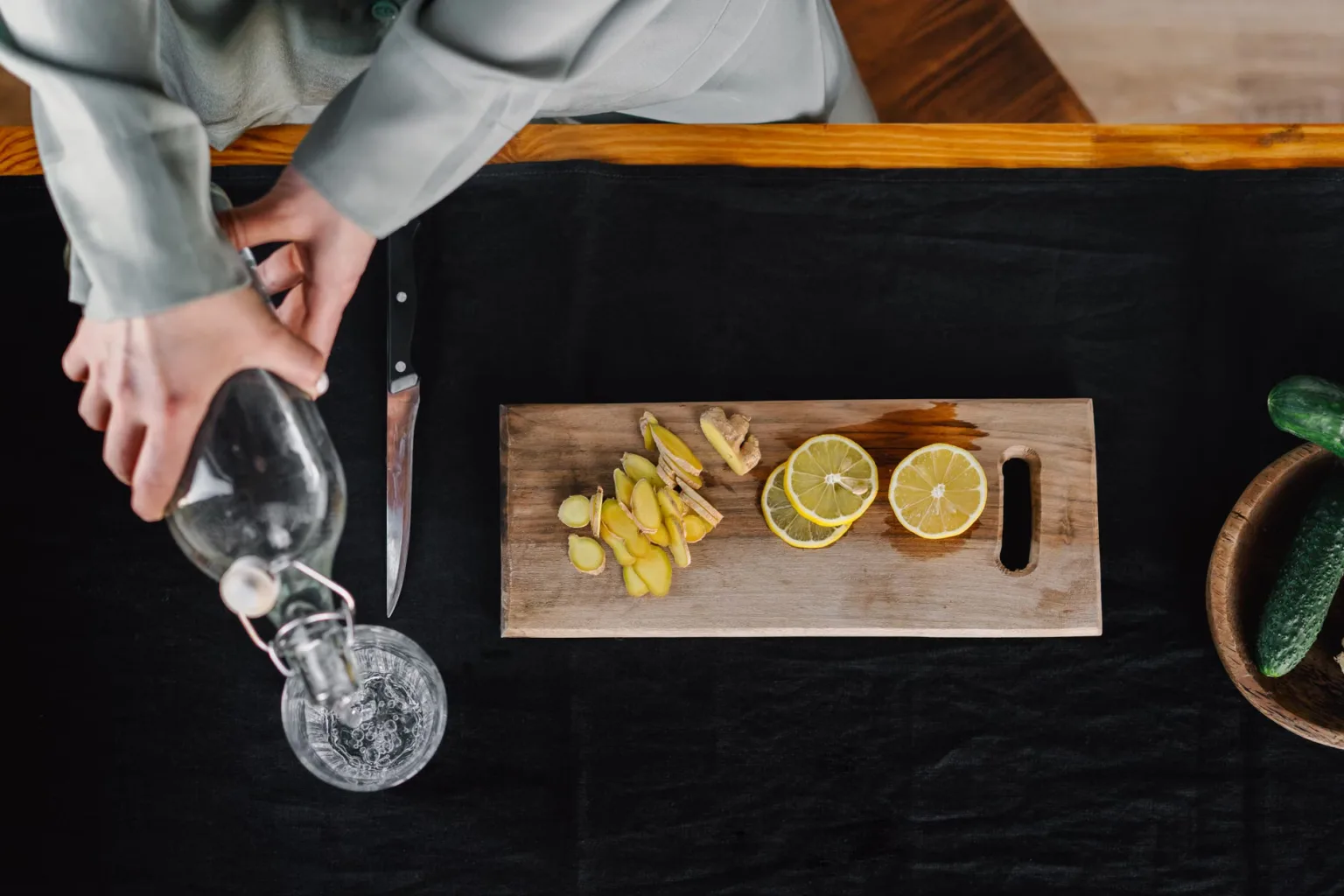
Choose water as the aqueous base and heat it if the recipe or ingredient calls for it. Add the aromatic ingredient and allow contact with the liquid to transfer aroma. Then strain the preparation to remove solids before serving or adding the liquid to another recipe. Ingredients mentioned in the sources include herbs, spices, flowers, tea, coffee, and citrus peel. Do not treat any one time or temperature as a universal rule: extraction varies with the ingredient, and the sources do not establish a single method for every infusion. Follow the specific recipe and the directions for the ingredient being used.
Flavour and texture
Water serves as the base, while the aromatic profile of the infused liquid depends on the ingredients placed in contact with it. There is therefore no single flavor that can be assigned to water for infusions. Texture also depends on preparation; straining removes the solid ingredients and leaves a liquid without those pieces.
How to choose it
This profile concerns water used as a liquid ingredient, not a particular bottled, mineral, or treated water. The available evidence does not set criteria for choosing a brand, composition, or format. When selecting water for a recipe, first check whether the recipe specifies a particular feature; otherwise, do not attribute to the water an aromatic profile that comes from the infused ingredient.
Storage
The available evidence does not specify a storage method or duration for water intended for infusions, or for every finished infusion. Follow the recipe and the directions for the aromatic ingredient used. This profile does not set storage periods or recommend room-temperature or refrigerated storage without specific supporting evidence.
Substitutions
Water can be replaced in an infusion by other liquids that also act as extraction media, such as milk, cream, oil, or syrup. Choosing one changes the recipe’s liquid base, so the swap is not neutral. Select a liquid that suits the intended culinary result and the instructions for the preparation.
Common mistakes
Do not assume that every aromatic ingredient uses the same steeping time or temperature. Do not confuse the water base with the ingredient that provides the aroma: the final profile depends on what is added. If the recipe calls for straining, remove the solids before serving or using the infusion.
Safety and allergens
The available sources provide no specific safety warning for water used in infusions. Follow the recipe and the directions for the ingredient you plan to infuse.
Culinary uses
- base líquida para infusiones
- medio acuoso para extraer aromas
Recommended techniques
- calentar
- infusionar y colar
Pairs well with
- hierbas y especias
- flores y pieles de cítricos
Frequently asked questions
What does water for an infusion mean?
It is water used as a liquid base in contact with an aromatic ingredient to make an infused liquid.
What can I infuse in water?
The sources mention herbs, spices, flowers, tea, coffee, and citrus peel, among other aromatic ingredients.
Is there one steeping time and temperature for every infusion?
No. Extraction depends on the ingredient, and the sources do not establish universal timing or temperature for all infusions.
Sources and review
Automatically researched, cross-checked and validated content. Sources consulted:
- The Essential Glossary of Cooking Terms for the Culinary Arts - Escoffier escoffier.edu
- Vamos a Conservar Alimentos: El secado de las plantas medicinales y aromáticas extension.psu.edu
- Qué es eso llamado epistemología, para qué sirve, por qué es inexcusable para la universidad y para la paz | Reencuentro. Análisis de problemas universitarios doi.org
- Radiation Oncology Recipes - Health Online healthonline.washington.edu
- Sopa Mexicana 1920s ( Mexican Soup) - lacocina.utsa.edu
- informe anual de indicadores - agricultura, pesca y alimentación servicio.mapa.gob.es
- Publicaciones de Seguridad alimentaria aesan.gob.es
- Farmer's use of improved seed selection practices in mexican ... ageconsearch.umn.edu
- hydration Archives | Page 4 of 4 | Dinner Tonight dinnertonight.tamu.edu
- Grand Canyon Beverage Company - Grand Canyon Beverage Company gcbc.gcu.edu
- Read "Dietary Reference Intakes for Water, Potassium, Sodium, Chloride, and Sulfate" at NAP.edu books.nap.edu
- Hybrid! Healthscapes:! Mothers'! Health! Care! and! Food! ... ir.library.oregonstate.edu
- Infusión: origen, proceso y aplicaciones en repostería pastrypedia.net
- Té: origen, beneficios y variedades de la bebida más popular del mundo - Vegenat vegenat.es