- Category
- Drinks
- State
- Liquid
- Usual unit
- l
What it is
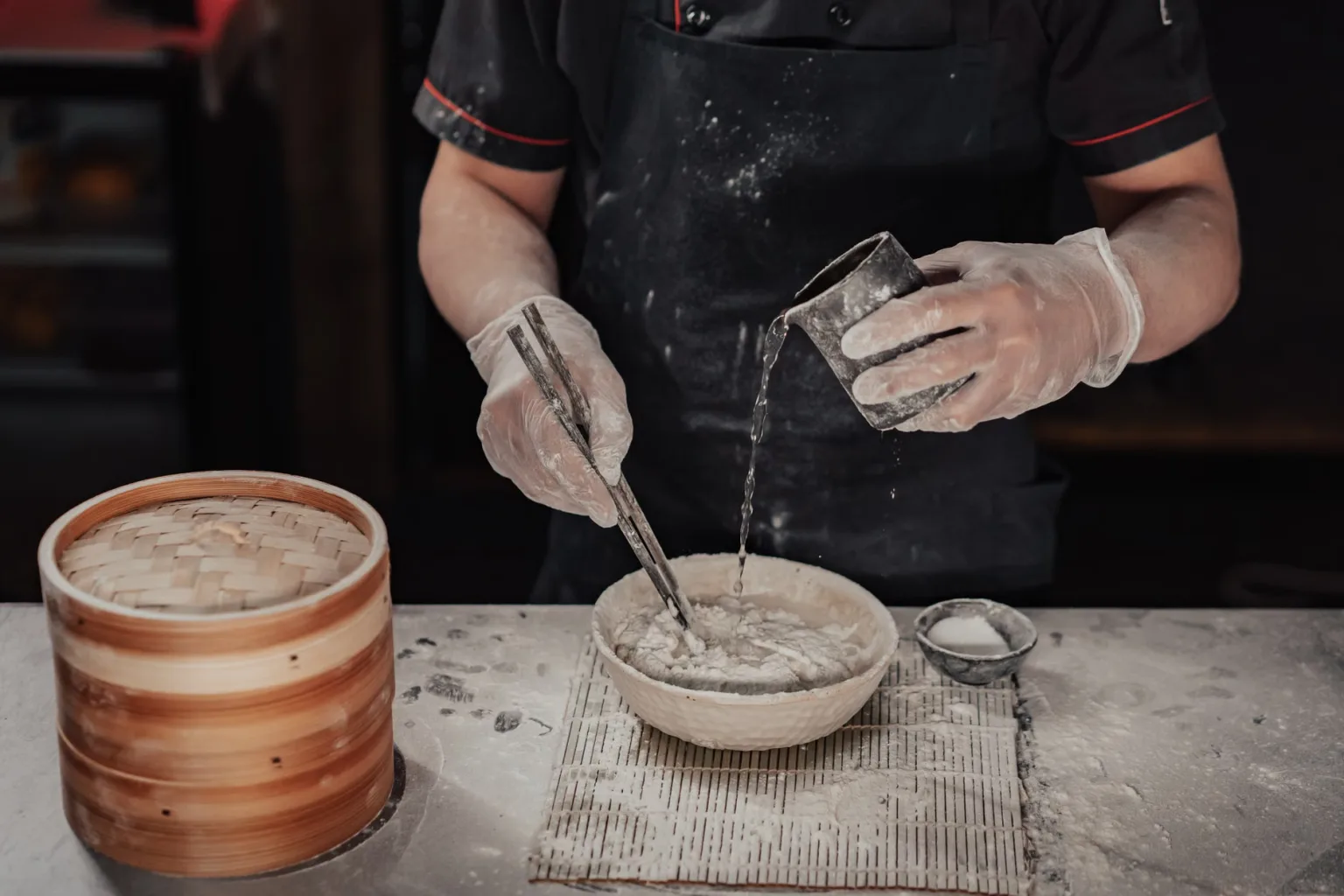
Water for a steamer is the liquid heated to produce steam during cooking. In a stovetop pot, it goes in the base while the food sits in a perforated basket or on a support above it. The steam reaches the ingredients without immersing them in the water. Electric steamers also use water, usually in a dedicated reservoir. The available evidence describes water's culinary role as a source of steam, but does not set a universal water quality, exact quantity, or purchasing rule for every appliance.
When to use it
Use water when steaming ingredients in a steamer, a covered pot with a basket, or a similar perforated utensil. This method places the food above the liquid rather than in direct contact with it. Vegetables and fish are among the foods described as suitable for steaming. The amount needed and the way the appliance is filled depend on its design; the available evidence does not establish one measure for all steamers.
How to use it
For a pot with a basket, pour water into the bottom and place the food on the perforated support above the liquid level. The available guidance is to keep the water from touching the ingredients; covering the pot helps keep steam around them. Heat the water to produce steam, and check during cooking that it has not evaporated completely. For an electric steamer, use its intended reservoir. No universal quantity is provided: follow the instructions for the specific model and do not fill the pot so high that water reaches the basket or food.
Flavour and texture
Here, water is a cooking medium rather than an ingredient served on the plate. The available evidence does not describe a specific flavor or texture profile for steamer water. It does note that other liquids can be used to add flavor, without naming them. It is therefore useful to distinguish any flavor from an alternative liquid from water's basic job: producing steam without immersing the food.
How to choose it
The available sources do not specify a category, brand, mineral content, or purchasing criterion for water used in a steamer. They also do not provide a universal recommendation for the type of water suitable for every model. Check the appliance's own instructions for the permitted liquid and fill level; do not rely on an unsupported universal specification or quantity.
Storage
The available evidence does not say how long to store water intended for a steamer or prescribe a special storage method. It also gives no universal guidance for water left in the reservoir after cooking. Avoid presenting an undocumented storage period or condition as a general rule; consult the appliance instructions for handling its reservoir and any remaining liquid.
Substitutions
One culinary source notes that other liquids may also produce steam and add flavor, but it gives no examples and does not establish that they suit every appliance. If replacing water, use only a liquid compatible with the steamer's design and instructions. The evidence does not support recommending a particular substitute or promising that any liquid will produce the same result.
Common mistakes
One mistake is filling the pot until water touches the food or basket, even though the described method uses steam without direct contact with the liquid. It is also worth checking the level: water can evaporate during cooking. There is no single quantity for every steamer, so avoid applying a universal measure without considering the appliance.
Safety and allergens
Handle hot water, the pot, and steam carefully while cooking and when uncovering the appliance. Follow the manufacturer's operating instructions; the available sources provide no specific warning or general temperature rule.
Culinary uses
- Fuente de vapor para cocinar alimentos sin sumergirlos
- Líquido de cocción en la base de una vaporera o una olla con cesta perforada
Recommended techniques
- Calentar agua en la parte inferior de la olla y colocar los alimentos en una cesta perforada por encima
- Usar el depósito de agua de una vaporera eléctrica y mantener el aparato cubierto según su diseño
Pairs well with
- Verduras colocadas en una cesta por encima del agua
- Pescado cocinado en una cesta o bandeja perforada sobre el agua
Frequently asked questions
Should the water touch the food?
Not in the method described: it sits below a perforated basket so steam cooks the food without immersing it.
How much water should I add?
No universal amount is given. It depends on the appliance; keep water away from the food and check that it does not evaporate completely.
Can I use another liquid instead of water?
Other liquids are mentioned as a way to add flavor while producing steam, but no types are specified. Check that any liquid is compatible with your appliance.
Sources and review
Automatically researched, cross-checked and validated content. Sources consulted:
- Qué es eso llamado epistemología, para qué sirve, por qué es inexcusable para la universidad y para la paz | Reencuentro. Análisis de problemas universitarios doi.org
- Arroz Meloso con Mango - MyLLU - Loma Linda University myllu.llu.edu
- Vamos a Conservar Alimentos: Peras extension.psu.edu
- Enjoying home-dried fruits and vegetables | Servicio de Extensión de OSU extension.oregonstate.edu
- Un Manual para Principiantes de Huertos Urbanos publications.mgcafe.uky.edu
- Uso de Envasadoras de Agua Hirviendo fieldreport.caes.uga.edu
- Cerezas | KSRE Bookstore - Kansas State University bookstore.ksre.ksu.edu
- Vegetales increíbles extension.usu.edu
- Cocer heno de caballo al vapor para reducir los efectos del moho y el polvo. es.extension.umn.edu
- COCCIÓN AL VAPOR: CÓMO PRESERVAR NUTRIENTES Y SABOR EN TUS VERDURAS alambique.com
- Trucos y consejos para cocinar al vapor | Recetas Nestlé recetasnestle.com.ec
- Cocinar al vapor: la técnica más saludable para conservar todo el sabor y los nutrientes hola.com