- Category
- Bread and dough
- State
- Fresh
- Usual unit
- unit
What it is
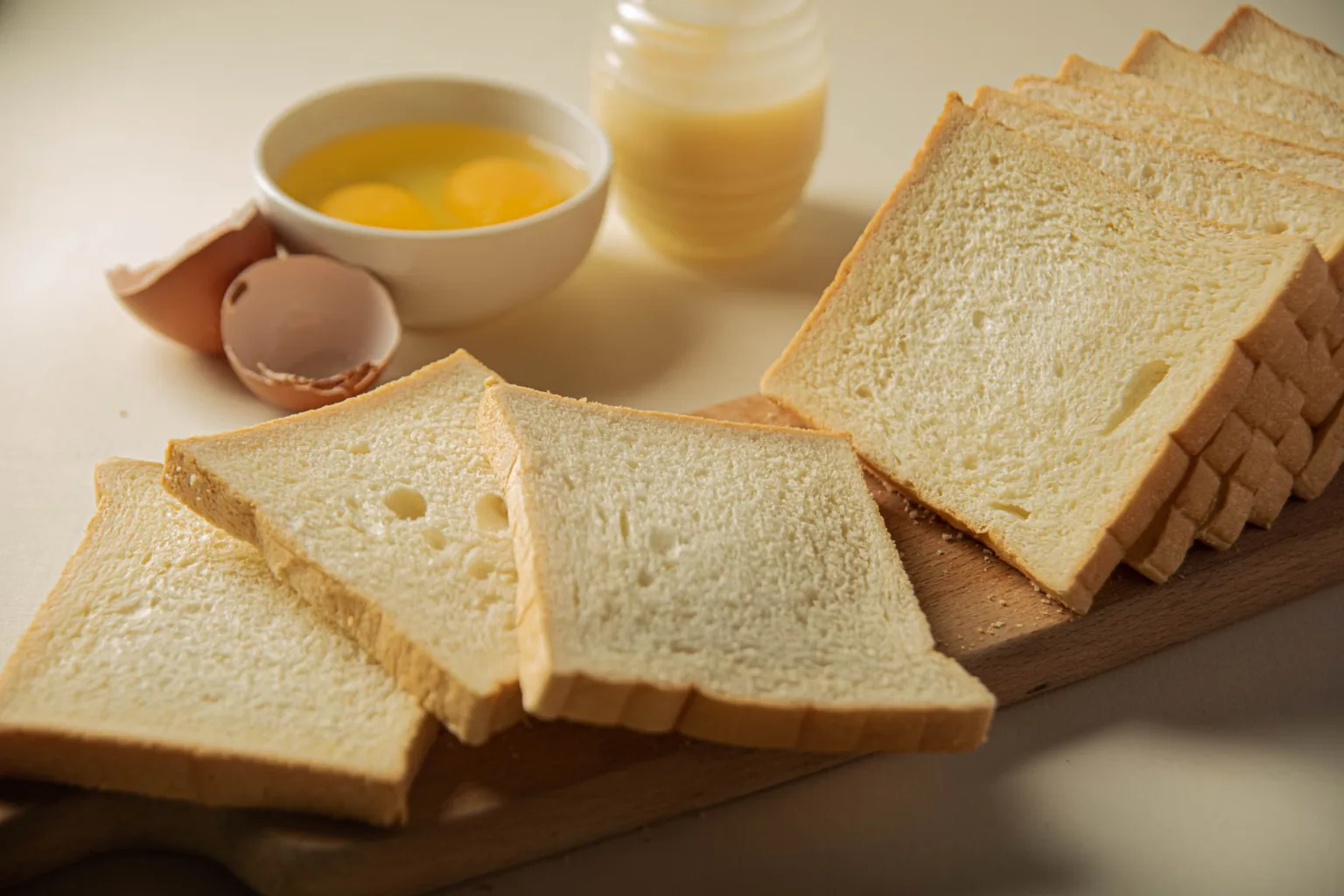
White bread is commonly made with refined wheat flour. Milling removes the bran and often the germ, leaving flour that is light in color. This distinguishes it from whole-wheat bread, which retains those parts of the grain. Appearance, crumb, and flavor can vary with the recipe and product, so “white bread” does not describe just one shape or texture. It may be sold sliced or as a whole loaf, and bakery bread does not necessarily keep for the same length of time as packaged bread. When choosing it, check the flour description and product information rather than assuming all white breads are alike.
When to use it
Choose white bread when you want a light-colored bread with a relatively light flavor and texture, or when a recipe specifically calls for it. It can be sliced and toasted, and it can be replaced with whole-wheat or whole-grain bread if you are happy with a different crumb and flavor. Bakery and packaged loaves may keep for different lengths of time, so consider the format and package directions when planning how to use it. The name does not guarantee a single recipe: check the ingredients if you need to confirm which flour was used.
How to use it
Use it sliced or toasted, two ways of presenting or using white bread and bread more generally that are noted in the available material. Serve it with sweet or savory spreads as a serving suggestion, choosing according to the meal and your preference; this guide does not assume one definitive pairing. You can also compare it with whole-wheat or whole-grain bread: flours that retain the bran and germ produce breads that differ in color, flavor, and texture. If a recipe calls specifically for white bread, consider whether a substitute will give the result you want. Follow the package directions for the particular product, since bakery and packaged breads vary.
Flavour and texture
White bread is generally light in color, with a flavor and texture that are lighter than those of whole-wheat bread. Products are not all identical: recipes and production methods can change the crumb and eating quality. A comparison with whole-wheat bread is useful, but it cannot tell you the exact texture of a particular loaf.
How to choose it
Check the product name, ingredient list, and date on the package. “White” commonly refers to refined flour, but recipes and formats vary. If you need to confirm the grain or flour used, read the label rather than relying only on color or the word “wheat.”
Storage
Storage life depends on the product and format: the available source gives two to three days as a general guide for bakery bread and one to two weeks for packaged bread. It also says bread can be frozen for up to three months. These are general estimates, not a guarantee for every loaf or brand; follow the package date and directions, and discard bread if you see mold.
Substitutions
Whole-wheat bread or whole-grain bread can stand in for white bread if you are comfortable with differences in color, flavor, and texture. Whole-wheat bread retains parts of the grain commonly removed when making white flour, so the result will not be identical. For a specific recipe, consider whether white bread is essential to the intended result.
Common mistakes
Do not assume all white breads have the same recipe, texture, or storage life. Also, do not confuse wheat bread with whole-wheat bread: check the flour description and product information. General storage estimates do not replace the directions for a particular product.
Safety and allergens
Follow the product’s storage and use directions, and use a basic precaution: do not eat bread if you see mold or signs of spoilage. The available evidence does not identify a specific safety warning for white bread.
Culinary uses
- Alimento de panadería elaborado con harina de trigo refinada
- Base neutra para servir rebanadas o preparar tostadas
Recommended techniques
- Rebanar
- Tostar
Pairs well with
- Ingredientes para untar, dulces o salados, como sugerencia de servicio
- Otros panes de trigo para comparar sabores y texturas
Frequently asked questions
What makes bread white?
It is commonly made with refined wheat flour, from which the bran and often the germ have been removed. Check the label for the specific flour used.
How is white bread different from whole-wheat bread?
Whole-wheat bread retains the bran and germ, while white flour commonly excludes them. The breads can therefore differ in color, flavor, and texture.
How long does white bread keep?
It depends on the product. The available source gives two to three days for bakery bread and one to two weeks for packaged bread as general estimates; follow the label.
Estimated nutrition
- Fat
- 5.81 g
- Saturates
- 1.16 g
- Carbohydrate
- 53.5 g
- Sugars
- 9.3 g
- Fibre
- 4.7 g
- Protein
- 4.65 g
- Salt
- 1.63 g
Sources and review
Automatically researched, cross-checked and validated content. Sources consulted:
- Client Challenge doi.org
- The Essential Glossary of Cooking Terms for the Culinary Arts - Escoffier escoffier.edu
- Historia del pan: cómo conocimos este gran alimento - Pastas Gallo : Pastas Gallo pastasgallo.es
- Building Communication between Serve City and the Hamilton ... etd.ohiolink.edu
- Recipes | The Lion's Pantry thelionspantry.psu.edu
- Survival Basics: Food — How to Stock Up and Prepare for Natural Disasters | OSU Extension Service extension.oregonstate.edu
- Storing Food for Safety and Quality wpcdn.web.wsu.edu
- Áreas de Seguridad Alimentaria aesan.gob.es
- Take Control Of Food Safety! An Educational Program For ... digitalscholarship.tnstate.edu
- 2023 Weber County 4-H Food Contest Recipes extension.usu.edu
- Pan blanco - Wikipedia, la enciclopedia libre es.wikipedia.org
- Breve guía para entender seis tipos de panes blancos e integrales | Grupo Animal grupoanimal.mx
- Diferencias entre el pan integral y el pan blanco – Botanical-online botanical-online.com