- Category
- Sugar and sweeteners
- State
- Dry
- Usual unit
- g
What it is
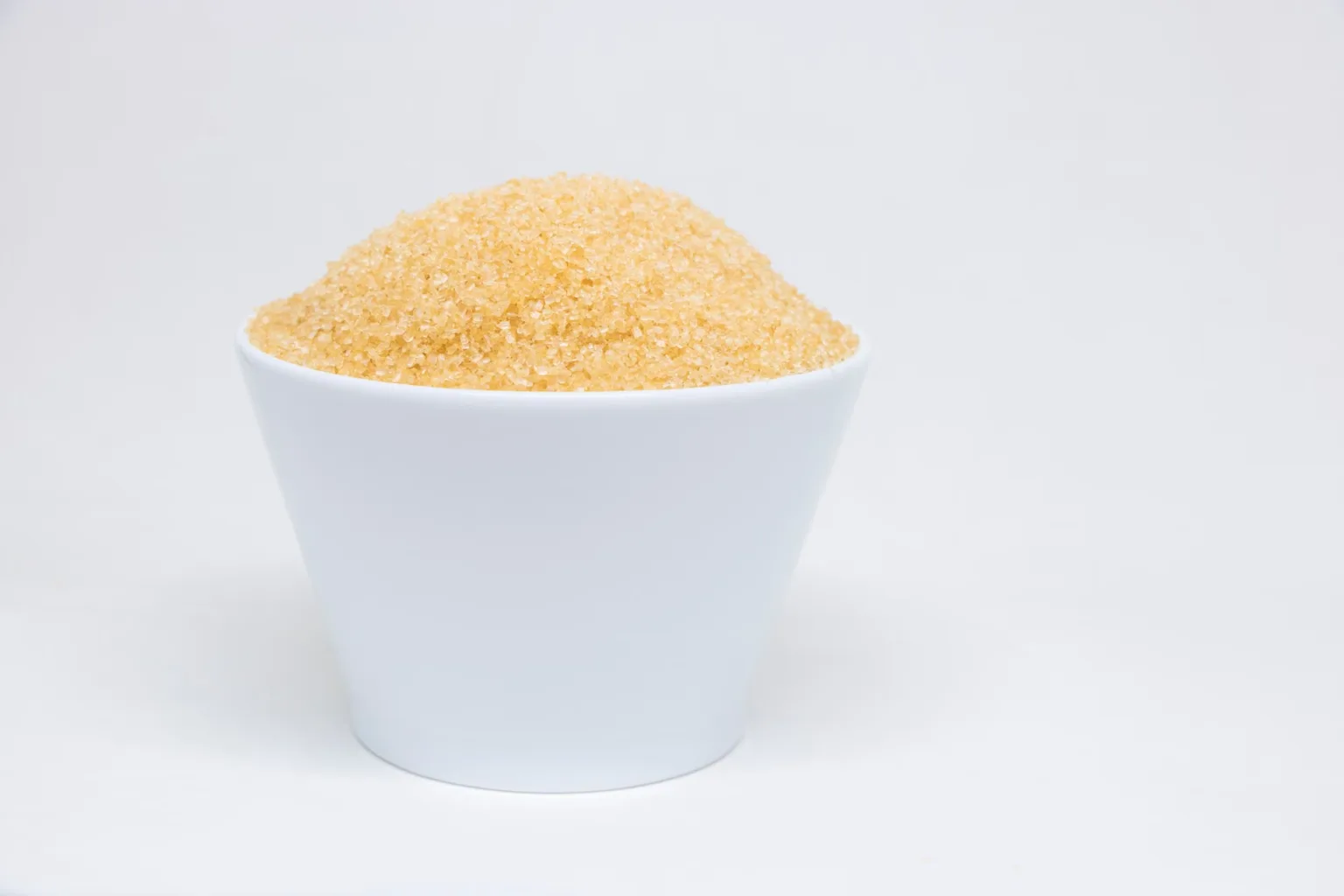
White sugar, also called table sugar or granulated sugar, is a crystalline sweetener whose main component is sucrose. Sucrose is made up of glucose and fructose. In ordinary white sugar, the small crystals are visible and noticeable to the touch; their size can vary slightly between products. It should not automatically be treated as the same product as icing sugar, which is white sugar ground into a fine powder, or brown sugar, which has different characteristics. When a recipe simply calls for sugar, granulated white sugar is often the intended choice unless another type is specified.
When to use it
Use it when you want sweetness without adding the color or distinctive character of other sweeteners. It is convenient for sweetening drinks such as coffee or tea and for baking recipes that call for ordinary sugar. In batters, it can be beaten with butter or eggs; it can also be sprinkled over a preparation before baking to create a crisp surface. When heated, it melts and can caramelize. In some savory dishes, a little may be used to balance pronounced acidity, but add it gradually and taste as you go rather than masking the dish's main flavor.
How to use it
Measure the amount specified in the recipe and add the sugar at the stage directed. To sweeten a drink, stir until it dissolves; it can be added to hot or cold liquids, although the rate of dissolving may differ. In baking, beat it with butter when the recipe calls for creaming, or with eggs when instructed. For a crisp topping, sprinkle it over the preparation before baking. If making caramel, heat it until it melts and reaches the result intended by the recipe, watching the process carefully. Do not automatically swap granulated sugar for icing sugar: particle size and the possible presence of anti-caking ingredients in powdered sugar can affect the outcome.
Flavour and texture
Its taste is clean and sweet, with little distinctive character, so it adds sweetness without the toasted notes associated with some other sugars. Dry, it consists of small, perceptible granules; the grain can be slightly finer or coarser depending on the product. Once dissolved, it no longer contributes a grainy texture. When sprinkled on and baked, it can help form a crisp surface. On heating, it melts and may caramelize, changing in color and flavor.
How to choose it
Check that the package says white sugar or granulated sugar if that is what your recipe requires. Do not confuse granulated sugar with icing sugar, pearl sugar, or brown sugar: their form and characteristics affect how they are used. Crystal size can vary somewhat by brand, so products may not look exactly alike. Read the product label to confirm its name and any composition or use information you need.
Storage
Follow the storage directions on the package, since the label applies to the specific product you have. Keep the sugar in its closed package or a clean, dry container to protect it from moisture and contamination by other foods. If the product has unexpected changes, has become damp, or appears contaminated, consult the manufacturer's information before using it. No special storage rule can be stated here for every brand and presentation, so follow the instructions supplied with the product.
Substitutions
Brown sugar may sweeten some recipes, but it is not identical to white sugar and can change the color and flavor of the result. Honey is another sweetener, but it is a different product and cannot be assumed to work in the same amount or in the same way. Icing sugar is ground white sugar and is used when a fine texture is wanted, but it is not an automatic replacement for granulated sugar. When a recipe depends on sugar's texture or behavior, it is best to use the specified type.
Common mistakes
A common mistake is replacing granulated sugar with icing or brown sugar without considering their different textures and characteristics. Adding sugar at a different stage from the one specified can also affect the result, especially in mixtures that require beating it with butter or eggs. Do not assume an exact equivalence with honey or other sweeteners: they are different forms of ingredient and may not behave alike. When caramelizing, watch the process closely; the color and flavor change as the sugar heats.
Safety and allergens
Check the label for the product name, composition, and its storage and use directions. Keep the sugar protected from moisture and contamination. When melting or caramelizing sugar, handle the hot pan and mixture carefully to avoid burns; use an appropriate cooking method and do not touch hot caramel.
Culinary uses
- Sweetener for drinks and foods
- Ingredient for baking and dessert preparation
Recommended techniques
- Dissolving in hot or cold liquid
- Creaming with butter or beating with eggs
- Melting and caramelizing
- Dusting over finished baked goods
Pairs well with
- Coffee and tea
- Eggs and butter in baking
Frequently asked questions
Is white sugar the same as icing sugar?
No. Granulated white sugar has noticeable crystals; icing sugar is white sugar ground to a fine powder. The difference in texture can affect a recipe.
Can I use white sugar to sweeten cold drinks?
Yes. It can dissolve in both cold and hot liquids. Stir the drink and check that the crystals have dissolved before serving.
Can I replace it with brown sugar or honey?
They may sweeten some preparations, but they are not identical to white sugar and can change flavor, color, or the result. There is no universal conversion that works for every recipe.
Estimated nutrition
- Fat
- 0.32 g
- Saturates
- 0 g
- Carbohydrate
- 99.6 g
- Sugars
- 99.8 g
- Fibre
- 0 g
- Protein
- 0 g
- Salt
- 0 g
Sources and review
Automatically researched, cross-checked and validated content. Sources consulted:
- En el etiquetado alimentario hay algunas menciones que son obligatorias eletiquetadocuentamucho.aesan.gob.es
- Client Challenge doi.org
- The Essential Glossary of Cooking Terms for the Culinary Arts - Escoffier escoffier.edu
- Del blanco a la panela: los 19 tipos de azúcar más comunes, en qué se diferencian y cómo usarlos en cocina directoalpaladar.com
- Azúcar - Wikipedia, la enciclopedia libre es.wikipedia.org
- Agencia Española de Seguridad Alimentaria y Nutrición aesan.gob.es
- educational content to support healthful lifestyle practices sjsu.edu
- Food & Fun Afterschool hsph.harvard.edu
- Rosquitas de Nuez 1953 (Pecan Ring Cookies ) - lacocina.utsa.edu
- ¿Qué es el azúcar? Tipos, sacarosa y edulcorantes - Zschimmer & Schwarz, Inc. zschimmer-schwarz.es
- Glimpses of an 18th century Colonial Kitchen in Manila archium.ateneo.edu
- filling gender gaps: determining how traditional knowledge of experts.esf.edu
- Salsa Picante de Jícama (Spanish) - National Center for Home Food Preservation nchfp.uga.edu
- ¿De dónde viene nuestro azúcar y por qué utilizamos azúcar blanco? pinkalbatross.com