- Category
- Grains, flour and pasta
- State
- Fresh
- Usual unit
- unit
What it is
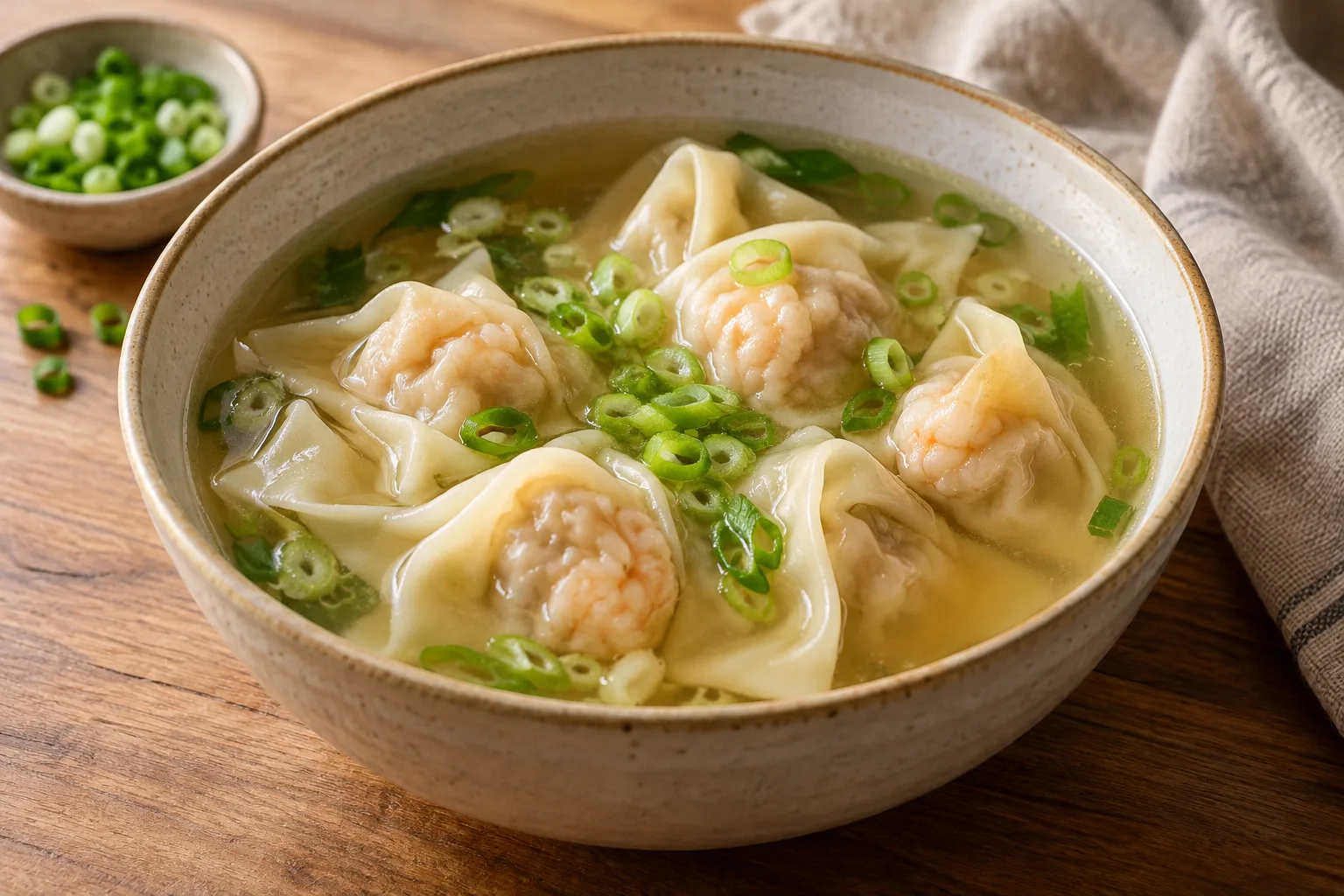
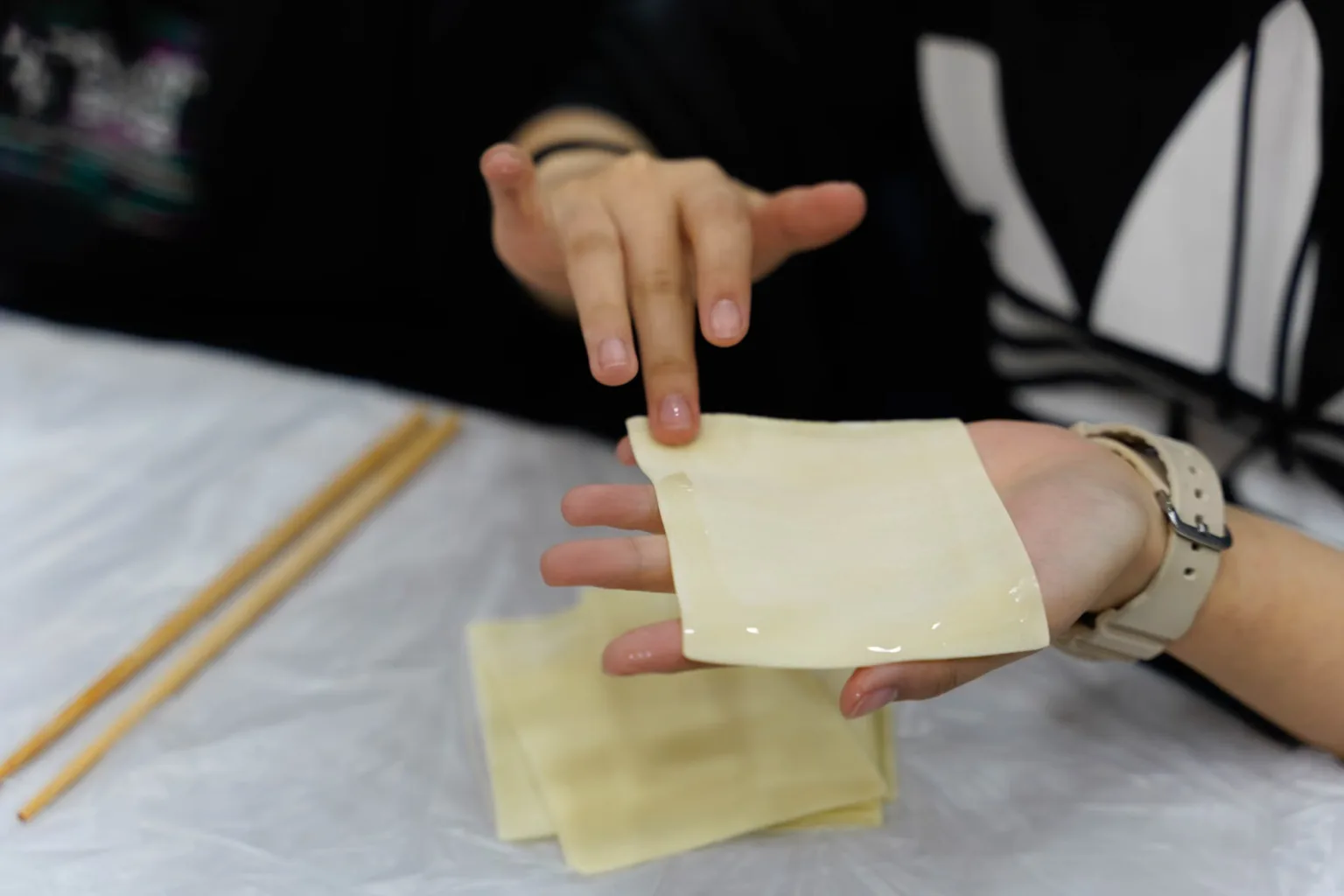
Wonton wrappers are thin sheets of dough used to enclose fillings in wontons and similar dumplings. Sources describe wheat dough made with water and salt, as well as versions that include egg, so ingredients can differ between products and recipes. Wrappers are sold in square or round shapes, and stores may stock them fresh or in the frozen section. They should not automatically be treated as interchangeable with other dumpling skins: some, such as those described for jiaozi, commonly differ in shape and ingredients. Their thinness makes them suitable for soup, boiling, steaming, pan-cooking or frying. They can also be made at home from basic ingredients.
When to use it
Use wonton wrappers when you want to shape filled wontons for soup, serve dumplings as a starter, or make a crisp fried snack. The sheets can hold a range of fillings, including meat, chicken, fish, seafood or vegetables, and can be served with broth or a dipping sauce. Choose square or round wrappers to suit the fold and presentation you want. Since products may differ in ingredients and thickness, check the package and follow the maker’s handling directions. Some wrappers can also be fried plain when you want a crisp snack without a filling.
How to use it
Keep the wrappers covered while you work so they are less likely to dry out, and gently separate the sheets you plan to fill. Place a small amount of filling in the center; lightly moisten the edges if needed, then press them together to seal, taking care to remove trapped air. Avoid overfilling, which can make sealing difficult. Once shaped, cook the dumplings in water or broth, steam them, pan-cook them or fry them, according to the result you want and the package directions. Unfilled wrappers can also be cut and fried for a crisp snack. For homemade wrappers, sources describe wheat flour, water and salt; some recipes also use egg.
Flavour and texture
A wrapper has a mild flavor and a thin dough texture that lets the filling and seasonings stand out. Boiled or steamed, it becomes tender; frying can make it golden and crisp. The result varies with thickness, ingredients and cooking method: some versions contain egg, while others use only flour, water and salt. These delicate sheets are best handled gently and sealed carefully.
How to choose it
Look for wrappers at Asian grocery stores or well-stocked supermarkets; some are sold in the frozen section. Check whether the package contains square or round sheets, and read the ingredient list to see whether egg is included alongside wheat. Shape and formulation vary among brands and styles, so choose a wrapper that suits your intended fold and cooking method. Follow the package directions for use.
Storage
Follow the manufacturer’s directions first, since storage depends on the product and whether it is sold fresh or frozen. The culinary sources consulted give different instructions for homemade and commercial wrappers: they describe refrigeration or freezing, but do not establish one universal rule for every brand. Keep the package closed and prevent the sheets from drying out; for stacked homemade wrappers, sources recommend dusting starch between sheets. Do not treat a recipe’s storage period as a guarantee for a different product.
Substitutions
If prepared wrappers are unavailable, you can make a homemade dough with wheat flour, water and salt; some versions include egg. Other dumpling wrappers may work in certain recipes, but their shape, thickness and ingredients are not necessarily the same. Adjust the folding and handling to the wrapper you choose, and check its label, especially if avoiding wheat or egg.
Common mistakes
Do not assume every wrapper has the same ingredients, shape or thickness: some recipes include egg and others do not. Avoid leaving sheets uncovered while shaping dumplings, as they may dry out, and do not add so much filling that the edges will not seal. A different dumpling skin is not always a direct substitute because its format and dough may differ.
Safety and allergens
Check the ingredient list and storage directions on the package; formulations vary, and some wrappers contain egg as well as wheat.
Culinary uses
- Envoltura para dumplings rellenos
- Base crujiente para aperitivos
Recommended techniques
- Hervir o cocer en sopa
- Cocinar al vapor, a la plancha o freír
Pairs well with
- Rellenos de carne, pollo, marisco o verduras
- Caldo claro y salsas para mojar
Frequently asked questions
Do wonton wrappers always contain egg?
No. Sources describe dough made with flour, water and salt, as well as versions that include egg. Check the ingredient list for the specific product.
How can wonton wrappers be cooked?
They can be boiled in water or soup, steamed, pan-cooked or fried. Check the package and choose a method suited to your dish.
Can I substitute another dumpling wrapper?
Sometimes, but the shape, thickness and ingredients may differ. Adjust the folding and check the alternative’s label.
Sources and review
Automatically researched, cross-checked and validated content. Sources consulted:
- ¿Por qué la muerte es origen de miedos y tabúes? doi.org
- Client Challenge doi.org
- elBulli: un nuevo lenguaje en la gastronomía repositorio.ucjc.edu
- Sopa Wonton, 100% auténtica y desde cero — diegodoal diegodoal.com
- The middle of everything by Kathryn Sukalich dr.lib.iastate.edu
- The ELI Student Voices - English Language Institute - University of ... eli.ufl.edu
- La auténtica Sopa Wontón – Kwan Homsai kwanhomsai.com
- Wonton | Gastronomía & Cía gastronomiaycia.com
- Cómo hacer pasta wonton en casa y qué usos le puedes dar hola.com
- - YouTube youtube.com
- Láminas de Pasta para Wonton o Empanadillas Chinas - Cilantro and Citronella cilantroandcitronella.com
- Masa para wontón | www.cocinista.es cocinista.es
- Baja California - Wikipedia, la enciclopedia libre es.wikipedia.org
- Sopa de wonton. Yes, you can! | Foodmorning foodmorning.wordpress.com
- Pasta wonton casera – Kwan Homsai kwanhomsai.com