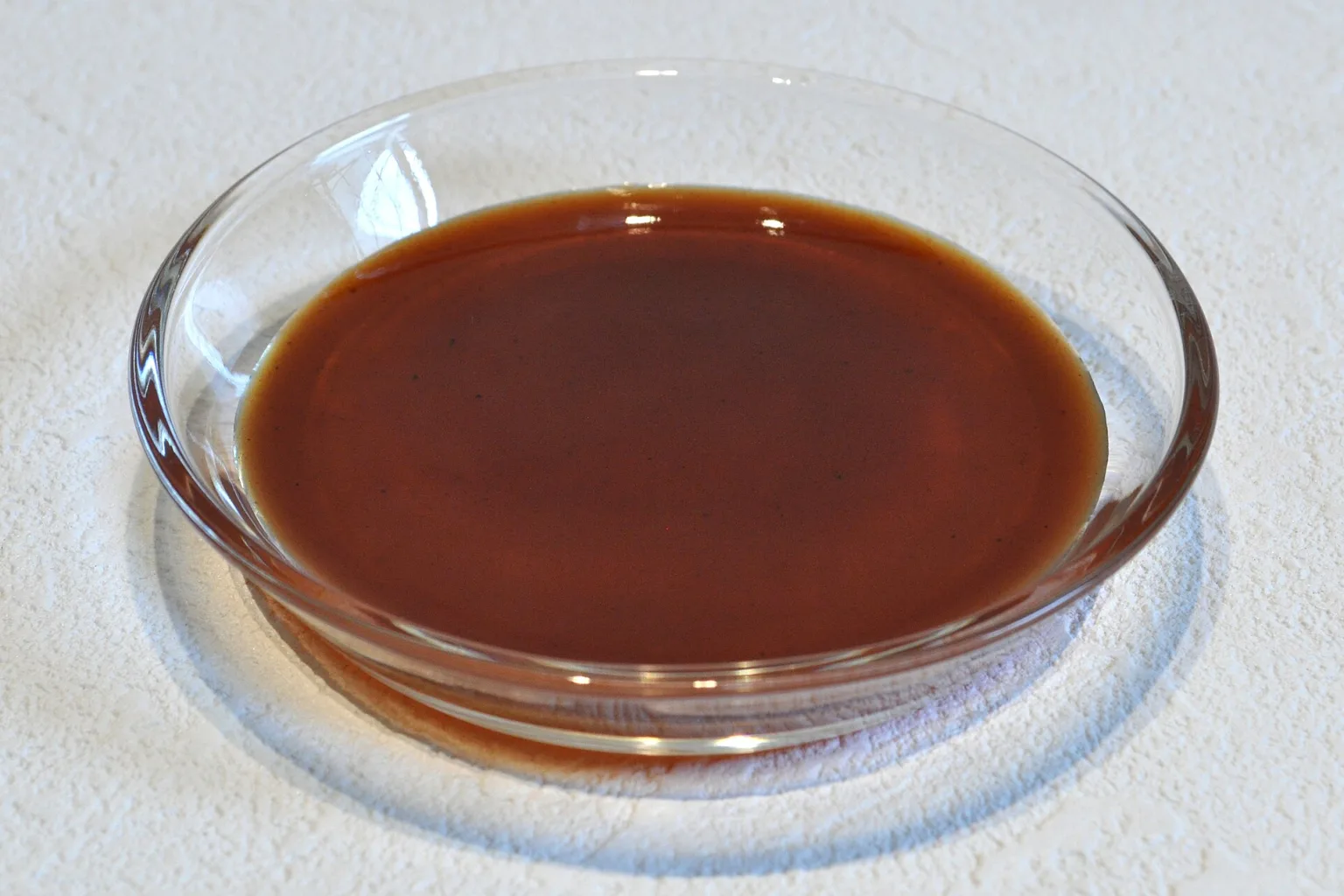
- Category
- Sauces and condiments
- State
- Liquid
- Usual unit
- ml
What it is
Worcestershire sauce, also called Worcester sauce or, in some places, English sauce, is a liquid seasoning used to flavor and enrich dishes. Its profile is commonly described as savory and umami, with tangy, sweet and spiced notes. There is no single ingredient list that applies to every brand: descriptions include combinations that may contain vinegar, tamarind, molasses, sugar, onion, garlic, spices and anchovies or fish extract. Some commercial products use different formulations, so check the bottle rather than assuming that every version has the same ingredients.
When to use it
Use it when a dish needs extra depth without making the condiment its dominant flavor. It can accompany red meat, chicken or pork, and is also used in soups, purées, vinaigrettes, salads, vegetables and sauces. It appears in drinks such as the Bloody Mary as well. Because products vary and the flavor can be assertive, start with a small amount, taste, and adjust to suit the dish.
How to use it
Pour in the amount indicated by your recipe or bottle, adding it gradually and tasting before adding more. For a marinade, combine it with the other ingredients and use it with meat or vegetables. Stir it into soups, purées and sauces during preparation, then taste the finished mixture to balance its acidity, saltiness and spices. It can also be mixed into vinaigrettes or salad dressings, used as a finishing touch, or added to tomato-based drinks such as a Bloody Mary. Do not treat it as a universal seasoning: adding it without tasting can allow its strong flavor to overwhelm a recipe.
Flavour and texture
This is a liquid sauce with a concentrated, complex taste. Descriptions emphasize savory and umami notes alongside tangy, sweet and spiced flavors; some characterize it as slightly hot. The precise balance and intensity can differ from one product to another, so taste and add it gradually rather than expecting every brand to have an identical profile.
How to choose it
Compare labels instead of assuming there is one standard recipe. Descriptions include formulas with tamarind, vinegar and anchovies, as well as commercial products with different ingredients, including soy protein in some cases. Read the ingredient list and allergen information to choose a version that suits your recipe and the people who will eat it.
Storage
The available sources do not establish one storage rule for every brand. Follow the directions on the bottle before and after opening, and close it between uses. Do not assume it must be refrigerated—or that it can be kept unrefrigerated—without checking the manufacturer's instructions.
Substitutions
Fish sauce can contribute a savory, salty character, but it does not fully reproduce Worcestershire sauce's tangy, sweet and spiced profile. Soy sauce can also work in some dishes, though it changes the result. Adjust gradually and check the ingredients and allergen information for any substitute.
Common mistakes
Adding too much at once can make this assertive sauce dominate a dish. Another mistake is assuming every brand has the same ingredients, or that it always contains—or never contains—fish or soy. Taste as you cook and check the label on the bottle you are using.
Safety and allergens
Ingredients can vary by brand. If you need to avoid fish or soy, check the label and allergen information before use; do not assume a product is suitable without verification. Follow the storage directions on the bottle.
Culinary uses
- Condimento líquido para realzar el sabor
- Ingrediente para aderezos, marinadas y salsas
Recommended techniques
- Añadir en pequeñas cantidades y ajustar al gusto
- Incorporar a marinadas, aderezos o preparaciones durante la cocción
Pairs well with
- Carnes rojas, pollo y cerdo
- Sopas, ensaladas, verduras y salsas
- Cócteles y bebidas a base de tomate
Frequently asked questions
Are Worcestershire sauce and English sauce the same thing?
These names can refer to this condiment, although its ingredients may vary by brand and market.
Does Worcestershire sauce always contain anchovies?
Do not assume that it does: some described formulas include anchovies or fish extract, but ingredients vary. Check the label.
What can I use Worcestershire sauce in?
In small amounts, it can season meat, marinades, soups, purées, vinaigrettes, salads, sauces and tomato-based drinks.
Estimated nutrition
- Fat
- 0 g
- Saturates
- 0 g
- Carbohydrate
- 0 g
- Sugars
- 0 g
- Fibre
- 0 g
- Protein
- 0 g
- Salt
- 6 g
Sources and review
Automatically researched, cross-checked and validated content. Sources consulted:
- Client Challenge doi.org
- Duke University Dissertation Template dukespace.lib.duke.edu
- Selección de Actas stmarys-ca.edu
- FICCIONES DE PATAGONIA - UKnowledge uknowledge.uky.edu
- Representaciones del capital cultural en Cocina ecléctica via.library.depaul.edu
- Historia de la salsa Worcestershire afuegolento.com
- Salsa inglesa Worcestershire - Koketo Salsa inglesa para intensificar koketo.es
- - YouTube youtube.com
- ^alAe za/i (S/taze/i digitalcollections.lib.iastate.edu
- Potaje de Frijoles Blancos 1913 (White bean Potage) - lacocina.utsa.edu
- Salsa inglesa. De qué está hecho este producto- Grupo Milenio milenio.com
- Todo sobre la Salsa Inglesa – Dos Anclas dosanclas.com.ar