- Category
- Herbs and spices
- State
- Other
- Usual unit
- tablespoon
What it is
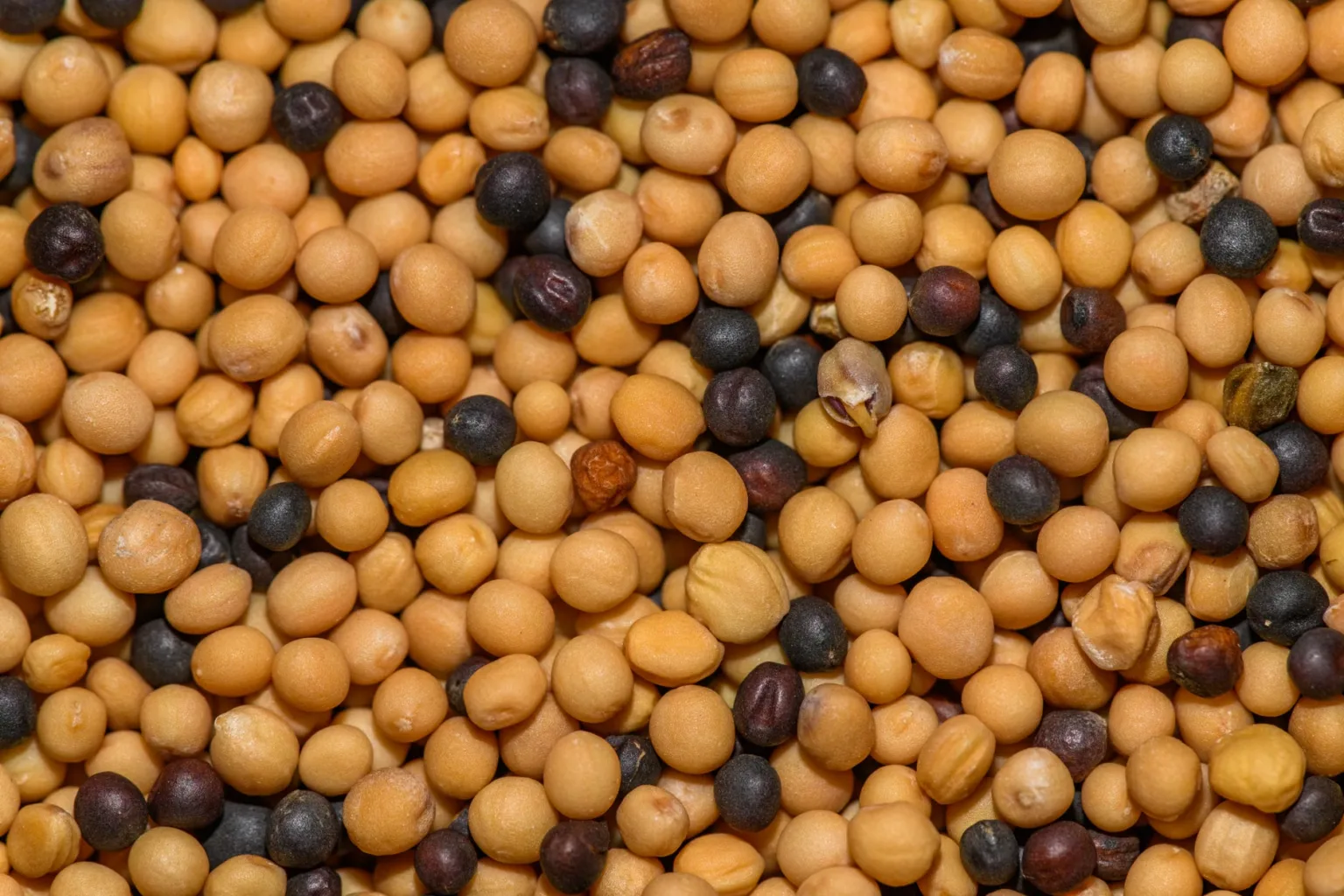
Yellow mustard seeds are the grains of the mustard plant used as a seasoning. They can be added whole, crushed, or ground, and are also used to make the paste or sauce known as mustard. The word “mustard” can refer to the seeds or to the prepared condiment, so check which form a recipe or product means. Mustard flavor can vary: some varieties and products are milder, while others are more pronounced or hot. This profile is about the seeds, not any one prepared mustard sauce. Choosing whole or ground seeds changes how they blend into a dish, so use the form that suits the recipe.
When to use it
Use them when you want mustard seasoning in seed form, or when a recipe specifically calls for whole, crushed, or ground seeds. They can add flavor to burgers, sandwiches, salads, meat, vegetables, and stews, although the result depends on the form used and the other ingredients. If a recipe calls for prepared mustard, remember that it is a paste or sauce rather than whole seeds. Adjust the amount to the flavor you want and the intensity of the product you have.
How to use it
Add the seeds whole when you want to retain their grain-like texture, or crush or grind them when you want them to blend more into a preparation. They can also be used as the starting point for prepared mustard, a paste or sauce made from mustard seeds and other ingredients. Intensity is not the same across all varieties, so start with a moderate amount and taste before adding more. They can be used in salads, meat, vegetable, or stew preparations, and served with burgers or sandwiches. Before substituting, check whether your recipe calls for seeds or prepared mustard.
Flavour and texture
Mustard intensity ranges from mild to strong and hot, depending on the variety and form. Whole seeds retain a grainy texture; crushing or grinding them changes how they blend into a dish. Prepared mustard is a different form of the ingredient and does not have the same texture as whole seeds.
How to choose it
Check that you are buying seeds rather than mustard sauce or paste: the product name and ingredient list can help distinguish them. Choose whole, ground, or prepared mustard according to your recipe. For packaged products, read the label to confirm the food's identity and composition and to check the allergen information.
Storage
Follow the storage directions on the package, since they may depend on the product and its form. Close the package after use, and do not assume seeds and prepared mustard have identical storage instructions. If buying in bulk, ask the retailer whether it has specific guidance for that product.
Substitutions
Whole seeds can be replaced with crushed or ground seeds when the recipe allows a change in texture. Prepared mustard is another way to add mustard flavor, but it is a paste or sauce, not a one-for-one replacement for whole grains. Adjust the amount and account for its other ingredients.
Common mistakes
Do not confuse mustard seeds with prepared mustard: they have different forms and textures. Do not assume that every variety is equally mild or hot. When swapping one form for another, start with a moderate amount and taste before making further adjustments.
Safety and allergens
Read the product label, especially its allergen information and any storage or use directions. If you are unsure what a product contains, ask the manufacturer or retailer before consuming it.
Culinary uses
- Condimento para aportar sabor
- Ingrediente para preparar mostaza
Recommended techniques
- Usar las semillas enteras
- Machacar o moler las semillas
Pairs well with
- Hamburguesas y sándwiches
- Ensaladas, carnes y verduras
Frequently asked questions
Can I use the seeds whole?
Yes. They can also be crushed or ground; choose the form that the recipe calls for or that best suits the texture you want.
Are mustard seeds the same as prepared mustard?
No. Prepared mustard is a paste or sauce made from seeds and other ingredients.
Is all mustard equally hot?
Not necessarily. Intensity can vary between varieties and forms.
Estimated nutrition
- Fat
- 25 g
- Saturates
- 2 g
- Carbohydrate
- 50 g
- Sugars
- 0 g
- Fibre
- 12.5 g
- Protein
- 50 g
- Salt
- 0 g
Sources and review
Automatically researched, cross-checked and validated content. Sources consulted:
- En el etiquetado alimentario hay algunas menciones que son obligatorias eletiquetadocuentamucho.aesan.gob.es
- Dictionary of Health Related Terms: English – Spanish hia.berkeley.edu
- UCCE efforts improve quality of and demand for fresh ... ucanr.edu
- guía de aplicación de las exigencias aesan.gob.es
- Descubre la mostaza friolisa.es
- Mostaza: origen, tipos, propiedades y usos en la cocina bonviveur.com
- Su Propio Cultivo | Servicio de Extensión de OSU extension.oregonstate.edu
- Healthy Eating Plan for Weight Management med.uc.edu
- Vamos a Conservar Alimentos: Chiles/Pimientos extension.psu.edu
- Sevin RTU Gallon Label v14 picol.cahnrs.wsu.edu
- The Origin of Species -- El origen de las especies people.duke.edu