- Category
- Herbs and spices
- State
- Dry
- Usual unit
- teaspoon
What it is
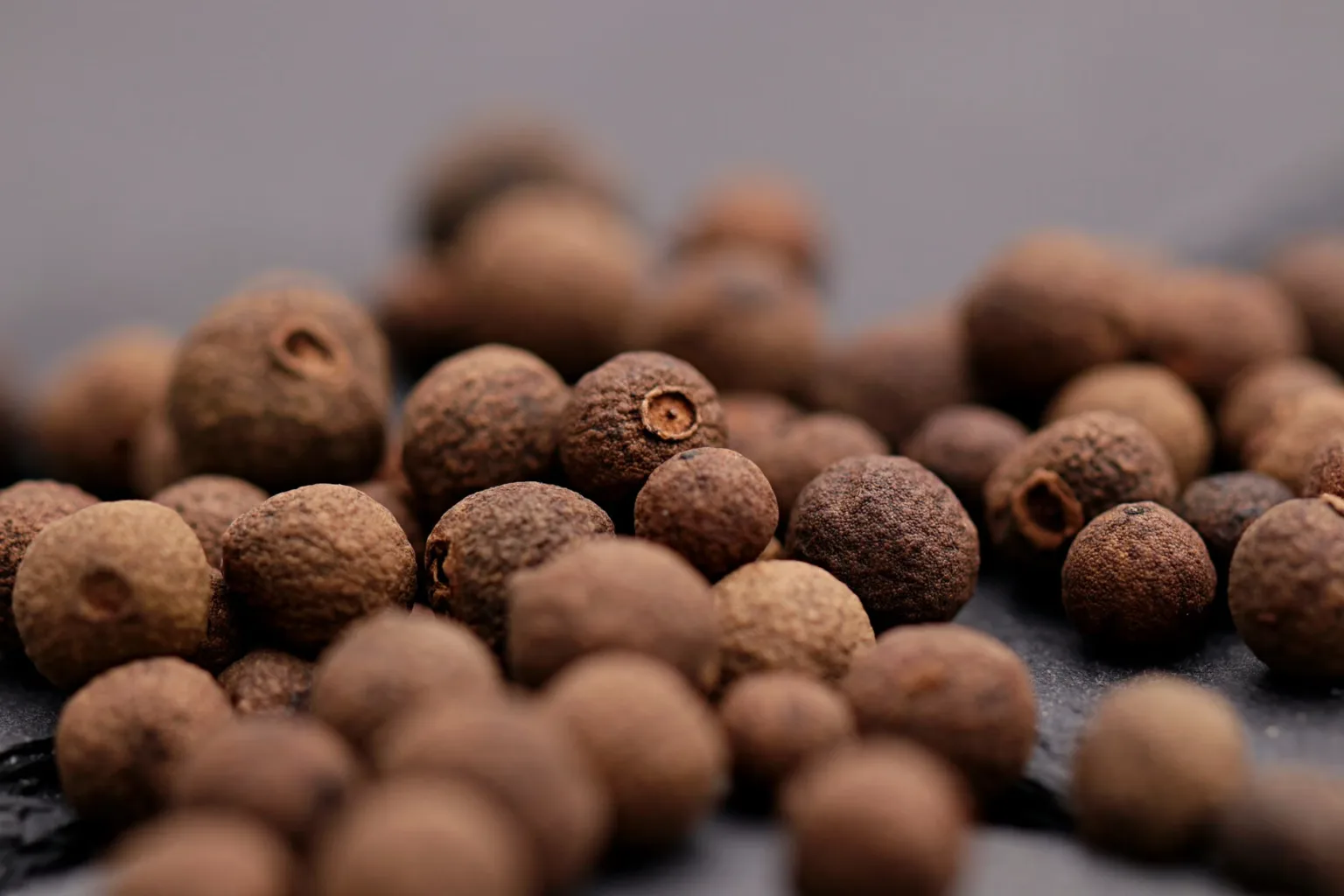
Allspice is a dried spice sold as whole berries or ground powder. Despite its name, it is not a blend: its aroma is often compared with clove, cinnamon, nutmeg, and pepper. The botanical name associated with the ingredient is Pimenta dioica, in the myrtle family. In cooking, a modest amount adds a warm, complex spice note to savory foods and desserts. Whole berries can flavor a dish by infusion, while ground allspice is easy to distribute through mixtures.
When to use it
Use allspice when you want a warm, rounded spice character in a dish, whether savory or sweet. It appears in marinades, soups, stews, and meat preparations, and also suits rice pudding, breads, and other baked goods. Choose whole berries when you want to infuse a liquid and remove the spice before serving. Ground allspice is more convenient when the flavor needs to be mixed evenly into dough, seasoning, or a marinade.
How to use it
Crush or grind allspice before adding it when you want its aroma to spread through a dish. Alternatively, add whole berries to a broth, stew, marinade, or drink to infuse it, then remove them before serving. Ground allspice mixes readily into doughs, marinades, and seasoning blends. Begin with a modest amount, taste the finished mixture, and adjust carefully so its warm flavor does not overwhelm other ingredients. Cinnamon or citrus can accompany it in sweet dishes; in savory cooking, blend it into the rest of the seasoning.
Flavour and texture
Allspice has a warm aroma commonly likened to clove, cinnamon, and nutmeg, with a pepper-like spice note. It is one spice with a complex profile, not a combination of those ingredients. Whole berries release flavor into a liquid and can be removed; ground allspice disperses throughout a dish and may be noticeable in texture if used generously.
How to choose it
Choose whole berries or ground allspice according to how you plan to cook: whole berries can be crushed or infused, while ground spice is ready to mix in. For whole berries, look for mostly intact, reasonably uniform pieces with little loose dust and a noticeable aroma when crushed. The available evidence does not support using a particular growing region or buying season as a guarantee of quality.
Storage
Keep dried allspice in a tightly closed container in a cool, dry place, away from heat, direct light, and moisture. Keep the container away from steam while cooking. Its aroma can fade over time, and ground allspice tends to lose its aroma sooner than whole berries. If it has been stored for a long time, smell it before use to check that its aroma is still present.
Substitutions
There is no exact substitute established by the available evidence. To suggest a similar warm-spice character, combine cinnamon, clove, and nutmeg, while expecting a different result. Add the mixture gradually and taste as you go. Cinnamon and clove alone can provide a simpler alternative, but they will not reproduce allspice's full character.
Common mistakes
A common mistake is to treat allspice as a blend or as black pepper. It is a distinct spice with a warm, complex flavor. Avoid adding too much at once, since it can dominate a dish. Also, whole berries and ground spice do not behave identically: ground allspice disperses through the food, whereas whole berries can be removed after infusing.
Safety and allergens
The supplied evidence identifies no specific safety warning for ordinary culinary use of this spice. Follow the product label and normal food-hygiene practices, and do not use the product if it shows visible signs of deterioration.
Culinary uses
- Warm aromatic seasoning for savory dishes
- Spice for baking and sweet dishes
- Flavoring for infusions and drinks
Recommended techniques
- Use whole berries to infuse liquids, then remove them
- Crush or grind shortly before use
- Mix ground allspice into marinades, doughs, and spice blends
Pairs well with
- Pork, chicken, and other meats
- Soups, stews, and marinades
- Rice pudding, baked goods, and other sweet dishes
- Cinnamon and citrus zest
Frequently asked questions
Is allspice a spice blend?
No. It is a single spice whose aroma is often compared with several warm spices.
Can I use it whole or ground?
Yes. Whole berries can infuse a liquid and then be removed; ground allspice mixes readily into doughs and seasonings.
What foods work well with allspice?
It can season marinades, soups, stews, and meat dishes, as well as rice pudding and baked goods.
Estimated nutrition
- Fat
- 0 g
- Saturates
- 0 g
- Carbohydrate
- 0 g
- Sugars
- 0 g
- Protein
- 0 g
- Salt
- 5 g
Sources and review
Automatically researched, cross-checked and validated content. Sources consulted:
- ¿Por qué la muerte es origen de miedos y tabúes? doi.org
- The Essential Glossary of Cooking Terms for the Culinary Arts - Escoffier escoffier.edu
- FSHN13-03s/FS264: De compras para la salud: Las hierbas y las especias ask.ifas.ufl.edu
- Encurtir los Alimentos - Illinois Extension extension.illinois.edu
- filling gender gaps: determining how traditional knowledge of experts.esf.edu
- Critical Perspectives On Women and Food scholarworks.umass.edu
- Summer sausage and deli-style meats | Servicio de Extensión de OSU extension.oregonstate.edu
- Arroz con Leche 2010 (Rice Pudding) - lacocina.utsa.edu
- Family Food Cent$ newsletter - Noviembre 2024 extension.sdstate.edu
- INGREDIENTS DIRECTIONS s3.wp.wsu.edu
- Obesity and the food system transformation in Latin America cdr.lib.unc.edu
- La pimienta de Jamaica: el sabor exótico que está conquistando el mundo - El blog de 1001 Especias | Trucos, curiosidades y recetas 1001especias.com
- Pimienta de Jamaica: El Secreto de la Cocina Tropical - Espècies Teixidor teixidor.com
- ▷ Uso de la pimienta de Jamaica: Propiedades y beneficios lacasadelossabores.com
- Pimienta Jamaica | PAPRIMUR paprimur.es
- ¡Vamos a conocer mejor la pimienta de Jamaica - Blog - Piccantino Tienda Online España piccantino.es
- Pimienta de Jamaica para profesionales | Alveus alveus.eu