- Category
- Fruit
- State
- Fresh
- Usual unit
- unit
What it is
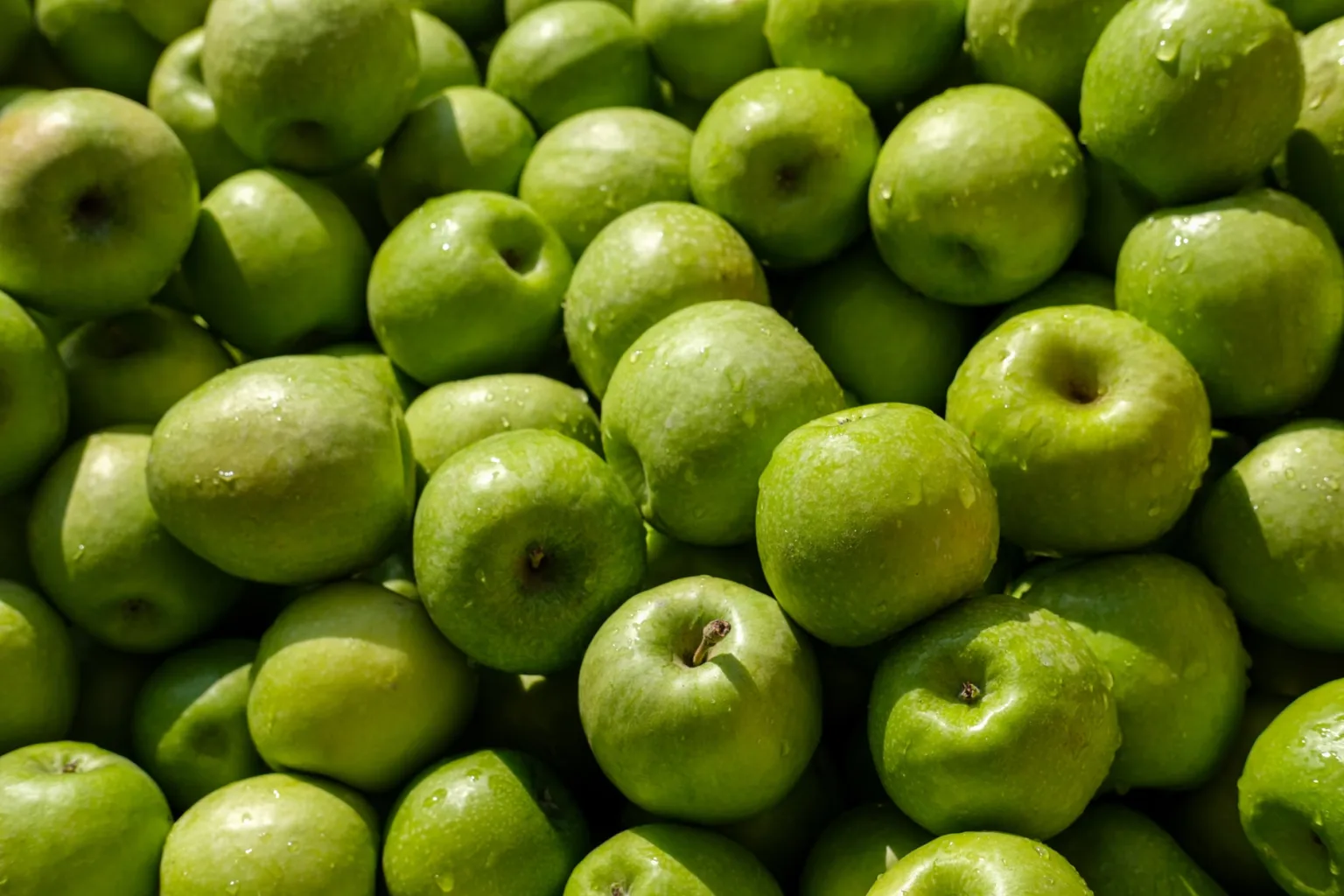
An apple is the edible fruit of the common apple tree, Malus domestica. Many varieties are available, differing in size, skin and flesh color, flavor, and texture. Some are sweet and firm; others are more tart, juicy, or soft. “Apple” therefore does not describe one fixed eating or cooking profile: both the cultivar and the fruit’s condition affect how it tastes and behaves in a recipe. Apples can be eaten whole or used in sweet and savory preparations.
When to use it
Choose crisp apples with a flavor you enjoy for eating fresh, slicing into salads, or adding to a dish where you want some bite to remain. For baking, roasting, tarts, compotes, or purées, remember that varieties respond differently to heat. A sweet apple may contribute sweetness of its own, while a tart variety can add contrast and may call for an adjustment to the recipe’s sweetness. Choose according to the result you want rather than relying on a single rule.
How to use it
Wash apples under cold running water before eating or preparing them, and work with clean hands and utensils. Eat one whole, slice it into a salad, or add it to a tart or cake. You can also bake apples whole, cook them into compote or purée, or press them for juice. For cooked dishes, consider the desired texture: a firm apple may provide more structure, while a juicier one may make the result wetter. Taste the preparation and adjust seasonings to suit the variety’s sweetness and acidity.
Flavour and texture
Flavor ranges from sweet to tart, and some varieties balance both notes. The flesh can be firm and crisp, very juicy, or softer and more mealy. Skin color alone cannot fully predict flavor or texture, since these qualities depend on the variety. In cooking, those differences affect the contrast in a salad and the consistency of a tart, compote, or purée.
How to choose it
Choose a variety with its intended use in mind: firm, crisp apples are useful for fresh eating or adding texture, while sweeter and tarter varieties bring different profiles to desserts and cooked dishes. Inspect the fruit and avoid using apples with serious bruising, rot, or other signs of spoilage. Apples may be green, yellow, red, or multicolored, so do not rely on color alone to predict flavor.
Storage
The available evidence does not establish one storage temperature or keeping time for every apple. Keeping quality and texture can vary with variety and ripeness. Follow seller or package guidance where provided, and inspect the fruit before use. Do not use apples that are rotten, badly bruised, or otherwise spoiled in food you plan to preserve.
Substitutions
If the specified variety is unavailable, another apple may work, but sweetness, acidity, and firmness can change the result. A firm, sweet variety can stand in for another in fresh eating; a tarter variety can add contrast in a recipe. Do not assume every apple will soften or release the same amount of juice during cooking.
Common mistakes
Do not choose an apple by color alone or assume all varieties share the same sweetness, acidity, or firmness. Replacing one variety with another may change moisture and texture in the finished dish. Avoid using fruit that is badly bruised, rotten, or spoiled.
Safety and allergens
Wash apples under cold running water before eating or preparing them. Use clean surfaces and utensils, wash your hands, and discard rotten or badly damaged fruit. No specific safe-preservation instructions for homemade apple products are provided here; use a tested recipe for canning.
Culinary uses
- Fresh snack or fruit salad ingredient
- Ingredient for baking and desserts
- Base for purée, compote, juice, cider, or vinegar
Recommended techniques
- Eat raw, sliced, or grated
- Bake whole or in pastries
- Cook into compote or purée
- Press for juice
Pairs well with
- Cinnamon and other spices
- Pork or game, especially as a purée accompaniment
- Sugar and butter in baked desserts
Frequently asked questions
Can every apple variety be cooked?
Different varieties can be cooked, but the result varies with sweetness, acidity, juiciness, and firmness. Choose according to the flavor and texture you want.
What can I use if I cannot find the specified variety?
You can use another apple, bearing in mind that acidity, sweetness, and texture may differ. Firm varieties are a useful option when a preparation should retain some structure.
Should apples be washed before cutting?
Yes. Wash them under cold running water before eating or preparing them, and use clean hands, surfaces, and utensils.
Estimated nutrition
- Fat
- 0 g
- Saturates
- 0 g
- Carbohydrate
- 14.3 g
- Sugars
- 10.4 g
- Fibre
- 3.2 g
- Protein
- 0 g
- Salt
- 0 g
Sources and review
Automatically researched, cross-checked and validated content. Sources consulted:
- En el etiquetado alimentario hay algunas menciones que son obligatorias eletiquetadocuentamucho.aesan.gob.es
- Client Challenge doi.org
- Recogida y conservación del fruto. El manzano, como todos los f rutales, es - mapa.gob.es
- Manzana: propiedades, variedades y 62 recetas para utilizar la fruta más económica y versátil directoalpaladar.com
- Artes culinarias/Ingredientes/Manzana - Wikilibros es.wikibooks.org
- Tipos de manzana, qué aporta cada una y cómo incorporarlas de forma natural en tu cocina hogarmania.com
- Manzana - Wikipedia, la enciclopedia libre es.wikipedia.org
- Si vas a cocinar con manzanas, esto te interesa | Consumer consumer.es
- Aesan - Agencia Española de Seguridad Alimentaria y Nutrición aesan.gob.es
- Preserving fruits: Mangoes | OSU Extension Service extension.oregonstate.edu
- Vamos a Conservar Alimentos: Manzanas extension.psu.edu
- Manzanas (Spanish) - National Center for Home Food Preservation nchfp.uga.edu
- Consejos para Conservar las Manzanas - Illinois Extension extension.illinois.edu
- Manzana: Golden Delicious | Postharvest Research and Extension Center postharvest.ucdavis.edu
- Conservación de alimentos en casa: Untables de frutas | Extensión UMN es.extension.umn.edu