- Category
- Herbs and spices
- State
- Fresh
- Usual unit
- Variable
What it is
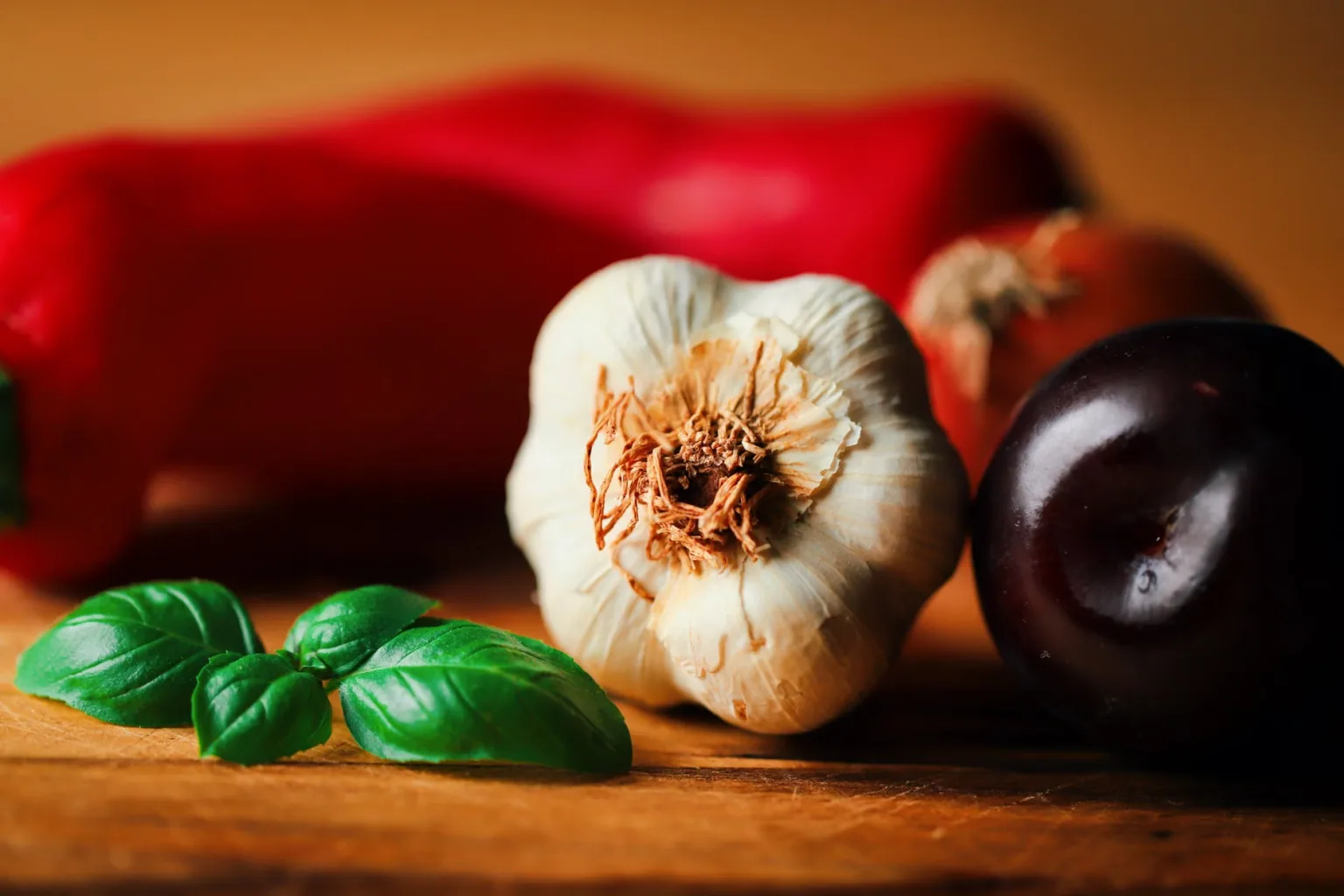
Basil is an aromatic herb in the genus Ocimum and the Lamiaceae family, the botanical family that also includes mint. Its leaves are the part most commonly used in cooking, and different varieties can vary in color, shape and aroma. Sweet or Genovese basil is a familiar choice for pesto and tomato dishes, while Thai, lemon and purple basils can bring different spicy, citrusy or anise-like notes. This profile concerns fresh basil leaves. Dried basil has a different texture and flavor intensity, so it does not behave exactly like fresh leaves in every recipe. Treat the variety and form as part of the ingredient choice rather than assuming that all basil tastes alike.
When to use it
Choose fresh basil when you want a clear herbal aroma and a fresh impression, especially when the leaves will be served raw or added just before serving. It suits salads, tomato dishes, pasta, pesto, eggs and vegetables; some varieties also work in Asian-style dishes, marinades or desserts. If a dish cooks for a long time, hold back some leaves and add them near the end, since extended heat can soften their aroma. Variety matters: Thai basil and lemon basil do not taste exactly like sweet basil, so choose according to the flavor you want in the finished dish.
How to use it
Separate the leaves from any tougher stems and handle them gently to avoid bruising. Rinse them under cool running water, then shake or gently dry off excess water before use; soap or detergent is not needed. For a salad, add whole leaves or tear them shortly before serving. For pesto, pound the leaves in a mortar or process them with the other ingredients until you reach the texture you like. In hot dishes, stir basil in near the end of cooking or use it as a finishing herb so its fresh aroma remains more apparent. When replacing fresh basil with dried, start with a smaller amount and taste before adding more, as strength can vary.
Flavour and texture
Fresh basil is usually strongly aromatic, herbal and fresh, with a flavor that can be sweet and penetrating. The exact profile depends on the variety: some types have anise-like, spicy or citrus notes. Its leaves are tender and can lose firmness and aroma when bruised or cooked for a long time. Dried basil is different: it lacks some of the fresh character and can be more concentrated by volume, so adjust the amount to the recipe and product.
How to choose it
Look for leaves that appear fresh and clean, without obvious damage or discoloration. In a bunch, check that the leaves are not crushed and the stems do not look deteriorated. Shape, size and color depend on the variety: basil may have green or purple leaves, and leaves may be smooth or ruffled, so color alone does not determine quality. If you want a particular flavor profile, check whether the product is identified as sweet, Thai, lemon or another basil variety.
Storage
Fresh basil is sensitive to cold, so do not automatically treat it like herbs that belong in the coldest part of a refrigerator. One option is to trim the stem ends and stand them in a glass of water, loosely covering the leaves while allowing air to circulate; change the water daily. Handle the leaves gently, since damaged leaves lose aroma more quickly. Basil can also be frozen if you cannot use it fresh, but freezing changes its texture, making it generally more suitable for cooked dishes than for serving raw.
Substitutions
Dried basil can replace fresh basil, but the flavor and texture will not be identical, and dried basil may taste more concentrated. Start with less and adjust after tasting. Another fresh basil variety can also work, although Thai, lemon and sweet basil have distinct profiles that can change the character of a dish. Choose an alternative for the flavor it brings; citrus basil will not reproduce Genovese basil exactly.
Common mistakes
A common mistake is cooking basil for a long time while expecting it to retain a vivid fresh aroma. Add it late or reserve some leaves for serving. Avoid crushing the leaves, chopping them far ahead of time or storing them in very cold conditions, as damage and cold can affect their quality. When switching from fresh to dried basil, do not assume the same volume will work: add a little at a time and adjust by taste.
Safety and allergens
Discard visibly deteriorated leaves and rinse basil under running water before use. Do not wash herbs with soap, detergent or bleach. Follow any applicable storage directions on the package and avoid eating leaves that show obvious spoilage.
Culinary uses
- Hierba aromática para aportar frescor y aroma
- Ingrediente principal de salsas verdes como el pesto
- Guarnición para terminar platos
Recommended techniques
- Añadir hojas enteras o troceadas en crudo
- Picar o machacar para salsas y pesto
- Incorporar al final de la cocción para conservar mejor su aroma
Pairs well with
- Tomate
- Pasta y arroz
- Huevo y verduras
- Pescado y aves
Frequently asked questions
Can fresh basil be cooked?
Yes. It can be used in cooked dishes, but its fresh aroma is more noticeable when you add it near the end or at the table.
Can dried basil replace fresh basil?
It can, although the flavor and texture will differ. Start with less dried basil and adjust after tasting.
How should I store a bunch of fresh basil?
You can stand trimmed stems in a glass of water and cover the leaves loosely, leaving some air circulation. Change the water daily and avoid intense cold.
Estimated nutrition
- Fat
- 0.64 g
- Saturates
- 0.04 g
- Carbohydrate
- 2.65 g
- Sugars
- 0.3 g
- Fibre
- 1.6 g
- Protein
- 3.15 g
- Salt
- 0.01 g
Sources and review
Automatically researched, cross-checked and validated content. Sources consulted:
- En el etiquetado alimentario hay algunas menciones que son obligatorias eletiquetadocuentamucho.aesan.gob.es
- Client Challenge doi.org
- Cooking Food Storage | USU extension.usu.edu
- The Essential Glossary of Cooking Terms for the Culinary Arts - Escoffier escoffier.edu
- Glosario de especias: albahaca | JUST SPICES ® justspices.es
- Todo sobre la albahaca, planta aromática imprescindible no solo en la cocina mediterránea (y siete recetas para disfrutarla) directoalpaladar.com
- Albahaca: qué es, para qué sirve y beneficios bonviveur.com
- Albahaca | www.cocinista.es cocinista.es
- Albahaca. ¿Qué es y cómo utilizarla en la cocina? Recetas y consejos de conservación abc.es
- Selecting, Storing, and Using Fresh Herbs | Ohioline ohioline.osu.edu
- · 112 · USOS PRINCIPALES Ramón Morales mapa.gob.es
- Cultivo de albahaca en huertos familiares | Extensión de la UMN es.extension.umn.edu
- Basil – Gardening Solutions gardeningsolutions.ifas.ufl.edu
- Pesto fresco de albahaca | University of Maryland Extension extension.umd.edu