- Category
- Sugar and sweeteners
- State
- Dry
- Usual unit
- g
What it is
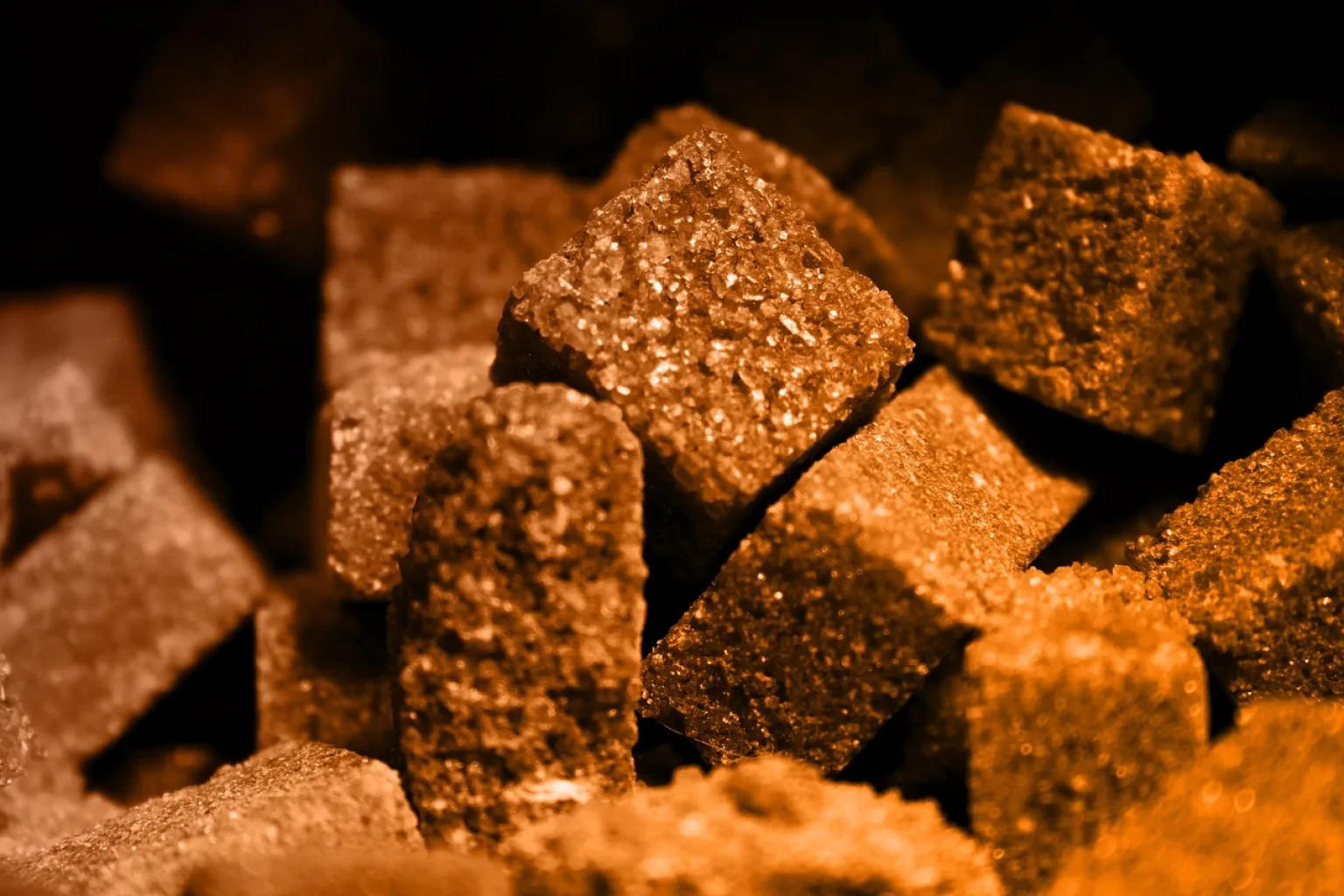
Cane sugar is sugar made from the juice of sugar cane. The name identifies its raw material, but does not by itself specify how refined it is, its color or its crystal size; those features depend on the particular product. In cooking, it is used mainly to sweeten and can melt and caramelize when heated. Cane sugar is sold in granulated forms as well as darker or less-refined products. These are not necessarily interchangeable in every recipe, because crystal size and the presence of molasses can affect flavor, appearance and texture. If a recipe simply says “sugar,” check whether its texture or intended result depends on a particular kind before choosing a product.
When to use it
Use it when a recipe calls for a dry sweetener and its crystal texture suits the preparation. It can sweeten coffee, tea and other drinks, be mixed into baking batters, or be added in moderation to some sauces and savory dishes to adjust their flavor. Sugar dissolves in liquids and can melt and caramelize with heat, so it is also useful when a preparation calls for those effects. If the recipe specifies powdered sugar, brown sugar or a particular crystal size, do not assume that the cane sugar on hand will produce the same result.
How to use it
Measure the amount specified in the recipe and add cane sugar according to the preparation: dissolve it in a drink or another liquid, mix it into a batter, or stir it into a sauce to balance its flavor. Some baking methods cream sugar with butter or beat it with eggs to incorporate it into a mixture. When heated, sugar can melt and caramelize; do not assume every cane sugar product behaves exactly alike, since refining and crystal size vary. If especially quick dissolution or a fine texture is needed, choose the type of sugar stated in the recipe. When substituting, bear in mind that changing the type can affect color, flavor and moisture.
Flavour and texture
The basic profile is sweet, but flavor and appearance vary with the cane sugar product and its level of refining. Granulated sugar has visible crystals; other cane sugars may have larger crystals, a darker color or a more pronounced flavor. Once dissolved, the grain is no longer perceptible; when heated, sugar can melt and caramelize. Do not treat the name “cane sugar” as a guarantee of one particular color, crystal size or flavor: check the product description.
How to choose it
Read the product name and package information to check which cane sugar you are buying and whether it is granulated, dark, refined or another type. The name alone does not reliably tell you the crystal size or level of refining. Choose a form that suits the recipe: coarse crystals do not dissolve as quickly as fine ones, and darker products may have a different profile. If buying in bulk, ask for the available information about the food and its characteristics.
Storage
Follow the storage instructions on the package. As a practical guide, keep the sugar in a cool, dry place away from moisture; a commercial cane sugar listing recommends these conditions. Keep it closed between uses and check that the packaging is intact. If the manufacturer gives different directions for a particular variety, follow those instructions.
Substitutions
Granulated beet sugar can work as an alternative for sweetening, but check that its crystal size and role suit the recipe. Brown sugar can contribute a different flavor and color, while powdered sugar has a much finer texture; do not swap them automatically in every batter or caramel. Honey and syrups are not direct replacements for a dry sugar: because they are liquids, they can change proportions and texture. Choose according to the result you want.
Common mistakes
A common mistake is assuming that all cane sugar has the same color, level of refining and crystal size. Another is replacing it with powdered sugar, brown sugar or syrup without considering the effect on texture or moisture. Do not add a large amount to a sauce to correct its flavor without tasting it again: sugar sweetens, but does not literally remove acidity, bitterness or excess salt.
Safety and allergens
Check the label and follow the product’s storage and use instructions. Mandatory food information can vary with the way a food is presented. If you need to avoid an ingredient because of an allergy or intolerance, verify the package information and confirm it when buying in bulk.
Culinary uses
- Endulzar bebidas y preparaciones dulces
- Aportar dulzor y ayudar a equilibrar salsas o platos salados
Recommended techniques
- Disolver en líquidos
- Batir con mantequilla o huevos para incorporar a masas
- Calentar para fundir y caramelizar
Pairs well with
- Café, té y otras bebidas
- Pasteles, galletas y otras masas de repostería
- Salsas y preparaciones saladas que admitan un punto dulce
Frequently asked questions
Is cane sugar always brown?
No. The name indicates that it comes from sugar cane, but does not by itself determine its color or level of refining. Check the product description and appearance.
Can I use it to sweeten drinks?
Yes. Sugar is used to sweeten drinks and can dissolve in liquids. How quickly it dissolves depends, among other things, on crystal size.
How should I store it?
Follow the package directions. As a general guide, keep it closed in a cool, dry place away from moisture.
Estimated nutrition
- Fat
- 0 g
- Saturates
- 0 g
- Carbohydrate
- 100 g
- Sugars
- 100 g
- Protein
- 0 g
- Salt
- 0 g
Sources and review
Automatically researched, cross-checked and validated content. Sources consulted:
- En el etiquetado alimentario hay algunas menciones que son obligatorias eletiquetadocuentamucho.aesan.gob.es
- Del blanco a la panela: los 19 tipos de azúcar más comunes, en qué se diferencian y cómo usarlos en cocina directoalpaladar.com
- Tipos de azúcar: cuáles son y cómo usarlos | Fine Dining Lovers finedininglovers.es
- Caña de Azúcar - Historia, Beneficios y Usos en la Cocina biopedia.datapedia.es
- Caña de azúcar - Wikipedia, la enciclopedia libre es.wikipedia.org
- Descubriendo las Variedades de Caña de Azúcar - Cañamiel xn--caamiel-5za.com
- Subproductos y Derivados de la Caña | Procana procana.org
- Caña de azúcar: valor nutricional y propiedades - Mejor con Salud mejorconsalud.as.com
- Caña de azúcar en la alimentación – Botanical-online botanical-online.com
- Todas las variedades de caña de azúcar: nombres, características y usos jardineriaon.com
- Evaluación multivariante sobre el rendimiento y la estabilidad de variedades de caña de azúcar en Ecuador doi.org
- Como sustituto de azúcar para Jarabe de caña puro (9 pasos)_Técnicas de cocina drinkfood.biz
- Azúcar de caña, tu secreto en la cocina lonchicuates.com
- 5 tips para cocinar con azúcar de caña · Hablemos de Azúcar hablemosdeazucar.com
- Azúcar de Caña rincondelsegura.es
- Desentrañando la Composición Química del Azúcar: Clave para Elegir los Mejores Ingredientes en Pastelería pasteleriamarianohernandez.es