- Category
- Fruit
- State
- Canned
- Usual unit
- cup
What it is
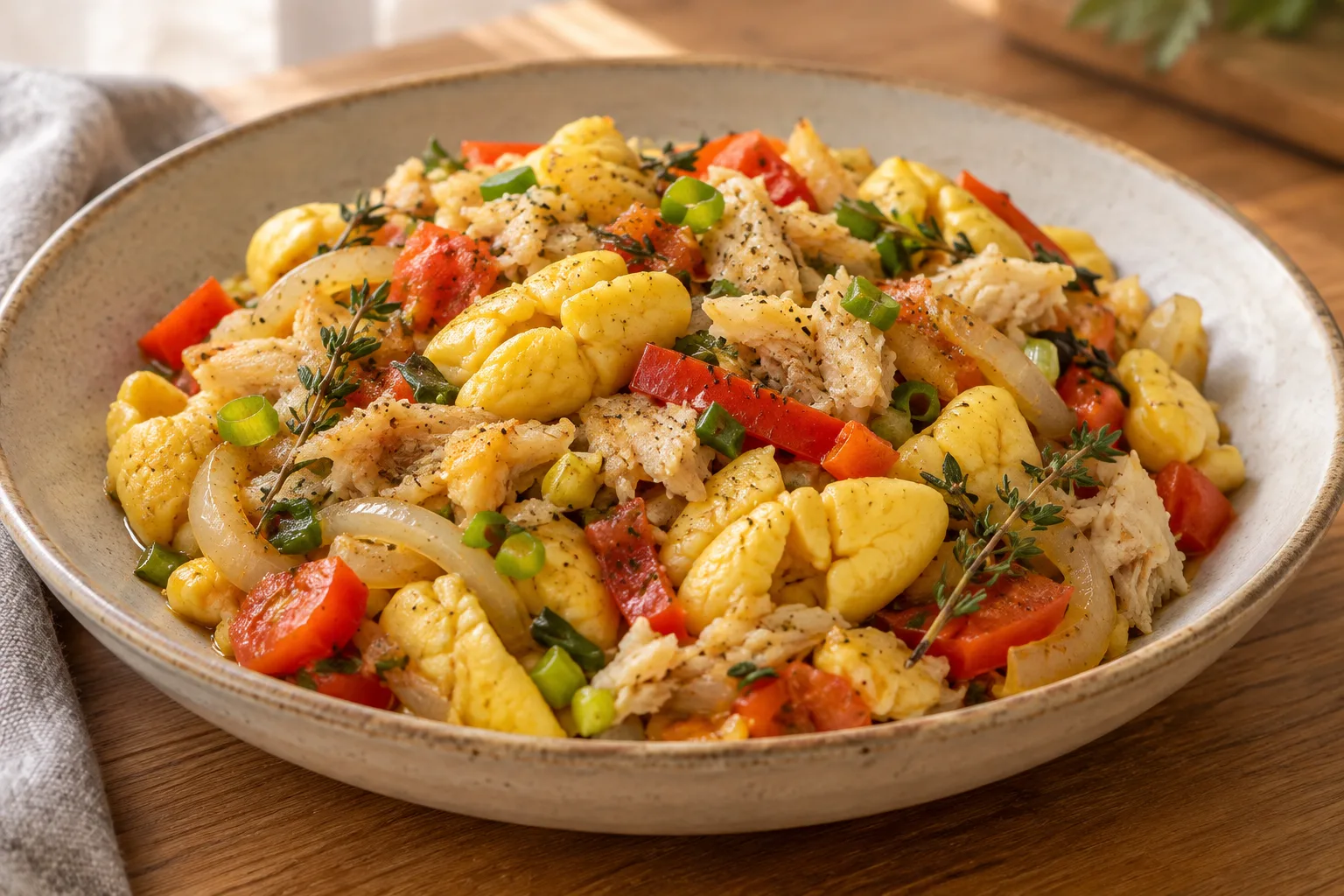
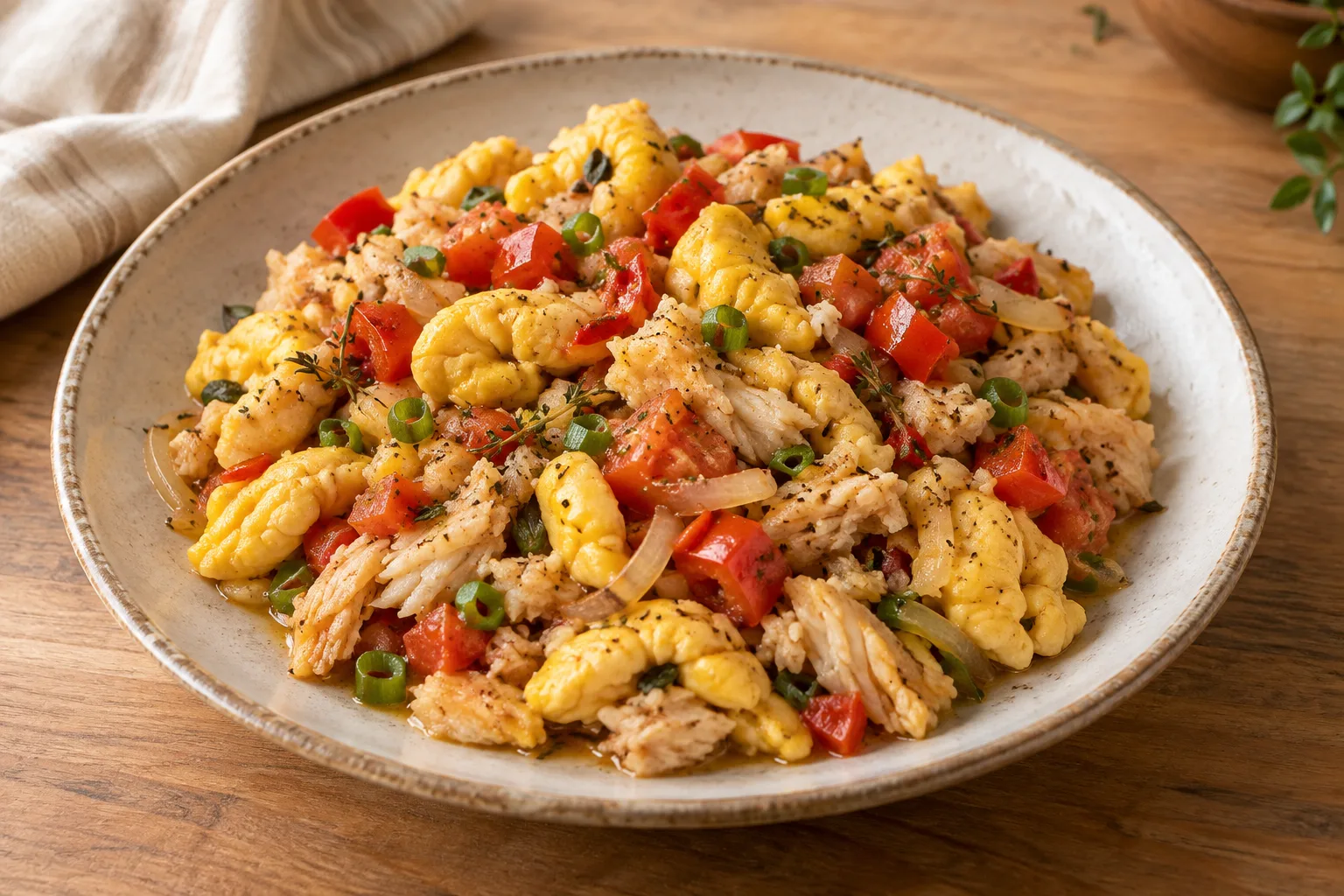
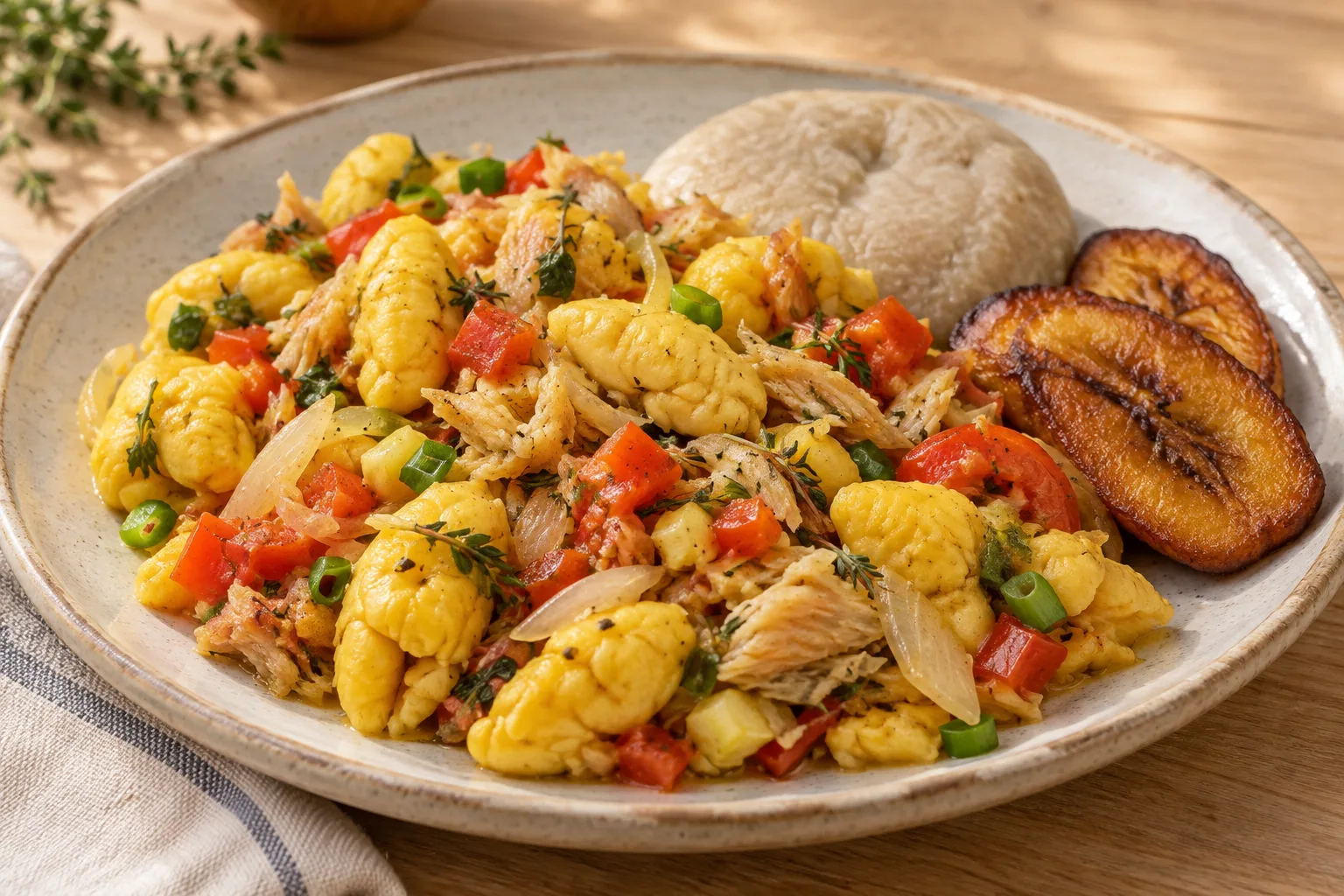
Ackee is a fruit used in cooking; this profile covers its canned form. A recipe for ackee and saltfish allows either canned or fresh ackee and instructs cooks to drain the canned version before adding it. The recipe combines it with salted cod and other ingredients, then recommends folding it in gently so it does not break apart. The available information does not identify the canned product’s variety or packing liquid, or describe its flavor. These details may depend on the specific product, so check its label. This profile makes no claims about nutritional properties or health benefits.
When to use it
Use canned ackee when you want to make ackee and saltfish and have a canned product on hand; the recipe consulted presents canned ackee as an alternative to fresh. In that dish, it is added after the aromatics have been cooked and combined with the salted cod. Treat this as a specific suggested use, not a universal rule: the source does not give guidance for other dishes or compare canned products. Check the package directions, and do not automatically apply instructions for preparing fresh ackee to the canned version.
How to use it
To follow the recipe consulted, drain the canned ackee and set it aside while preparing the other components. The recipe cooks onion, garlic, thyme, and peppers, then adds prepared salted cod before adding the ackee. Fold the ackee in gently to reduce the chance of breaking the pieces. The recipe also includes green onion, pepper, and tomato, but does not establish that these are essential. Check the can for directions specific to the product and adapt the rest of the dish to your recipe. The available sources do not provide specific instructions for rinsing, reheating, or storing leftovers.
Flavour and texture
The culinary source consulted does not describe the flavor of canned ackee. It advises folding the ackee in gently to avoid breaking it; this supports taking care to preserve the pieces, but does not establish a particular texture. The packing liquid and characteristics of different products are not described either. To learn about a particular can, check its label and assess it in the context of your recipe; do not assume every brand will produce the same result.
How to choose it
The recipe consulted specifically includes canned ackee as an option for ackee and saltfish, but it does not compare brands, varieties, or quality criteria. When shopping, check that the product is clearly identified as canned ackee and read the label for ingredients and directions. The available evidence does not establish criteria for comparing the contents or packing liquid. If you need information that is not on the package, consult the manufacturer.
Storage
The available evidence does not state how long canned ackee keeps or how to store it before or after opening. Follow the package directions rather than applying an unsupported storage period or temperature. The consulted recipe only says to drain the can before use; it does not explain how to store leftovers. If the label does not clarify storage after opening, consult the manufacturer.
Substitutions
The recipe presents canned and fresh ackee as options for ackee and saltfish, so one may replace the other within that suggested dish. It does not give equivalent quantities or explain preparation adjustments between the two forms. It also does not offer other culinary substitutes for ackee. If switching from canned to fresh, do not assume the same instructions apply: the source mentions both options but does not provide a complete fresh-ackee preparation guide.
Common mistakes
A practical mistake is stirring the ackee vigorously after adding it: the recipe recommends folding it in gently to help prevent it from breaking apart. Avoid assuming that instructions for fresh ackee automatically apply to canned ackee, or that every canned product behaves identically. The source gives no cooking times, temperatures, interchangeable quantities, or leftover-storage directions; do not invent those details, and check the package directions.
Safety and allergens
Follow the directions on the package and do not automatically apply instructions intended for fresh ackee to the canned product. The consulted recipe only says to drain it before use and does not provide storage directions after opening. If the label does not explain how to handle or store the product, consult the manufacturer.
Culinary uses
- Ingrediente de ackee and saltfish
- Componente de un plato de desayuno
Recommended techniques
- Escurrir antes de incorporarlo
- Añadirlo al final y mezclar suavemente para conservar los trozos
Pairs well with
- Bacalao salado
- Cebolla, ajo, tomillo, pimiento y tomate
Frequently asked questions
Should canned ackee be drained?
Yes. The recipe consulted says to drain canned ackee before adding it to the dish.
What is it paired with in the consulted recipe?
It is paired with salted cod and ingredients such as onion, garlic, thyme, peppers, and tomato.
How can I keep the pieces from breaking?
Add the ackee after combining the other components and fold it in gently, as the recipe recommends.
Sources and review
Automatically researched, cross-checked and validated content. Sources consulted:
- Romanica Olomucensia : «¿Qué pinga es esto?». Usos disfemísticos en el español de Cuba doi.org
- Gastronomía de Costa Rica - Wikipedia, la enciclopedia libre es.wikipedia.org
- Qué es (y qué no es) la estadística, usos y abusos de una disciplina clave en la vida de los países y las personas | Estudios económicos doi.org
- Patterns and processes in crop domestication faculty.washington.edu
- Ackee y pescado salado: Receta del Plato Nacional de Jamaica | Remitly remitly.com
- Gendered traditional agroecological knowledge in agri-food systems: a systematic review dugi-doc.udg.edu
- Plant Conservation - Smithsonian Research Online repository.si.edu
- Project MUSE -- Verification required! muse.jhu.edu
- 1990 ANNUAL REPORT uaf.edu
- NEW-Mona Departmental Reports 2024:2025.indd mona.uwi.edu
- Antes de ir a YouTube youtube.com
- Ackee: la fruta jamaicana que podría matarte. – Supah Frans blog supahfransblog.wordpress.com