- Category
- Pulses
- State
- Canned
- Usual unit
- g
What it is
These are lentils that have already been cooked and packaged as a canned product. They belong to the legume family and may be made from different lentil varieties, so their color and firmness are not always identical. Because they are cooked, they can be used without first cooking dried lentils. Depending on the product, they may be packed with covering liquid; draining and rinsing are practical options before use, not steps required for every recipe. Check the package to confirm the product name, ingredient list and product-specific directions.
When to use it
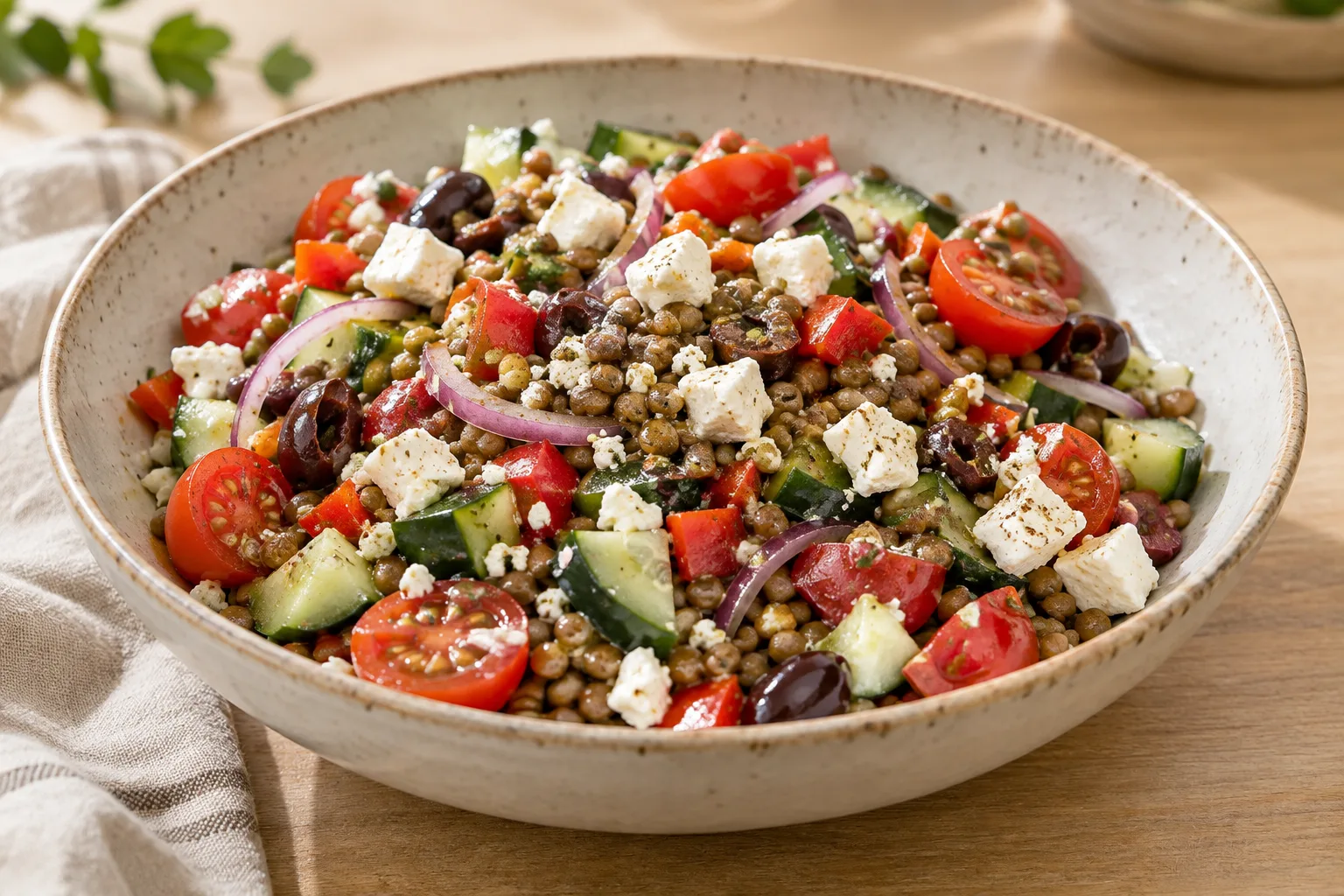
Use them when you want to add legumes to a meal without starting with dried lentils or adding an initial cooking step. They work in salads, bowls, soups, stews, curries and casseroles, and can be served with rice or vegetables. In a hot dish, add them toward the end to warm them while helping them retain their shape. For a salad, drain them and combine them with the other ingredients and dressing. Variety and degree of cooking can affect texture, so adjust when you add them to suit the consistency you want.
How to use it
Read the label and open the package according to the manufacturer’s directions. If the recipe calls for it, or you prefer to remove the covering liquid, drain the lentils in a colander and rinse them; you can also use them drained directly in the recipe. For a salad, combine them with vegetables, a vinaigrette or herbs. For soup, stew or curry, add them to the preparation and heat them through, stirring gently if you want them to keep their shape. They can also be heated on the stove or in a microwave. Follow the package directions for use and storage, particularly after opening.
Flavour and texture
Flavor depends on the variety, covering liquid and added ingredients; lentils in general are described as mild and earthy, although some varieties have a more pronounced flavor. Canned lentils are already cooked and are generally tender, but firmness can vary between products. Handle them gently and add them to a hot dish near the end if you want to keep them whole. Dressing, herbs and spices make it easy to adapt their flavor to different recipes.
How to choose it
Check that the package clearly identifies the food, and review the ingredient list, net quantity, date marking and any special storage or use instructions. The label helps confirm whether ingredients have been added and provides the allergen information applicable to that product. If you need a particular variety or texture, look for that information in the product name or on the label, since lentils can differ in color and firmness.
Storage
Before opening, keep the can in a cupboard or pantry and follow the date marking and directions on the package. After opening, check the label for any manufacturer’s storage instructions and follow them. Do not assume that all canned lentils have the same after-opening storage period: use the directions for the specific product and do not store it contrary to them.
Substitutions
You can substitute lentils cooked at home from dried lentils, using an equivalent amount once cooked and drained. Another variety of cooked lentils can also work. The result may differ in color and firmness, which matters in salads or recipes where the lentils should stay whole. In a creamy preparation, a difference in texture is often less important.
Common mistakes
Do not assume all canned lentils have the same firmness, variety or covering liquid. Rinsing is an option, not a requirement for every preparation; decide according to the recipe and label. Avoid adding them too early to a long-cooking dish if you want them to stay whole, and do not overlook package directions, especially for storage after opening.
Safety and allergens
Read the label for ingredients, applicable allergen information, and any storage or safe-use directions for that product. Follow the manufacturer’s instructions, particularly after opening. If the label gives specific directions, they take precedence over general advice.
Culinary uses
- Base rápida para ensaladas, boles y platos de legumbres
- Ingrediente listo para sopas, guisos, curris y salteados
- Acompañamiento o relleno para platos vegetales
Recommended techniques
- Escurrir y enjuagar antes de usar cuando se desee retirar el líquido de cobertura
- Añadir directamente a preparaciones calientes o calentarlas en la estufa o el microondas
- Incorporar al final de la cocción para calentar sin deshacerlas en exceso
Pairs well with
- Arroz, quinoa y otras bases de cereal
- Verduras, tomate, ajo y hierbas
- Especias y pastas de curry
- Vinagretas, aceite y vinagre
Frequently asked questions
Do canned cooked lentils need to be rinsed?
Not necessarily. Drain and rinse them if you want to remove the covering liquid, or use them according to the recipe and package directions.
Can I add them straight to a salad?
Yes. Drain them, rinse if you wish, and combine with vegetables, herbs and dressing. Handle them gently if you want them to keep their shape.
How should I use them in soup or curry?
Add them to the dish to heat through. If you want them to keep their shape, add them toward the end and avoid vigorous stirring.
How should I store an opened can?
Check and follow the storage directions on the package; a single after-opening period should not be assumed to apply to every product.
Sources and review
Automatically researched, cross-checked and validated content. Sources consulted:
- En el etiquetado alimentario hay algunas menciones que son obligatorias eletiquetadocuentamucho.aesan.gob.es
- Romanica Olomucensia : «¿Qué pinga es esto?». Usos disfemísticos en el español de Cuba doi.org
- Tipos de lentejas: características y cocción | Fine Dining Lovers finedininglovers.es
- Lentejas: beneficios de una legumbre muy nuestra - Legumbres Ja'e legumbresjae.com
- Origen de las Lentejas: Historia, Variedades y Usos Culinarios spice.alibaba.com
- Lentejas, rojas, cocidas (¿orgánicas?) | Fundación G+E diet-health.info
- NC conservas vegetales mapa.gob.es
- Presencia de gluten en lentejas Página 1 de 4 26/10/2020 aesan.gob.es
- Lenteja - Spend Smart Eat Smart spendsmart.extension.iastate.edu
- (DOC) Hamburguesa a partir de lentejas academia.edu
- Recetas para comer fuera de casa: Ensalada de lentejas especiada cordonbleu.edu
- Potaje de Lentejas (Cuban Lentil Soup) | Global Learning Center Student Resources blogs.shu.edu
- Aspectos Básicos de la Preparación de Conservas en Casa (Spanish) - National Center for Home Food Preservation nchfp.uga.edu
- Tasty Tidbits: Lentils - Alabama Cooperative Extension System aces.edu
- Lentejas cocidas en conserva es.openfoodfacts.org