- Category
- Meat
- State
- Fresh
- Usual unit
- g
What it is
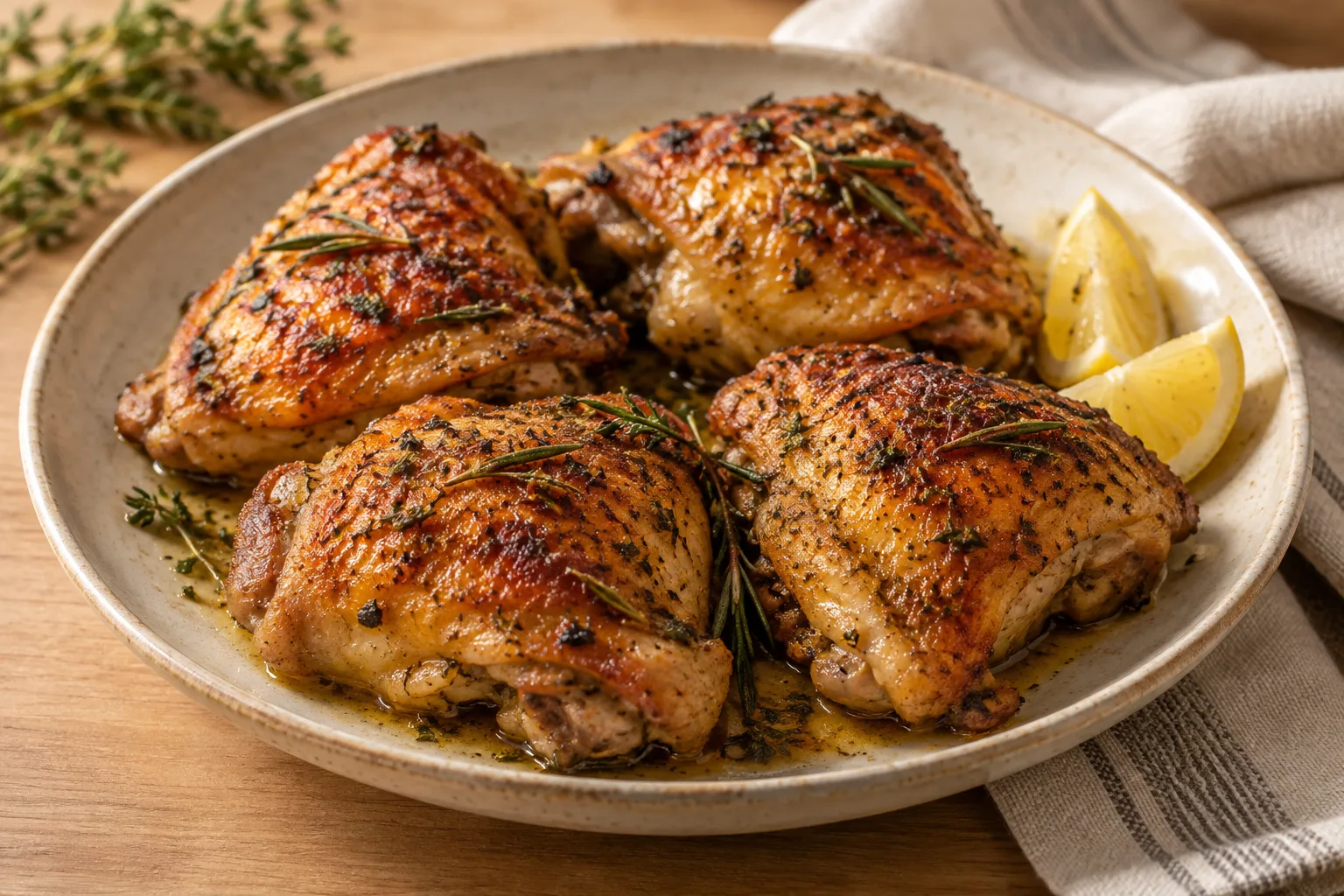
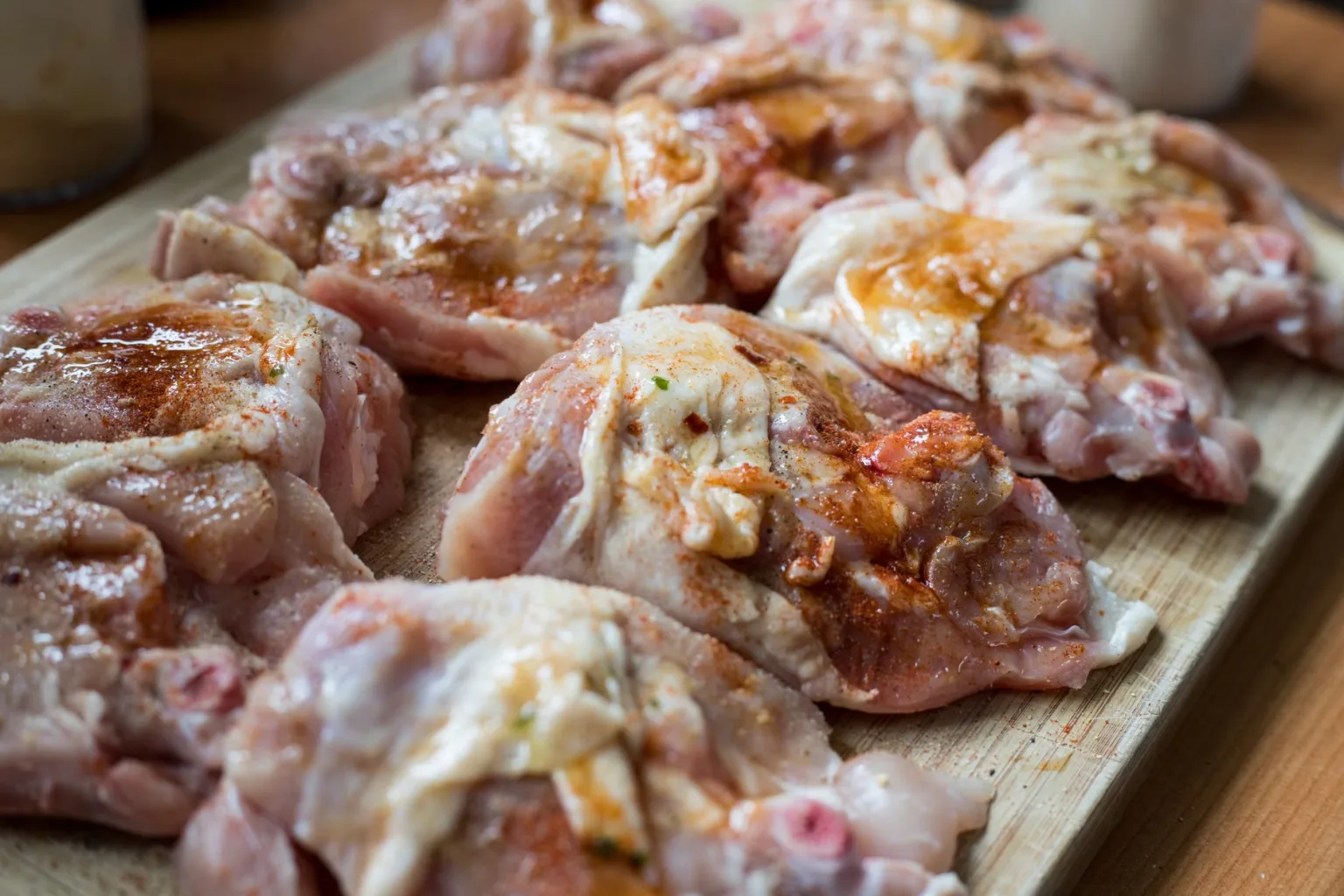
Chicken thighs are portions of chicken from the leg area. Retail descriptions may distinguish the upper thigh, drumstick and whole leg quarter, which includes more than one section; therefore, the shape and amount of bone can vary with the way the bird was cut. This entry uses the term practically for a chicken leg portion suited to recipes that use the piece whole or boneless. Check the product name and presentation before following a recipe, especially if its instructions call for a specific cut or for boneless meat.
When to use it
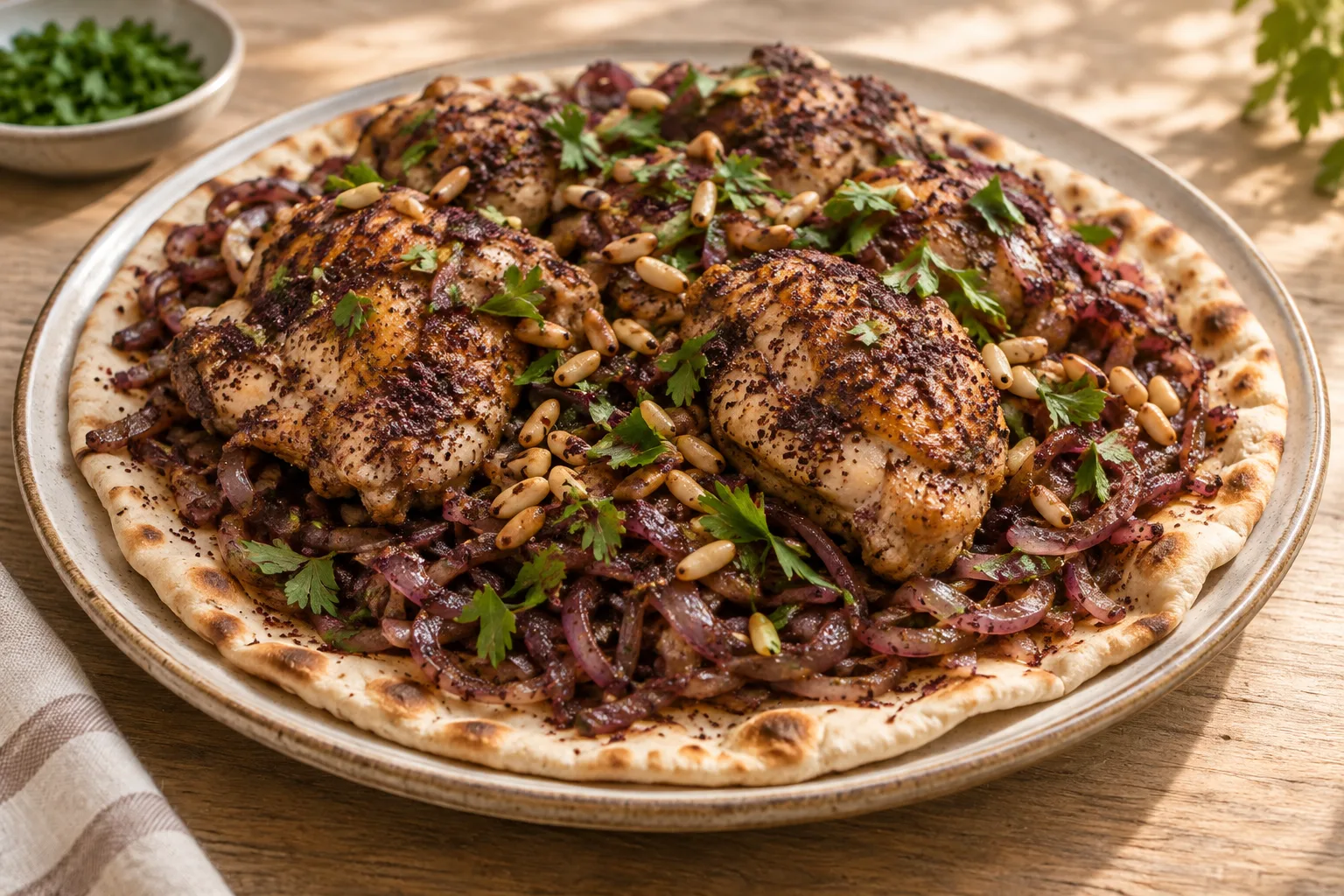
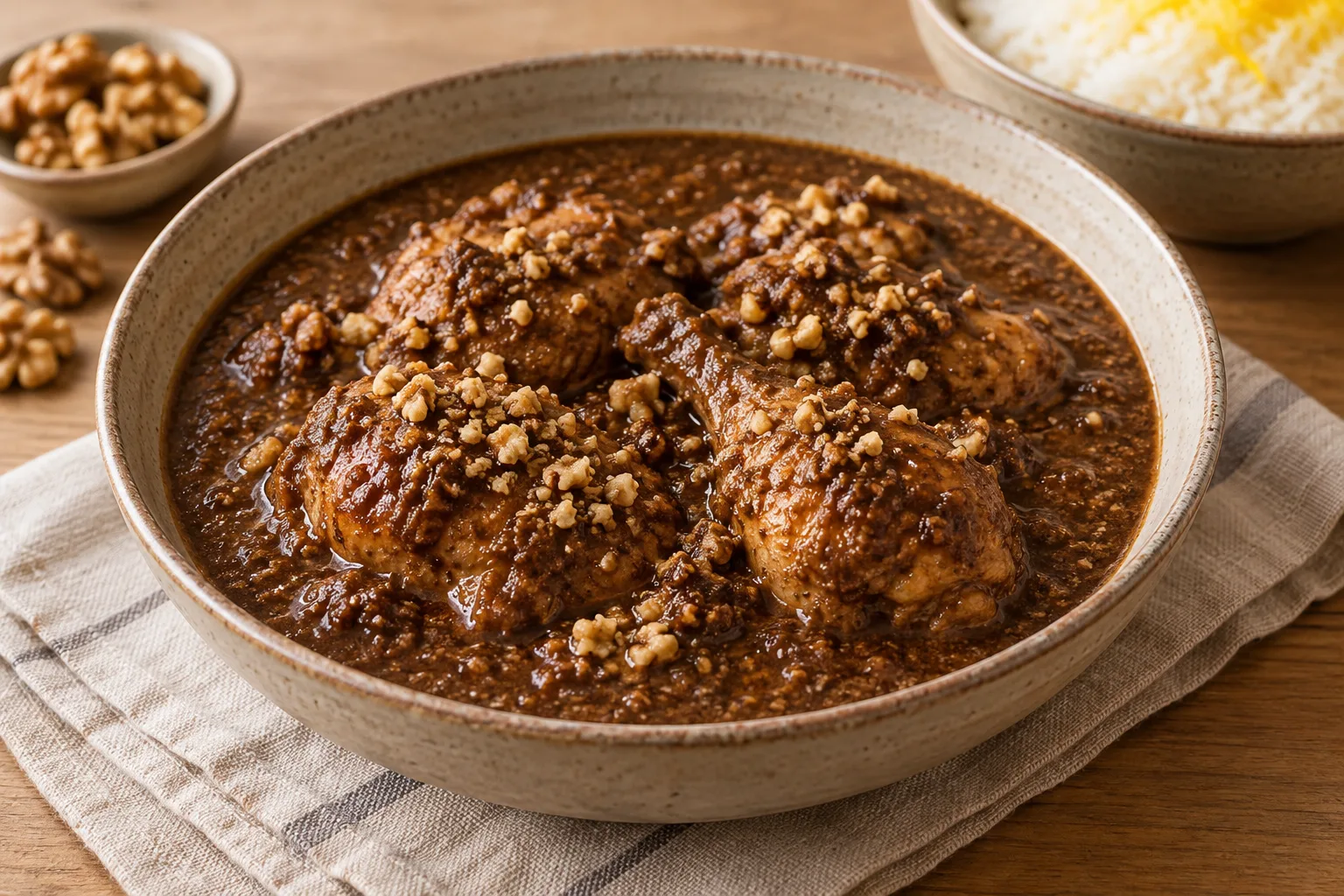
Choose chicken thighs when you want a poultry portion for roasting, frying or stewing, or when a recipe benefits from serving the meat as a piece with sauce. They can also be used to make stock: an extension recipe uses chicken or leg quarters with water, vegetables and seasonings. If a recipe requires boneless meat, make sure you have bought boneless thigh meat or another suitable presentation rather than assuming that every package labelled as thighs is boneless.
How to use it
Match the method to the cut you have: chicken thighs can be roasted, fried or stewed, and cooked meat can be shredded for sandwiches, wraps or salads. For stock, cook the chicken with water, onion, celery, carrot and herbs, then separate the meat from the bones and strain the liquid. Check whether the portion includes bone and skin before preparing it, since these affect how it is portioned and served. Follow the product’s cooking and use instructions, and adapt the recipe to the size and type of cut.
Flavour and texture
Chicken thighs are commonly described as flavorful and juicy when roasted or stewed. The result varies with the cut, whether the skin or bone remains, and the cooking method. In a stew, sauce and seasonings complement the meat; roasting can brown the skin. The available sources describe the cut as flavorful and juicy but do not establish one identical texture for every product or preparation.
How to choose it
Read the package description to distinguish thigh, drumstick and whole leg quarter; these names do not necessarily refer to the same presentation. Check whether the meat is bone-in or boneless and skin-on or skinless, then choose what suits your recipe. The label is the reference for product identity and storage and use directions. Do not identify the cut by size or shape alone.
Storage
Store the product according to the directions on its label, which can depend on how it is sold and presented. Follow any stated special storage conditions and use-by information. The available evidence does not establish one universal storage period for fresh chicken thighs, so avoid applying a single number of days to every package or situation.
Substitutions
You can replace thighs with another chicken cut if the recipe can accommodate a change in size, bone content or cooking time. For stock, a whole chicken or chicken leg quarters are also documented options. Turkey thigh may suit some preparations, but it is not identical; adapt the method to the particular cut and follow its package instructions.
Common mistakes
Do not assume that “thigh” always means the same portion: it may be confused with a drumstick or a whole leg quarter. Another mistake is using instructions for boneless meat unchanged for a bone-in piece. Check the cut and presentation, and follow the product’s use directions.
Safety and allergens
Follow the storage and safe-use instructions on the package. For unpackaged product, ask the retailer for available use information and consult your local food-safety authority.
Culinary uses
- Main protein in a meal
- Base for soups, broths and braises
Recommended techniques
- Roasting
- Braising or stewing
- Frying
Pairs well with
- Onion, carrot and celery
- Garlic and herbs such as thyme, rosemary or parsley
- Potatoes, rice or pasta
Frequently asked questions
Are a chicken thigh and a drumstick the same cut?
Not necessarily. Retail descriptions may distinguish the drumstick, upper thigh and whole leg quarter. Check the stated cut or ask the retailer.
How can I cook chicken thighs?
They can be roasted, stewed or fried. Choose a method that suits the cut, whether it is bone-in, and the recipe and package instructions.
What ingredients pair well with chicken thighs?
For stock, an extension recipe uses onion, celery, carrot and seasonings such as garlic, parsley, rosemary or thyme. Potatoes, rice and pasta are also serving options.
Estimated nutrition
- Fat
- 44.2 g
- Saturates
- 12.1 g
- Carbohydrate
- 0.79 g
- Sugars
- 0 g
- Fibre
- 0 g
- Protein
- 9.58 g
- Salt
- 0.13 g
Sources and review
Automatically researched, cross-checked and validated content. Sources consulted:
- En el etiquetado alimentario hay algunas menciones que son obligatorias eletiquetadocuentamucho.aesan.gob.es
- Caldo de pollo y pollo cocido - Spend Smart Eat Smart spendsmart.extension.iastate.edu
- ¿Por qué la muerte es origen de miedos y tabúes? doi.org
- Poultry, Meats, & Game - BFS 104: Basic Culinary Skills Theory - Research Guides at Sullivan University libguides.sullivan.edu
- Informe del Comité Científico de la Agencia Española de ... aesan.gob.es
- PROGRAMA DE CRÍA DE LA GALLINA EXTREMEÑA AZUL VERSIÓN 5 DE JULIO DE 2025 mapa.gob.es
- Pollo Entero Rostizado extension.oregonstate.edu
- POLLO MUSLO/ENCUENTRO | Store Room stristoreroom.si.edu
- HISPANIC HERITAGE MONTH CELEBRATES ... monroecc.edu
- Muslo de pollo(Ingrediente)_Baidu Enciclopedia baike.baidu.com
- Muslitos picantes: el secreto detrás de su irresistible sabor solococinar.com
- 15 recetas sencillas y deliciosas con muslos de pollo elle.com
- Muslos de pollo - Gastronomía Vasca: Escuela de Hostelería Leioa gastronomiavasca.net
- Recetas con Muslos - Gallina Blanca gallinablanca.es
- Recetas con muslos de pollo - 50 recetas - Petitchef petitchef.es
- Recetas con muslos de pollo: jugosas y sorprendentes cookpad.com