- Category
- Herbs and spices
- State
- Fresh
- Usual unit
- unit
What it is
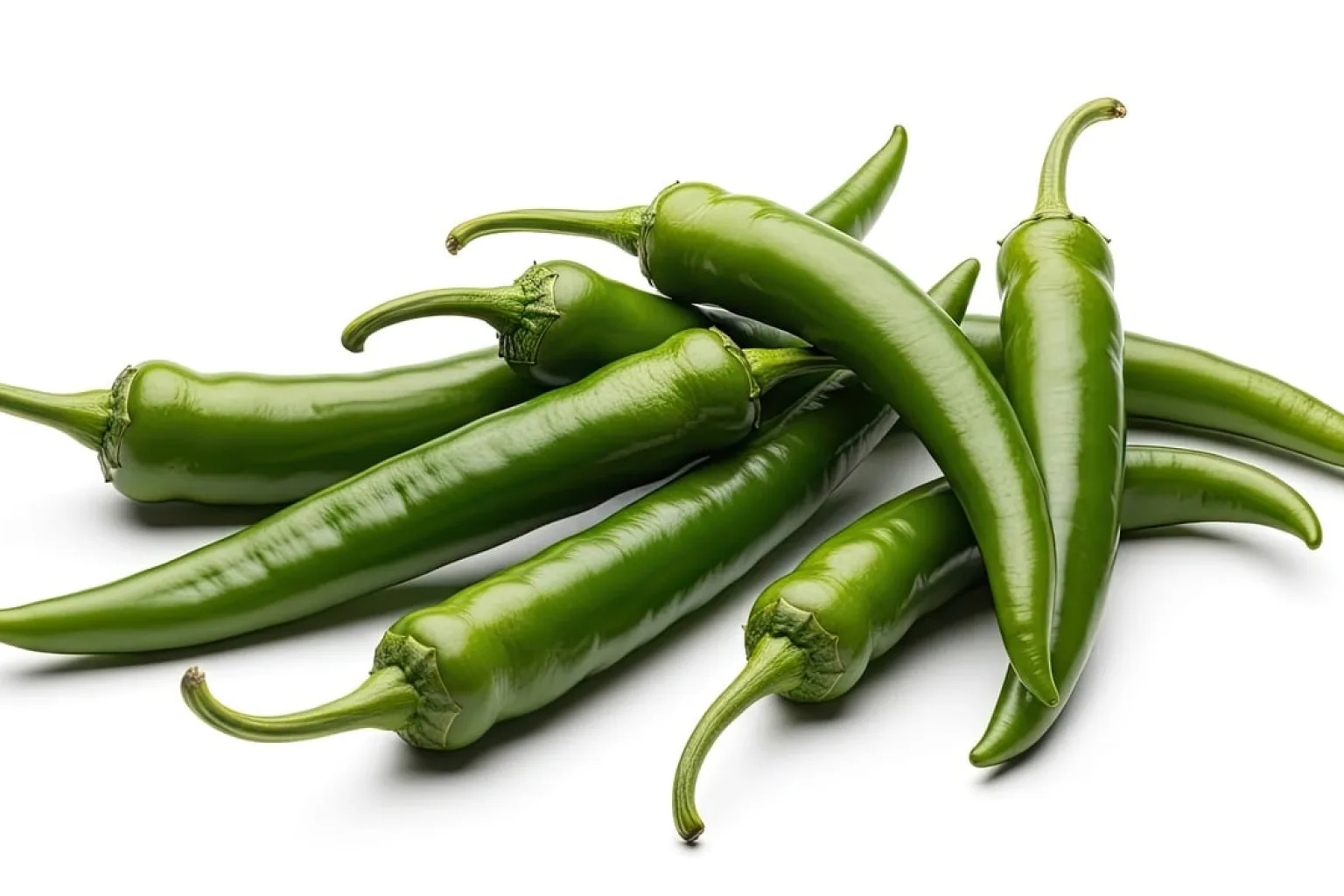
Chili pepper is a common name for the hot fruits of Capsicum; in culinary use, the name covers peppers with a range of heat levels. It is not black pepper: it belongs to the Capsicum genus in the nightshade family. Varieties differ in shape, color, flavor, and pungency, and not every chili is equally hot; some, such as piparra, are mild. Fresh chili has fleshy fruit and can be used whole, sliced, or chopped. Its pungency is associated with capsaicin, but the amount of heat can vary substantially by type and individual fruit. The name alone therefore cannot tell you exactly how hot a particular chili will taste.
When to use it
Use fresh chili when you want to add heat and a distinct flavor to a dish rather than relying only on salt or a prepared sauce. It can season stews, legumes, meat, fish, pasta, sauces, and sautéed vegetables. Choose a mild type for a gentler effect, or begin with a small amount if the variety is unfamiliar. Since heat differs between varieties, it is more dependable to taste and adjust during cooking than to add a large amount at the start.
How to use it
Rinse the chili under running water before preparing it. Remove the stem, then slice it thinly or chop it, depending on how noticeable you want the pieces to be. Add it to a stew, sautéed vegetables, or pasta with oil and garlic; it can also season fish, meat, or a sauce. Because heat varies, begin with a small amount and taste before adding more. When handling hot chilies, wear gloves or wash your hands thoroughly with soap and water before touching your face or eyes. Keep work surfaces and utensils clean.
Flavour and texture
Chili pepper brings heat and a vegetal flavor that may be mild or intense depending on the variety. Fresh, it has fleshy fruit; finely cut pieces blend into a dish, while larger pieces make their presence more noticeable. Color and pungency also vary. Do not assume that every chili has the same heat: start with a little and adjust to taste.
How to choose it
Choose chilies that feel firm and show no visible signs of disease or insect damage. Color can vary and is not, by itself, a reliable measure of heat; varieties may be mild or hot. If the variety is unidentified or unfamiliar, buy an amount you can taste cautiously and start with a small piece. Look for intact fruit and avoid pieces that are soft or damaged.
Storage
The available evidence does not establish a specific storage method or shelf life for fresh chili peppers. Follow any storage directions from the seller or package, and do not assume that instructions for freezing or canning apply to everyday storage. Rinse the chili under running water before eating or preparing it, do not soak it, and use clean surfaces and utensils.
Substitutions
There is no exact substitute because Capsicum varieties differ in heat, flavor, color, and texture. Jalapeño can serve a similar culinary role, but it will not necessarily have the same intensity. Cayenne can also contribute heat, although dried or ground cayenne behaves differently from a fresh fruit. For a milder result, piparra is an option, but it brings a different profile. Start with a small amount and adjust by tasting.
Common mistakes
A common mistake is treating every chili as equally hot or replacing one variety with another in the same amount. Heat can vary, so taste first and add gradually. It is also easy to touch your face or eyes after handling hot chilies: wear gloves or wash your hands thoroughly with soap and water. Do not soak the fruit; rinse it under running water before preparing it.
Safety and allergens
Rinse chili peppers under running water before preparing or eating them, and work with clean surfaces and utensils. Wear gloves when handling hot chilies; if you do not, wash your hands thoroughly with soap and water before touching your face or eyes. Since heat varies, taste a small amount before serving.
Culinary uses
- Fresh seasoning for adding heat and color
- Flavoring ingredient for stews, sauces, vegetables, pasta, fish, and meat
Recommended techniques
- Slice or finely chop and add to a dish
- Cook gently in oil or sauté with other ingredients
- Add to stews or use as a fresh seasoning
Pairs well with
- Garlic and oil
- Pasta and vegetables
- Fish and vinegar
- Stews, legumes, and meat
Frequently asked questions
Are all chili peppers equally hot?
No. Varieties differ in heat, and some, such as piparra, are mild. If you do not know the variety, start with a small amount and taste it.
How can I use fresh chili in a dish?
Rinse it under running water, slice or chop it, and add it to stews, sautéed vegetables, pasta, sauces, fish, or meat. Begin with a small amount.
What precautions should I take when cutting chili?
You can wear gloves when handling hot chilies. If you work without gloves, wash your hands thoroughly with soap and water before touching your face or eyes.
Estimated nutrition
- Fat
- 0 g
- Saturates
- 0 g
- Carbohydrate
- 25 g
- Sugars
- 25 g
- Protein
- 0 g
- Salt
- 8.75 g
Sources and review
Automatically researched, cross-checked and validated content. Sources consulted:
- Client Challenge doi.org
- The Essential Glossary of Cooking Terms for the Culinary Arts - Escoffier escoffier.edu
- Guindilla: Botánica, cultura y sabor en una Especia | Alveus alveus.eu
- Guindilla: qué es, beneficios y usos en la cocina de este pimiento picante bonviveur.com
- Comité Científico aesan.gob.es
- Lesson 4A – Semillas: Elementary Spanish I pressbooks.uiowa.edu
- IEW Recipes | OISS | Rice University oiss.rice.edu
- Vamos a Conservar Alimentos: Chiles/Pimientos extension.psu.edu
- Guindilla: qué es, beneficios, usos en la cocina y variedades de este pimiento picante directoalpaladar.com
- Exploring Basque Gastronomy Identity through Recipes and ... ebiltegia.mondragon.edu
- Las guindillas | Consumer consumer.es
- Dialectal variations of food terms in the Spanish-speaking ... scholar.utc.edu
- Uncategorized Archives - San Sebastian, Spain: Honors Special Topics: Basque Cultural Immersion 2019 Session 1San Sebastian, Spain: Honors Special Topics: Basque Cultural Immersion 2019 Session 1 blogs.uml.edu
- Estimation of Age in Nesting Female - Iguana iguana repository.si.edu
- Propiedades de la guindilla: ¡más allá del picante! | LÉKUÉ lekue.com